A high speed nose lift; a high speed crow hop; and finally off and away
around the pattern; the 20B powered Velocity, N755V maid its maiden
flight
yesterday, 8/04/06. What an exciting milestone – even though in this
case I
was watching from the ground as the test pilot did his thing.
The engine performed well, and the pilot reported that all handling
characteristics were good. The flight was short, however; because
the oil
temp was 10-15F higher than the limit I had set, and the pilot did
the right
thing in abbreviating the flight so that can be evaluated and
changes made
as necessary. All in all, with that as the only issue of note at this
point; it was a good day.
It’s such a common thing, isn’t it – these cooling issues. The oil temp
(downstream from the cooler) peaked at 230F, somewhat after the end
of the
climb (OAT about 80F); I guess it takes a little while for the hot
oil to
get to the bottom of the 8 qt sump and back through the cooler. The main
concern was that the temp didn’t drop more that 3-4 degrees as he went
around the pattern, and after landing and rolling out it was still
225F.
Coolant temps peaked about 190F.
I had a video camera mounted reading the engine monitor display which is
great for review later. Unfortunately, even though I have all sorts of
instrumentation for doing diagnostics, in his focusing on flight
characteristics, and the concern about the high oil temp the pilot
forgot to
push the ‘page up’ button; so the only data I have is page 1.
Regardless of
further data, it seems clear that there is insufficient air flow
through the
wing root oil cooler – a condition that was not entirely unexpected.
Another major step in an on-going process.
Al
Congratulations Al. You have a very nice airplane there.
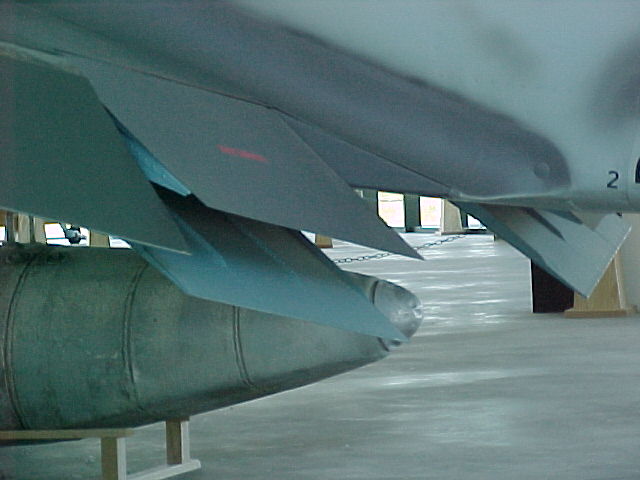
Here are some pictures of Al's oil cooler installation. It is a big
mystery
to me why this does not work but this is the second pusher aircraft
with this
configuration that has a problem with this. Perry's was the first.
I suspect the boundary layer back there has higher pressure than one
would think. We measured it on Perry's airplane and it was much
higher than I expected.
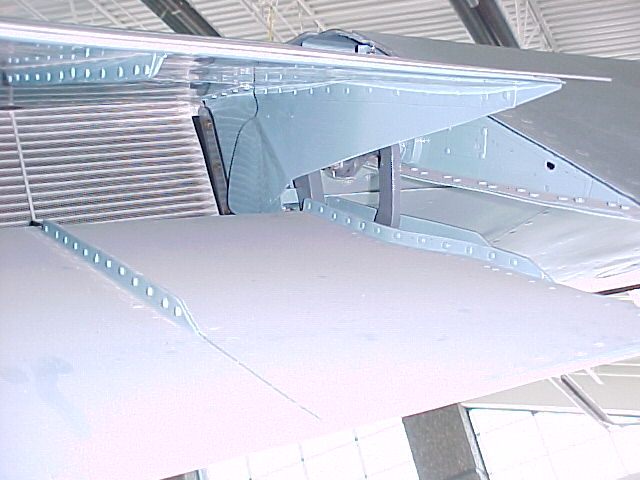
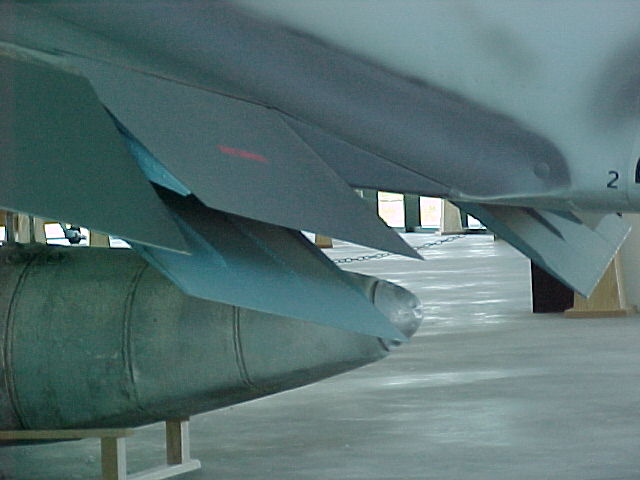
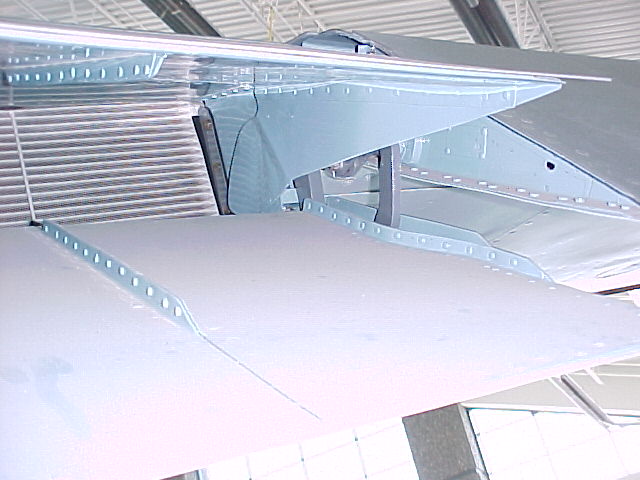
Time for Me 109 flaps Al :) Perhaps modifying the exit duct as
per red line would help.
BTW Al, I don't have any pictures of the air intake. Can you send me
some?
--
Paul Lamar ...No rotor no motor.
I, too, am very concerned about cooling since my bird has angular
body lines(6)leading to a smoothed-out fairing over the engine/PSRU.
Do you suppose my boundary layer pressure over that area will be even
higher than Perry's? And can you point me in the direction pics of
ME-109 flaps? Thanks!
Tim Tracey.
Refresh me on what kind of airplane you have Tim.
I just uploaded some pictures of Me109 flaps. Did you miss them?
Here they are again.
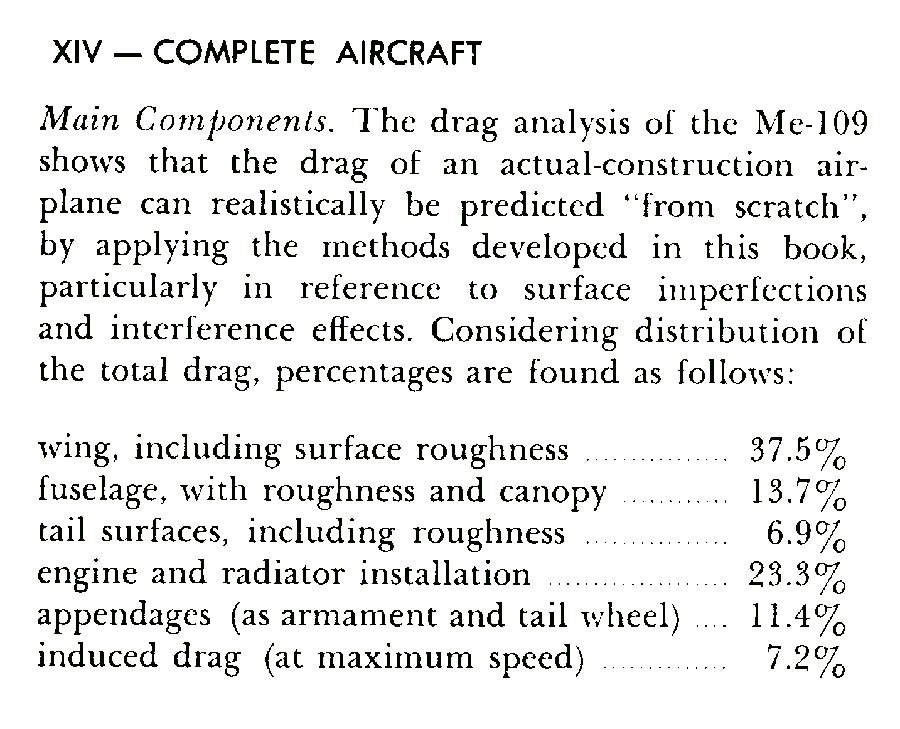
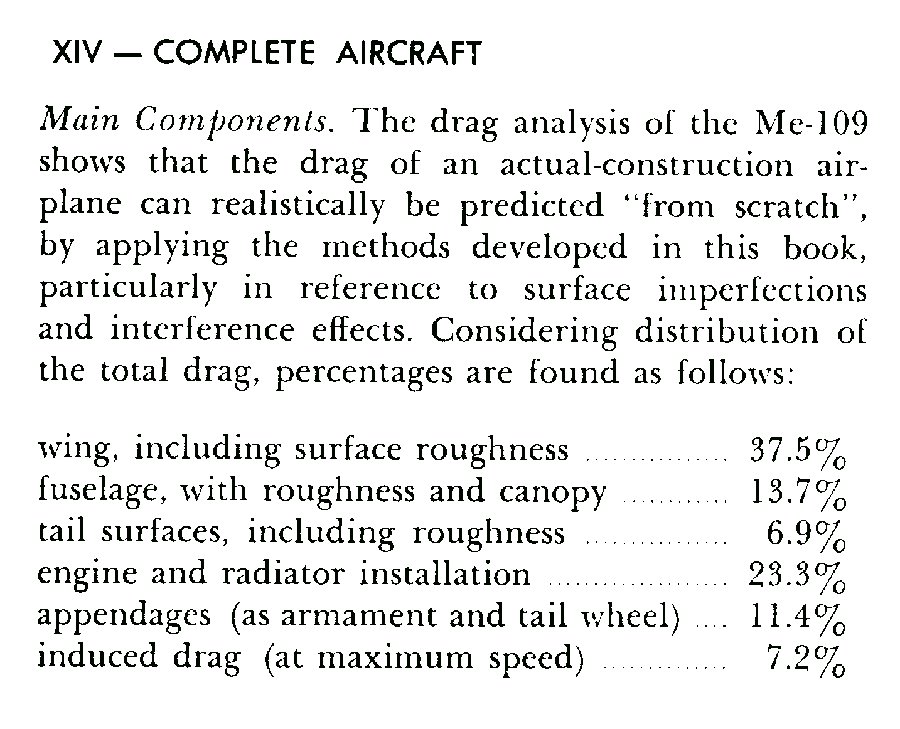
The last jpg shows the percentage of drag broken down into
components. Not engine and cooling are 23%.
Paul Lamar ...No rotor no motor.
The Rotary Engine NewsLetter. Powered by Linux.
ACRE NL web site.
http://www.rotaryeng.net
Copyright 1998-2006 All world wide rights reserved.