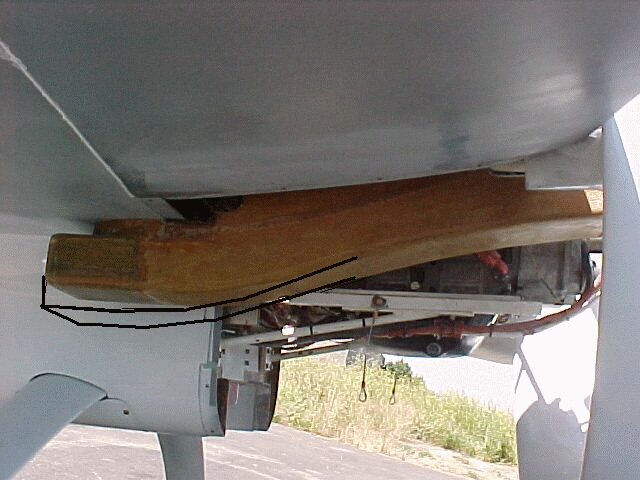
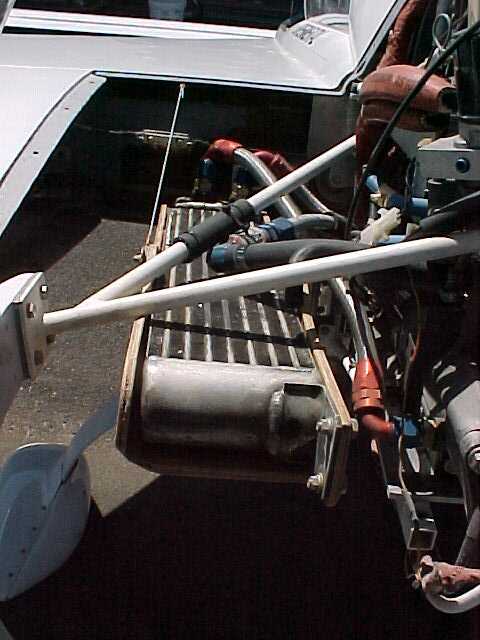
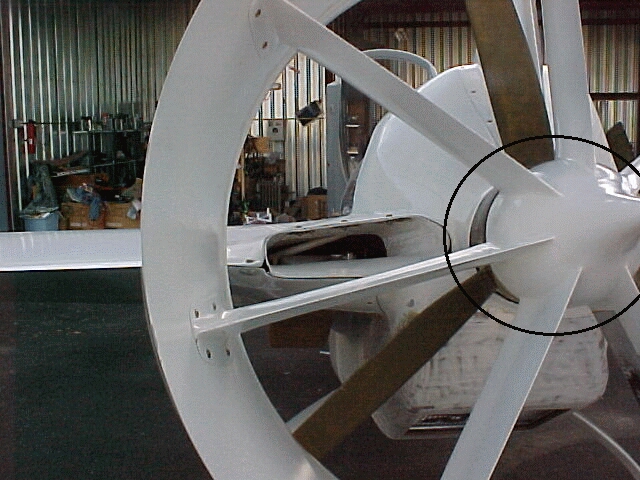
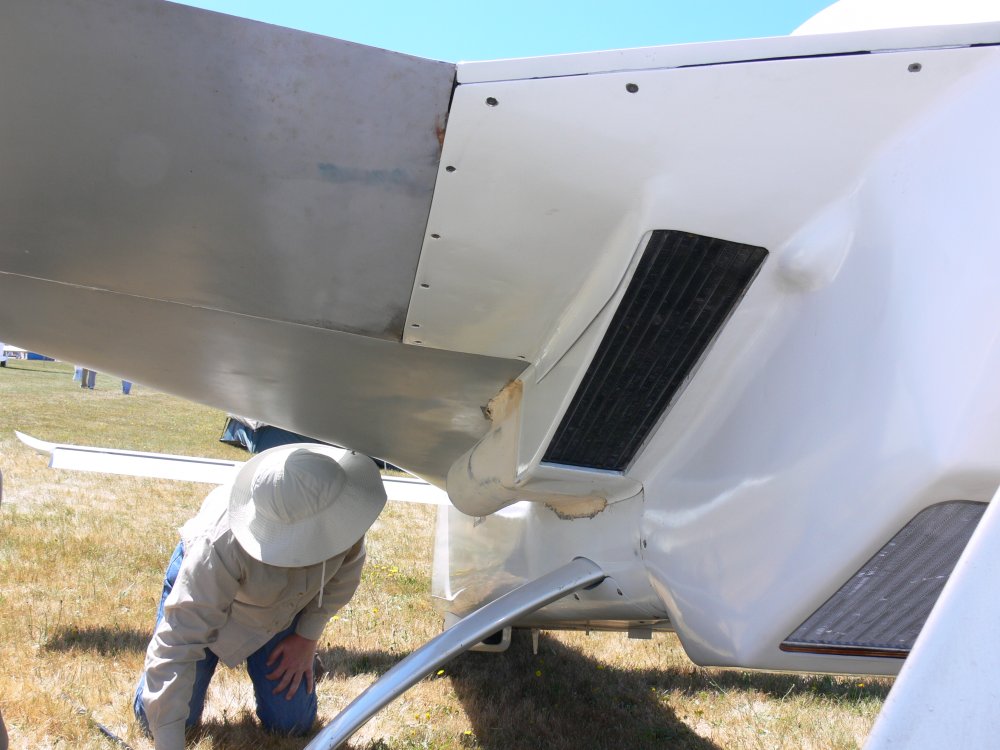
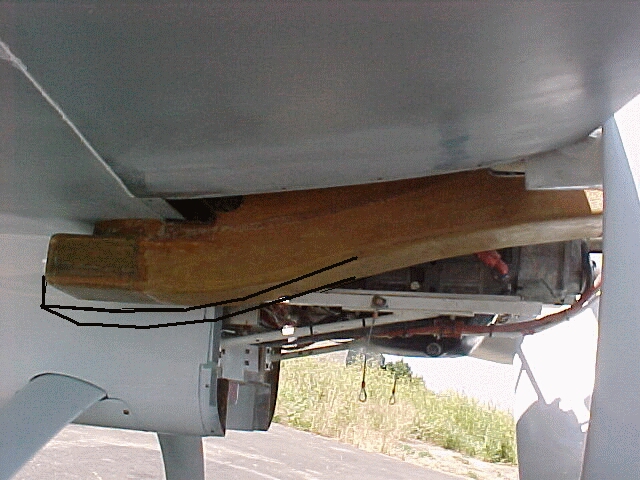
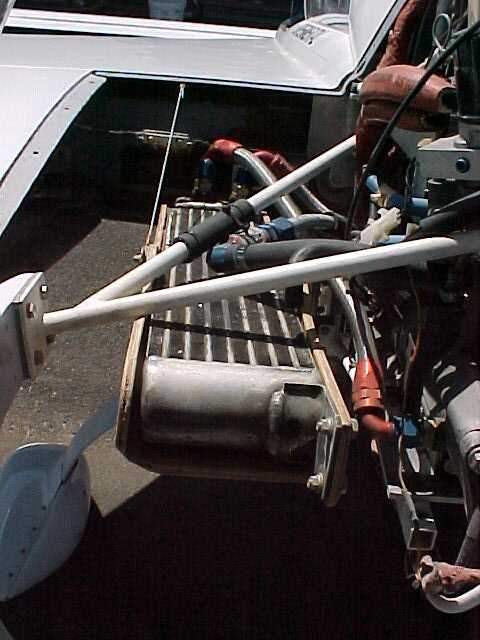
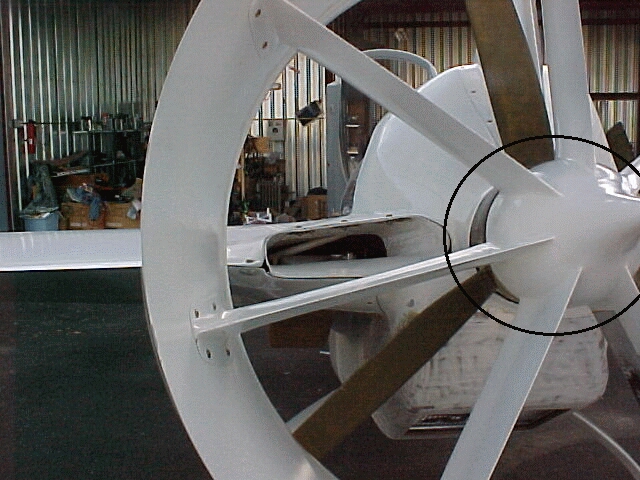
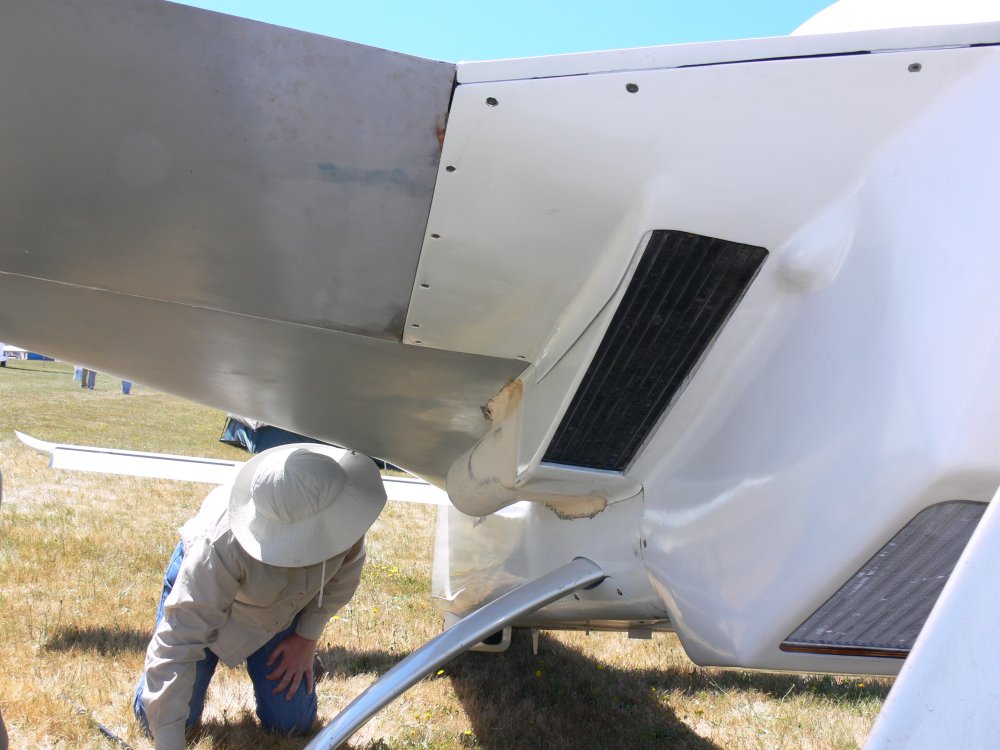
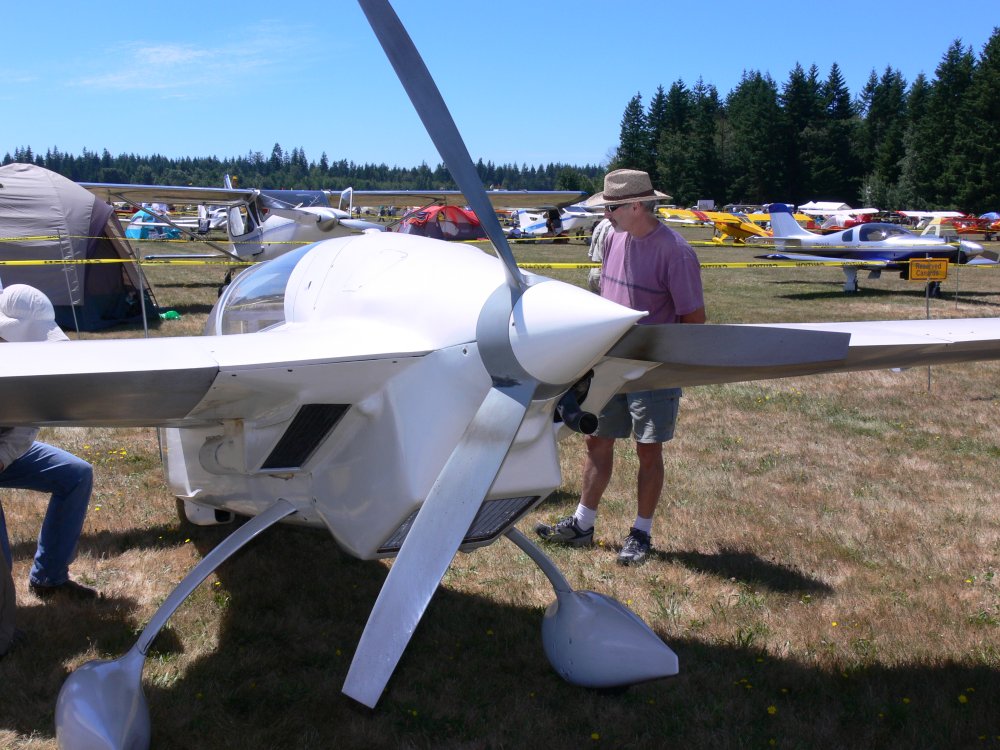
Al, the next few messages are recent on oil cooler in the wings
of pushers. I know you have been off the list.
Paul Lamar
> > Paul,
> >
> > You suggested that an under the wing option might also work
> for
> > some of the Glass Goose coolers.
> >
> > It looks like I have about 4"x30"x1" inside of the trailing
> edge
> > of each upper wing that might could be adapted to hold a thin,
> custom
> > oil cooler -- one on each side. You also mentioned that the
> boundary
> > layer would be pretty thin under the wing. Would a scoop about
1"
> down
> > from the wing's lower surface (25% of the 4") be deep enough? I
> could
> > probably taper this much back into the trailing edge without
too
> much
> > problem. I'm guessing that most of the upper skin would have to
> be
> > removed to allow unobstructed air exit from the radiator's
upper
> > surface. I would have to address all the lost surface material
on
> both
> > the upper and lower skins, but this might be feasible.
> >
> > Scott Gettings
> >
> >
> > Perry did not have much luck with that configuration.
> > Nor did Al Gietzen.
> >
> > The boundry layer would be thicker that far back.
> >
> > I'll think about it for a few hours and see if I can come up
> > with something.
> >
> > Paul Lamar ...No rotor no motor.
>
>
> Scott,
> Five or six vortex generators under the wing out in front of your
> scoopmay make it effective.
>
> Aubrey
>
> It would be better to continue the duct out to the leading edge.
> In that case there would be no doubt the scoop was working as well
> as it could.
>
> Scott, here is an idea for you. Set oil HE core vertical and use
> the ME109 configuration. The flaps would help you get out of
> the water. You will need them on both sides to prevent yaw.
>
>
> Paul Lamar
>
OK, thanks, I'll keep exploring these concepts. The ME109 looks
like it
uses a very small inlet duct with no boundary layer offset, even
thoughit is near the trailing edge. Do the rear flaps make up for
thissuboptimal intake?
Anything I do near the pylon has to have a minimal airflow effect on
this already-troubled air going into the prop -- so any ducting would
have to be relatively unobtrusive in this area. A thin duct under the
wing might be OK.
I still may be able to shoehorn the oil cooler on the cool side of the
engine if I can get a big enough duct around the front radiators. I'm
waiting for Ed's oil pan so I can re-mount my engine and continue this
process.
Scott Gettings
Probably but here are some rough 3Ds of the oil cooler in
the trailing edge of the wing.
--
Paul Lamar ...No rotor no motor.
Thank you. This looks very interesting, and may well be do-able.
Should any of the exit air flow through the upper, low-pressure surface
of the wing? This might be an advantage during ground operations with
no forced airflow. I'm assuming the radiator could also be tilted
somewhat to decrease its vertical height if necessary?
Scott Gettings
We messed with Perry's top exit a lot and was never able to get it
to work. Perry felt the oil rad was defective so it was probably
not a valid test.
Well you can always make the upper and lower flaps movable
like the Me109. I would not try to takeoff with the upper
flaps deflected upward however. Deflecting both flaps downward
could aid taking off. The other side could be a second water
or aux rad allowing you to reduce the size of the main water rad in
front of the engine.
Paul Lamar ...No rotor no motor.
The Rotary Engine NewsLetter. Powered by Linux.
ACRE NL web site.
http://www.rotaryeng.net
Copyright 1998-2006 All world wide rights reserved.