Sorry for these dumb questions but Id really like to get an order in
this week and could use some advice from all of you far more experienced
than me ;-) in these things.
Id like to purchase one of the Australian Renesis engines- I just do
not
know which one to order, the 4 or 6 port. I am leaning more to the
4-port for the potential reasons of lower weight, simplicity, and it
already has the needed flywheel and balance weights for Tracy's 2.85
redrive. I dont really need the extra HP or extended rpm capability
that the 6 port offers (building a RV 9-A, designed for a Lyc O-320
@160HP)- are there any other differences between the two Mazda engines
other than the extra 2 ports? From my perspective, the extra ports add
a bit of (unneeded) power over 7000+ rpm but add extra weight and intake
manifold complexity, will add problems down the road if I decide to
p-port.
Also, it seems Mazda likes the new side port arrangement; they claim
better drivability, less cross contamination, larger port area, etc.
Given that the P port tests suggests more peak power across the board,
why their side port preference? Will it create problems if I eliminate
the OEM computer and all the related intake timing parts/valves and use
long runner tubes instead, assuming most of the action occurs between
4000-7000 rpms?
Mike Parker
-------------------------------------------
I don't know how many people have said that in the last 7 years
and then lived to regret it once they had their airplane flying :)
HP in an airplane is like money. You can never have too much
as long as it does not significantly increases the weight.
Once you change the six port flywheel to a auto tx flex plate there
is no difference in engine weight.
It is a safety thing. You can get in situations all the time
where you need more HP. Climbing over clouds in the flat lands
and climbing over mountains and clouds in the mountains are just
two examples. Taking off on a hot day at something other than
sea level is another. When you get two people and luggage in a
150 HP airplane you will wish you had more HP. A low HP airplane
limits your options.
Sure you get 150 HP at sea level and 67 degrees F but what about
5000 feet or 12,000 feet on a hot day. At 8000 feet you are
down to 120 HP.
You don't have to use the HP if you don't need it.
Drivabilty means nothing in an aircraft engine.
Mazda has a whole different set of requirements than we do. Torque
at less than 5000 RPM means nothing to us but it means everything
in a car engine. One misfire per minute at idle means a lot to
car emissions. It means nothing to us. Apples and Oranges.
Why are you putting a 2.85:1 gear box in there if you don't need
7000 RPM and HP?
Paul Lamar ...No rotor no motor.
Hey Paul,
I generally agree with you, but with a few caviats.. Airplanes don't
have to idle all that well, but they shouldn't threaten to quit (sounds
like the slide throttle addresses this?) or load up the plugs..
Nor do they need particularly good throttle response, but it has to be
good enough to accept power increases without coughing and sputtering.
Although (as an aside), I don't know if any of you have flown O-360
powered Archers, but every single one of them that I have flown (at
least 5 different airplanes), burp and sputter when advancing the
throttle from idle to stretch final glide. Gives you a funny feeling
when you realize that you're a bit low on final, and advancing the
throttle initially just causes the engine to stumble.. :) I have flown
a couple of other carbureted O-360 powered airplanes that don't do this,
so I think it's airbox design or carb jetting...
The other thing is that lots of airplanes can't reasonably afford the
weight of a constant speed prop (at least, not a metal one). If the
airplane has a wide speed range, the prop needs to have a lot of overall
pitch for cruise comfort and efficiency. . . . Franklin 6cyl engines
are considered kind of doggy when operated with a fixed pitch prop
because the cams and induction are optimized for horsepower at higher
RPM (or so the story goes) - higher specific horsepower/displacement
than Lyc/Cont. Constant speed props solve the issue by allowing the
prop to stay in relatively flat pitch until the governed RPM is reached
- allowing access to rated horsepower.
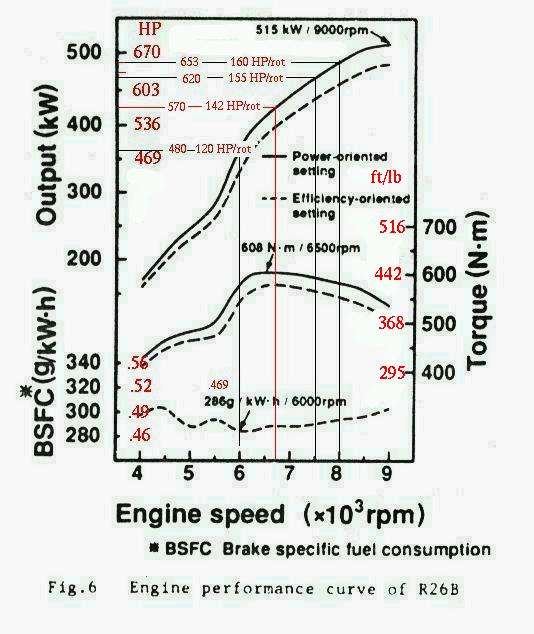
Do you think that rotaries optimized for high RPM will suffer from the
same isse? I guess the thing to know would be how the RPM vs. torque
(or horsepower) curves compare on Lyc/Cont vs Franklin.. I know that
you've shown that rotary RPM vs. torque curves are flat. I wonder how
flat they are compared to Franklins..
I think it would be fun to experiment with the trombone intakes to see
how much low RPM horsepower could be increased - allowing a taller fixed
pitch prop. I'd have to think that a trombone would lighter and less
trouble than a constant speed prop..
Regards,
Matt-
I don't know about Franklins but I may have an O-470 HP curve
around here someplace. I'll have to find it and scan it in.
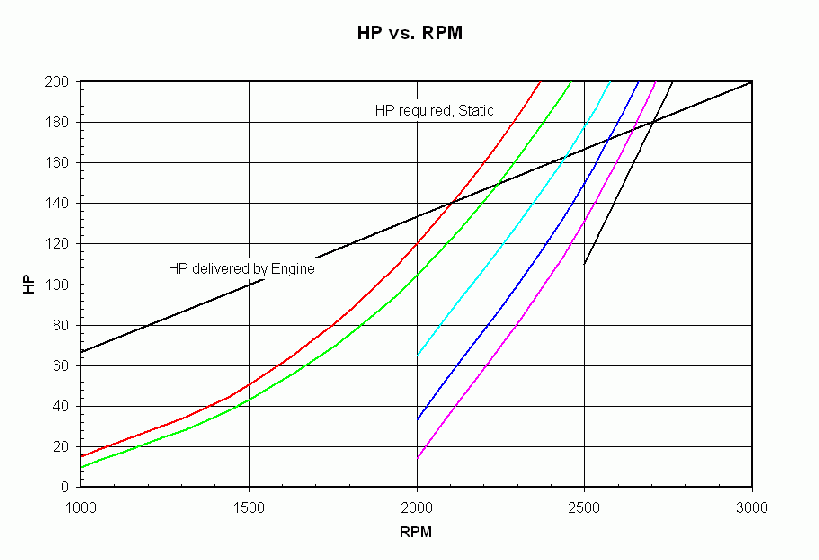
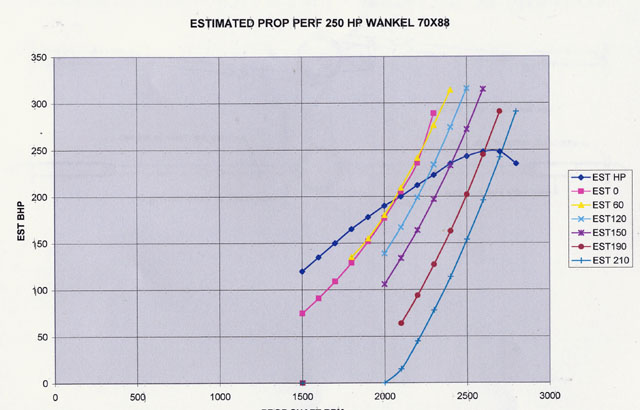
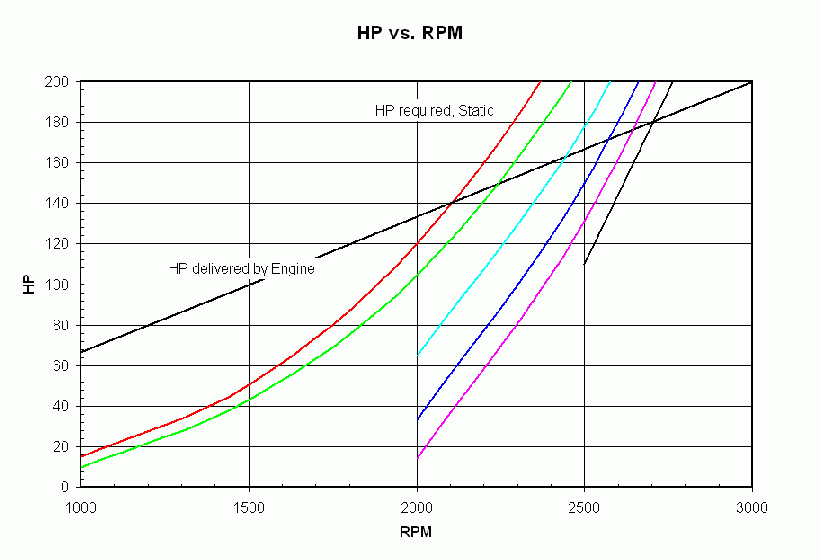
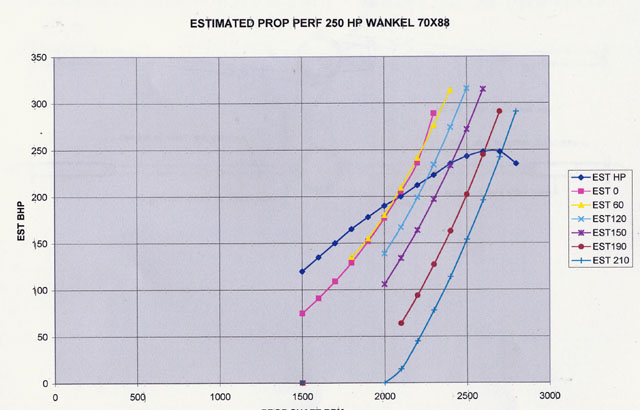
With a fixed pitch prop the prop load is about the square or cube
of RPM. I forget which.
So prop load off max HP is not much.
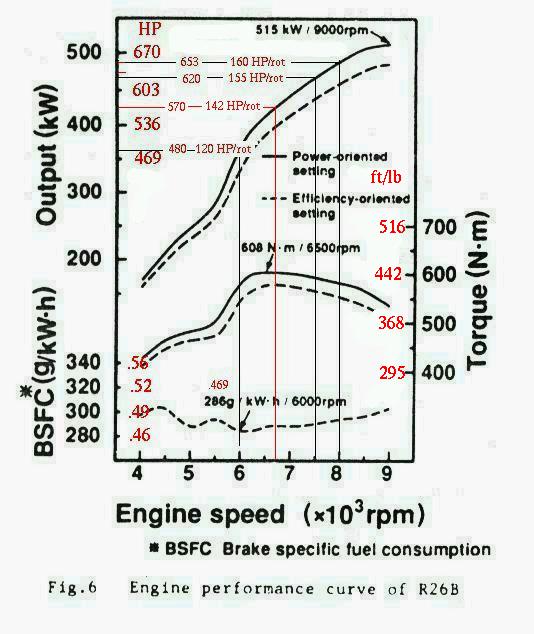
Here are some charts from Perry Mick and Vance.
Paul Lamar
The Rotary Engine NewsLetter. Powered by Linux.
ACRE NL web site.
http://www.rotaryeng.net
Copyright 1998-2006 All world wide rights reserved.