Sorry for these dumb questions but Id really like to get an order in
this week and could use some advice from all of you far more experienced
than me ;-) in these things.
Id like to purchase one of the Australian Renesis engines- I just do not
know which one to order, the 4 or 6 port. I am leaning more to the
4-port for the potential reasons of lower weight, simplicity, and it
already has the needed flywheel and balance weights for Tracy's 2.85
redrive. I dont really need the extra HP or extended rpm capability
that the 6 port offers (building a RV 9-A, designed for a Lyc O-320
@160HP)- are there any other differences between the two Mazda engines
other than the extra 2 ports? From my perspective, the extra ports add
a bit of (unneeded) power over 7000+ rpm but add extra weight and intake
manifold complexity, will add problems down the road if I decide to
p-port.
Also, it seems Mazda likes the new side port arrangement; they claim
better drivability, less cross contamination, larger port area, etc.
Given that the P port tests suggests more peak power across the board,
why their side port preference? Will it create problems if I eliminate
the OEM computer and all the related intake timing parts/valves and use
long runner tubes instead, assuming most of the action occurs between
4000-7000 rpms?
Mike Parker
-------------------------------------------
I don't know how many people have said that in the last 7 years
and then lived to regret it once they had their airplane flying :)
HP in an airplane is like money. You can never have too much
as long as it does not significantly increases the weight.
Once you change the six port flywheel to a auto tx flex plate there
is no difference in engine weight.
It is a safety thing. You can get in situations all the time
where you need more HP. Climbing over clouds in the flat lands
and climbing over mountains and clouds in the mountains are just
two examples. Taking off on a hot day at something other than
sea level is another. When you get two people and luggage in a
150 HP airplane you will wish you had more HP. A low HP airplane
limits your options.
Sure you get 150 HP at sea level and 67 degrees F but what about
5000 feet or 12,000 feet on a hot day. At 8000 feet you are
down to 120 HP.
You don't have to use the HP if you don't need it.
Drivabilty means nothing in an aircraft engine.
Mazda has a whole different set of requirements than we do. Torque
at less than 5000 RPM means nothing to us but it means everything
in a car engine. One misfire per minute at idle means a lot to
car emissions. It means nothing to us. Apples and Oranges.
Why are you putting a 2.85:1 gear box in there if you don't need
7000 RPM and HP?
Paul Lamar ...No rotor no motor.
*Why are you putting a 2.85:1 gear box in there if you don't need
7000 RPM and HP?
*Excellent question- I don't have an answer, other than I keep hearing
that the 2.85 ratio is the best (in the 13Bs).
My concern :-[ with excess HP has more to do with matching power output
to the aircraft design speed envelope than needing a few extra HP's for
emergency climb rates (the 9 series RVs have outstanding performance
with 160HP, an extra 40 HP is huge :-) ). The VNE is only 210 in the RV9
series, cruise around 180 mph. Assuming a prop length of around 73" and
an adjustable pitch midpoint of 70" (45-105") , the ideal airspeeds
suggests prop speeds of abt 2000-2500rpm for cruise and 3000 at top
speeds will be needed. Converting to engine rpm, the 2.17 ratio comes
out to around 4400 at cruise and 6500 at top speed; the 2.85 comes out
to 5700 cruise and 8000 top end. Im starting to see your point: the
4-port is better with the 2.17 and 6-port for the 2.85.
I have to wonder what the differences in fuel burn rates might be,
particularly at cruise, and whether the 4-port Renesis engine has the
required torque to spin the prop at these engine speeds. The 4-port
engine and the 2.17 redrive appears to be the best choice for the 9a if
I read you correctly???
Rotary Engine wrote:
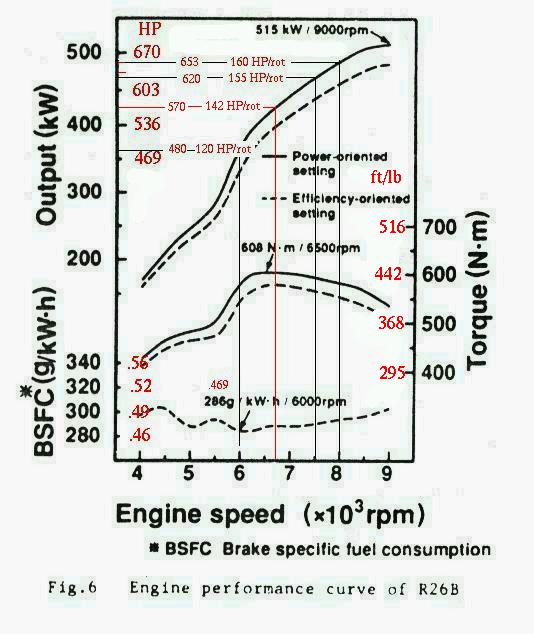
The easier it breathes the better the BSFC. Nobody but nobody
has gotten better than .47 BSFC which is what the Lemans P-port
engines get at 6000 RPM.
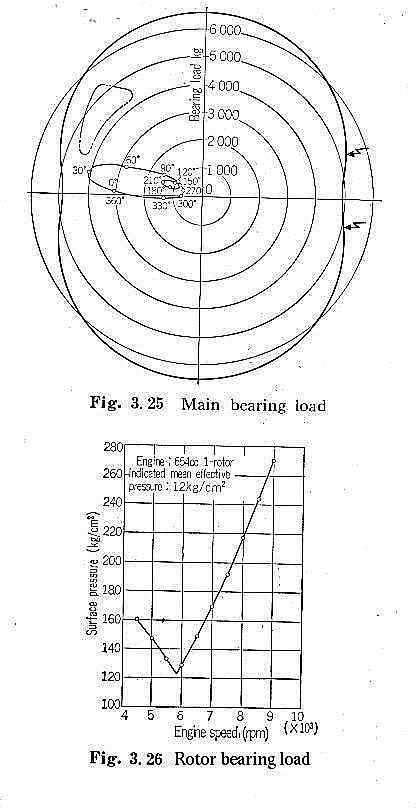
BTW 6000 RPM is the point where the loads on the rotor
bearings are at a minimum. Therefore it is the best cruise RPM.
It is were the combustion loads equal the rotor centrifugal load.
Paul Lamar ...No rotor no motor.
The Rotary Engine NewsLetter. Powered by Linux.
ACRE NL web site.
http://www.rotaryeng.net
Copyright 1998-2006 All world wide rights reserved.