> As the rotor weight goes down for a given displacement
> the minimum load point goes up in the RPM scale. Rotor
> weight limits the red line RPM of the engine so the
> red line also goes up.
> --
> Paul Lamar ...No rotor no motor.
SO! how does the higher compression affect all this?
George (down under)
Higher compression also moves the point up.
--
Paul Lamar ...No rotor no motor.
Paul,
Given the RX8 has a lighter rotor AND higher compression, what would your
guess be at the point where the compression equals centrifugal force - 6,500
rpm?
George (down under)
There is not a heck of a lot of difference either way.
The old rotors were 9.7 and only just a very few ounces heavier.
Therefore the number is slightly higher for the RX8 engine.
BTW the corresponding number for piston engines is about
3600 RPM. That is where the inertial forces are balanced by
the compression forces on average. Large displacement low RPM
aircraft engines are limited by the compressive forces in the
connecting rods. High RPM engines the tensile forces dominate the
connecting rod design. Rod failure results in windowing
the block :)
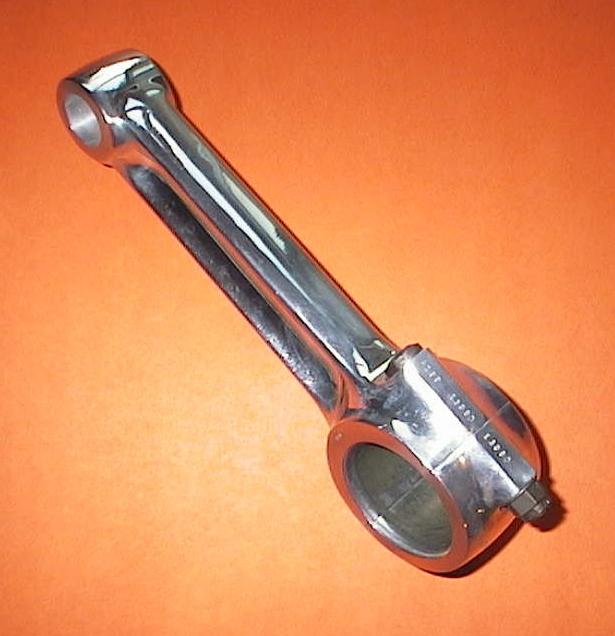
Another interesting point. Walter inline inverted
Czech aircraft engines use aluminum rods. Double AA fuel
dragsters also use aluminum rods because the combustion forces
outweigh the inertial forces. Even at high RPMs. Aluminum rods
have a better compressive strength to weight ratio than steel rods.
--
Paul Lamar ...No rotor no motor.
Paul,
I'm glad you mentioned the Walter engines, which are now going by the name
LOM.
I was lucky to have logged a couple of short hops in a Zlin aerobatic
two-seater with the inline LOM engine. This is a silky smooth engine that is
a real pleasure to fly. With its supercharger you can climb quickly and
maintain strong power as you go. The four-cylinder is rated at 170hp but
feels stronger than a 180hp Lyc at anything past 5000 feet.
The supercharger has a clutch that can be turned off, so you if you don't
need the extra power, just turn it off.
Another nice piece of engineering is the fuel injection which is
altitude-compensating and very resistant to vapor lock, even with auto fuel.
This engine is known for running nice and cool too, and maintaining steady
oil and cylinder head temps. A good feature for homebuilders is that the
baffling is an integral part of the engine, so the only thing that's
required is a cowl with the proper size opening.
A really nice piece of work all around. The Czech-made Zlin is a really nice
aerobatic trainer too.
Regards,
Gordon.
The main problem with inline engines is the rods are attempting
to shove the crank out the bottom, or top in this case, of the
block. In an horizontal opposed layout these forces cancel somewhat.
Consequently these engines are heavier than an opposed layout.
Paul Lamar
The Rotary Engine NewsLetter. Powered by Linux.
ACRE NL web site.
http://www.rotaryeng.net
Copyright 1998-2006 All world wide rights reserved.