Hi Paul,
Paul, why is no one mounting the alternator using
sprockets / gears and a chain alike the oil pump rather
than pullies and straps?
Also could an electrical water pump be used in place
of the regular mechanical pump?
Thanks a lot Paul,
JP
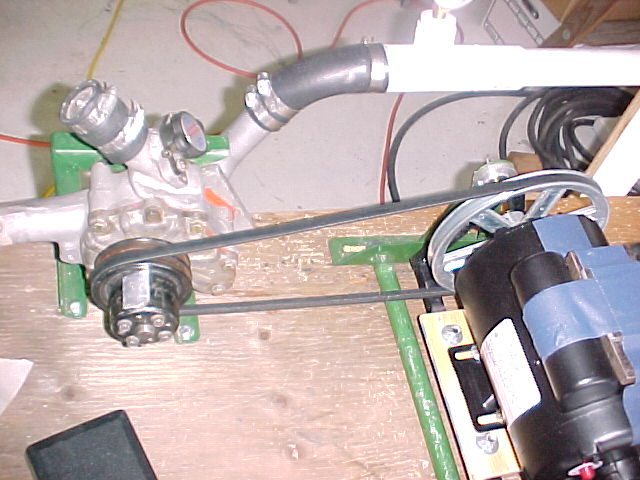
People don't think mounting the alternator with
chains and gears is worth the trouble. A v belt or v-ribbed belt
is reliable enough for aircraft use. The condition of the belt
becomes obvious with just a glance.
Your second question is very controversial due to the tremendous
money spent on advertising by electric water pump manufactures.
The reason electric water pumps are still around is due to the
low average duty cycle of the typical automotive engine.
Particularly drag racing engines. Some where
between 12% for a Corvette and 50% for an old Honda Civic. The car
manufactures, Mazda included, design the mechanical water pump
for worst case knowing as the RPM of the engine rises so too does
the engine HP and the amount of water flowing through the block.
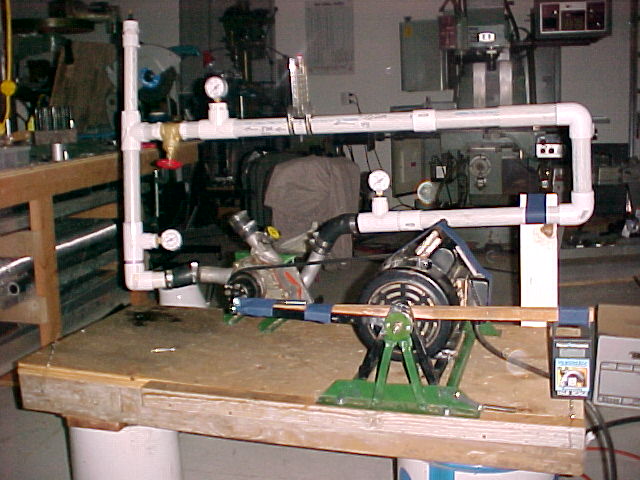
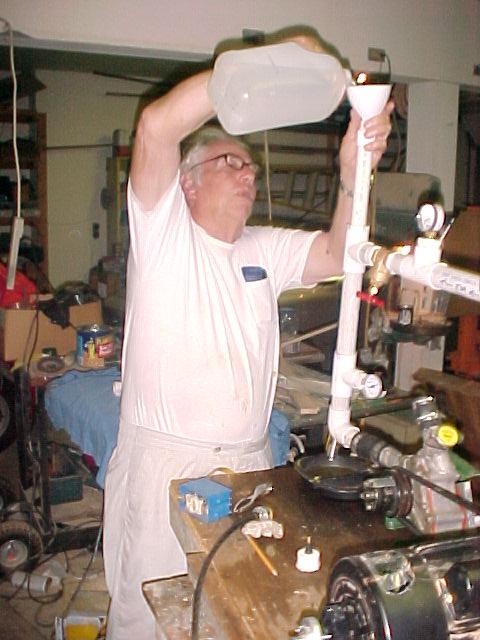
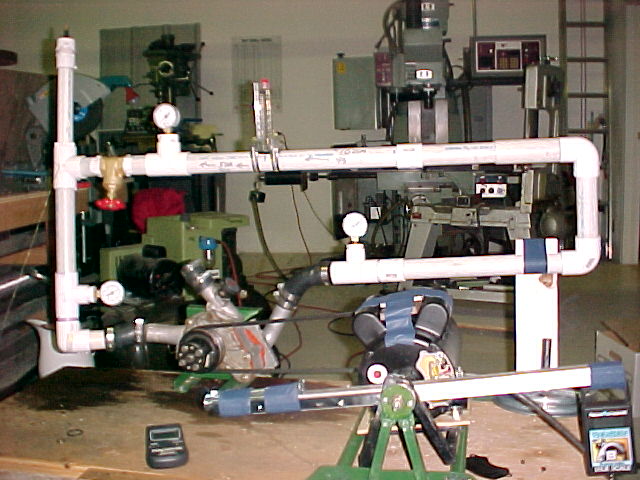
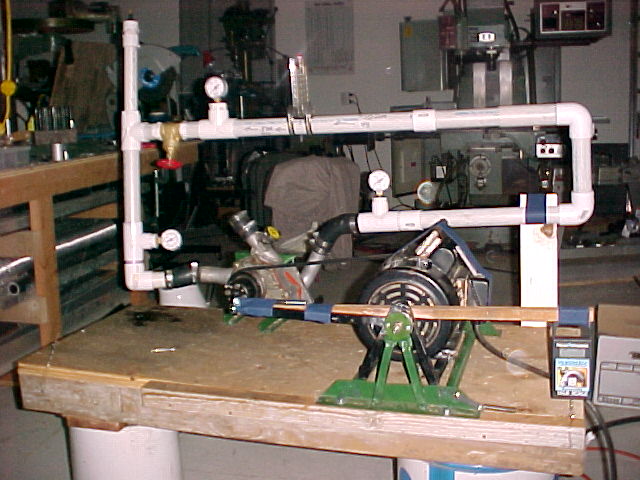
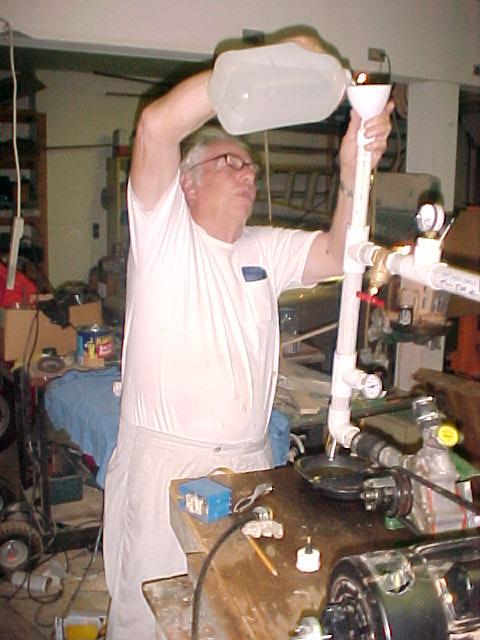
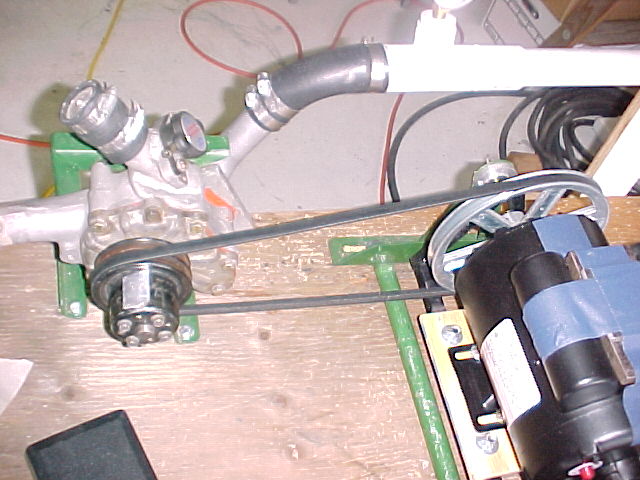
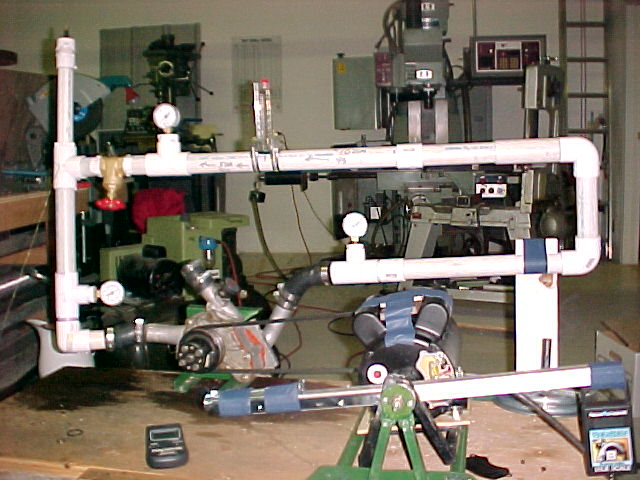
At high RPM, using Vance's water pump dyno, we have measured as much
as 3 or 4 HP required by the mechanical pump and water flow up
to 60 gallons per hour.
A 10 AMP electric water pump on the other hand can only pump enough
water to cool the engine at some low duty cycle say 15% on average
of max peak power.
There is no magic in water pumps. Impellers are impellers and scrolls
are scrolls. There has been no breakthroughs in designed for the last
100 years. Therefore it takes the same amount of HP to drive an
electric pump as it does a mechanically driven pump for a given
GPH and head pressure.
The car manufactures require 30 gallons an hour at high
engine power to force the water through the resistance of the block
and the radiator to insure adequate scrubbing action and heat transfer
from the metal to the coolant and vice verse when the hot coolant
gets to the radiator.
Electric water pump manufactures claim high GPH but they don't specify
the pressure. They also claim their pump draws only 10 amps or so.
Ten amps at 14 volts is 140 watts. Since there is 746 watts in
one HP they claim their pumps use only .18 HP. That is not going
to do the job. Particularly since electric motors are only about
85% efficient. That means the actual mechanical HP going into
the impeller is .15 HP.
There is no free lunch and there is no perpetual motion machines.
No way is a .15 HP electric water pump going to cool your rotary engine
while it is generating 75% to 85% max power or 150 to 200 HP
continuously. To think otherwise is to have ones head
firmly up an orifice where the sun does not shine:)
Also read
http://www.rotaryeng.net/how-to-cool12.html
--
Paul Lamar ...No rotor no motor.
The Rotary Engine NewsLetter. Powered by Linux.
ACRE NL web site.
http://www.rotaryeng.net
Copyright 1998-2006 All world wide rights reserved.