Your second question is very controversial due to the tremendous
money spent on advertising by electric water pump manufactures.
The reason electric water pumps are still around is due to the
low average duty cycle of the typical automotive engine.
Particularly drag racing engines. Some where
between 12% for a Corvette and 50% for an old Honda Civic. The car
manufactures, Mazda included, design the mechanical water pump
for worst case knowing as the RPM of the engine rises so too does
the engine HP and the amount of water flowing through the block.
At high RPM, using Vance's water pump dyno, we have measured as much
as 3 or 4 HP required by the mechanical pump and water flow up
to 60 gallons per hour.
A 10 AMP electric water pump on the other hand can only pump enough
water to cool the engine at some low duty cycle say 15% on average
of max peak power.
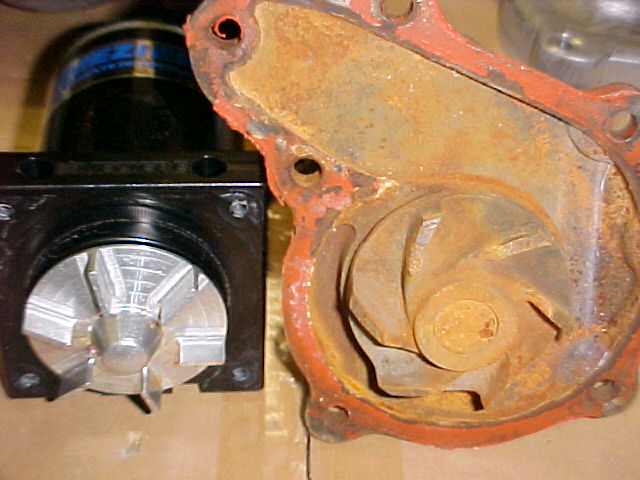
There is no magic in water pumps. Impellers are impellers and scrolls
are scrolls. There has been no breakthroughs in designed for the last
100 years. Therefore it takes the same amount of HP to drive an
electric pump as it does a mechanically driven pump for a given
GPH and head pressure.
The car manufactures require 30 gallons an hour at high
engine power to force the water through the resistance of the block
and the radiator to insure adequate scrubbing action and heat transfer
from the metal to the coolant and vice verse when the hot coolant
gets to the radiator.
Electric water pump manufactures claim high GPH but they don't specify
the pressure. They also claim their pump draws only 10 amps or so.
Ten amps at 14 volts is 140 watts. Since there is 746 watts in
one HP they claim their pumps use only .18 HP. That is not going
to do the job. Particularly since electric motors are only about
85% efficient. That means the actual mechanical HP going into
the impeller is .15 HP.
There is no free lunch and there is no perpetual motion machines.
No way is a .15 HP electric water pump going to cool your rotary engine
while it is generating 75% to 85% max power or 150 to 200 HP
continuously. To think otherwise is to have ones head
firmly up an orifice where the sun does not shine:)
Also read
http://www.rotaryeng.net/how-to-cool12.html
--
Paul Lamar ...No rotor no motor.
P,
I've been following the "electric" water pump vs. the "mechanical"
water pump issue for some time. Therefore, I know this is somewhat of a
hot topic, with supporters firmly entrenched in each camp.
There have been tests of the flow through a13B engine, from idle to
about 6000 rpm that seem to confirm that up to 60 gpm is flowing before
the pump cavitates. I also understand that a couple of builders have
actually installed electric water pumps and have flight-tested them at
some level of success. I believe there is still quite a big of
confusion out there.
In an effort to finally resolve this issue, Would it be
possible for someone to try an electric pump on an engine in a
dynamometer. Use the same size radiators as would be used in the
proposed aircraft. Change only the water pump. Bypass the mechanical
pump and rely solely on the electric; then, operate the engine up to
6-8,000 rpm and measure flows and temperatures. Could this not be
accomplished at a reasonable cost, as an additional task on an,
otherwise, normal test procedure...?
Jack Beale
I personable don't need to test them. I can do the math
and understand the physics. The laws of physics are not just
a good idea or opinion. They are the LAW!!!.
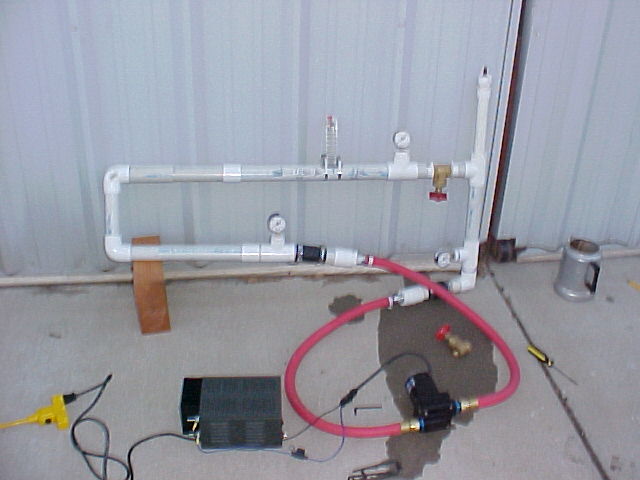
However I did test an EWP in our standard water pump test set
up. As I recall with any back pressure at all the flow meter
would not even register. In other words the ball would not
come off the stop. It was so bad it was ridiculous.
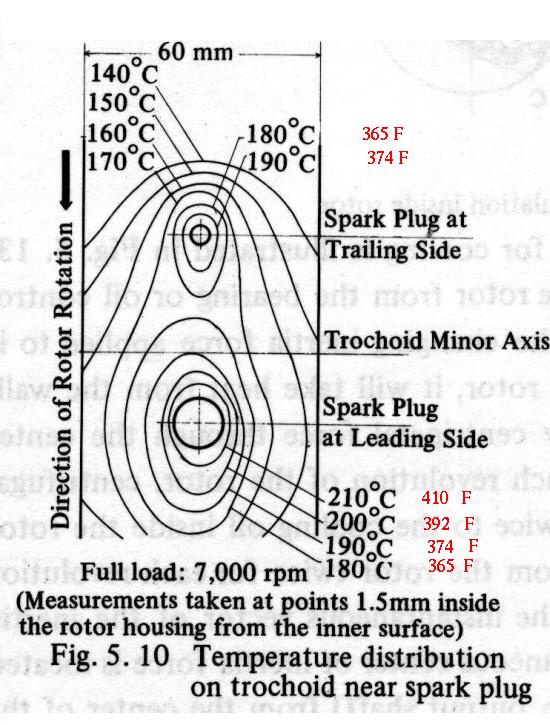
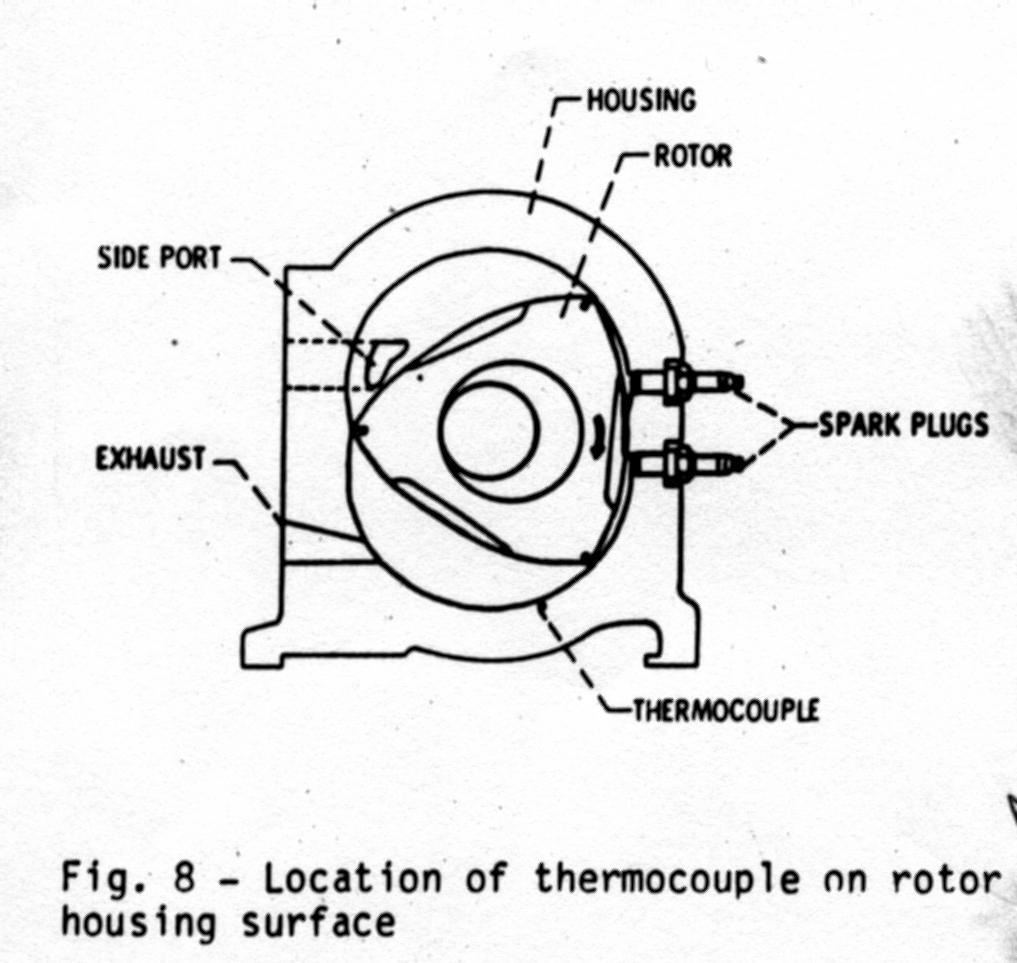
The water temp alone could be misleading. What you need are
cylinder head temperature gages. Just because the water temp
is reasonable does not mean the metal is cooled enough.
"The higher flow and pressure capability of the H.P.D. water pump
decreases hot spot gasification and creates a higher degree of
boundary layer scrubbing. This results in improving the heat
conductivity to the coolant."
Also the people running them are in cold northern climates. One person
using one flew through a hail storm as I recalled. For this
reason he does not appear to be the sharpest tack in the box :)
Other than that he seemed to be a real sweet guy :)
One needs to test them in Arizona or So Cal in the summer time.
One degree F ambient is one percent gain or loss in cooling.
When I see a guy fly in from the southern part of the US
using an electric water pump to OSH in the summer time I will
conclude that Newton and Mazda did/do not know what they were/are
doing :)
Paul Lamar ...No rotor no motor.
The Rotary Engine NewsLetter. Powered by Linux.
ACRE NL web site.
http://www.rotaryeng.net
Copyright 1998-2006 All world wide rights reserved.