> > Paul I think these fit on the Racing beat manifold. I just e-mailed them to find out what the bolt pattern is, It specifically states that it is a weber replacement for the rotary. they can also make
> > them with two injectors per throttle body. THAT'S GREAT!!!!
> >
> > http://cgi.ebay.com/ws/eBayISAPI.dll?ViewItem&ih=013&item=230019159281&rd=1&sspagename=STRK%3AMEWA%3AIT&rd=1
> >
> > Tony
> >
> > Place this at the top of the long pipes near the plenum cum scoop
> > Otherwise the built in butterflies will disturb the organ pipe
> > tunning effect. You really need four injectors for safety
> > and staging with Tracy's system.
> >
> > Paul Lamar
>
> >
> > Paul I think these fit on the Racing beat manifold. I just e-mailed
> them to find out what the bolt pattern is, It specifically states
> that it is a weber replacement for the rotary. they can also make
> > them with two injectors per throttle body. THAT'S GREAT!!!!
> >
> > http://cgi.ebay.com/ws/eBayISAPI.dll?ViewItem&ih=013&item=230019159281&rd=1&sspagename=STRK%3AMEWA%3AIT&rd=1
> >
> > Tony
>
>
> It does have four injectors. You just can't see them in that
> view but on the ebay listing you can clearly see the other two.
> Tony
>
> Looks good and will work fine. Is it 48 mm or 51 mm ? Big bucks
> however without the injectors and base extensions. $250 is more
> like it. It will also be slightly less power than with one large
> 3 inch butterfly. You will still need to build base extensions for
> it. What sort of machine tools do you have access to? Got any stock
> Mazda throttle bodies lying around?
> --
> Paul Lamar ...No rotor no motor.
Paul it looks like these are 50mm. I have a really nice lathe I
also have a clausing milling machine. I have access to a cnc
waterjet and cnc Tree mill so whatever you can come up with I
can make it. I do have my stock throttle body I saved it for
some reason, this must be why.
Tony.
With all those tools why are you not building a p-port? :)
The easy thing to do is take the long shaft out of the stock
Mazda tb and use it to make a 4 inch round or square plenum cum
throttle body cum air scoop as in this 3D. One part does three
jobs. The slot in the shaft is long enough for a 4 inch square
or round butterfly.
I still need those dimensions on the RB 6 port manifold in relation
to the cowling. If you don't have a cowl yet use a wood furring
strips to mock it up or simulate it.
Is your engine in the airplane yet?
Do you have a gear box?
If not place the engine temporarily
and simulate the gear box with a 12 inch diameter plywood
disk. Then use the wood furring strips to simulate the cowl
and give me those dimensions. We might be able to fit
some 90 degree 2 inch diameter tubing with a 3 inch center line
radius to the RB 6 port manifold and get it under the cowl.
The ebay throttle body would then work mounted horizontally
or you could build one.
Paul
I thought that making a P-Port would've been a pain in the arse it
was real easy to bolt up the RB manifold. Plus my housings are brand
new I didn't want to screw them up by trying to cut a whole in the
side. At the time when we where all talking about P-porting there
was still a lot of huplaa about the idling issue so at the time when
I bought my housings I just went with turbo housings and never gave
it another thought I'm still on the fence about it but as I can tell
not a lot of p-ports flying yet, mostly manifolds so far, I think!
I could be very wrong but that is my perception believe me I'm all
for more horses with the same amount of weight I'm just afraid that
it won't see a timely TBO at such monster amount of HP.
To answer your other question NO I don't have a gear box as of yet.
No the engine is not in the airplane. What I'm trying to do is get
the preliminaries out of the way, like twin injector throttle bodies.
What I'm working on now is getting the retracts finished and getting
my air scoop completed, which in turn will allow me to complete my
firewall, then I can mount my engine. Probably looking at about
5 months worth of work given my work schedule. Thanks for the
renderings again. I have a great steerable nose gear for my Long
Ez I'm just getting back from the water jet cutter. I'll send some
pics it's gonna be awesome.
Tony
-----------------------------------------------------
Tony, why don't you buy a junk rotor housing from Mazdatrix for
$30 and cut a hole in it to get some experience. Buy two. Do one
and see what happens. Then do another till you get confidence
in doing the procedure. I'll give you the step by step the
way I did it.
We had three P-port engines at OSH in 2005. At least two are
flying on a regular basis that I know about. One crashed for
a non rotary related electrical reason. Everett Hatch and Allan
Tolle were flying P-ports ten years ago.
It will be a long time before anybody proves or disproves P-ports
have a shorter, the same or a longer life than side ports.
Nobody has worn out a rotary engine in aircraft service yet
and it has been at least 30 years when rotaries were first
used in aircraft. What probably happens is they outlast
the pilots.
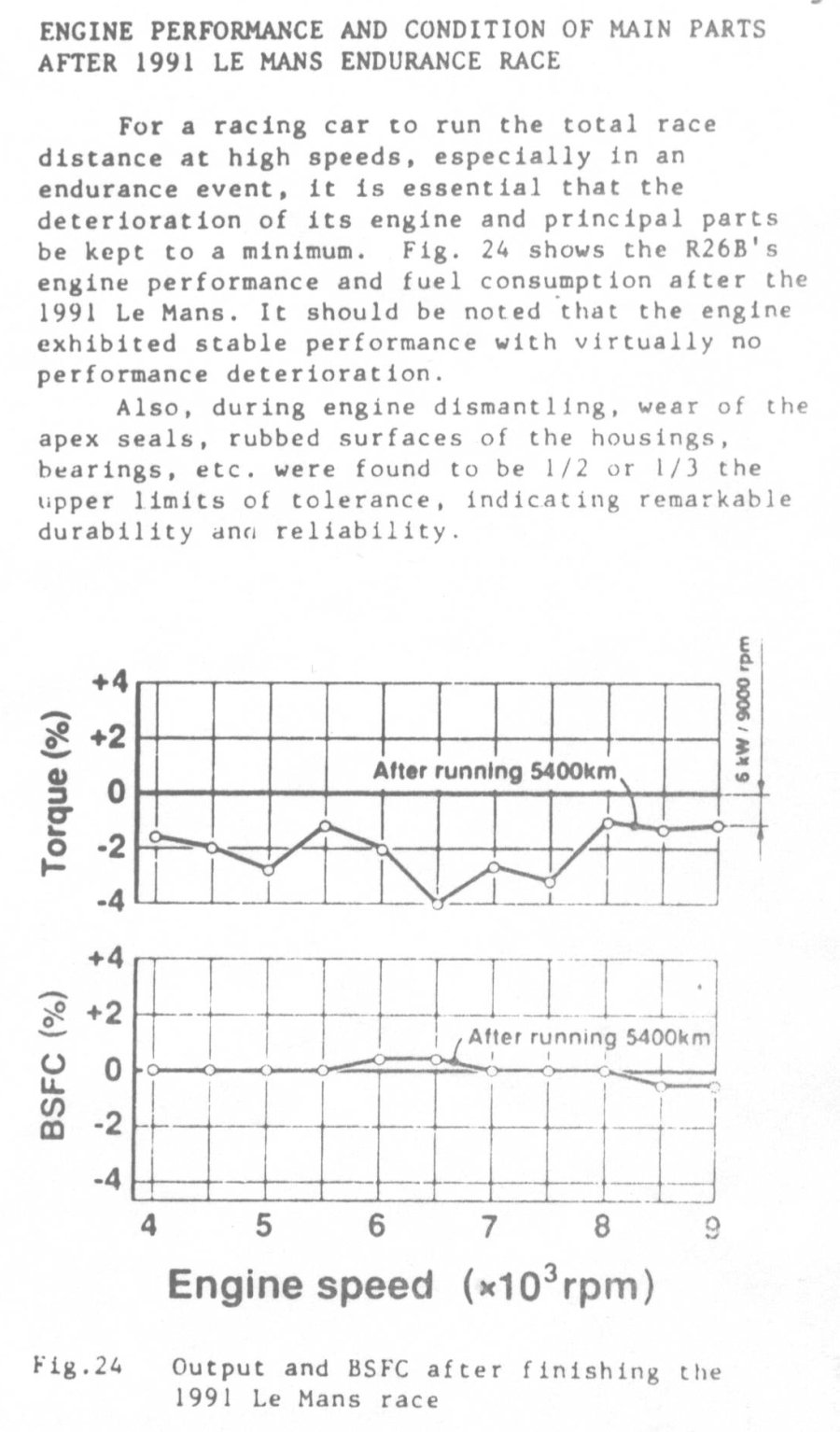
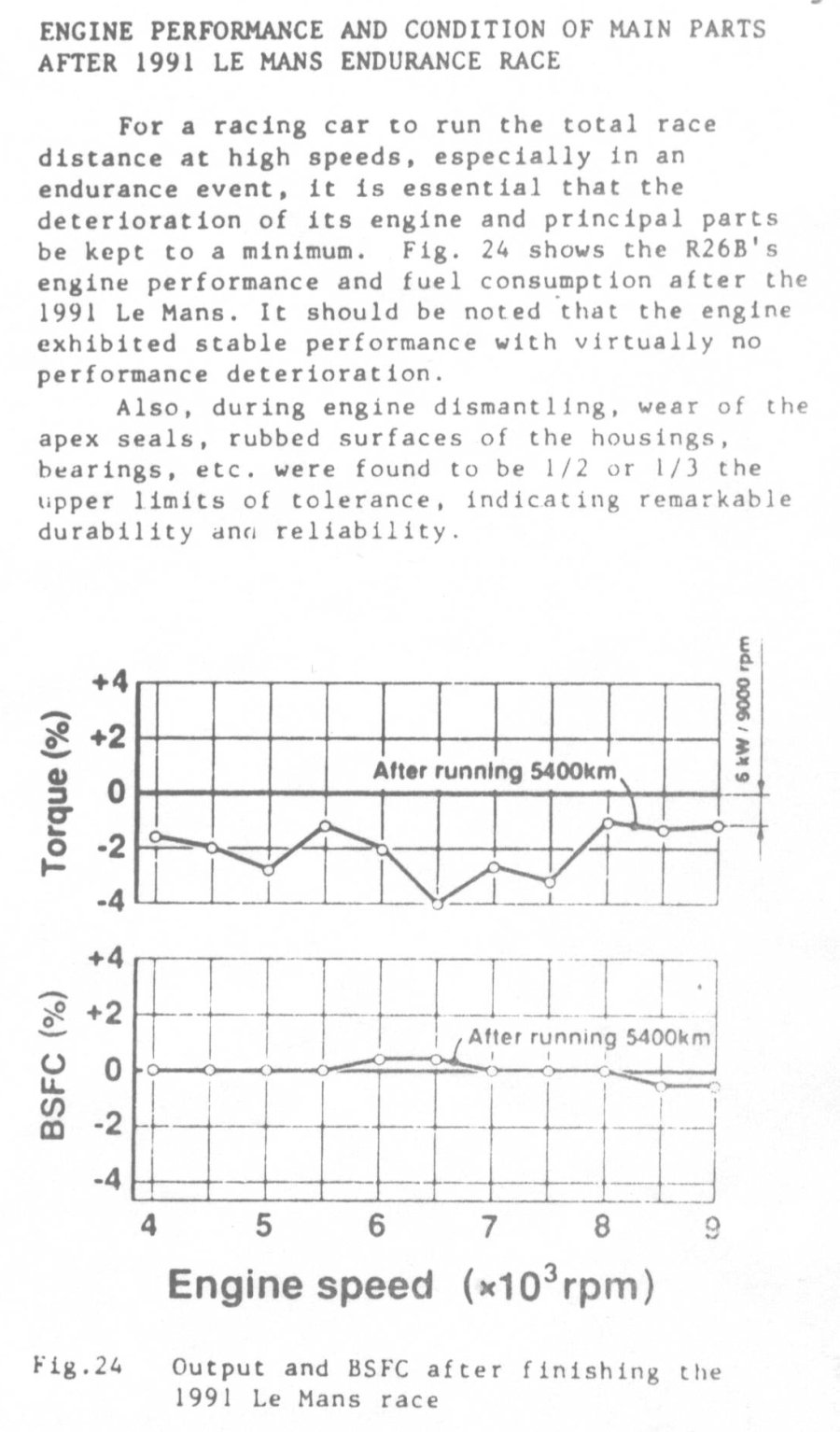
The Mazda Lemans winner four rotor P-port engine was disassembled
after the race and the wear measured. The wear was 1/2 to 1/3
of the upper limits of tolerance. Piston engines are usually junk
after the Lemans race if they even complete the 24 hours. Piston engines
are usually in dire need of overhaul after all endurances
races. Star Mazda ran 2nd gen stock rotary engines for ten races a
year for several years without touching them. These race engines are
run at wide open throttle most of the time except for long corners
and braking. Mazda rotaries dominated endurance racing in the U.S.
during the 1980's until the rules were changed handicapping rotaries.
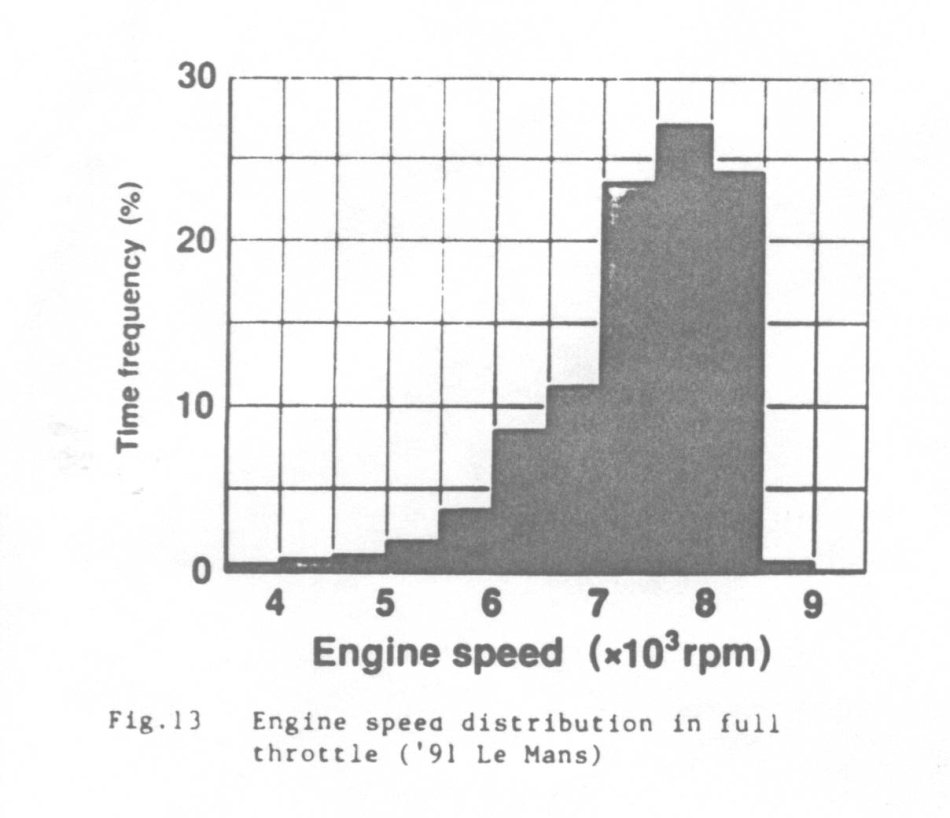
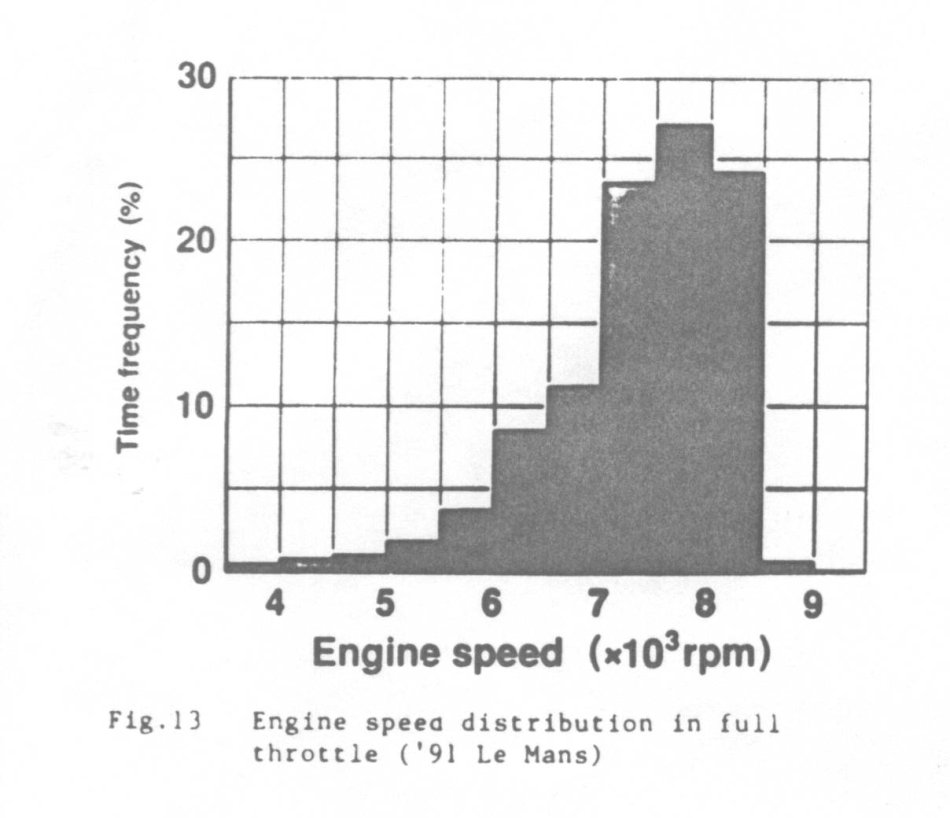
The Lemans engine spent the majority of its time during the
24 hour race at 7000 to 8500 RPM full throttle. You are going to take off
and climb out for less than five minutes at 7500 RPM full throttle
and back off on the RPM to around 6000 and drastically reduce power
for cruise. Five minutes at 1000 feet per minute is 5000 feet where
you are not going to get full power anyway.
You will probably see about 50 hours a year which is average
for most private pilots. That is one hour every week, week in week
out. Ten years would be 500 hours. Worst case even if you needed
to lap the end housings and put new seals and rotor housings in
it after 500 hours that is still way cheaper than an aircraft engine.
Paul Lamar
The Rotary Engine NewsLetter. Powered by Linux.
ACRE NL web site.
http://www.rotaryeng.net
Copyright 1998-2006 All world wide rights reserved.