> > I'm pursuing it - I finished boring rotor housings last weekend.
> Hopefully
> > I'll have tubes in and the slide throttle done by next week. If that
all
> > goes well and the housings still look good - I'll order a complete
> rebuild
> > kit and put it all together the week after that.
> >
> > Since the 13B in my airplane is waiting for a re-built exhaust system
to
> > replace the one that cracked off - I've got time on my hands and
figured
> I
> > go ahead and take a shot a rebuilding this second 13B into a P-Port.
> >
> > Thanx,
> > Joe Hull
> > Cozy Mk-IV N31CZ (65 hrs - Rotary 13B NA)
> > Redmond (Seattle), Washington
> >
> >
> > Congratulations Joe. Since you are already flying and all
> > you need do is swap out the engine, I think you will be
> > the first true homebuilder to fly a p-port of your own build
> > since Everett Hatch. There are going to be a lot of
> > envious RV'ers your neck of the woods as you flash past
> > them in the sky.
> >
> > It was easy wasn't it? Hey, got any pictures of the boring
> > process? Here are a few picturs of Joes airplane for the
> > new guys.
> >
> > Where did the exhaust crack Joe?
> >
> > Paul Lamar ...No rotor no motor.
>
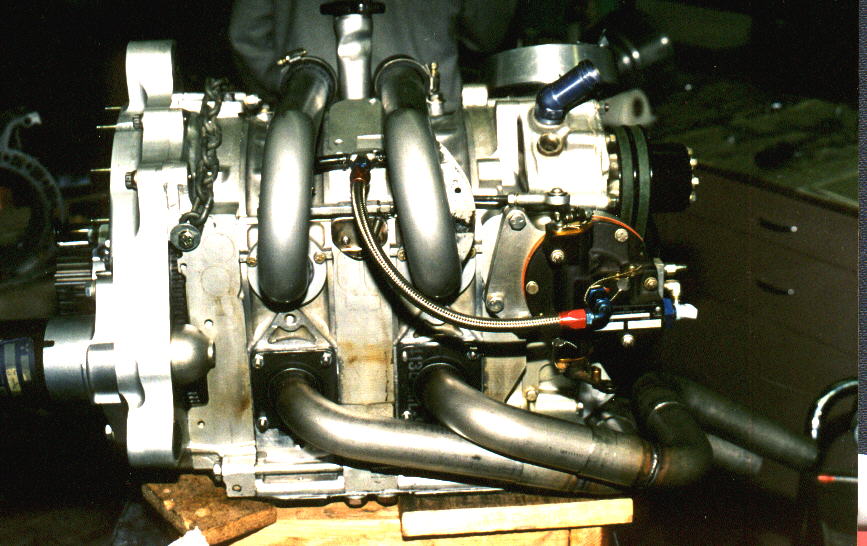
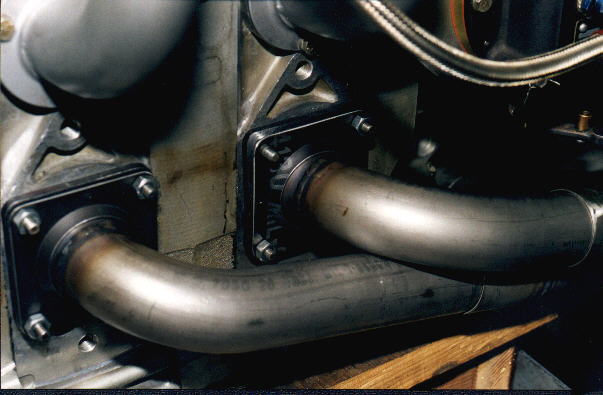
> Pictures - Nope! I was going to take pics but forgot the camera. My
> friend
> has a huge Cleveland milling machine in his shop and tons of different
> cutters. So I started off with a 1/2" face cutter to flatten the area -
> i.e.
> the knob where the manifold stud sticks out. Then I bored progressively
> larger holes with three drills and then used what-cha-ma-call-its (big
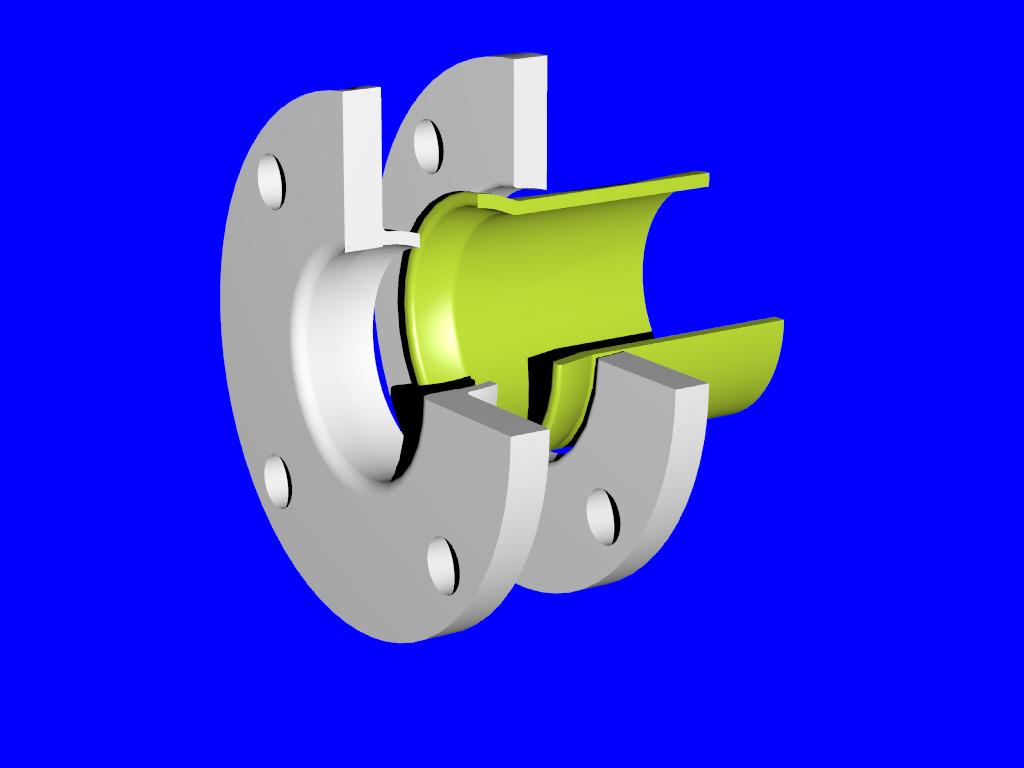
> cutters with blades on the face and the sides) to cut 3 stepped holes 2
> 1/8,
> 2 3/16, and 2 7/32. I wanted a notch in the inner face and another in
the
> outer face to seat the tubes and provide another barrier to water leaks
-
> the 2 1/8 hole goes all the way through. The tube I'm using is 2" OD x
> 1/4"
> wall.
>
> Next I'll turn the tube to match the steps and also a little lip on the
> outside edge to help capture the rubber tube that will join the manifold
> to
> the P-Ports.
>
> Exhaust - I was on my way to OSH and about an hour east of Cheyenne,
> Wyoming, over Nebraska when I felt a slight change in the vibration of
the
> airplane. All the temps, pressures and RPM were fine - just a slight
> change
> in the vibration. So I figured I better get on the ground and see what
was
> up. I landed at a little ranching town (population 267) with a 4000ft
> runway
> (since I need lots of runway to land) and after landing and running up
the
> engine - the engine quit DEAD. The paint on the cowling started to
bubble
> and burn - not good. I pulled the cowling and found that the big tube
of
> the tangential muffler had broken off both of the 2" runners that come
off
> the exhaust flange. The hot exhaust had melted the wires together to
the
> injectors and other wires in that area - that's why the engine quit.
>
> Fortunately this little town had a great welder - and even on Sunday
> afternoon he welded it back together. I pealed the injector and other
> wires
> apart and wrapped them all up in electrical tape and silicone rubber
tape
> and took off for home the next morning.
>
> I'm abandoning the tangential muffler and inconel - too prone to cracks
> (this is my second) and am going with .049" 321 stainless tubes. The
noise
> will be higher but so will HP (I'll also have way less back pressure) -
> and
> hopefully more reliability too!
>
> Joe Hull
> Cozy Mk-IV N31CZ (65 hrs - Rotary 13B NA)
> Redmond (Seattle), Washington
>
> Thanks for the report Joe.
> That is interesting. Who welded up the failed rig?
> This is the second pusher rotary engine muffler failure
> we have heard of. Many people make the mistake of welding
> the tubes to the exhaust flange on the outside of the flange rather
> than the inside of the flange. There is vibration causing
> fatigue due to the mass of the large muffler cantilevered off
> the tubes. The weight of the muffler can must be supported by a strap
> to the engine and not just by the tubes.
>
> This was discussed on Mark Wrathal's best practices web site which
> is linked to the ACRE NL site. Everybody building an airplane please
> read this site. http://www.wankel.org/
>
> Also check out http://www.rotaryeng.net/interesting.html
>
> Too bad I did not know about it sooner Joe. Sorry.
>
> Paul Lamar ...No rotor no motor.
>
>> Who welded up the failed rig?<<
A guy here in Seattle who is a master welder - it was an excellent job.
The
welds themselves didn't fail. It was the inconel on the 6" tube all around
the area where the 2" tubes connected. There were spider cracks emanating
from where the inconel cracked next to the welds.
If inconel is used it MUST be supported and made rigid so there is
absolutely no unsupported flex. It does not handle flexing at all without
cracking and breaking. The flexing can even be small amounts from the
exhaust pulses themselves - not just overall engine vibration.
I wish I'd had the presence of mind to take a picture of the cracked
exhaust
before I was welded - I guess I was pre-occupied with trying to figure out
what to do since I was in the middle of nowhere. But, attached is a
picture
after it had been welded but before I buttoned things up. Note the melted
bottom of the throttle position sensor - that's what all the wires looked
like too! I had an aluminum heat shield - primarily for keeping any
dripping fuel away from the exhaust. Next time it's going to be
stainless!!
(you can see holes blown through the heat shield on the right)
Joe Hull
Cozy Mk-IV N31CZ (65 hrs - Rotary 13B NA)
Redmond (Seattle), Washington
That is interesting. What was the wall on the Inconel.
Dave Atkins has been flying an .035" Inconel muffler like that
for years. First picture was taken 7 years ago. As far as
I know he is still flying it.
Perhaps the guy that tig welded it used the wrong
rod or something like that. I am no welder but there is something
about migration as I recall.
I see your exhaust flanges to pipe joints are welded incorrectly.
I am surprised those did not fail before the pipe to can joint.
We talked about making the can in two pieces with a slip joint.
There is a temp. diff. between engine and can.
--
Paul Lamar ...No rotor no motor.
Atkins Muffler<<<
Yep, that's who's design I copied - I even bought my 6" inconel tube from
him because he had some left over from his muffler. The welder used the
inconel welding rod that I bought. So I know it was the right stuff.
The exhaust flange joint is welded both on the outside joint and on the
inside joint. There is no possibility of weld failure there - the pipe
itself would have to tear/crack.
Like I said - Inconel doesn't live long when there is flexing. So, maybe
Atkins has his muffler supported and mine wasn't - although I've seen his a
few times and didn't note any supports close to the can. It does look like
he has a tab for support down the line a ways - that may damp out enough
vibration to keep the flexing under control. For sure something was
different!
Joe Hull
Cozy Mk-IV N31CZ (65 hrs - Rotary 13B NA)
Redmond (Seattle), Washington
-----------------------------------------------------
The exhaust always breaks just next to the weld for some strange
reason so the flange actually supports the tube.
Here is some more info from Marks Wrathal site on welding
tube to exhaust flanges. Many many racers do it all the time.
http://www.wankel.org/
" Weld only the engine side of the flanges. Four spot wells on the
header side seems to be the way to go. Belt sand the flange faces
then lap them on a piece of glass and a piece of oiled wet or
dry paper."
"Archie backed up this crucial point as follows:"
"In hard core racing, the same problems (as occured on N214KW)
arose a number of years ago, mostly in funny cars, but dragsters
also. The common denominator, other than various grades of stainless,
was outside welds. Now you may see some tack welds on the outside,
but the actual welding is done on the backside.(inside) Also in
current use is a tube within a tube. I noticed the weld bead was
quite wide, increasing the hazard, and may have contributed to the
failure."
Archie builds 7000 HP AA drag engines for a living and has several
forums at OSH.
This last trick is expensive but Everett Hatch came up with the
idea. A ball flex joint is used right next to the block.
Paul Lamar ...No rotor no motor.
The Rotary Engine NewsLetter. Powered by Linux.
ACRE NL web site.
http://www.rotaryeng.net
Copyright 1998-2006 All world wide rights reserved.