Paul,
Do you have a rough idea how deep these grooves are? Although the
picture
shows a water passage on the upper right without grooves can I
assume that
this picture was taken before they were ground out?
This information came at a great time. I'll pick up several some
junk
housing today to play with.
DougFir
My guess they are around 1/8 inch.
--
Paul Lamar ...No rotor no motor.
Paul,
How would you grind those grooves? By hand with a rotary tool?
I guess the idea is increased surface area exposed to coolant --
like fins
on air cooled engine?
Regards,
Gordon.
It has been done by hand in the past but it could be done
on an NC mill. Perhaps with a custom cutting tool.
Mazda them self selves machined away a ridge for the 280 HP
turbo charged 3rd gen RX7 rotor housings.
The big question in my mind is how does that change the distorted
shape of the housing as it warms up. The apex seal already has a
slight
crown to conform to the distorted rotor housing wear surface.
Paul Lamar ...No rotor no motor.
Paul,
Thanks. I would think the ribs would increase the young modulus
number and
make the housing stiffer. Same reason an H beam is stiffer than a
flat bar.
My mechanic friend gave me two housings to play with that he said
are still
usable. He also mentioned that if the p-port wasn't done correctly
the Hp.
could go down, referring to too much overlap and improperly radius
ed edges.
That jives with what Paul Yaw said about radiusing the inner edges
properly
and flow bench testing to confirm it.
He mentioned that Mazda racing engines quite often had "D" shape
ports with
the flat part facing downwards and that is what he had done on his
race
engine. This is news to me. He also said most road racers in
Japan put in
the third plug.
I am beginning to suspect that the data I received from Mazda
engineers
was for the earlier Lemans engine so I checked Craig's website on the
rotary.
http://cp_www.tripod.com/rotary/pg03.htm
Well it turns out my power curve research sheet which is dated
Feb. 22 1989
is for the 13J-MM engine.
"...The 13J-MM 630bhp@9000rpm Peripheral port intake with variable
length
intake trumpets (2 steps only), EFI, 2 plugs/rotor. The 13J-MM has
ceramic
apex seals and the side housings were hot sprayed with a ceramic
surface for
wear&friction resistance. Used in the 1989 LeMans 767B racer."
This was the engine before the R26B winner as the intakes curve
slightly
back toward the top of the engine. Mazda notes show a sketch with the
opening in the housing at 51 mm in dia and total port area is 200
cm2 which
works out to around 51mm dia. Hmmmmmm. IO is stated as 100 degrees
and IC
at 75.
I measured the distance across the outside radius of the exhaust
port and it
was 51mm. But to allow for at least 1.5 mm of a radius on each
side of the
intake port then the ID would be closer to 48 which is what you
suggested I
believe. 48mm equals 1.89 inches.
If the Lemans port was indeed round and not slightly flat on bottom
then
Paul's counter sink method would be the superior way to do it.
Side sketches you have provided and I have received show a tapered
inlet.
Has anyone actually seen the Lemans P port shape as it looks like
from the
inside of the housing to confirm it is completely round?
DougFir
"Thanks. I would think the ribs would increase the young modulus
number and
make the housing stiffer. Same reason an H beam is stiffer than a
flat bar."
A bar is stiffer than an I beam of the same height.
Width being the same. The housing is less stiff with the slots
cut into it.
These illustration are from an SAE paper published after
Mazda won Lemans. It is what I copied the P-port from.
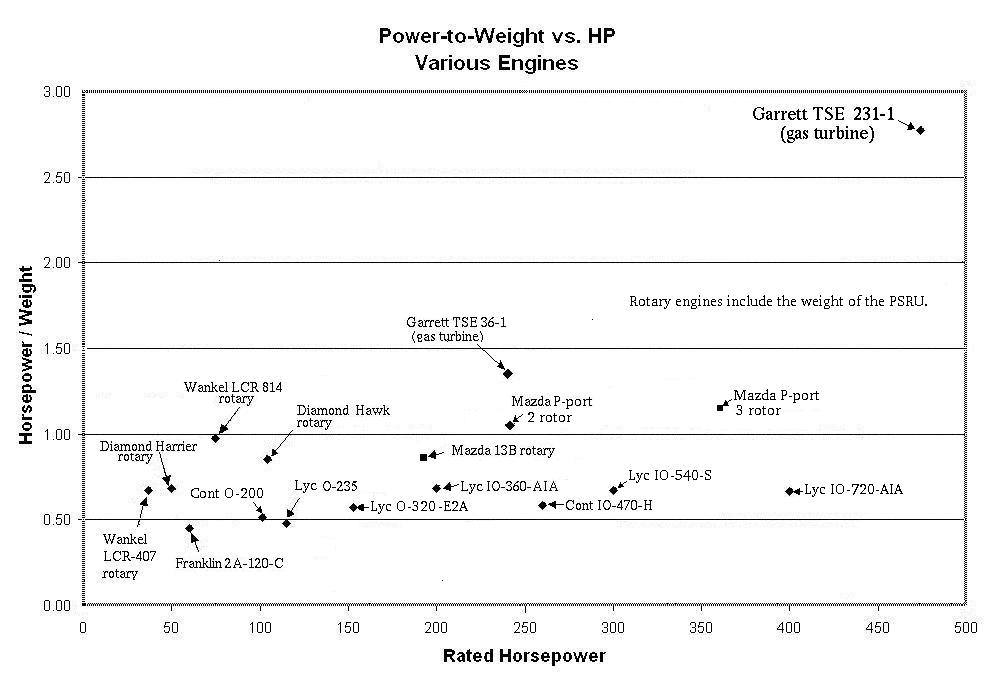
We dyno ed the engine at 240 HP at 6500 RPM. This HP number
correlated very well with what the SAE paper said it would generate.
I have no reason to believe the authors of the paper lied.
Afterall somebody some where in the world might duplicate
the engine and test it. If it did not do what Mazda said it
would do it would create bad publicity for Mazda akin to
Cold Fusion.
If you deviate from these dimensions you are in left field.
Paul Yaw is always selling his flow bench services using the
FUD sales technique developed by IBM. Fear Uncertainty and Doubt.
The road racers are always looking for the last 1% and they
are running the p-port engines at 11,000 RPM.
It is BS if the exit radius is .065" or .125" :) It does make a
5% difference if the inlet to the pipe is not radius ed.
I know about the D shape but I deemed it not worth the trouble.
We proved that when we dynoed the engine. Also an apex seal has
an easier time of it passing over a pure oval.
Don't worry Doug just do something.
BTW find a dyno over there to make yourself feel better.
Paul Lamar ...No rotor no motor.
Regarding the shape of the port at the inner surface of the housing.
If the port is drilled straight (parallel to the horizontal center
line) the port will be oval. At 1.8750 dia. it is much narrower than
the exhaust port and should not cause any problem with the seals. If
the port is drilled perpendicular to the housing than it should be
circular I would think. How would one create the "D" shape. Die
Grinder? Sounds scary to me. One slip and the housing is junk. Or
the insert could be made thick enough that the port shape could be
ground in it before it is installed in the housing. Jerry
All true Jerry. I am happy with 240 HP. That is far more
HP than any piston aircraft engine anywhere near its weight.
--
Paul Lamar ...No rotor no motor.
The Rotary Engine NewsLetter. Powered by Linux.
ACRE NL web site.
http://www.rotaryeng.net
Copyright 1998-2006 All world wide rights reserved.