Perry Mick has a turbo engine on a test stand and
he would like to test the LAEV prop. Here are some pictures.
This was a joint design and build effort of the ACRE.
Butch machined the mechanisim and Perry built the blades.
It is a cockpit adjustable pitch prop.
Yes, the engine on my test stand is 1988 turbo. Probably only
around 200HP, not 250. The prop blades were built for tractor
reverse rotation.
I'd like to test the prop and blades as is, then
perhaps build a new set of blades that I can run on
my plane, which would still be 2.17 ratio reverse rotation,
but pusher instead of tractor.
Paul Lamar ...No rotor no motor.
The prop looks good.
Pardon my ignorance, which I am trying to fix, but what is LAEV
and ACRE?
Doc
I am not sure what LAEV means. Somebody made it up
a long time ago.
ACRE is the Air Craft Rotary Engine.
--
Paul Lamar ...No rotor no motor.
Paul,
Butch suggested it was Lamar Aircraft Electric Variable ( Prop)- from
memory. Although the concept needs proof, it's quite obvious that it's a
strong economical unit.
For those that don't know Butch he's an Aviation Engineer still working for
the US Government, no matter how hard I try to get him to give it up and
concentrate on the Rotary program. I think he likes the challenges!
Either that or he's a masochist, either way when your on the top of the pile
it hard to give it up - I guess!
George (down under)
--------------------------------------------------------
It all started way back around late 1998, 1999 or 2000. I am not
sure as I am going on some of my old part dwg dates. I would have
to go back to the old CDs with all the old emails to be sure.
Some of the part dates are later as a computer crash or two
happened with copies of the dwg's re-installed which changes
the file dates.
Most constant speed props at the time and still do today use
a forged two piece aluminum hub with separate two piece steel ball
bearing races. This is done to capture the blades. Blades need ball
bearings or you would never be able to change the pitch due
to the tremendous centrifugal forces.
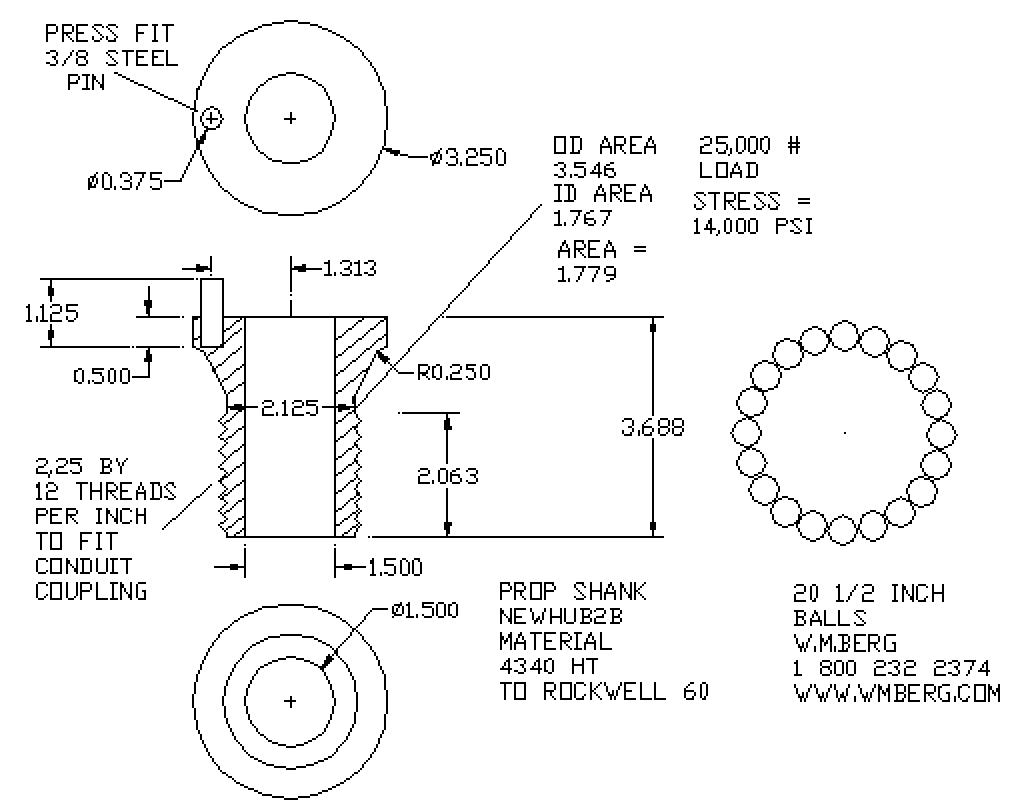
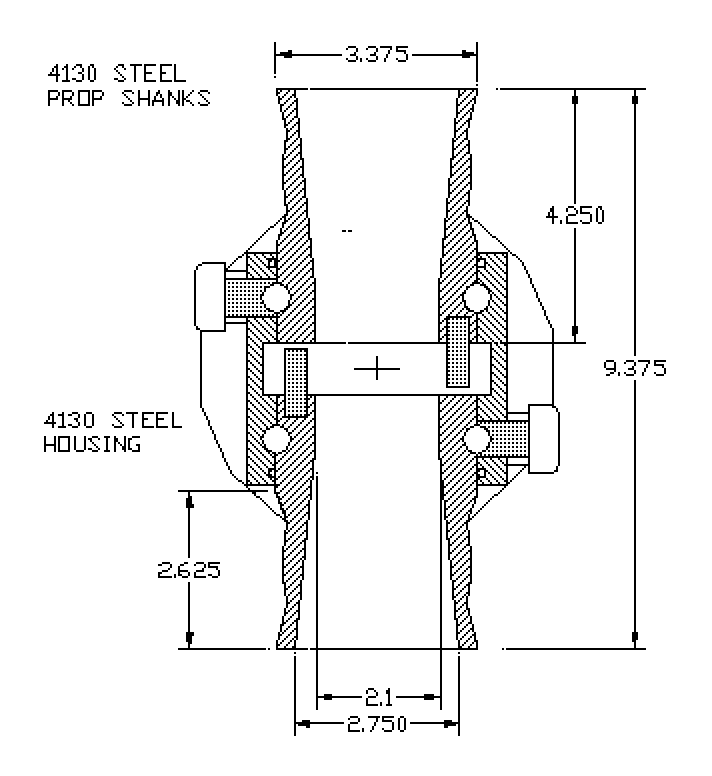
The idea (mine I think but I am not sure) was to use a one piece
steel hub with internal grooves in it to feed in the ball bearings in
one at a time. The outer race for the ball bearings was integral
with the steel housing. This was an enormous simplification of a
constant speed prop hub. Furthermore aluminum has lousy
fatigue characteristics so I used tig welded 4130 steel. John Moran
built some of the early parts.
I was using ACAD 10 at the time so you will have to excuse the
crude dwg's. Butch undertook the dwgs job as he was using something
more sophisticated than ACAD DOS Version 10. Improvements were suggested
by other people. Bill Freeman did the blade design using spread
sheets. Perry Mick built the carbon fiber blades. Butch had access
to a NC machine shop and did a fine job of building the hub. Butch
also had access to an FEA program and an FEA and high speed hub
testing was done.
Several years ago somebody from NC volunteered to test the prop but
dropped the ball. That is the current status. We are still trying
to get it tested.
Paul Lamar ...No rotor no motor.
The Rotary Engine NewsLetter. Powered by Linux.
ACRE NL web site.
http://www.rotaryeng.net
Copyright 1998-2006 All world wide rights reserved.