Paul
This is the one of the earlier posts Oct.12th 2004 I received from you. It
appears you have been talking about the Lemans P-port for years ad nauseam.
I can see the side profile of the Lemans drawing that you scaled from the
side view drawing but I hate to point out the obvious and that is how to
determine inner port shape from a side view drawing.
Paul said....." There is nothing trick about the Lemans engine housing
shape. It is a more or less a large mostly round hole. You can scale the
port diameter and timing from this drawing. I never understood why people
could not understand that while for the last five years we have been talking
about the Lemans geometry and port timing. I think I mentioned it many times
until I got tired of mentioning it over and over again. You can also scale
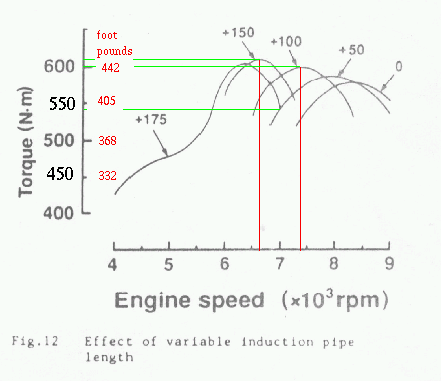
the fixed length of the runners and add the lengths from this chart for any
RPM between 6000 and 9000.
Well a mostly round hole doesn't tell me much. A picture of the port from
the inside would be of immense help and end this issue once and for all.
The Lemans engine housings were sitting with the innards removed at the
your local Mazda festival last year so perhaps someone got a camera shot of
the inside.
Sorry to be so anal about this but 220 or 240hp is not good enough for me.
I am shooting for at least 300HP at 8200 rpm NA.
Waiting to bore ... not you, the housing:)
DougFir
I don't have any pictures of the inside of the Lemans
rotor housings. Sorry. Note the height of the port
at the wear surface is the same as the round part outside
the rotor housing. That means it was probably not a
D shape. Now it could have been a slight rectangle
but I doubt it. There is nothing to be gained by
slowing the air just before it enters the rotor
housing. True the port open area might increase
slightly faster and close slightly faster.
Making it rectangular is not going to help the apex seal.
You are picking nits Doug. The last little bit of die grinding
in this area will do very little. Study these VE charts again.
You will get 300 HP at 8200 RPM with almost any 1.875 inch
p-port shape. The Lemans engine got 320 HP at only 8000 RPM.
What you need to pay more attention to is the exact length
of the runners.
Paul Lamar ...No rotor no motor.
Paul,
OK. Thanks. I am waiting to hear back from my Mazda friend but for now I'll
take your advise and start thinking about the manifold. I realize that if I
have the injectors close to the engine downstream of the throttle body then
I could conceivable make the intake runners that wrap over, out of composite
covered Teflon pipes.
Page 18 of Zeus
<http://www.zeusinc.com/> has 2" ID Teflon pipe. I don't
know if you can heat weld Teflon. Anyone know?
Yes you convinced me to make an adjustable length manifold. Aluminum bell
mouths and pipes riding inside Teflon pipes should be smooth. I would like
to cover the pipes with something that doesn't burn so easily though.
Stainless foil wrapped?
See chart below:
Looking at the manifold lengths and the resulting torque curves for the
Lemans engine at 8500 rpm, the length is 0mm meaning zero extension of the
intake manifold tubes and at about 16" (408mm) . Having an adjustable
manifold takes up more room naturally so it would be wise to limit the
adjustable range to take off and cruise ranges. The total adjustable range
is stated as going from 0 to 175mm or 6.9" Perhaps we can reduce this
range to 110mm or 4.33". Here is what I am thinking.
For a 300hp 13B we are only concerned about the rpms between 6,000 (cruise)
to 8200 (max take-off). For people with 2.83 or less ratio redrives that
range would be even less. For max power, the shortest position the manifold
is located at is the plus 50mm point on the chart. Add this to the standard
retracted length, 50mm + 408mm to arrive at the new retracted length.
458mm or 18".. Next.. The cruising speed manifold length only needs to
extended to the 160mm point or actually 110mm past the 18' starting point
to arrive at the longest length of 568mm or 22.36"
Of course this exercise is academic and the exact lengths will be different
depending on different engine configurations. It does help to understand
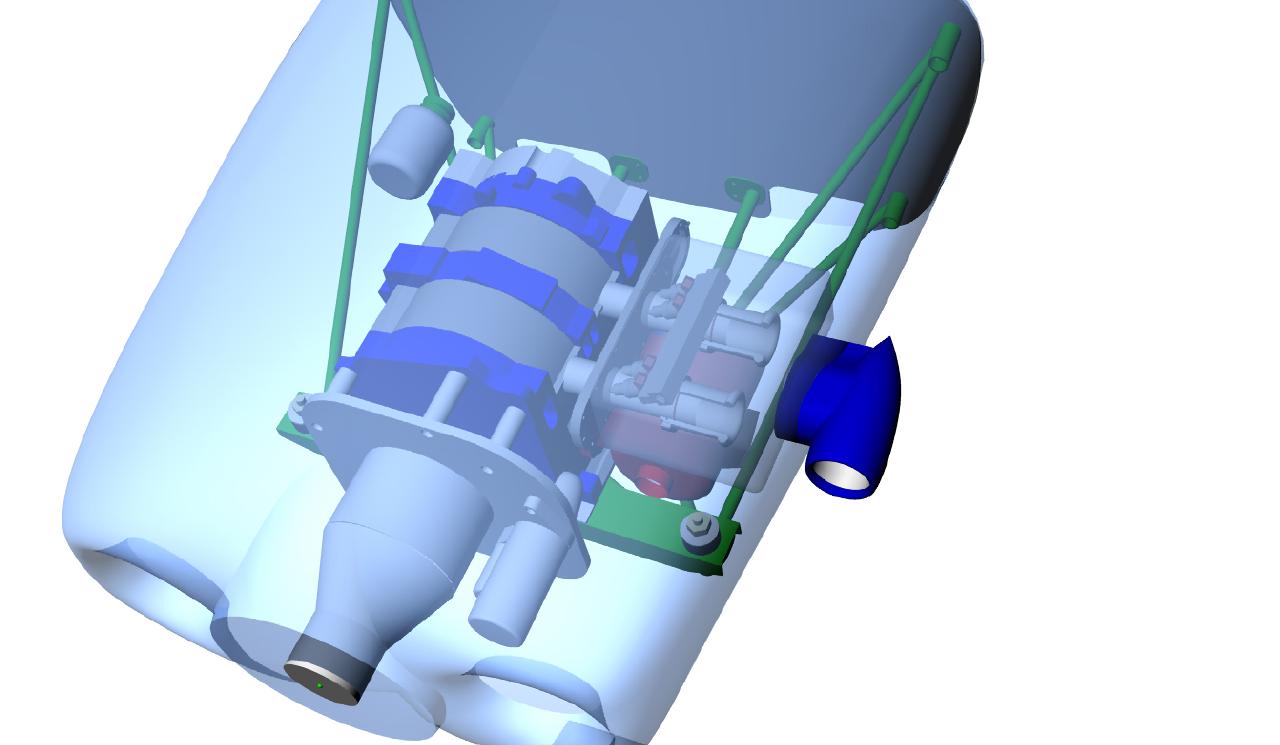
the approximate lengths needed and how the system will fit it under the cowl
though. The closer we can get to duplicating all variables of the Lemans
engine the more valuable their research becomes.
To bad we can't have the manifold sticking out in the breeze at a 45 angle:)
DougFir
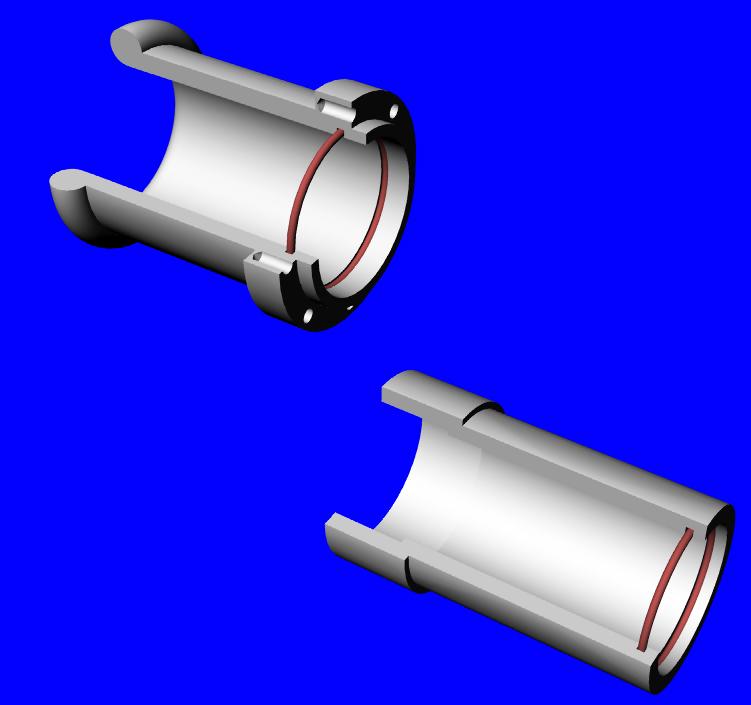
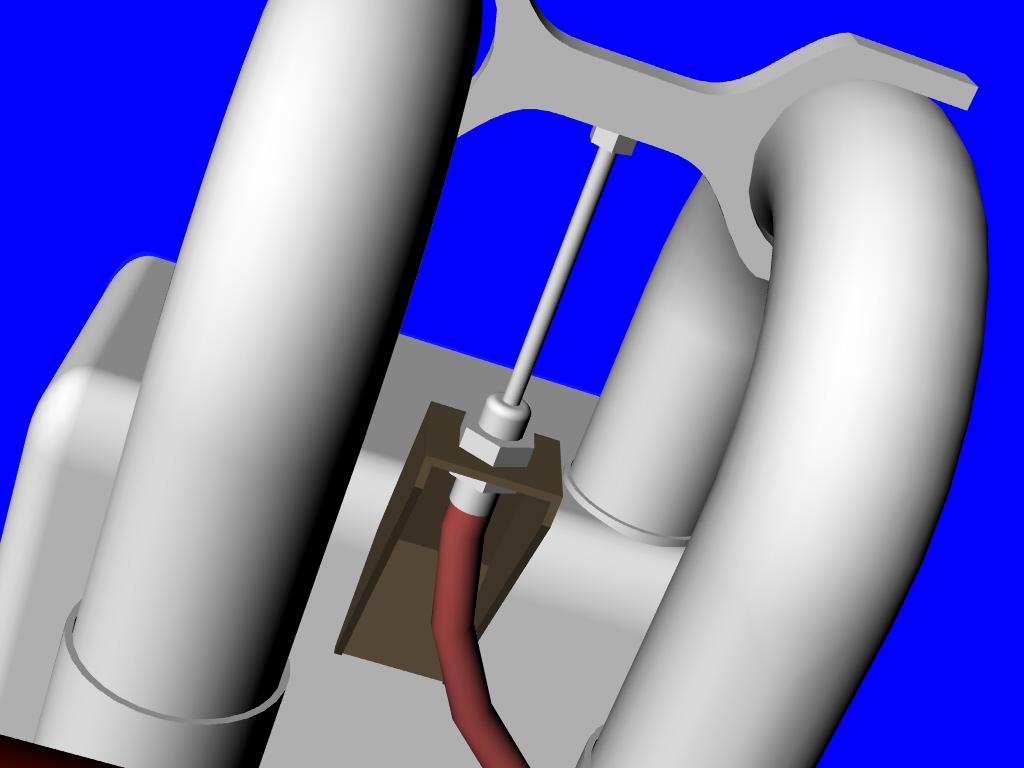
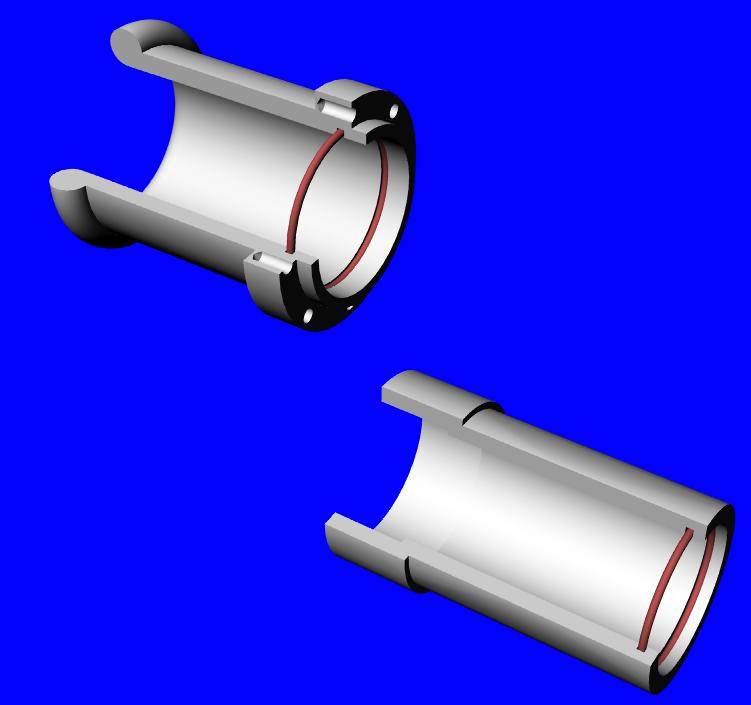
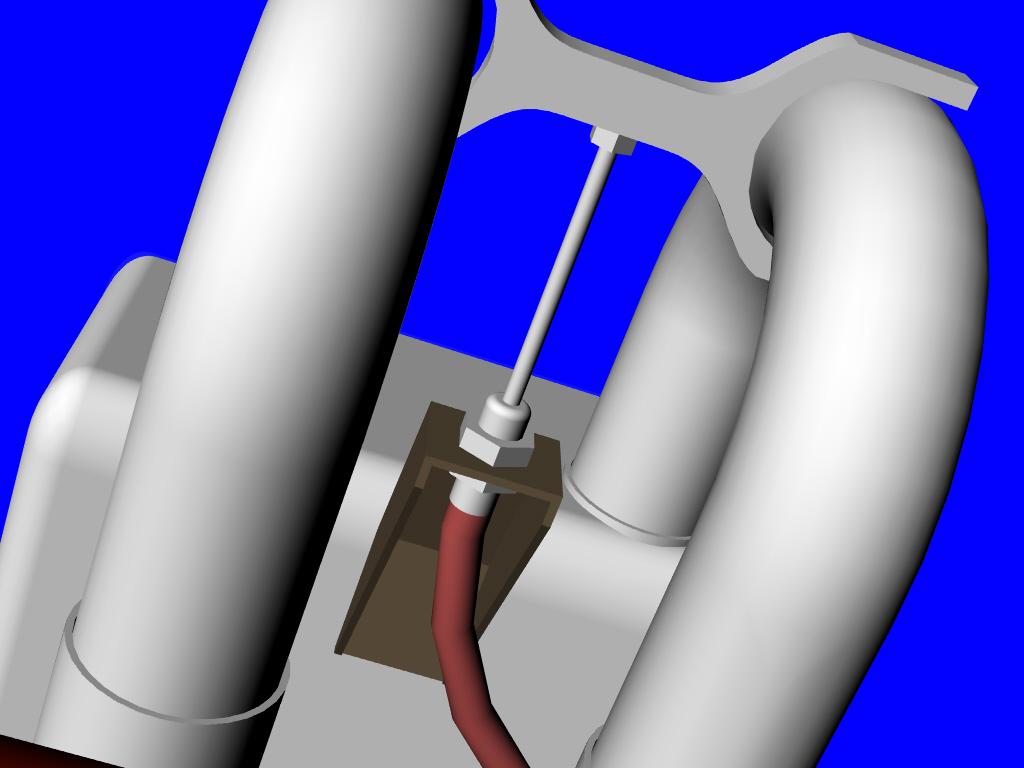
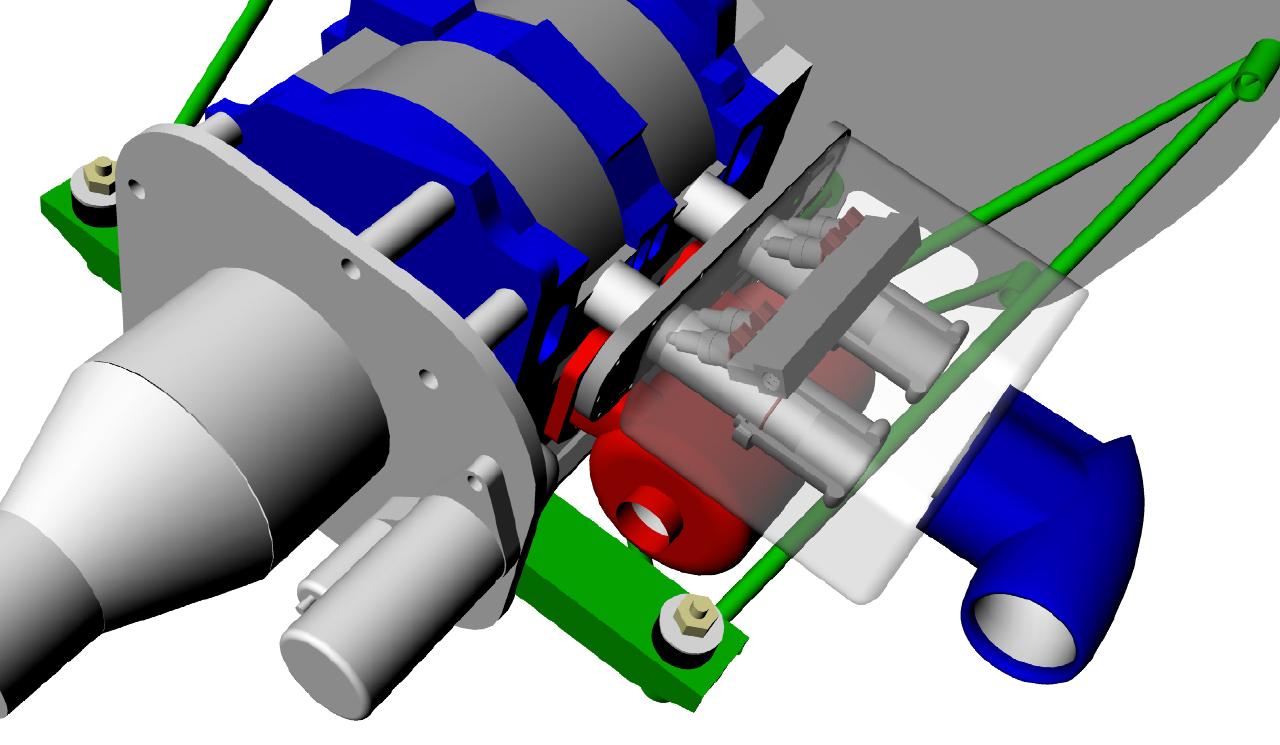
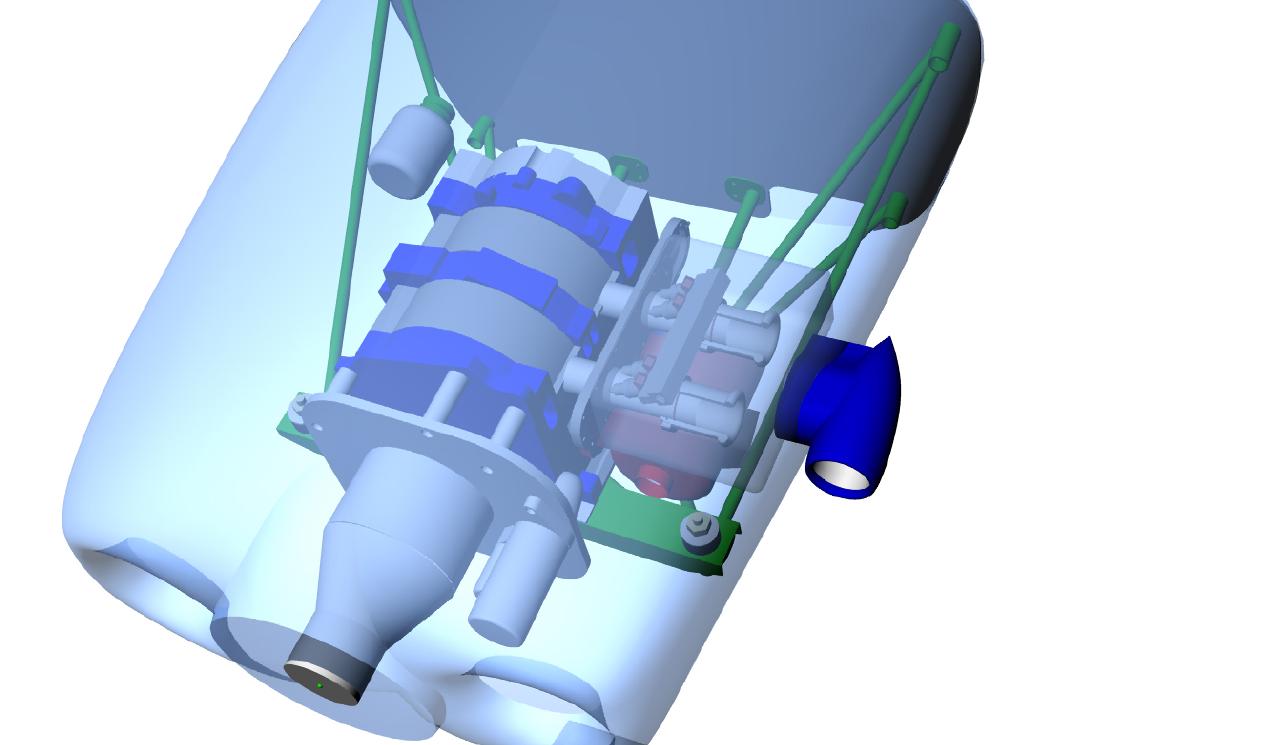
Here are a few 3D ideas for you.
Paul Lamar ...No rotor no motor.
The Rotary Engine NewsLetter. Powered by Linux.
ACRE NL web site.
http://www.rotaryeng.net
Copyright 1998-2006 All world wide rights reserved.