Paul and all,
I have waited 3 months for machine work on a std. 4 port 13b intake and
am now contemplating the P-port as a quicker and less expensive intake
to build . I have tried to follow this topic closely but I have a couple
of questions.
#1 Original dyno run on Marks P-port you ended up using carb. What
problems do you expect with EC2.
#2 Is the water jacket jb weld the only seal other than machining to
prevent water in combustion chamber . If so would o-rings at or near
the liner add little cheap insurance.
#3 Is 600 ci. rad required for additional heat load ( I have 13by19xby2
installed)
#4 Any idea on endurance /TBO
As always thanks in advance for your time and wisdom.
Geir, 598JW Murphy Elite
I would not say we "ended up" using carbs. I would say it was a can
of worms trying to get the mixture right on the dyno using
Tracy's EFI system. Tracy EFI system was designed for prop
load. A huge difference when it comes to ease of tuning.
I was running over my budget on dyno time.
Mark has run the P-port engine with Tracy's EFI default mixture
settings so far and no real problems as far as I can tell.
He did say it misses once or twice at 3600 RPM but that
is still a long way from 5000 RPM cruise or 7500 take off RPM.
That may go away when the mixture is finally tuned
properly.
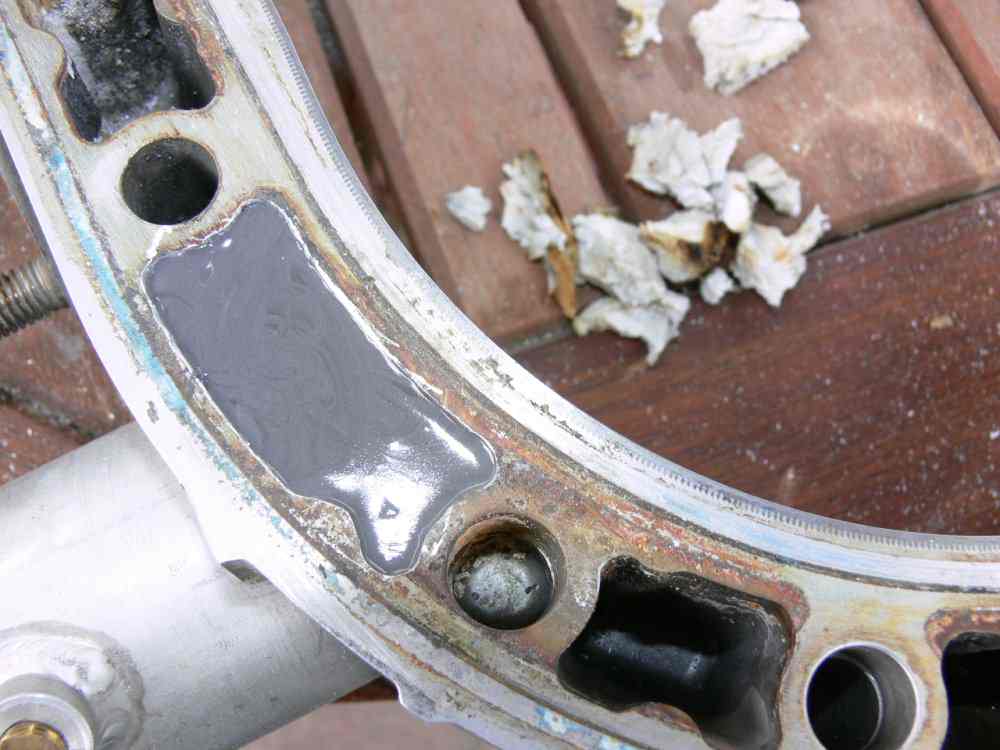
Yes the JB Weld does an excellent job of sealing the
tubes into the rotor housing. You need not worry about
that. No O-rings required. Despite an improper mixing
on the first go around leaving the epoxy soft there still
was no water leakage from this source.
There was water left in the
water jacket and the engine was stored in an un heated
hangar over the winter while the air temperature dropped to
-30 degrees F as I recall. If it were a piston engine
it would have a cracked block. With the rotary however
the tension bolts merely stretched a bit more and water got
by the water O-rings into the combustion chamber.
495 cubes for the rad is a bit on the marginal side
however you are in a rather cool climate area so
you may be fine. A lot depends on how well you fabricate
the cooling scoop, the duct connecting it to the rad
and how well the duct is sealed. It is best to bond the duct
directly to the rads so there is no possibility of air
leaks. You also need to shield the rads from exhaust
heat and feed them with cold air.
Read
http://www.rotaryeng.net/how-to-cool12.html
I know you know all this but we always have new subscribers.
The Lemans P-port engine was hardly worn after running
24 hours wide open at mostly 8500 RPM and winning the race
outright. I expect no difference in wear between the side
port and the p-port both running at the same cruise RPM.
The rotary is very easy to overhaul once you do it once.
If you need more than about 2000 hours TBO go with the $1200
ceramic apex seals that nobody has been able to measure
the wear on yet. Other wise stick with the high tech stock
Mazda apex seals. Use two cycle oil mixed with the fuel
at one ounce per gallon and Idemitsu rotary engine oil
or Mobile One in the oil pan. Both are synthetics.
BTW the car racing organizations have either outlawed the
P-port or handicapped rotaries in general. If they had not done
that nobody in their right mind would race a piston engine.
The rotary is that good.
--
Paul Lamar ...No rotor no motor.
---------------------------------------------------------------------------------------
Paul, I may have found a reputable machine shop locally.I had contacted
jerry about the boring but would prefer to see the work in progress as
opposed to shipping it off. I have utmost respect for Jerry's talent I
just would like to learn more about the machine process and tooling as I
have very limited exposure in the past and would love to buy a milling
machine for future projects.A few more redundant questions and I'll
quite pestering you.
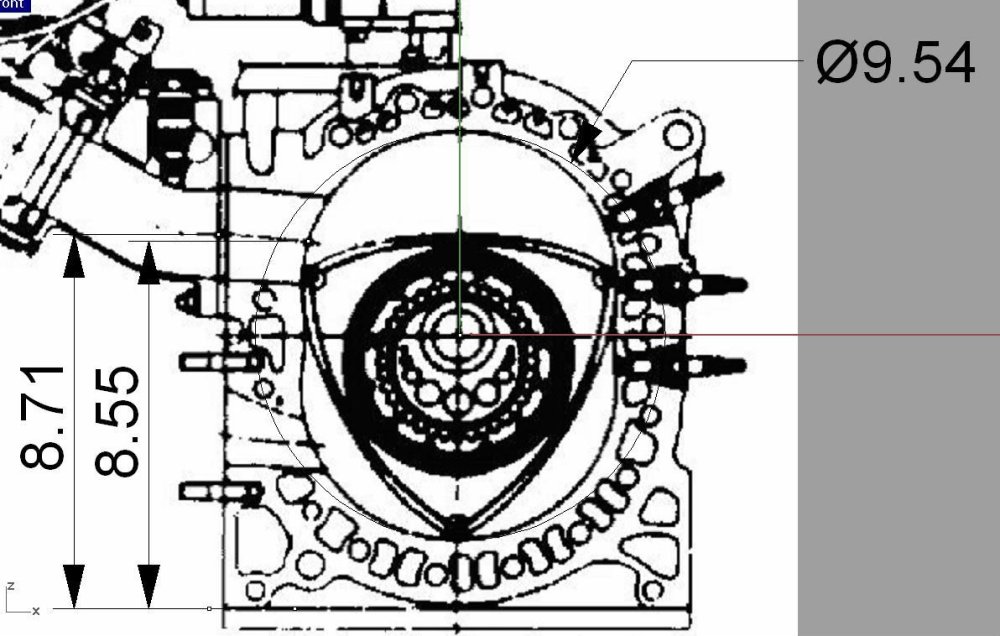
#1 Looking back on previous mail and your intake site I can't find the
exact center of bore location on rotor housing.
8.64 inches up from the bottom of the rotor housing.
#2 Just to confirm ,the angle of bore is 90 degrees to exhaust flange
surface , correct
Correct.
#3 Based on pic in attachment it appears one of tension bolts is
deleted to accommodate tube.
No. What looks like a tension bolt hole is not used by Mazda.
#4 Is the tube welded to rotor housing and if so is it done prior to
potting.
Thank you
Geir
Don't weld it. You might warp the rotor housing. Just bond
it in with JB Weld. The bond, potting and mechanical lock is
good to at least 18,000 pounds. Epoxy bonding is typically
3000 pounds per square inch.
Try to find some junk rotor housing to practice on.
Atkins in Puallup has hundreds.
--
Paul Lamar ...No rotor no motor.
------------------------------------------------------------------------------------
I will get a housing from atkins on monday
Any response to the first 3 questions
Thanks, geir
I inserted the answers into the messages for a change.
Something I don't like doing.
--
Paul Lamar ...No rotor no motor.
The Rotary Engine NewsLetter. Powered by Linux.
ACRE NL web site.
http://www.rotaryeng.net
Copyright 1998-2006 All world wide rights reserved.