Paul
I don't want to be the source of discouragement to anyone so feel free to
post this or not.
First up. Nice drawings. I was wondering how I was going to model it. Yes I
think we are pretty much in agreement now. A few differences in terms and
ID sizes. I happen to think a wee bit bigger ID is the way to go.
A press fit in my thinking doesn't necessarily mean a hydraulic press fit.
Of course distortion is to be avoided. If the hole and insert are round the
you can do a slip press fit with a small tolerances (.002"?) and a very cold
insert. I suspect even a good fit may even move a thousand of an inch
during heating and cooling cycles. This is a good thing I believe. Cary and
a few others have already done press fit with a tap of hammer. That is
most likely because it is difficult to get it to go straight in. A slight
bevel on the front edge would help. As Scallawag says if you get it cold
enough you shouldn't need to heat the housing. He recommends not to because
of warpage potential. How to get it real cold? Dry ice in a foam box, or
liquid nitrogen. The later is not available at your neighborhood supermarket
I know.
Yes all tubes and pipes are not completely round and so the insert needs
lathe work. I would machine a step on the end that holds the flange as well
to get a nice weld. The housing port will have to be finished off, ground
and polished in any case. It seems this is a given in P-ports. There are
ways to do this and precautions to take and the info is out there.
I do see where you are coming from design wise as it solves the gap
challenge and that you still have high regards for the JB Weld to act as
sealant. I don't think anyone can say how long it will hold up in an
airplane engine. That it works in auto racing engines is proven without a
doubt. These engines take a lot of short term abuse but don't endure
thousands of hours of hot cold cycles. I'm not trying to discourage the
P-port effort in any way. Au contraire. Safety is on my mind. Who wants to
rebuild engines even though they are easy to do so. I would rather be
flying with it. P-ports make a lot of sense for our airplanes. That and the
adjustable length manifold are great innovations.
Keeping the insert in place is not a design challenge. Finding the best
material to seal the inside housings but stay flexible is. Machine a step on
the insert to rest against the stubs and it won't be falling into the
engine. Counter sinking set screws drilled and installed in the remaining
two stubs on each side of the tube will hold it from coming out as the steel
bites into the soft aluminum. Look at how the exhaust port is kept in place
and you can see what I mean. Add to the holding force is the sealant.
You can pour the port full but why? Smeared around the insert and hole
before placement is adequate. Put some more around the pipe perimeter after
pipe insertion and then do a water test. Water leaks will be easy to see
where if indeed there are any with a tight fit. Is more sealing better not
necessarily. It is a mind set we do to make ourselves feel better.
O-rings are best for side sealing purposes but NG on our desired straight in
approach into a curved housing. I wonder what else is flexible but a
literal pain in the ass to remove from aluminum housings and comes in two
part liquid form as well with many hardness options to choose from. Hint you
use it to make molds for high temperature plastic forms with undercut
reliefs.
No picture came through about the potential leak area. I would be interested
to see that as I must have missed it.
I don't have access to the machine shop down the road now because they are
assembling some top secret industrial equipment for Epsom/Seiko. It looks
like a machine used in an assembly line plant for flat panel displays.
Seiko gets a little worried to see a non employee working in the factory and
threw their weight around. A-holes. Paranoid I might steal one of their
ideas. Actually they stole one of my research groups idea we brought to
them (our stupidity) to make 25 years ago. It was a wrist watch that had a
device in the band that sensed and displayed heart beat. They patented it.
Justice was done .... sort of. They spent a fortune trying to market it and
lost the fortune. Moral: Only let your rivals steal your bad ideas:)
That leaves me with a good drill press at the moment and a chopper circuit
to control the speed. The insert I will order out.
DougFir
Darn. Too bad! That machine shop was one hell of a resource for you.
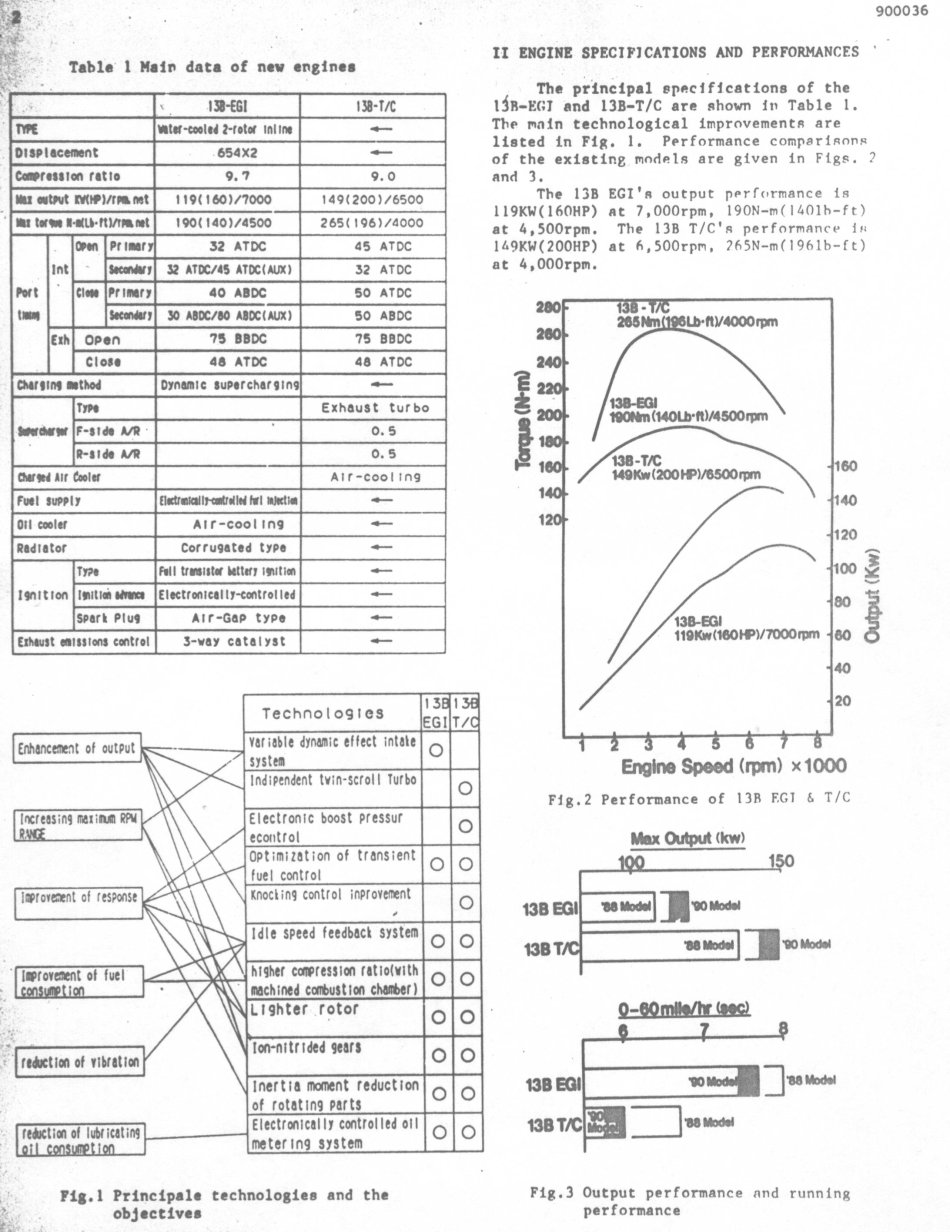
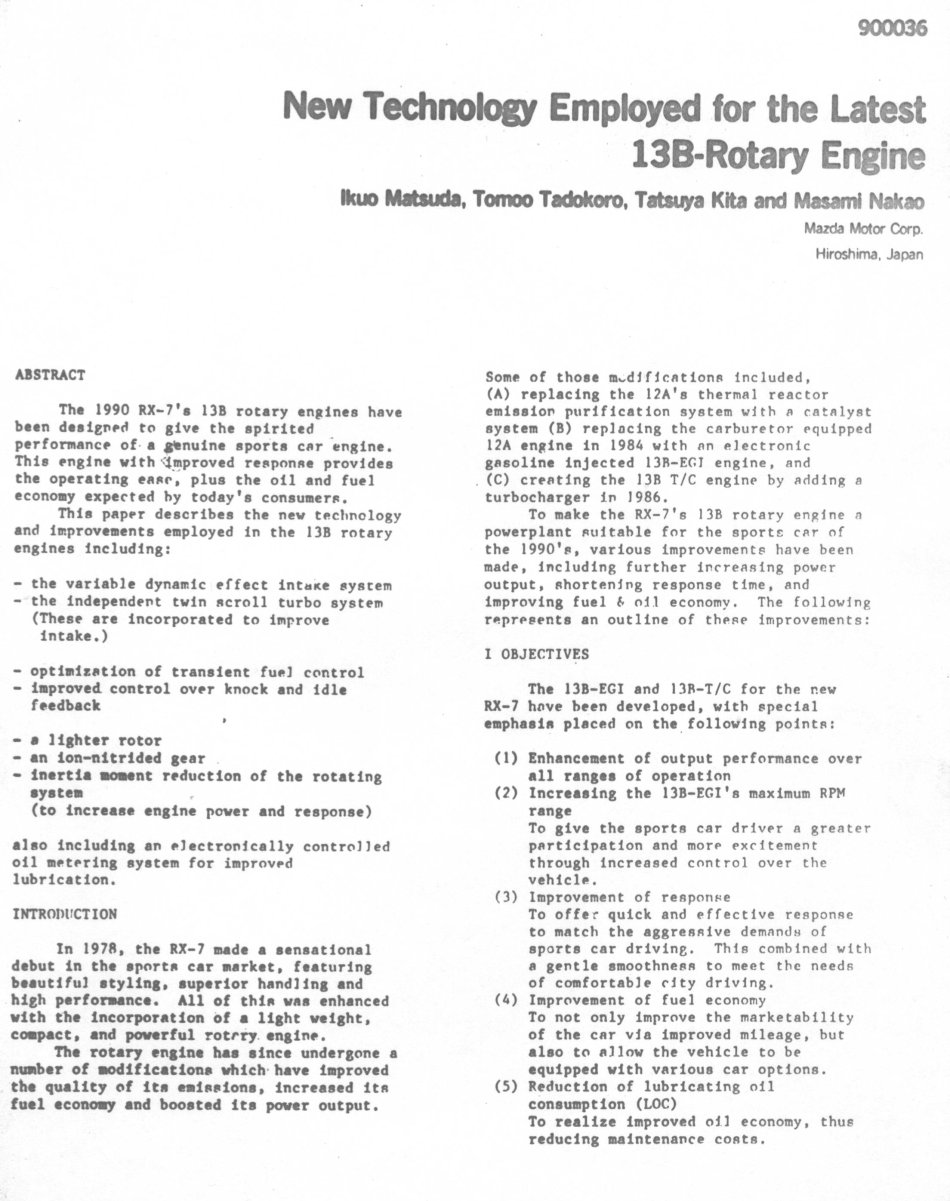
Is this the 1990's SAE paper you referred to above.
Paul Lamar ...No rotor no motor.
The Rotary Engine NewsLetter. Powered by Linux.
ACRE NL web site.
http://www.rotaryeng.net
Copyright 1998-2006 All world wide rights reserved.