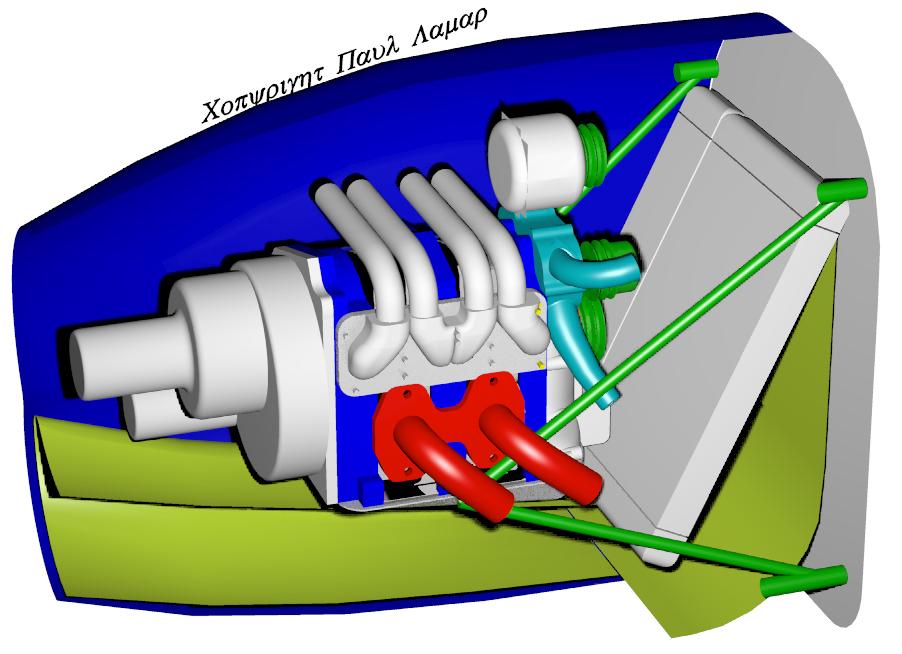
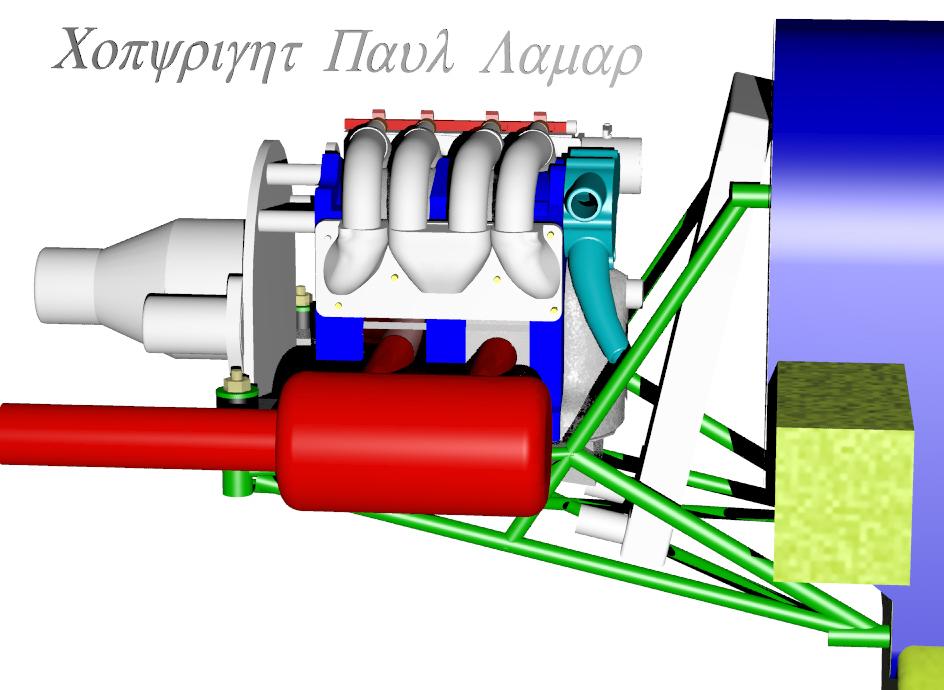
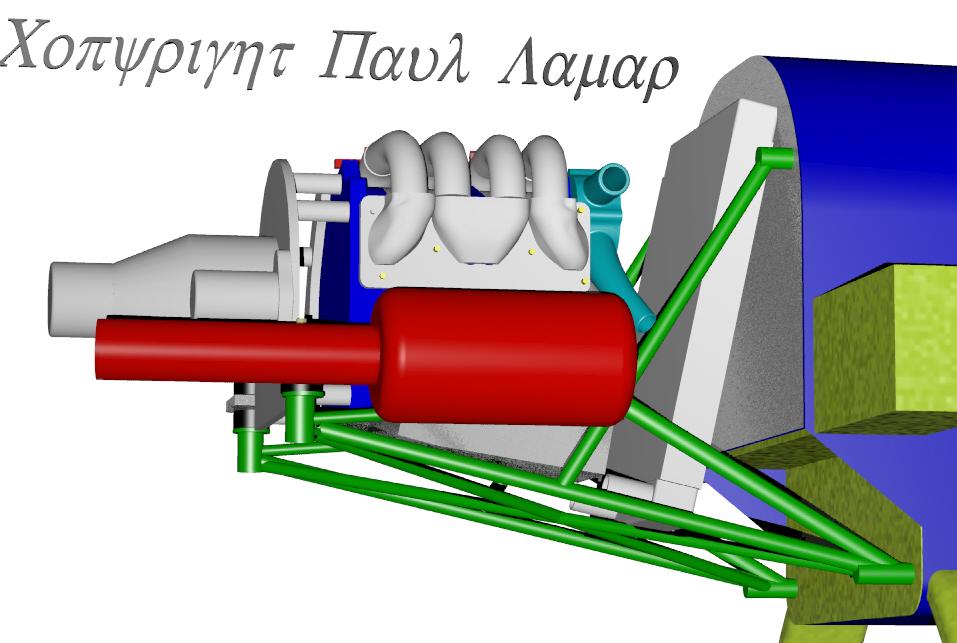
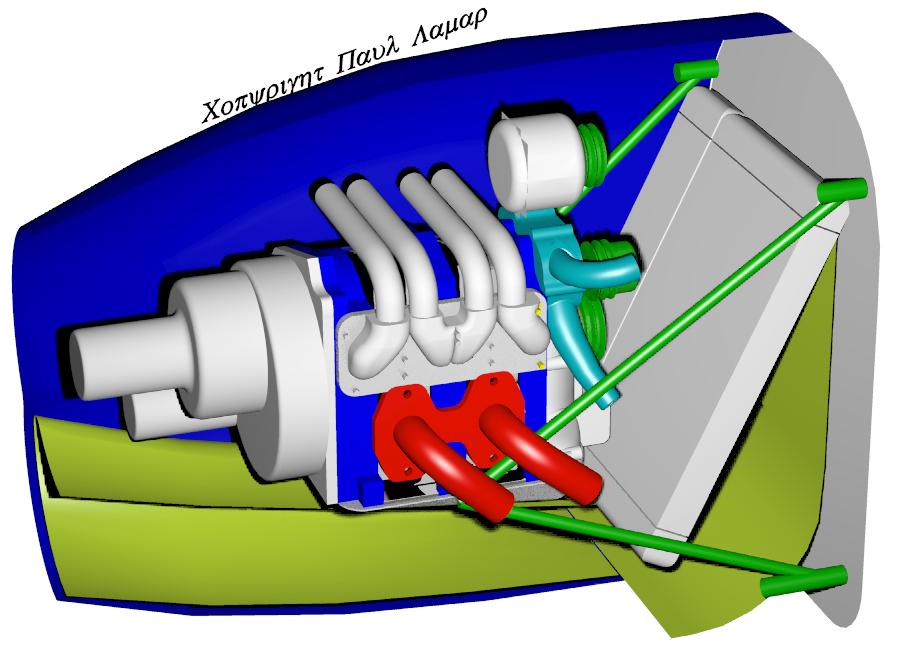
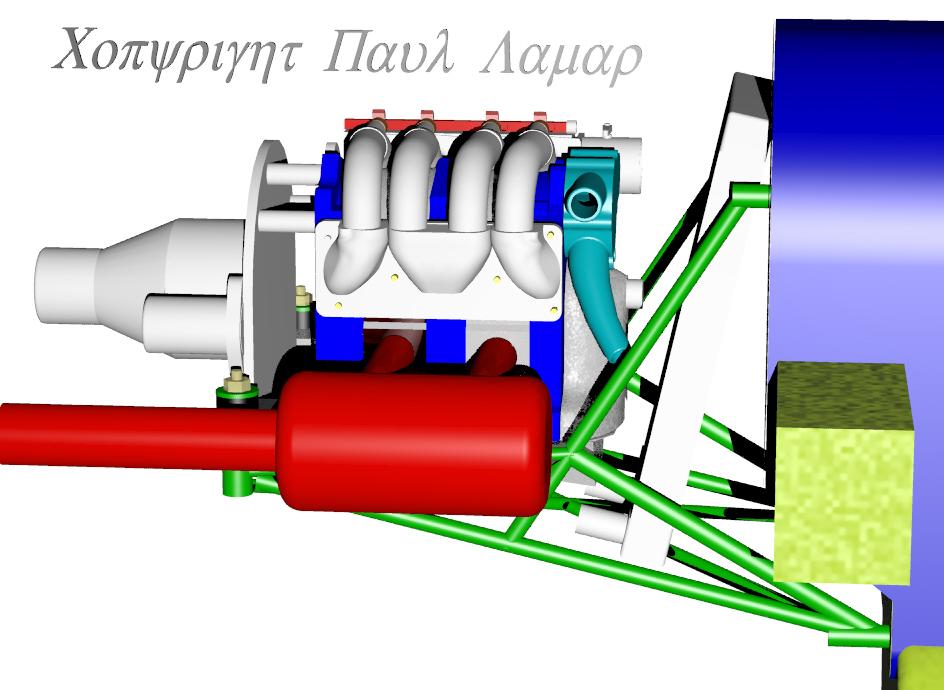
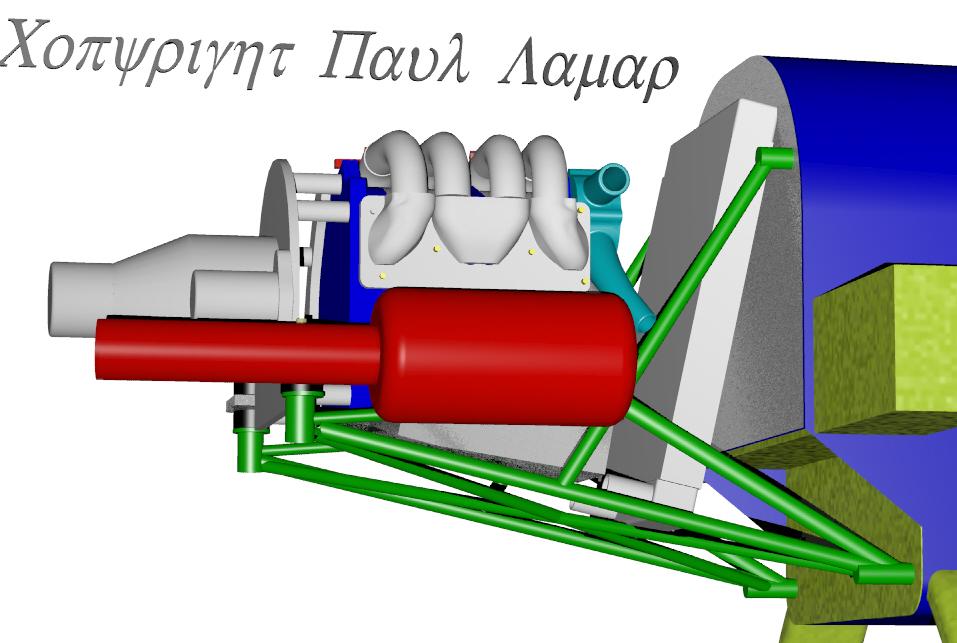
This is for those people that want to save a couple hundred
on a custom oil pan and use a stock oil pan. This is near
identical to the way the Questair bed mount is done for the
air cooled Cont. IO-550 AC engine. This bolt pattern is for an
RX8 engine but the same idea is used for a 2nd gen or 3rd gen
engine.
What does everybody think of this? In particular what
do you think Jerry? Does it add so much to the cost that
a custom aluminum oil pan is still worth while?
Paul Lamar ...No rotor no motor.
Paul,
Yes! I like this one! This is much better than structural supports
attached to the oil pan. This is a big move toward standardization. I
have two possible suggestions:
1) IF, the side channel material is not available as off the shelf 4130
channel, use 3/4 x 1.5 tubing counterbored on the bottom side and use
Torx flange head bolts.
2) Make a standard variation of it with the rear beam extended a few
inches on each side for a four point mount. This would be useful for
those who can't make a hard point on the firewall.
Make it three suggestions:
3) Could possibly use off-the-shelf rectangular tubing for the main
beam also.
Let's try to standardize this basic configuration into as few variations
as possible so Jerry (or someone) can manufacture them as readily
available items. We need to get away from custom fitting everything.
This now gives us a standard structural part for attaching radiators,
etc.
Aubrey
Metric 6 mm socket head screws are much cheaper and you can
get ball end hex screw drivers. Makes it much easier
to screw them inside the Schertz beam.
It is easier and better to make a hard point on the
firewall. A four point tubing mount would be more expensive,
over kill and be in the redundant constraint category.
It takes FEA to analyze them. Goes against my engineering
sensibilities :) Not elegant.
The advantage of the ball joint rear is the down thrust
can be easily adjusted for max speed or max MPG at cruise.
The rectangular tubing is more expensive and heavier and not high
enough at only 1.5 inches. I considered it. It needs to be two
inches deep to properly support the Schertz beam. The 4130 sheet
thickness required here is only .049" thick. The flange width
shown is only .625" wide.
Most RX8 are going to need a custom oil pan anyway as the stock
oil pan has real breathing problems and we all could use
more quarts to delay oil heating on take off.
This is primarily intended as a money saving option for those
cheap skates out there :) I am not sure if it would really
be any cheaper.
Paul Lamar
Paul,
The benefit that I see to this mount is the degree of standardization
it enforces. This mount makes it possible to have a two part system
that will work for nearly everyone. Part "A" is the part that would
attach to whichever 13b you have and part "B" is the part that would
attach to whatever airframe you have. If we design it so part "A" mates
with part "B" then we have a turn-key engine mounting system that anyone
can assemble. This is a huge step toward a FWF package.
The only reason I mentioned Torx bolts is that the auto industry is fond
of them. Therefore, high quality metric ones are readily available.
I agree with you on the engineering elegance of the three point mount.
But, I think there are builders who would prefer a four point
configuration. For example, so the radiator could be fitted between the
engine and firewall.
Aubrey
The ball joint strut does not preclude putting the rad back
there. One just comes up from the bottom of the firewall
or the nose gear socket if it has one instead down from
the top of the firewall.
However that is not a good location for the rad in a tractor
airplane. You need a lot of space behind the rad so the
air can escape easily. Air passing through the rad has some
velocity. This velocity develops dynamic pressure on the
front of the firewall. This pressure cancels some of the
pressure on the front of the rad causing in turn a reduction
in air flow through the rad.
K&W has plenty of data on this subject.
See
http://www.rotaryeng.net/how-to-cool12.html
If you push the engine forward you have CG problems
with most airplanes. P.S. struggled with this problem for
years. However if you duct the air to the area between
the rad and the firewall using a K&L wedge diffuser
you might be able to fit it in. In this case air would
make a 180 degree turn and flow backwards through the rad
and dump forward into the engine compartment. You are then
confronted with turning it 180 degrees again and making it
squirt out towards the rear. It requires a long duct under
the engine to get the air into the back side of the rad.
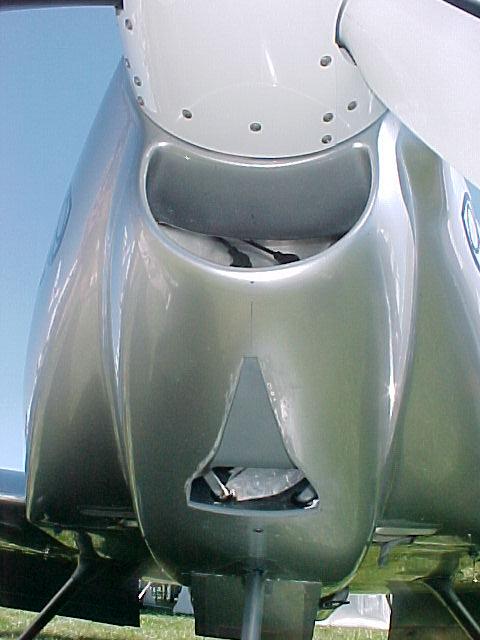
See the attached 3D. Any time you turn airflow you have losses.
Unfortunately PS did not do it this way.
They heated the air by first passing it through the engine
compartment and over the exhaust before passing it through
the rad and then tried to get it down and out between the
rad and firewall. Remember one degree increase in air temp
is a one percent loss in cooling capability. I tried to help
by doing a 3D and sending it to them. Some of the scoops
they tried were rather funny. See the last attachment.
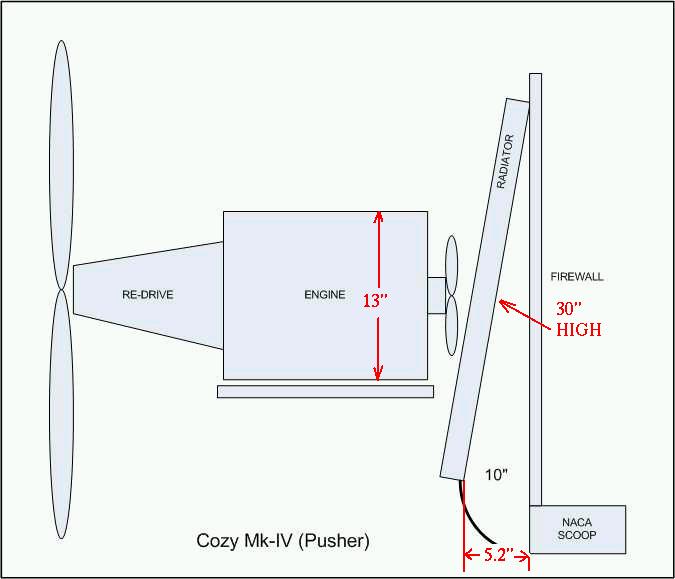
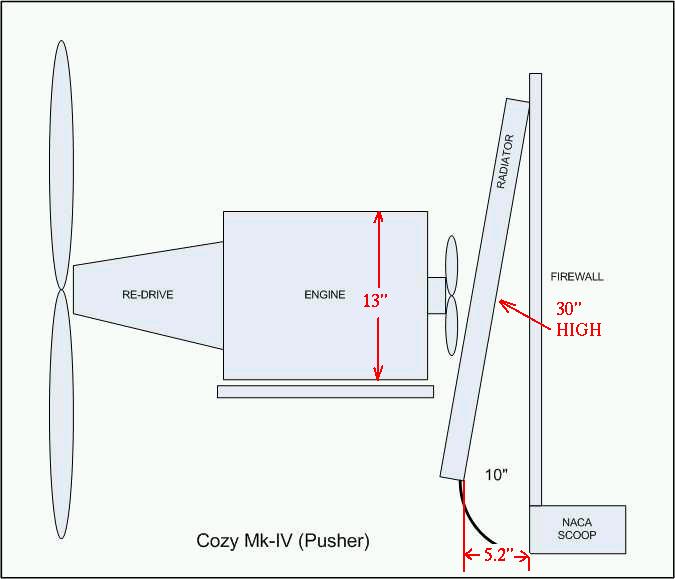
This rad between the engine and the firewall set up lends
itself much better to a pusher airplanes. I think Joe Hull
implemented this configuration. Seems to be working well.
Is that a true statement Joe?
Again the strut does not get in the way as it can come
down from the top of the firewall on what is now the
back side of the rad.
IMHO the best place for a tractor rad is under the engine
or vertical on the cool side of the engine with the
cool air duct and K&L diffuser between the rad and the
engine shielding the rad from engine heat. The bottom or
side of the cowl can then have flaps to control the
airflow and speed it up squirting it backwards to cancel
some of the cooling drag.
Paul Lamar ...No rotor no motor.
The Rotary Engine NewsLetter. Powered by Linux.
ACRE NL web site.
http://www.rotaryeng.net
Copyright 1998-2006 All world wide rights reserved.