> Paul,
> While I like the simplicity of the idea, and believe with the right
> ramp profile it CAN work, dribble systems are never going to be as
> efficient as FI. Fuel atomization is the first reason. By its very
> nature this system can't be high pressure, it is a fixed pressure
> variable orifice system. It would have to be over rich in most of
the
> mid range to be operable. Many things will run, most not very well. I
> saw a photo of a guy that got himself out of the desert of Baha after
> rolling his bug and smashing the carb. He ran the hose from the fuel
> pump into the point end of a BIC pen he pulled the guts out of. Duct
> tapped the thing over the inlet bell and it ran shoving gas out
through
> the little hole on the side of the pen! He even told the press
guys that
> it worked pretty well at "bout 50". Mechanical fuel pump made it
a kind
> of ultra-primitive FI. The flat slide idea could be ok but never as
> precise as good FI. Perhaps as a redundant system would be its
best use.
>
> By the way I checked and Lectron is still in business. They have some
> very sophisticated ground needle systems. They could be
incorporated in
> the center of the slide throttle to improve mixture control but then
> your simplicity goes out the window. You're making a carb again.
BTW the
> system WOULD be subject to icing. Though typical carb heat could
be used
> with it.
> Bill Jepson
>
> It is not like this is a new idea. Klaus flies an Ellison
> on his O-200 and gets 50 MPH at 200 MPH. What is inefficient
> about that? Gravity feed no less. All the pumps do is fill
> the header tank. I know half a dozen people running these
> types of carbs and they are getting better MPG than we are
> with EFI.
>
>
http://www.aeroconversions.com/carb_saying.html
>
http://www.ellison-fluid-systems.com/article/notaposa/notaposa.htm
>
http://revmasteraviation.com/products/revflow_injector_carburetor/index.htm
<http://revmasteraviation.com/products/revflow_injector_carburetor/index.htm>
>
> These are becoming universal on cert engines in experimental
> airplanes because they are simple and relatively cheap.
>
> If you have some data or documentation to support
> your inefficient or atomization claims I liked to see it.
>
> EFI is not worth the high cost and the redundant electrical
> system required to make it safe.
>
> Paul Lamar ...No rotor no motor.
>
> Paul,
>
> I think your original idea with the many small holes would work
better
> for atomization. That's the idea behind the Ellison fuel spray
bar which
> uses lots of tiny holes to achieve very fine atomization.
>
> Regards,
>
> Gordon.
>
Paul
Gordon has a good point. A spray system, perhaps a double pipe
(mini tank)
with a built in throttle valve that controls the flow to holes
drilled into
the P port Al. manifold pipe. It would be placed just downstream of
the
slide throttle. This eliminates slide throttle soak. Fuel flow
valves could
be linked to the throttle linkage mechanically. I think the design
parameters (read seal pressure friction) for handling flammable
liquid and
air are not complimentary to put in the same valve mechanism. Said
another
way the challenge would be to keep the slide press tightly against
the fuel
inlet pipe while assuring fuel traveled laterally along the slide
and out
the appropriate place while eliminating capillary action. Daunting
but worth
thinking about. It is done in rotating cylinders within a pipe all
the time
for fuel reserve and shut off valves though.
How about my linear gear on top of the slide idea I told you about
several
weeks ago? Instead of a electric motor it could be a flow
valve. The same
rotating shaft that goes to the valve shaft goes to an arm.
Linkage to the
a lever makes the whole unit a lot more compact as well.
DougFir
Have you ever dropped a drop of water on a hot frying pan?
What happens to the water? It becomes water vapor
or steam doesn't it? We are going to use exhaust heat
to heat the slide throttle to 150 F or there abouts.
What is wrong with slide throttle soak?
The word soak implies that Teflon is a sponge.
Teflon is not a sponge.
What is wrong with a little capillary action?
The amount of fuel going into the slide throttle and thence
into the P-port is controlled by the leaning ball valve. I think
you are missing the significance of that point.
The metering part of the ramp is just a crude
approximation so the engine will run when started
and accelerate to take off speed. Anything between
8:1 to 18:1 air/fuel the engine will start and run. Fine
mixture control is done by the leaning valve. You set the
takeoff power by running the engine up to static RPM and
set the mixture for max RPM. It is a good habit to get
into anyway in case you find yourself at a high altitude
airport.
A grain of sand will defeat your rack and pinion.
Why make it complicated? Yes I know your Seawind engine is many
feet from the pilot but so is a 747 engine and Boeing
uses throttle control cables.
Paul Lamar ...No rotor no motor.
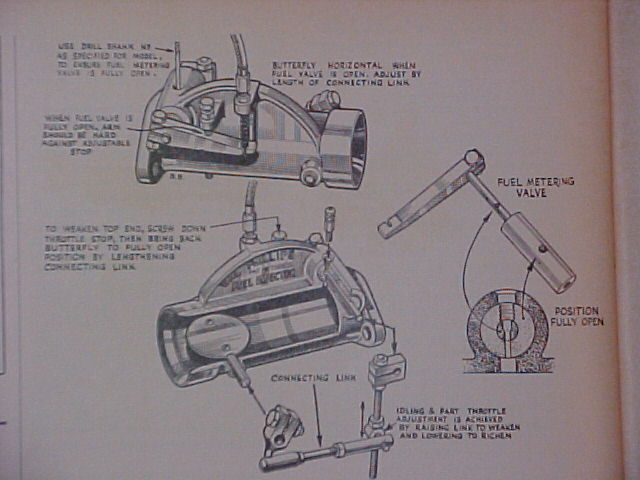
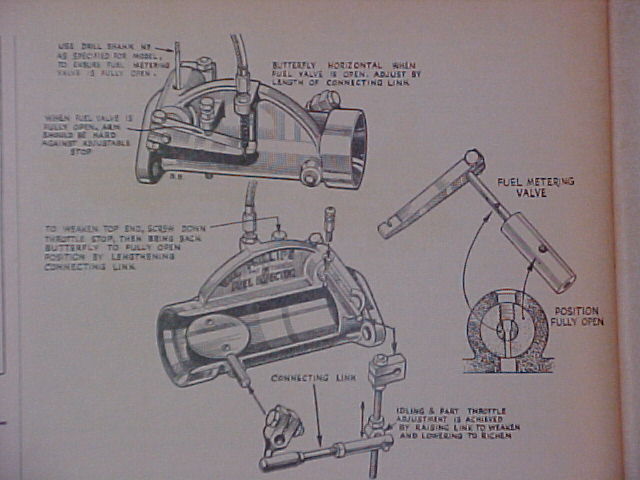
Paul.maybe you should look on Google and type in Wal Phillips....Wal was
a eary Speedway[dirt track]rider that made a very basic injector that he
used on a methanol-burning engine in the eary 50s the Phillips Fuel
Injector is a very simple design.
Robert Pay
Yes. Very interesting. It certainly is a simple device.
It varies however from the current aircraft low pressure fuel
injection device like the Ellison in that there is no way
of tuning the mixture independently of the rate of throttle
opening. That would require another valve of some type
in series.
http://www.britbike.com/ubb/cgi-bin/ultimatebb.cgi?ubb=get_topic;f=65;t=000023;p=1
Also it is not a slide throttle of course.
Paul Lamar ...No rotor no motor.
The Rotary Engine NewsLetter. Powered by Linux.
ACRE NL web site.
http://www.rotaryeng.net
Copyright 1998-2006 All world wide rights reserved.