> The questions of this thread should center around:
>
> - Are high speed (50-80K RPM) alternators
available
OTS?
> - Can they be safely coupled to the turbo?
>Possibly replacing the compressor section?
>(U-joints are out!)
> - Are high efficiency electric motors available
OTS
that can be bolted to the e-shaft?
> - Can this be done to recover some exhaust energy,
or is this a waste of time?
First, turbocharging does not increase efficiency.
However, a carefully designed system using a
turboalternator might increase the torque.
I'm not aware of OTS high speed alternators, at
least
just yet, for the rotaries. Custom, they can safely
be
coupled to the turbo. The compressor section can be
replaced too.
High efficiency brushless electric motors are
available.
Given the notorious inefficiency of the rotary
engine,
any heat recovery would be of great value. A custom
turbo alternator has been done.
see Barber-Nichols site
http://www.barber-nichols.com/products/specialty_products/turbo_alternators/default.asp
To do this single design change in isolation would
make the engine prohibitively expensive. However, an
estimated 20-30% could be recovered assuming a base
efficiency of 40%.
However...one design takes the rotary engine and
eliminates the "bulkiness" of past and current
designs
in RX-7/8 and other rotaries.
Almost all rotating parts are placed on the main
rotary shaft including a starter/alternator, a
compressor, and a flywheel in line with the rotary
engine! Intake and exhaust would be designed to
assist
in cooling/heating.
The result is interesting since efficiency goes up
as
weight goes down. With the above changes, and by
using
other materials, the efficiency could reach 75% and
the weight could drop 50%. The gross increase in
power/pound would be a factor of 3 1/2, very
significant for airplane use.
Starter/alternators are already here and gives the
engine a bit more breathing room.
Instead of one turbo alternator, smaller multiple
turboalternators might be used for redundancy sake.
Also, there are scalability issues to address with
the
larger the rotating parts.
David Mathes
"Given the notorious inefficiency of the rotary
engine,"
It is not as bad as you think David. We are within
4% of a typical Lycoming BSFC. .47 for the rotary as
opposed
to .45 for the Lyc. Sure people are claiming .38 but
they
have no independent data to back it up. That is
diesel territory.
What more than makes up for that is the ability of
the rotary
to burn auto fuel. Most Lyc's now a days require 100
LL.
Typically there is a 50 cent a gallon saving or
about
$2.50 verses $3.00 or about a 17% savings in favor
of the rotary.
Paul Lamar
About 12 yrs ago I was a contract employee at Garrett
corp. I was involved with some of the electronics for
a turbo generator Aux Power Unit of about 30Hp. The
alternator was on a common shaft between compressor
and turbine. It spun to 55-60K rpm. From what I was
told, a conventional alternator design had high losses
at this rpm. Their design used what they called ring
winding with(I think) flat cross section wire on a
long, small diameter core. It has been done, but with
specially designed alternators, probably not easily
available.
regards, Robert
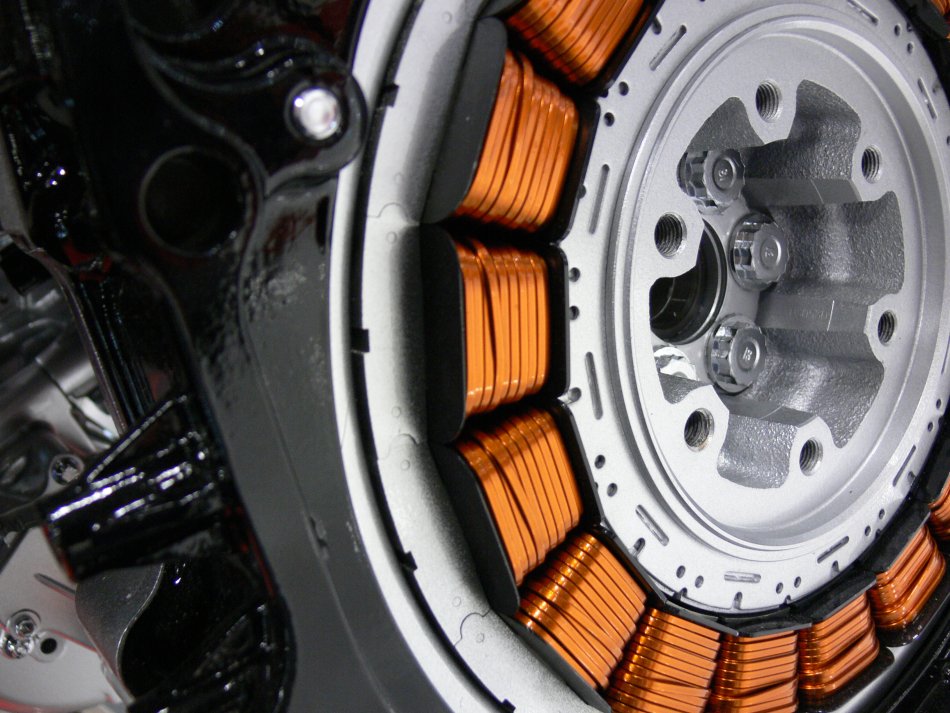
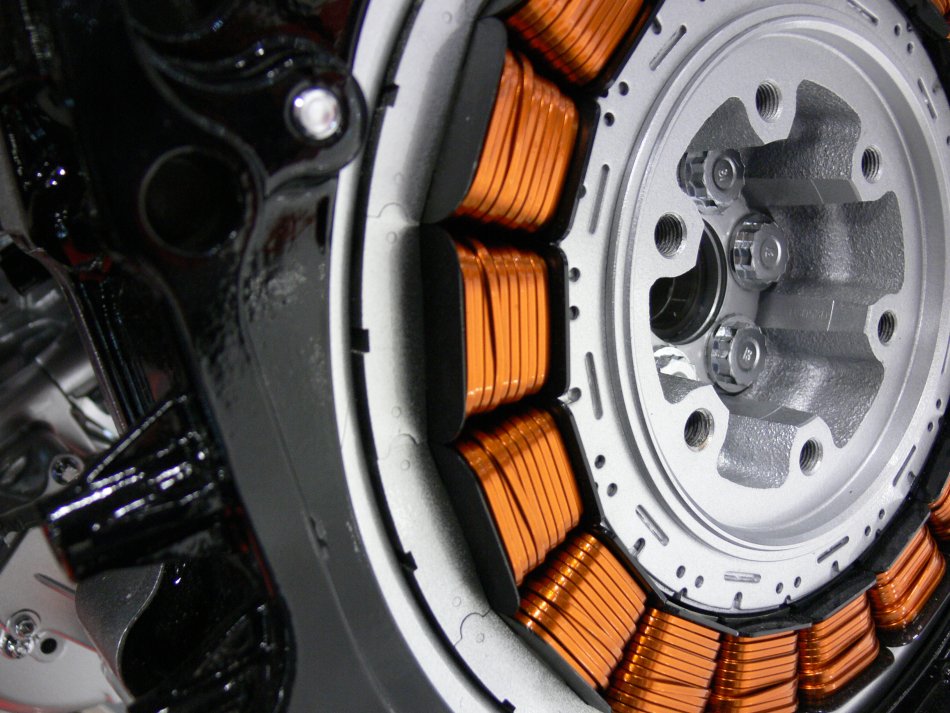
Here is a picture of the Honda alternator starter motor
on a hybrid Honda engine I took at the Tokyo Motor Show.
Paul Lamar ...No rotor no motor.
The Rotary Engine NewsLetter. Powered by Linux.
ACRE NL web site.
http://www.rotaryeng.net
Copyright 1998-2006 All world wide rights reserved.