Paul,
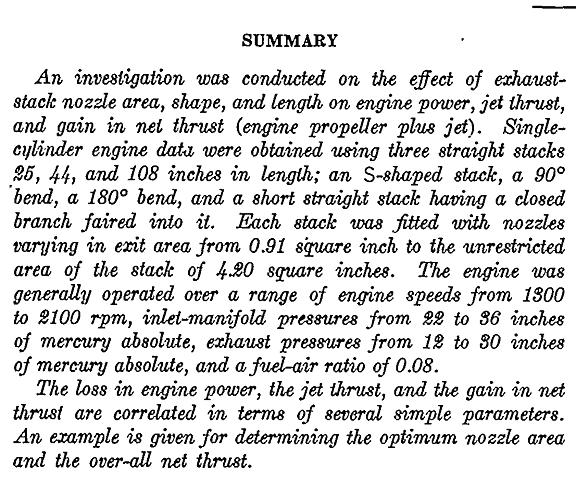
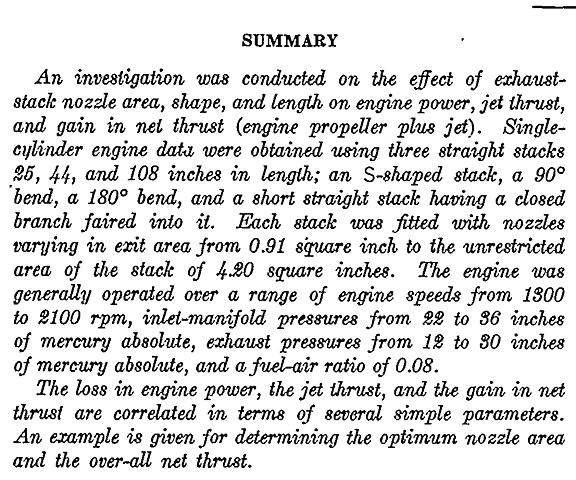
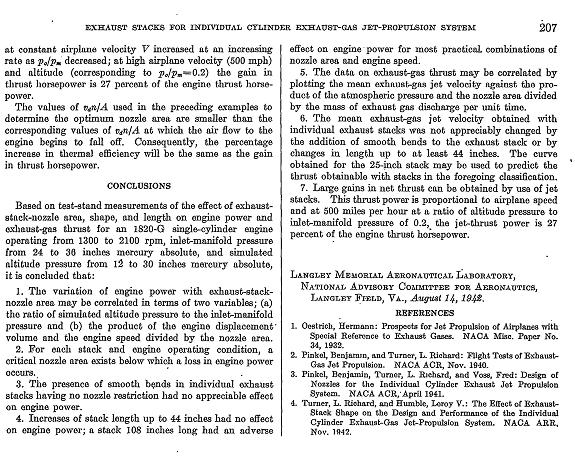
I've attached NACA Report 765 for you, in case you don't have it. It
describes a series of experiments in the early 1940s to utilize piston
engine exhaust gas for useful aircraft thrust.
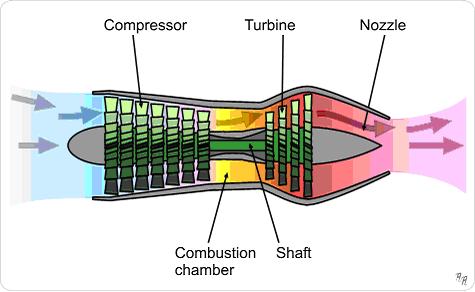
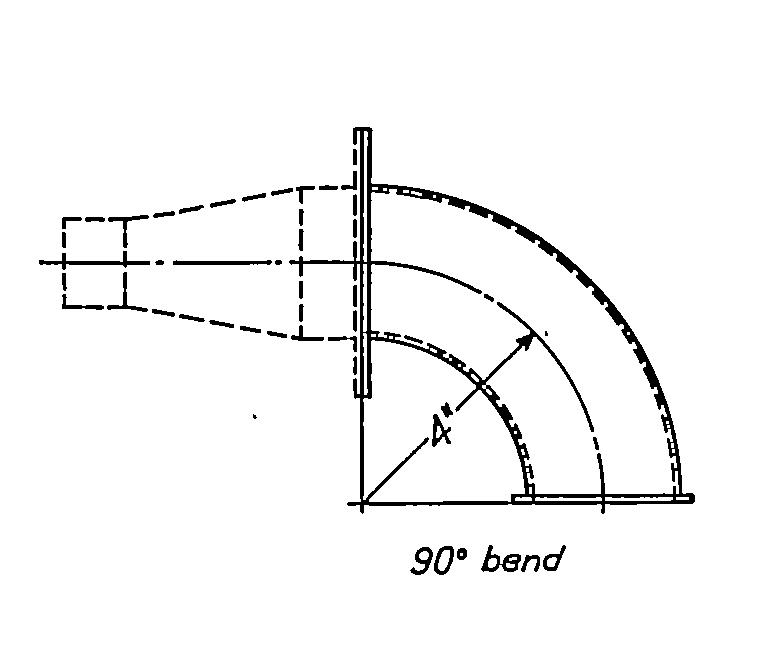
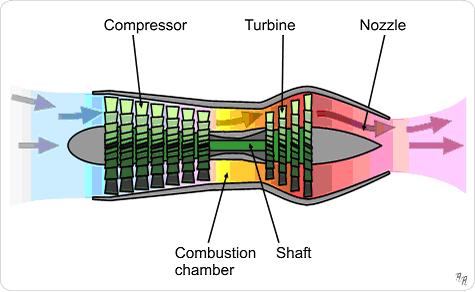
The idea is basically the same as what is used in jet engines -- place a
nozzle of decreased area at the exit that increases the jet velocity
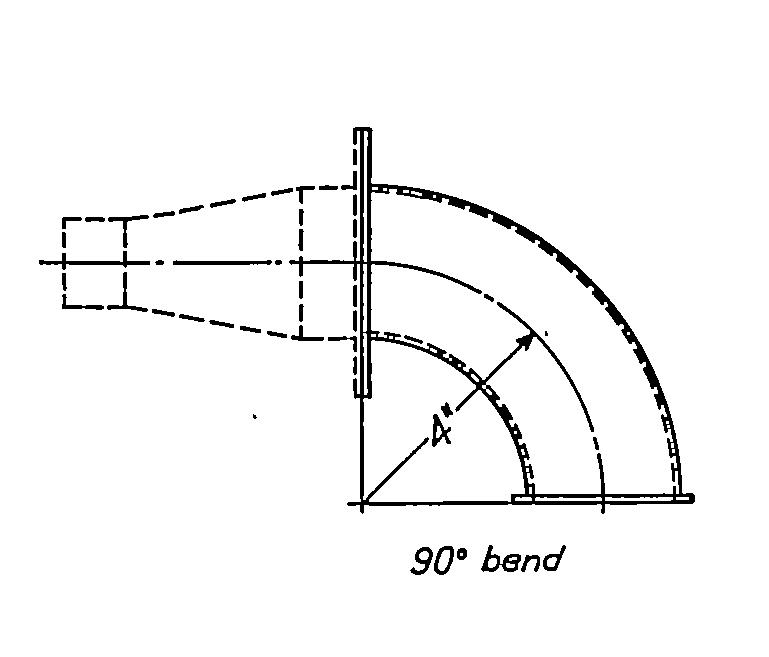
coming out of the engine. You can see this in the graphic of the jet
engine and the nozzle for the exhaust pipe from the NACA report.
The trick is not to make the nozzle area so small that it causes a loss
in engine performance. According to the test results, this works
remarkably well, especially if the ambient pressure is lower than
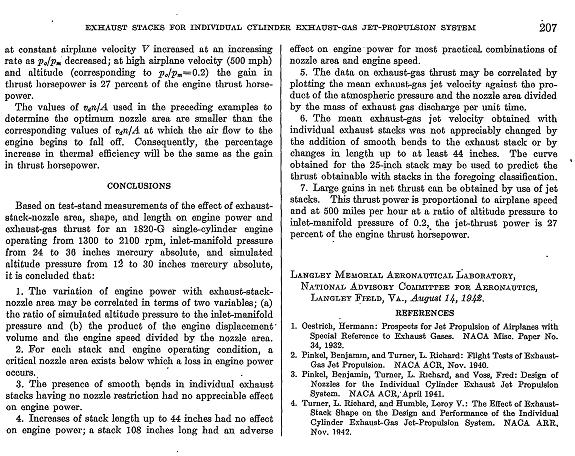
manifold pressure -- in other words a boosted engine. You can see this
on the horizontal axis of the chart.
We can see from the chart that the faster we go -- as you pointed out --
the more we gain from the exhaust jet. Also, the higher our boost, the
more we gain.
Even in the worst case situation, the unboosted engine (1.0 on the
bottom axis) going only 200 mph, we see an increase of 7 percent. This
is an increase in thrust horspower, which is defined as brake horsepower
times prop efficiency.
But look what happens if we go 350 mph and have a boosted engine. We can
get close to 20 percent increase in thrust. This is huge. If we have an
airplane with the flat plate area of a Columbia 400 say, which is about
3.7 square feet and we are cruising at 25,0000 feet at 350 mph, we need
518 pounds of thrust. (Dynamic pressure of 140 psf * 3.7 sq-ft. = 518 lb.)
The thrust horsepower required would be 438 thp.
(THP = Thrust in pounds * Velocity in fps / 550 = brake hp * prop
efficiency)
So 20 percent more thrust horsepower gives us almost 90 thrust
horsepower from our exhaust jet!
And this is from a piston engine. We can only guess how much more thrust
we can get from the very energetic rotary exhaust. I would say 25
percent at 25,000 feet and 350 mph should be attainable with a
turbocompound rotary.
What's interesting here is the possibility that there might be some
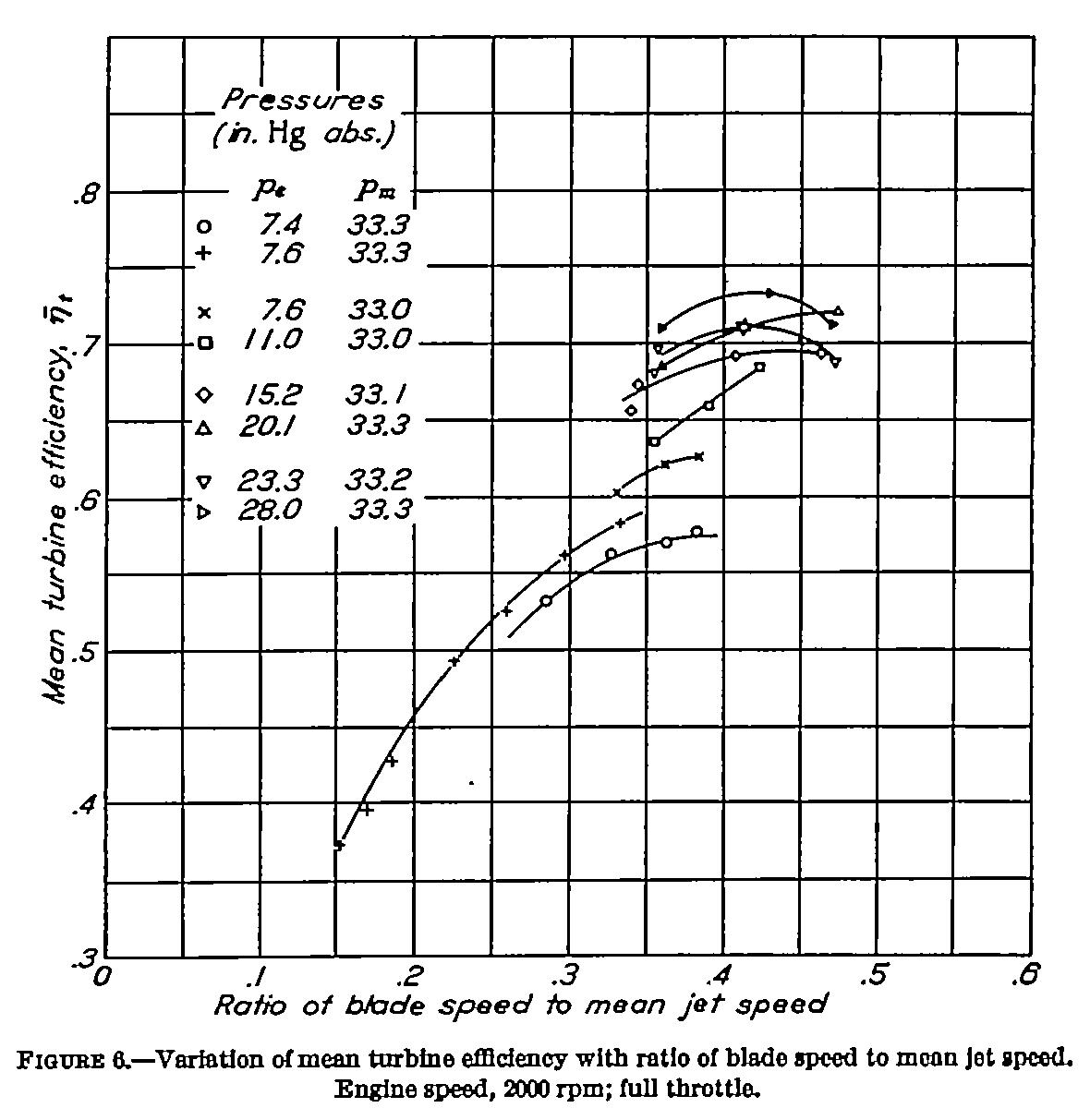
synergy between the impulse turbine and the exit nozzle. Recall that the
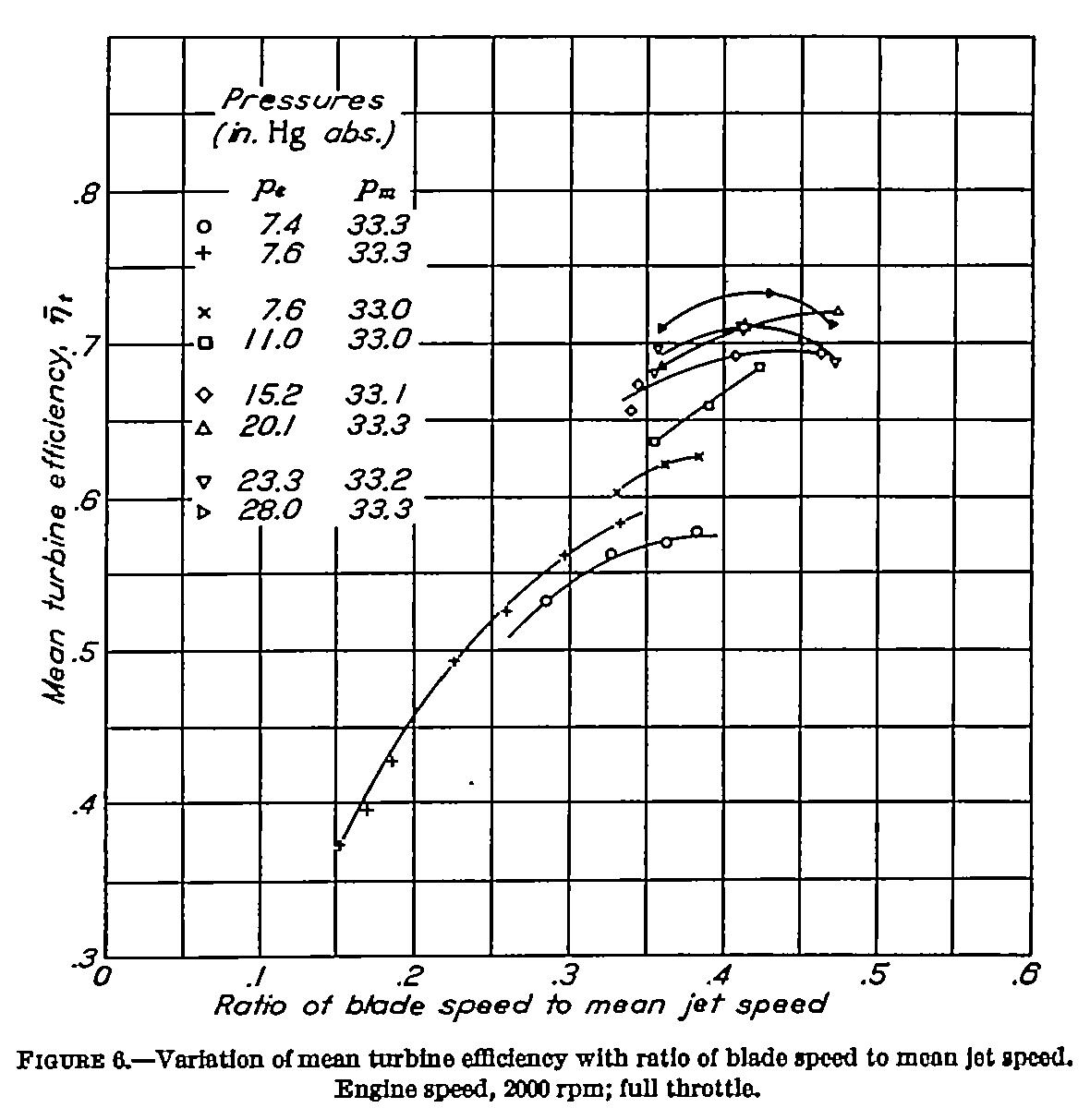
impulse turbine gets less efficient as the ambient pressure drops (see
NACA 786 turbine efficiency graph). By putting the nozzle at the end of
the exhaust pipe, you will cause an increease in pressure upstream at
the turbine outlet, so the pressure ratio across the turbine will be
lower -- the same effect as a lower altitude. And at lower altitudes and
pressure ratios, the turbine is more efficient.
Regards,
Gordon.
PS: I'm not sure how much there is to be gained for non-boosted rotary
engines in the 200 mph speed range, but I came across some comments by
Jim Griswold who worked on the Questair Venture and experimented with
exhuast nozzle thrust. With the NA engine it did not work so well:
"The experiments that I conducted on optimizing exhaust thrust used a
normally aspirated engine and resulted in unacceptable BHP/ BSFC's
before any thrust effect was detectable. The boosted engine offers the
best opportunity for exhaust thrust, i.e., low drag at high altitude
with high mass flow through the engine.
"However, turbocharged engines are generally more sensitive to exit
pressure than normally aspirated engines. It is possible that the
technique commonly used to accelerate the exhaust is faulty. A lip,
insert or converging cone at the exit is typical. This causes an abrupt
acceleration of the gas and sends positive pressure waves upstream. Both
are inefficient.
"A better approach might be to use the minimum possible collector
diameter, thus minimizing the deceleration upon entering the collector
and eliminating the acceleration exiting the collector. The limitation
on collector size is avoidance of the riser and collector behaving as a
single tube longer than critical length. An exhaust tube at or above
critical length causes reverse flow at mid-scavenge stroke, reheating
the exhaust valve/cylinder head and interfering with the critical final
scavenging. (As a matter of interest, the Venture has a very favorable
drag/engine mass flow ratio and it requires an exhaust velocity increase
of 71 fps with no loss of engine power to gain 1 kt. A 10% reduction in
exit area is necessary to achieve this, and that materially affected
engine performance.)"
Thanks Gordon I'll give it a read.
Paul Lamar
The Rotary Engine NewsLetter. Powered by Linux.
ACRE NL web site.
http://www.rotaryeng.net
Copyright 1998-2006 All world wide rights reserved.