> > > Dave,
> > > Having had to deal with many carbs and FI systems over the
> > years I
> > > would
> > > respectfully disagree that carbs are safer. While there is
> > higher
> > > pressuure fuel in a FI there are systems designed (hoses and
> > ends) to
> > > deal with it. The float valve in any typical carb is the weak
> > link. The
> > > fact that the gas is pumped in by "only" 6 PSI is little comfort
> > when
> > > you
> > > have an engine fire. In fact if turned off the FI system
> > provides
> > less
> > > to burn. (No float bowl)
> > > Bill Jepson
> >
> >
> > Hi Bill,
> > I see your point but the reasoning was more as follows:
> > A leaking hose in FI produces a fine mist which, if ignited, makes
> > the
> > cowl a bomb.
> > A carb leak will more likely produce a fire, so turn off the fuel
> > and
> > remove the source.
> > Of course, these are only likely scenarios; the carb leak because
> > of a
> > stuck float valve could also lead to an explosion; but the high
> > pressure mist in the FI example is almost guaranteed to explode.
> > It was
> > more that the explosion was the worry rather than the fire.
> >
> > We have a couple of old bike racers in our club and we spoke at
> > length
> > on this possibility and the general opinion was that float valves
> > rarely stuck, and when they did, often the valve stuck in the
> > closed
> > position; cutting off the fuel. Also the Bing and Mikuni 'caged'
> > valves
> > are much more reliable than the old Amal "free" valves.
> >
> > Further to this debate, in your bike days, how common was a stuck
> > float
> > valve and in what position?
> >
> > Thanks for your valued comments, BR, Dave McC
> >
> > Dave,
> > Older bikes are a bit of a different subject since gravity feed was
> > normally used. We saw both stuck open and stuck closed, the latter
> > mostly on machines that had been inactive. With fuel pumps, and
> that is
> > very common now, stuck open is more common. Usually stuck open
float
> > valves being caused by debris. Running a good filter reduces this
> > greatly.
> > With respect to the under cowl mist being sure to cause an
> explosion I
> > must say bunk, sorry. Few cars built any time in the last
decade have
> > had carbs, all are fuel injection. You don't see sudden fire
balls on
> > the road. It would be just as likely as with an aircraft with
> many cars
> > having extraordinary under hood temps. Hell if it was common the
> > resultant lawsuits would be all over the papers. Additionally the
> > number
> > of leaking and ill-maintained cars would make ANY comparison to
> planes
> > look like a tiny sample of generally pampered engines. On racing
> > engines
> > I would say I have seen far more mechanical failures than fuel
> > failures.
> > Put more simply, I would say if you are more comfortable with carbs
> > RUN THEM. You should remember though that more aircraft
accidents are
> > attributable to carburator icing than any kind of fires. FI engines
> > don't have a problem with icing. I had the carb on my 172 ice up
> once
> > on
> > a night flight into Montery, scared the crap out of me honestly.
> I was
> > getting ready to let down for landing and the normal "carb heat
> on for
> > decent" proceedure saved the rookie from further misfortune.
> > Bill Jepson
>
>
> Hi again Bill,
> I appreciate your comments ref icing up the 172, I was aboard a
Stinson
> that dead sticked into a field due to carb icing. Overturned, I
exited
> on hands and knees!
>
> However, since your last remarks, I had some time with old aircraft
> engineers, they say most airplane carbs in use today are Marvel
> -Schiebler, MA 3, MA3-4, MA 5 etc or derivatives , all have
floats and
> float valves and no real history of sticking float valves. Some time
> back, 10-15 years, there was a problem with "sinking" floats, but
this
> was mostly due to corrosion of the brass float, because of water
in the
> float bowl, the float developed a hole and sunk; and was fixed by
> installing "plastic floats". AD as I recall.
>
> As regards carb icing; this should be called by its correct name-
> "Induction Icing". If you introduce gasoline into a a long
runner, you
> will get icing due to the latent heat of vaporization; whether it is
> by carb or by injector, you will have the possibility of induction
> icing. Just because the fuel is "injected" does not make the system
> ice proof. Injecting fuel close to the valve, (warm head), all but
> eliminates the possibility of icing, but if we inject fuel at the
bell
> mouth, then we can expect induction icing. A good reason to introduce
> fuel into Paul's slide throttle; close to the port.
>
> As regards being 'comfortable' with carbs, I am, - have been for 40
> years; but I am "not comfortable" yet with hi pressure FI. I have
> been through the auto wrecking yards quite often over recent years, I
> am a hotrodder, and underhood fires are far more common than you
> suggest.
>
> BR, Dave McC
>
>
> I had C172 float sink on me one time. Hard to keep that sucker
> running with the leaning knob.
>
> --
> Paul Lamar ...No rotor no motor.
>
>
> For what it's worth, I tend to agree with Dave that there are
> probably more engine fires since EFI became widespread.
>
> This is hardly a scientific sample, but two years ago I witnesses a
> crash in front of my farm in which a brand new Ford F-150 pickup
> smashed into the back of a farm tractor pulling a trailer. I just
> happened to be looking out my front window and there was a huge
> fireball almost instantly. I bolted out the front door and sprinted
> the hundred yards or so down my drive in my slippers and by the time
> I got there the truck was completely engulfed.
>
> My neighbor across the road ran over with a fire extinguisher and
> tried to put it out, but there was no chance. By the time fire crews
> arrived the truck was completely burned out. The blaze was
> huge. Luckily the driver and passenger got out, but the guy on the
> tractor wasn't so lucky -- he was fatally injured on impact.
>
> In the last few years I have seen more cars burning on the side of
> the highway. This is something I never saw in years past.
>
> I tried to find some statistical info, but the last NHTSA study is
> from 1990. They did find that fire frequency had increased even then.
>
>
http://www.autosafety.org/article.php?scid=96&did=533
>
>
> A more recent article from 2004 appears to suggest that fires are
> increasing at a high rate, despite overall safer vehicles.
>
>
http://www.autosafety.org/article.php?did=1193&scid=179
>
>
> It's hard to draw cause and effect conclusions from this, but it
> does reinforce my nervousness about flying with an
> automotive-derived EFI. Just my personal preference, but I would
> rather go with a carb and low-pressure fuel. Paul's slide throttle
> carb could be the best bet.
>
>
> Regards,
>
> Gordon.
>
Paul, Gordon, Anyone
what will it take to adapt a Marvel -Schiebler, MA 3, MA3-4, MA 5
etc or derivative
to our engine? Also my uncle has been a police officer for some
35yrs and I think
you will learn with a little insurance research that the increasing
car fires are
intentially set by it's owner usually to avoid paying the enormously
high car payments
that at the time of the purchase seemed perfectly acceptable to the
buyer, call it
buyers remorse by fire.
One other thing I would like to mention the injection units
in cars use the lowest cost hoses and hardware to assemble there
system. Now a guy
like me using only aircraft grade materials to build my FI system
will more than
likely never experience a problem if done correctly. Aeroquip
fittings and braided
fuel lines are not something you find in most automobile FI systems.
Look at the
stock fuel rail you got with your 13b are you kidding me?
As far as a race
application goes lets not forget those are conditions that far
exceed what
your engine will see in an airplane (I think). Seems that most
engines that
are in a race enviorment are expected to perform beyound it's limits
or close
to it. I just want to use race proven products and have my engine
perform
exceptionally well, not necessarilly pushing the bounds of it's
performance
envelope, by using extruded fuel rails, AN fittings, safety wire
,and braided
hoses to contain the fuel preasures, I think is a sure way to reduce
most
fire issues, even under regular driving conditions.
(Just thinking outloud).
Here is a drawing of what I have come up with to get rid of the fuel
rail.
I will make a few of these next week. I want to copy the "dare I say it"
Lycomings way of FI, using stainless fuel lines and a fuel spider.
The drawing
you see here is of a holder that incases the injector. The top cap
attaches to
the lower section of the holder using (3) 8-32 allen screws safety
wired together.
there is a bore hole in the top cap for the injector O-ring. The top
cap has a
threaded stud machined into it for the attaching fuel line. These
will allow me
to attach my injectors anywhere on my manifold and they don't have
to be inline
like if the injector were attached to a fuel rail.
Tony
Tony,
Getting rid of the fuel rails is a good idea, but how do you handle
the return flow ?
I like the mechanical FI used in piston aircraft engines better than
EFI, but the high pressure pumps add pilot workload. You have to
manage that boost pump a lot of the time and in an ememrgency that
can be the killer. More than a few accidents have been caused by
improper use of the boost pump.
Personally, I'll take the carb. I suppose you could make a
Marvel-Schebler work, but you would need to orient your manifold in
an updraft position. But why bother, the Ellison is a better carb
and can be oriented any direction. Plus it gives a bit more manifold
pressure.
Regards,
Gordon.
------------------------------------------------------------------------------------
Fire seems to be one of the main objection to EFI. One of the
previous posts referenced the government crash/death reports about
FMVSS 301 indicating that there was a slight increase in automotive
collision deaths due to fire over the time studied. However, if you
read the report thoroughly, it indicates that the fires originated
at the GAS TANKS! No mention in either article attributed deaths to
fire caused by the EFI system.
Safety features in EFI systems include fuel pump shut off if the
motor is not rotating, a 2 second on cycle when the ignition is
turned on to pressurize the system, and as mentioned elsewhere, some
have an impact cutoff switch. I agree that any existing fuel rail
system should be thoroughly examined to replace weak components
which were used as cost saving substitutes for a high strength system.
A question for the design experts on the list. What is involved in
moving wing tanks further away from the fuselage for fire safety and
what are the advantages or disadvantages.
Joel
One advantage is the bending loads on the spars are reduced.
One disadvantage I can see is access to the tank for service
reasons is more limited or requires access panels.
Perhaps one other is balance when one tank is empty and the other
is full.
In a slip it is harder to suck fuel from the lower wing tank
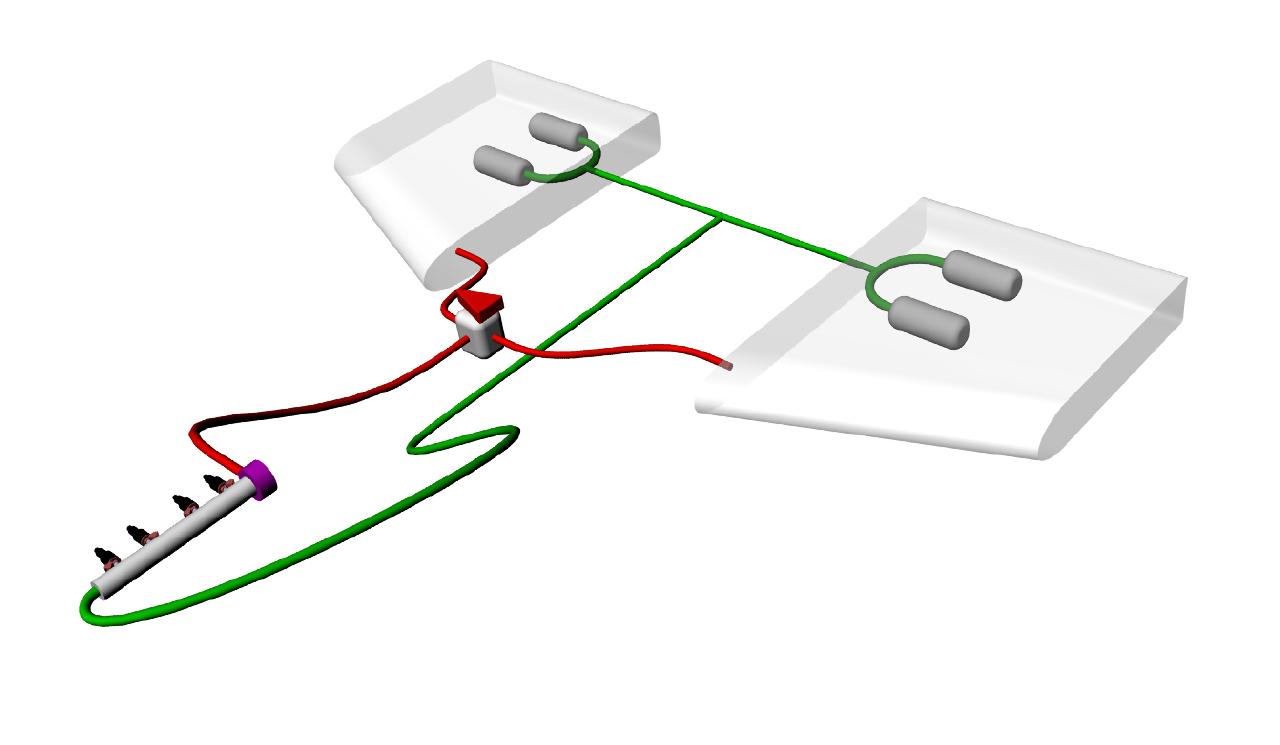
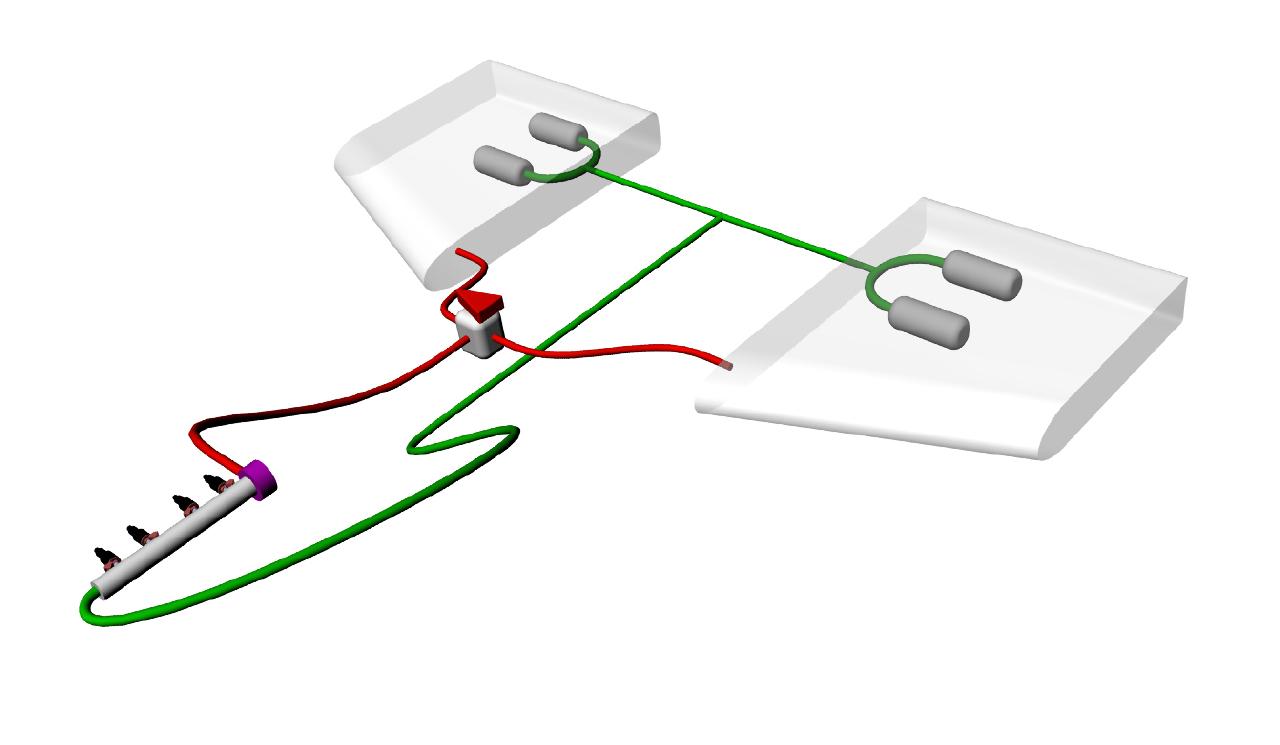
but that could be mitigated by pumps in the tanks as in this
3D.
--
Paul Lamar ...No rotor no motor.
The Rotary Engine NewsLetter. Powered by Linux.
ACRE NL web site.
http://www.rotaryeng.net
Copyright 1998-2006 All world wide rights reserved.