The last line of my last message was the following:
"The bearing load on the output shaft near the ring gear is equal to the
force as calculated torque / radius, F = T / r = 1722 lbs."
Oops, that is not correct.
That would only be true if there would be only one planet gear or if it
would be a stationary spur gear arrangement.
Having several planet gears equally spaced around the circumference, the
various force components cancel each other out, so that theoretically,
there is no load due to torque on the bearing holding the planet
carrier. The same is true for the sun gear bearing.
Now I realize that I made another mistake. For the better however.
The force on the planet carrier bearings is output torque over the
radius of the planet carrier.
The radius of the planet carrier is in our case 3/4 of the diameter of
the ring gear. 234 / 2 *3/4 = 87.75 mm or 3.455 inches.
F carrier = 660 ft lbs * 12 / 3.455 inches = 2292 lbs. Divide by 6
carriers is 382 lbs.
The load on each side of the planet gear which is also the contact force
between the teeth is half of that or 191 lbs.
This also agrees with calculating the sun gear on its own.
F = T / r = 220 ft lbs * 12 / (234 / 4 /25.4) = 1146 lbs. divide that by
6 planets gear = 191 lbs per contact point.
Instead of 287 we have only 191 lbs or 2/3 of the load.
The stress is proportionally lower, instead being 12,000 psi it is only
8,000 psi, which is quite acceptable for hardened gear steel.
Sorry for the wrong calcs sent earlier.
Rolf
I thought about responding to that but I did not want
to prolong the agony :)
I still think the pitch line vel. is not so simple.
When you have a moving planet gear and planet gear
carrier moving around the sun gear at the the same
circumferential vel and direction as the teeth on the
sun gear the planet gear would not rotate at all.
The pitch line velocity would be zero.
Lets get off this subject as Doug is not likely
to put the money into this that WILL BE REQUIRED :)
He is in for a huge sticker SHOCK!!!
Right Francois?
Paul Lamar ...No rotor no motor.
Paul
With all due respect you assume too much:) Cost has never been the deciding
factor with me. If so I wouldn't be making a Seawind and attempting a
turbo-compound system. I know how much Mistral's unit cost and that is
still an option depending on the success of the turbo compound. The final
PSRU decision is an engine or two away. There are many variables to consider
in this project. Mass produced Ford or Allison units are neither good nor
bad weighted in this consideration at this moment. You know I am not
planning to go into business with this unit.
DougFir
I was taken by surprise when you were able to talk
Dave Garber out of those parts. I knew you were interested
in that gear box but I never thought anybody would
seriously consider it when you informed me the
used price was $30,000. I don't think Dave was aware of
that fact unless you told him.
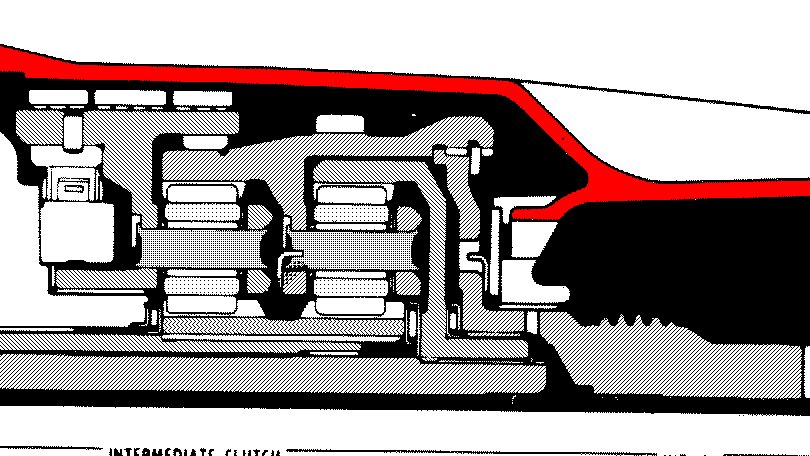
BTW the big trouble with the Allison and all GM automatic
designs is the degree to which they integrate parts.
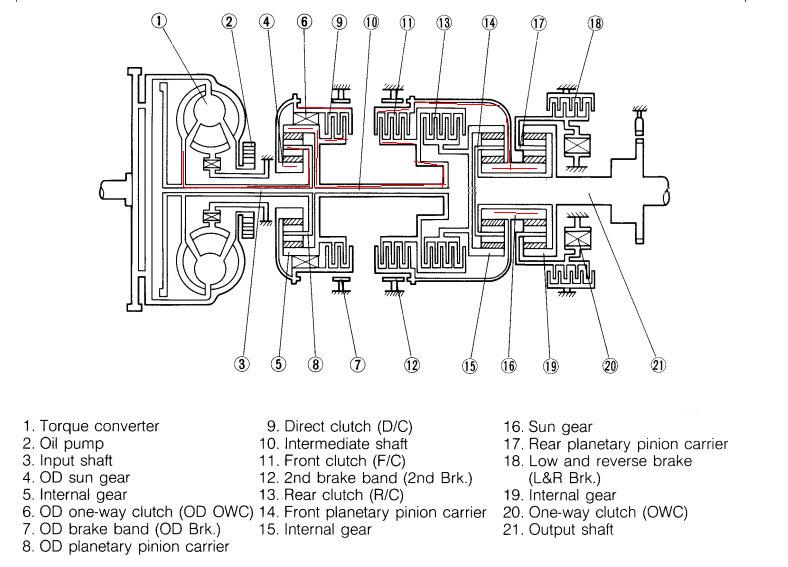
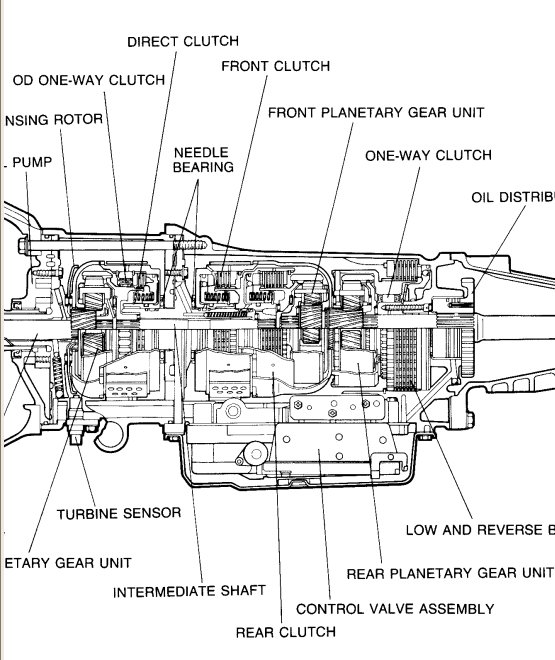
For example: The ring gear, ring gear bulkhead and shaft
can all be one piece in the GM or Allison while in the Ford/Jatco
design they are three separate parts. This makes it much easier to
incorporate the Ford parts and explains why the Ford parts are
so ubiquitous in PSRU's. It also lowers the costs of the
required parts as you are not paying for something you
are not using.
Paul Lamar ...No rotor no motor.
The Rotary Engine NewsLetter. Powered by Linux.
ACRE NL web site.
http://www.rotaryeng.net
Copyright 1998-2006 All world wide rights reserved.