Paul,
The mechanical injection will idle just fine.
Fuel Delivery is tied to throttle opening -- it is not just a
function of pump output with rpm.
The barrel valve controls how much fuel goes to the nozzles. It is
linked directly to the throttle. As the throttle is opened the
barrel valve turns to allow more fuel to go to the nozzles. You can
see the linkage in the photo.
There are several other features of the system that allow very
precise fuel delivery at all engine operating conditions.
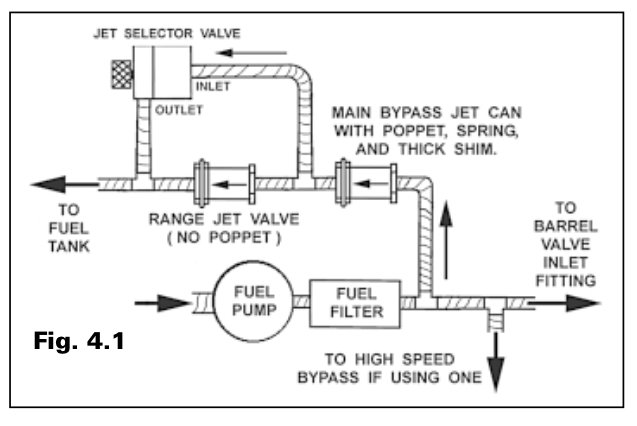
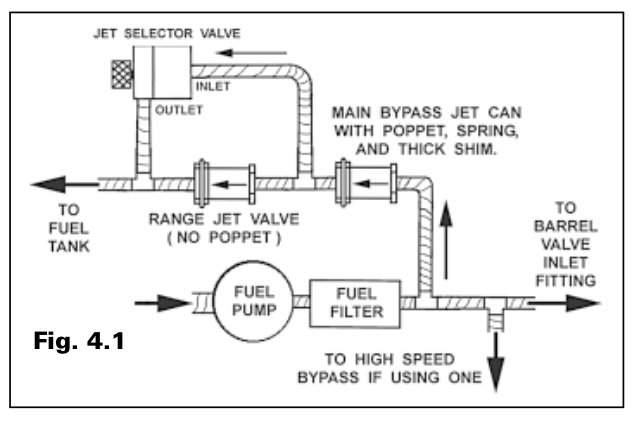
Have a look at the basic schematic. See where it says jet can?
That's where we put the needle valve for leaning. The more we open
the leaning valve the greater the return to the tank and the less
fuel flowing to the nozzles.
So we are not leaning by restricting flow -- we are leaning by
increasing flow to the return. This is the key concept.
There are also other subleties to the system. The barrel valve
diverts some additional flow at low throttle opening. This is the
secondary bypass valve. Have a look at the photo and the explanation.
This system will work like a charm for an aircraft engine. We will
have precise fuel metering throughout the operating range, very
precise leaning -- and best of all great reliability. As long as the
engine is turning we will have fuel delivery.
Regards,
Gordon
What does all this cost? Most people installing the
rotary are driven by cost.
The Kinsler pump puts out 1000 pounds
per hour at 2000 RPM. We are running our engines
at 7000 RPM and we need 30 pounds per hour max.
10 gallons an hour at cruise.
We would then have to run the pump at 30/1000 or 60 RPM.
If we had a two inch pulley on the e-shaft the pulley
on the pump would have to be 7000/60 x 2 or 233 inches
in diameter!!!! :)
These low RPM 800 HP mechanical fuel injection systems seems
impractical for a high RPM 250 HP rotary.
Paul Lamar ...No rotor no motor.
Paul,
Here is the flow for the various size Kinsler pumps.
The smallest pump, the KW-200 will work just fine. It can flow 570
pounds per hour at 50 psi and 3500 pump rpm, which is 7000 engine rpm.
If you run a lower pressure flow will be lower. Even with a
turbonormalized engine 25 psi fuel pressure will be plenty.
So flow would be:
New Flow = Old Flow * (New Pressure / Old Pressue )^0.5
New Flow = 579 * (25 / 50 )^0.5 = 403 pph
At 5 psi it would flow only 180 pph. At 2 psi it's only 112 pph.
This is maximum flow at 7000 engine rpm. Don't forget you've also
got a return flow to the tank. I don't see a problem with this
amount of flow. If you think this is too much you can run the pump
at a lower speed, just change the pulley.
Btw, what speed does the unneeded oil pump turn on the rotary? If it
turns 1/2 speed and the gear is strong enough, you can just run the
pump right off this gear.
As far as cost, I don't anticipate it is that much. The costliest
item is the fuel pump. You also need the barrel valve. The single
port barel valve is probably the cheapest and best for our use.
You also need a couple of nozzles and the Parker valve for leaning.
You need a couple of AN Tee fittings, and some fuel line. That's it.
An Ellison carb costs more than $800 for the smallest one. An
aftermarket EFI controller that lets you lean the engine from the
cockpit costs $1000 or more. And that's not including fuel pumps and
fittings and lines and all the other little pieces you need.
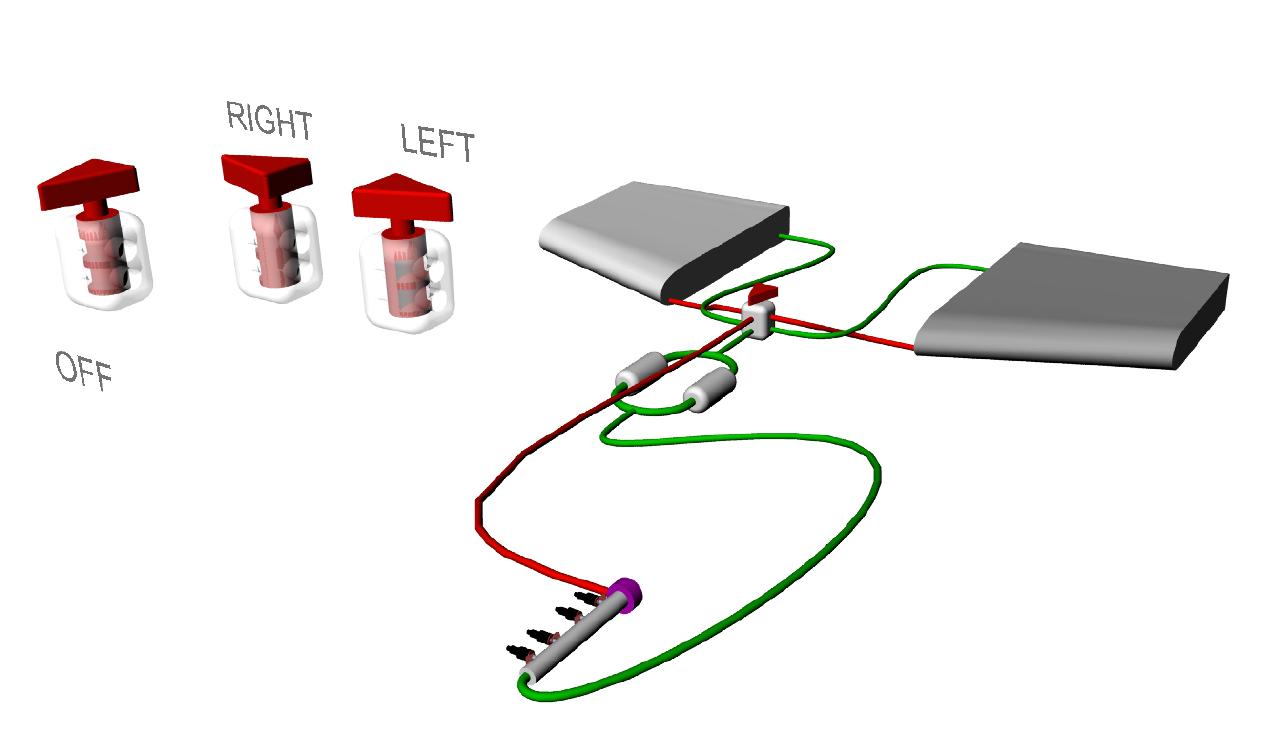
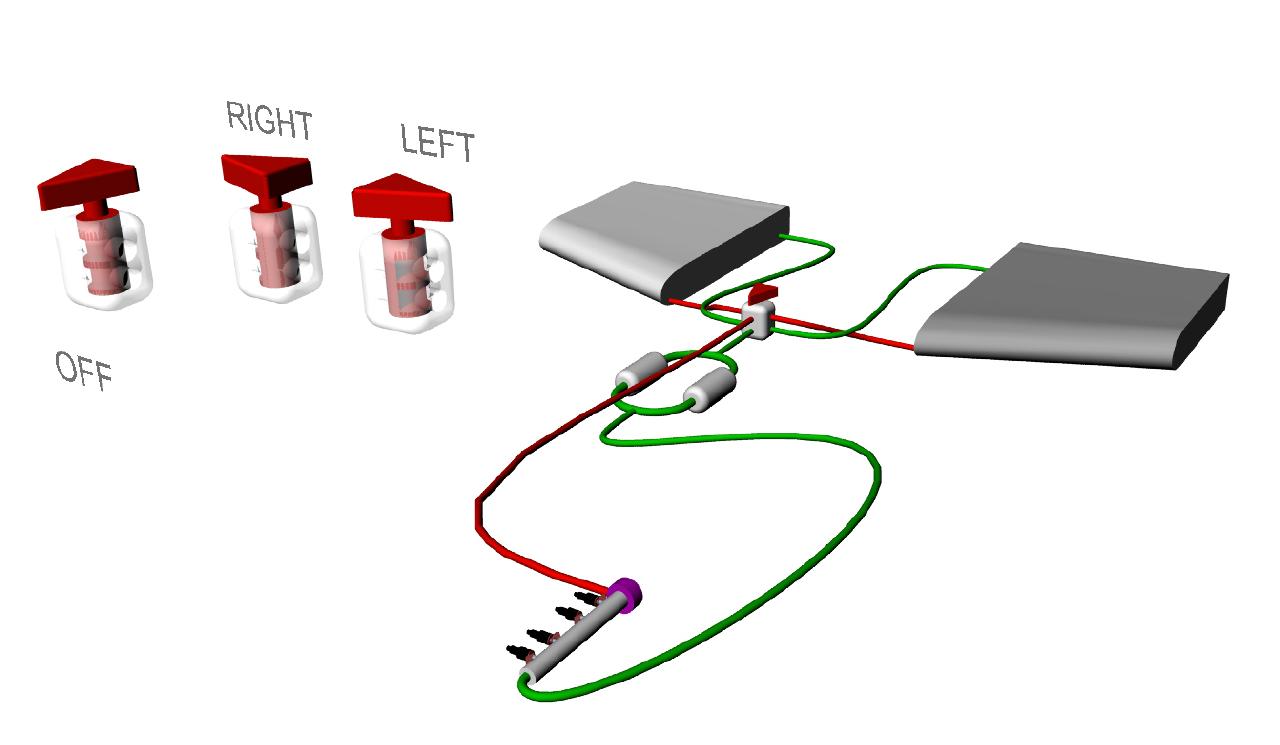
Btw, the Kinsler system is designed for leaning. You can use either
their jet selector, which you can turn from the cockpit to ratchet
between eight different jet orifice sizes, or an electric leaning
valve. See pictures.
Using our Parker valve isntead, will work just dandy. The system is
designed around this method.
Regards,
Gordon.
PS: The sprint cars have a lumpy idle because they use big cams with
lots of overlap, not because of any shortcomings with the fuel
injection. I would guess that when you add P-ports you effectively
lengthen the overlap too.
----------------------------------------------------------
You are pumping a lot of fuel back to the tank.
You now need a two level fuel selector valve with dual fuel
lines everywhere just like an EFI system or you
will pump one tank dry in about 20 minutes or less.
One of the things we want to avoid with a low pressure
fuel injection system.
Race cars have only one fuel tank.
570 pounds per hour at 3500 RPM is still 20 TIMES more than we need.
That is a four inch pulley driven by a two inch pulley.
To halve the pump RPM again and reduce it to only 1750 RPM
and ten times more than we need or 285 pounds per hour
would require an eight inch pulley on the pump and a two inch
pulley on the e-shaft. Still impractical and space consuming
from an aircraft installation point of view.
I have some more info on the Kinsler but I won't upload it
here. Too many attachments already. I'll upload it next message.
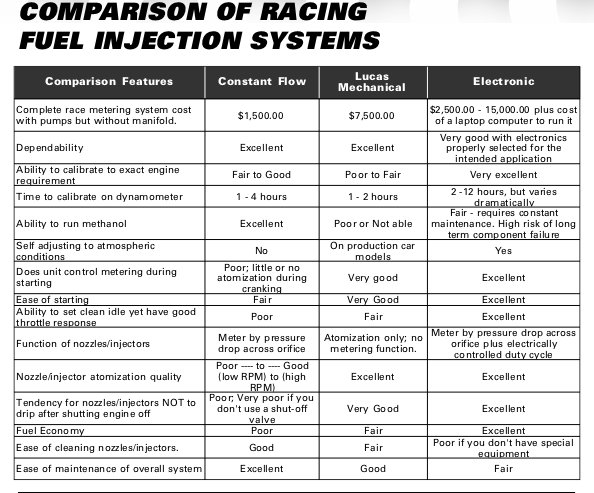
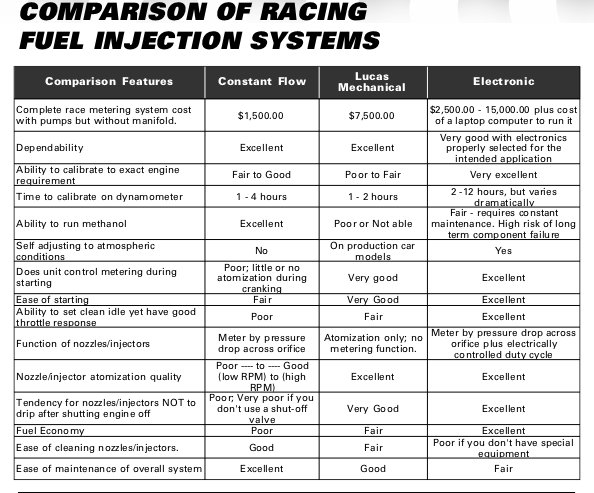
Cost is approximately $1500 which is way more than Tracy EFI system.
More than most people spend on their engine.
Paul Lamar ...No rotor no motor.
Paul,
Let's say I have a turbonormalized 2-rotor engine that is P-ported
and making 250 hp up to 20,000 ft. Let's say its BSFC is 0.5.
At 80 percent power that is 200 hp and 100 pph fuel burn. You want
to have a pump with at least double that capacity. Look at the boost
pumps that fuel injected airplanes use. Go to Aircraft Spruce and
you'll see a Weldon pump that is rated at a MINIMUM of 35 gph;
that's over 200 pph:
http://www.aircraftspruce.com/catalog/eppages/weldonfuelpump.php
That means it can put out more. And don't forget that the
engine-mounted fuel pump is pulling not pushing. In the case of
Doug's Seawind and his six foot uphill fuel line, he could use an
even bigger pump.
So if you are using a turbocharger or supercharger and need to run
high pressure, the small Kinsler pump will work just fine.
If you have a normally aspirated engine and can use a low pressure
system, why not just use the stock diaprhagm fuel pump? You can
still use the constant flow nozzles, the barrel valve and the
leaning valve. You will save a lot of money on the fuel pump.
The point is you don't have to be using the pump's full capacity --
and you probably never will.
Also, those pulleys are pretty small. Why would you want to put a
2-inch pulley on the pump? The one in the photo looks to be maybe an
inch. So if you wanted to step down the speed to 4:1, you need a
4-inch pulley on the engine.
Regards,
Gordon.
If it is a turbo charged system I would recommend an EFI
fuel system for better control of detonation. The computer
can monitor the intake air temperature and/or the detonation
sensor and richen the mixture
or retard the ignition or inject anti detonation fluid.
All that is way too complicated for any mechanical system.
The two inch pulley is on the engine and the eight inch pulley
is on the pump to step it down from 7000 RPM engine speed
to 1750 RPM pump speed. I think we are both making a lot of
mistakes on here. The most fuel burn I have seen on an NA rotary engine
is 30 gallons an hour or 180 pounds an hour. 570 pounds an hour
is only is only three times as much as we need and not 20 times
as much as I stated. Anyway here is the Kinsler data I spoke of.
You uploaded some of this 11/30 I think.
Also a double layer fuel plumbing system 3D required to handle
the return flow.
There are other high buck high pressure
mechanical fuel injection systems on the market. Some for aircraft.
Nobody since Everett Hatch seems to be interested in them
for the rotary.
http://www.eci2fly.com/
Also the Silver Hawk in the AC Spruce cat for $2200.
I also don't think a 50 psi mechanical fuel injection system
is worth all the trouble and expense over a 2 psi simple fuel
system that has been used for close to 100 years
on cars and airplanes with carburetors. I would like to
find a low cost mechanical pump to supply a 2 psi system
however.
I like the rotary positive displacement mechanical fuel pump but
I don't think the Kinsler pumps are suited to our purposes. I would
like to find a rotary engine driven mechanical pump to supply
a 2 psi system.
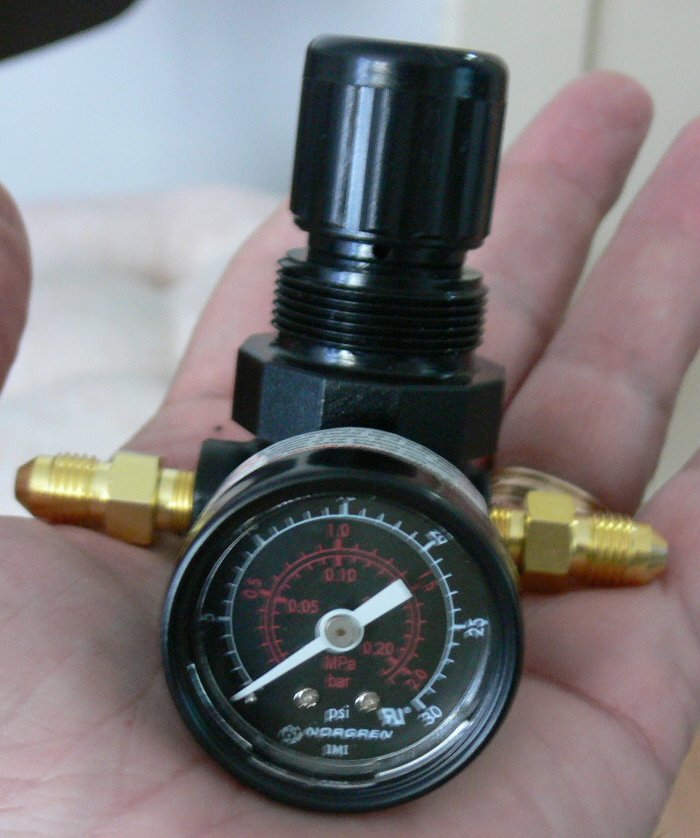
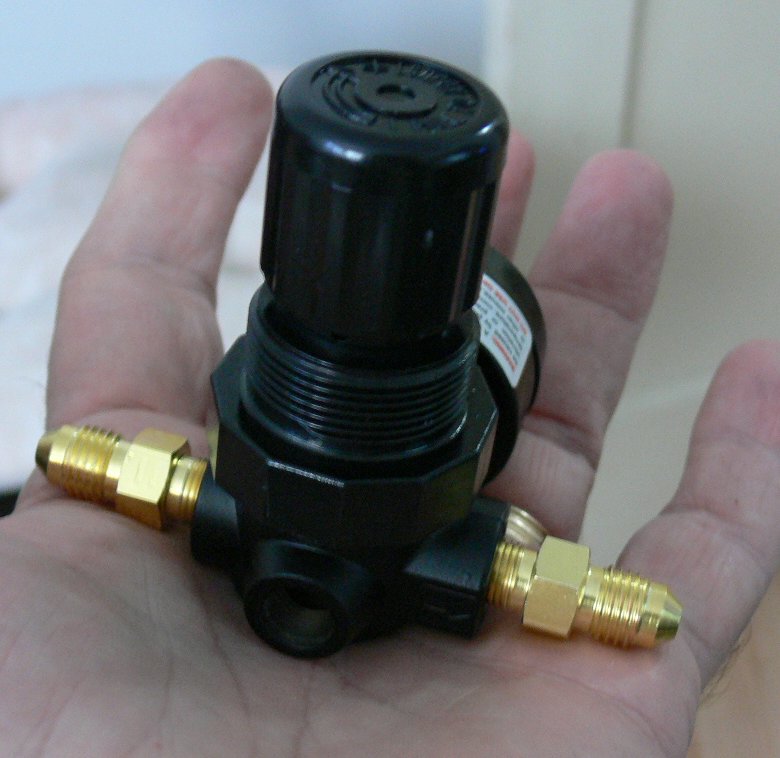
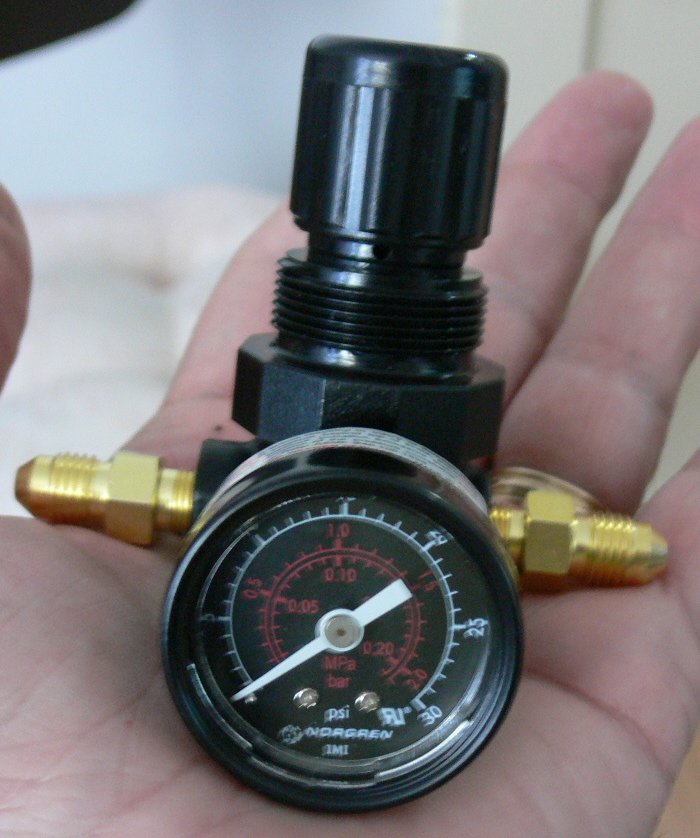
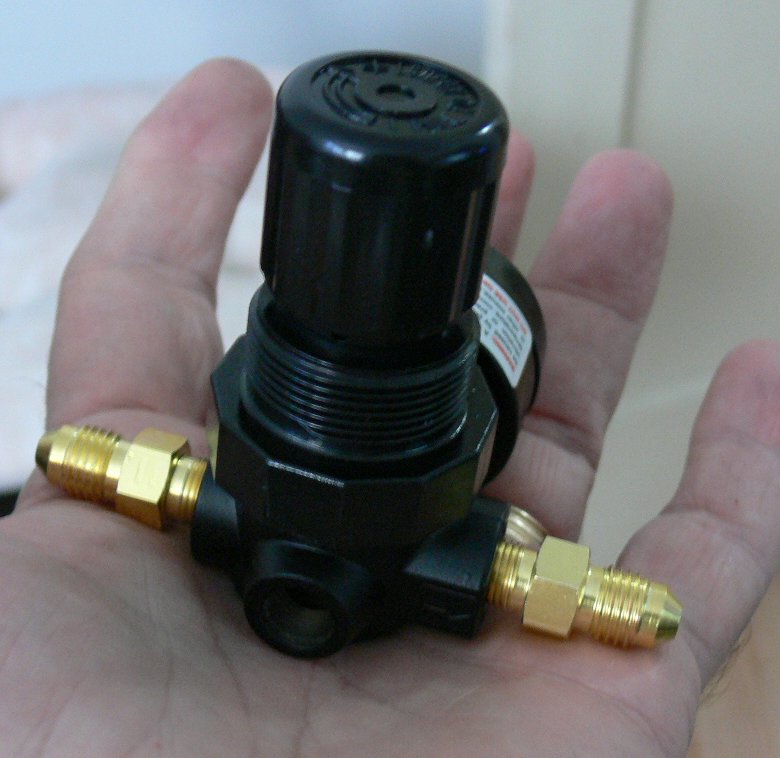
BTW Here is a low cost dia cast aluminum pressure regulator that
I have and I am thinking of using. It is primarily an air pressure
regulator but the Norgren maker says contact them for other fluids.
It is much lower cost and more accurate than your typical car racing
fuel pressure regulator. I intend to soak it in gasoline for awhile.
I think our low pressure system can be brought in for a couple
of hundred bucks total including the slide throttle with
the side benefit of 50 more HP at 7000 RPM.
Paul Lamar ...No rotor no motor.
The Rotary Engine NewsLetter. Powered by Linux.
ACRE NL web site.
http://www.rotaryeng.net
Copyright 1998-2006 All world wide rights reserved.