Paul,
I've worked up a spreadhseet for turbocharger sizing.
It is a simple 3 step process.
1. Enter the amount of horsepower you want at sea level, as well as the
desired air-fuel ratio and BSFC and you get the mass flow required to
make that much power in lbs/min.
2. Enter a few engine parameters like VE, RPM and displacment and get
the amount of boost you need to make the power you selected.
3. This is the best part. You can see how much flow you need at various
altitudes if you want to keep that amount of manifold pressure as you go
to a higher altitude. This also gives you the compressor outlet
temperature, plus the evaporative cooling temp. finally you get your
corrected mass flow that you use to select a compressor map.
You can enter whatever values you want in the green cells. You get
results in the tan cells.
You can see in the example that's in there that I've selected 300 hp at
12.5 A/F and 0.5 BSFC. This is takeoff power so I'm giving a rich
mixture. Probably could be even richer to be on the safe side.
Surprisingly, to make 300 hp only takes 35 inches manifold pressure iwth
a P-port 2-rotor. This is just a couple of psi boost at sea level. This
is typical of a turbonormalized aircraft engine.
You can see that at 20,000 feet we have a high pressure ratio of 2.5.
but we are still able to make 300 hp at 20,000 ft!
If you want to see what you get at cruise, just enter the cruise power
settings. The compressor map I selected is the Garrett GT3782, which at
cruise will put us right in the most efficient island.
Of course you could use this with any compressor map. That's the whole
point of this. Now you can see exactly where you are on the map at
various altitudes.
I will have more to come. We can plot a curve of our pressure ratio
increase iwth altitutde which will greatly help us to get the right size
turbine and compressor.
Regards,
Gordon.
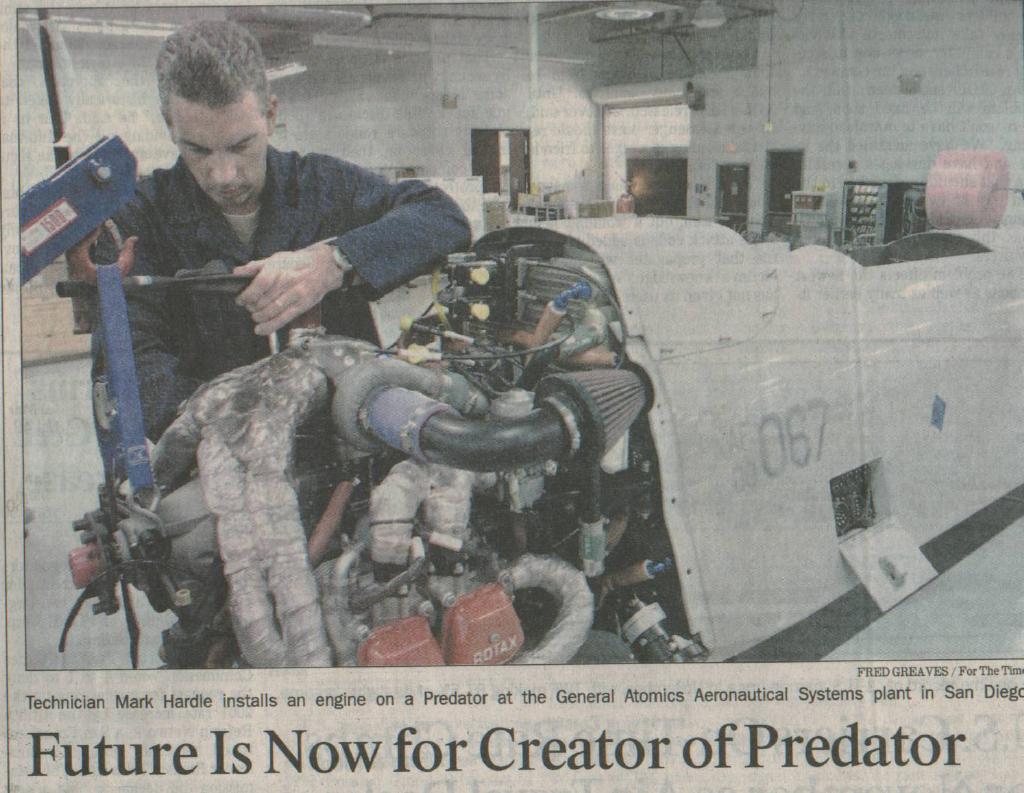
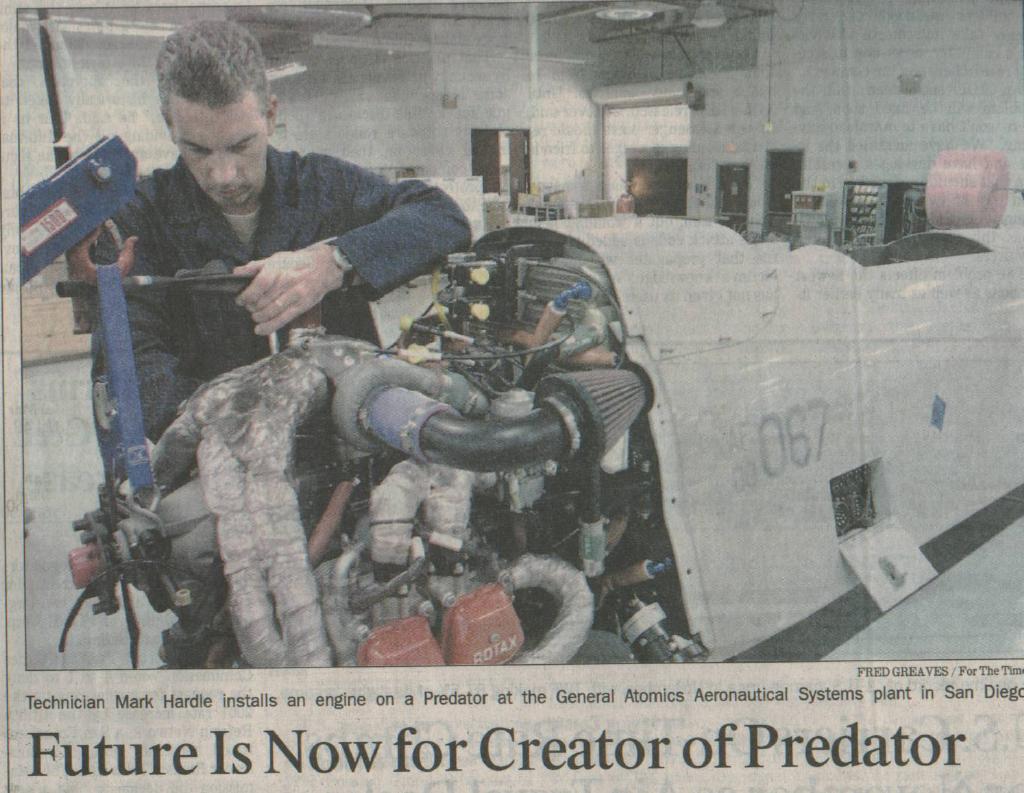
Thanks, I'll add it to my collection. Jeff Spitzer also did
a turbocharger xls spread sheet. Jeff is a rotor head, former Moller
engineer and now the chief engineer on the UAV Predator. He got the
Rotax 914 powered Predator up to 56,000 feet by modifying and
adding another turbo charger.
Paul Lamar ...No rotor no motor.
The Rotary Engine NewsLetter. Powered by Linux.
ACRE NL web site.
http://www.rotaryeng.net
Copyright 1998-2006 All world wide rights reserved.