Just thought I'd pass this along. Please subscribe me to your news
letter.
http://ntrs.nasa.gov/archive/nasa/casi.ntrs.nasa.gov/19920011408_1992011408.pdf
Joshua Thompson
Thanks for the NASA tech paper URL Joshua.
Typical NASA paper study. Garbage in garbage out.
NASA needs to start testing real hardware and stopping passing
money out to people doing erroneous paper studies based on other
erroneous paper studies. For example; the so called "BASELINE"
60 HP engine they used for this study had only a 90% VE at 6000 RPM.
Apparently this paper engine is the figment of someone's
imagination. The stock Mazda RX8 engine has 100% VE and a p-port
Mazda 13B engine is 120% VE. In other words no allowances were
made for intake and exhaust tuning.
I suggest they buy a real Mazda RX8 engine
and study it for a change. I'll bet that would cost one tenth
of what they spend on paper studies.
Paul Lamar ...No rotor no motor.
Paul,
Are those VE figures you mentioned accurate?
I'm revamping my turbo sizing spreadsheet and want to use accurate
VE. I had guessed that P-port was maybe 110 percent. I can believe
120, but just want to be sure.
Regards,
Gordon.
Yes. They got these number years ago.
It assumes tuned length intake and exhaust runners.
Abel Ibarra was able to achieve 800 HP with a stock
tuned intake system and a turbo charger. Side ports
no less. He is now looking at 500 HP per rotor
with P-ports I suspect but he is a bit secretive.
Paul Lamar ...No rotor no motor.
Thanks, Paul.
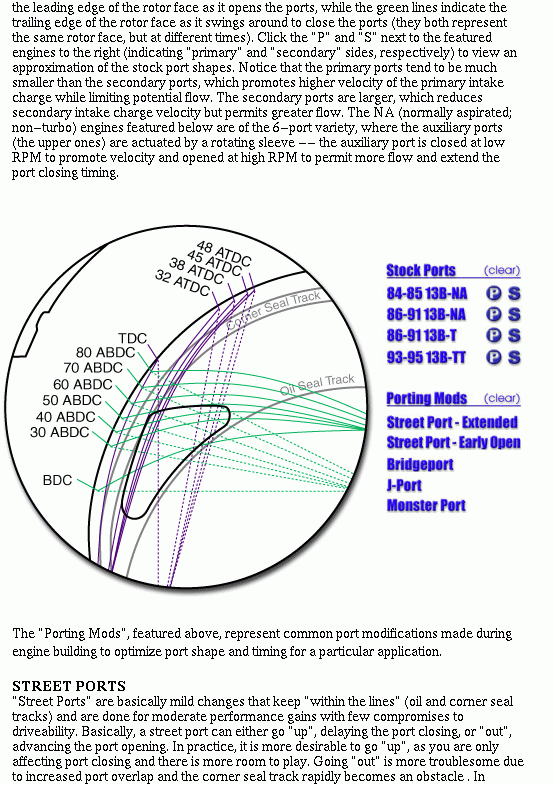
What do you think about the RX-8 side exhaust ports compared to the
P-port exhaust on the 13B?
I had assumed that the P-port would be be more efficient and hence
better for turbo compounding. But it occurs to me that the side ports
can have a bigger cross section area than the P-ports which are
limited by rotor width. Do you think the RX-8 exhaust ports could
actually flow more?
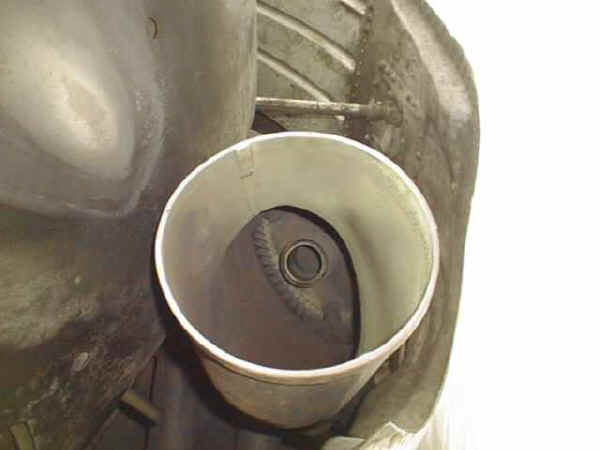
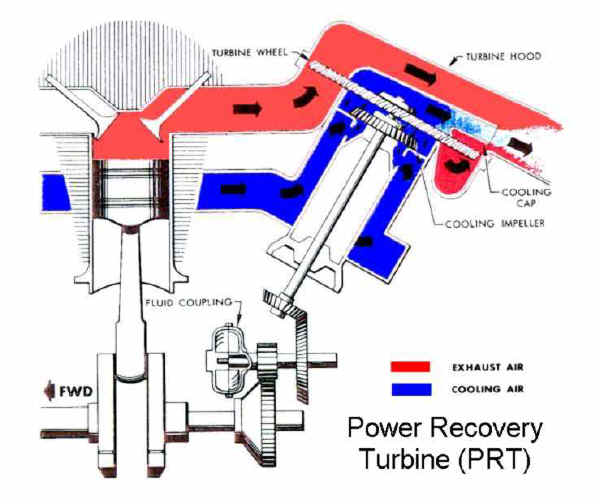
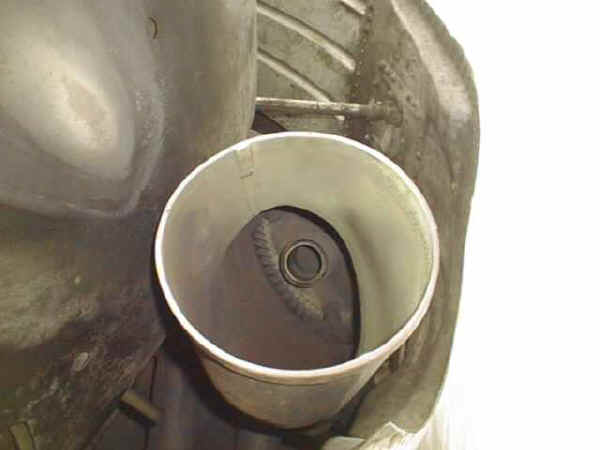
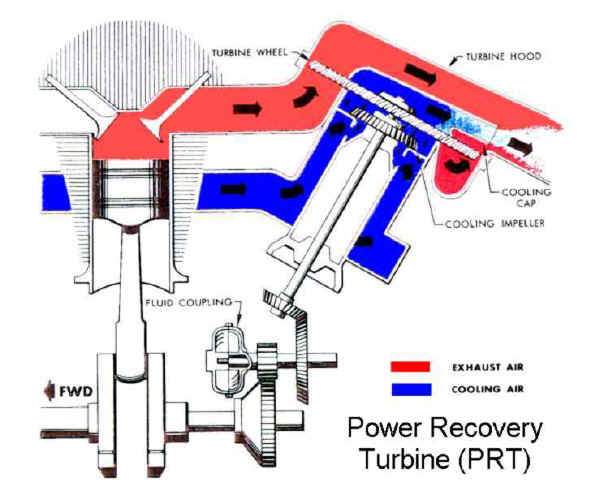
Btw, here is a picture of a CW 3350 Power Recovery Turbine wheel as
seen through the exhaust stack. Also a graphic that shows the
layout. Notice that the wheel is an axial flow, not radial flow like
modern turbocharger wheels.
I wonder if this is simply because this was the kind of turbine used
in turbochargers at the time and they didn't have anything better,
or maybe axial flow is better after all?
These turbines weren't without glitches apparently. I understand
pilots used to jokingly refer to the PRT's as "Parts Recovery
Turbines." I know Karibian has a lot of hours behind this engine and
he says it was very dependable.
I'm just wondering about that turbine. Maybe not quite as dependable?
Regards,
Gordon.
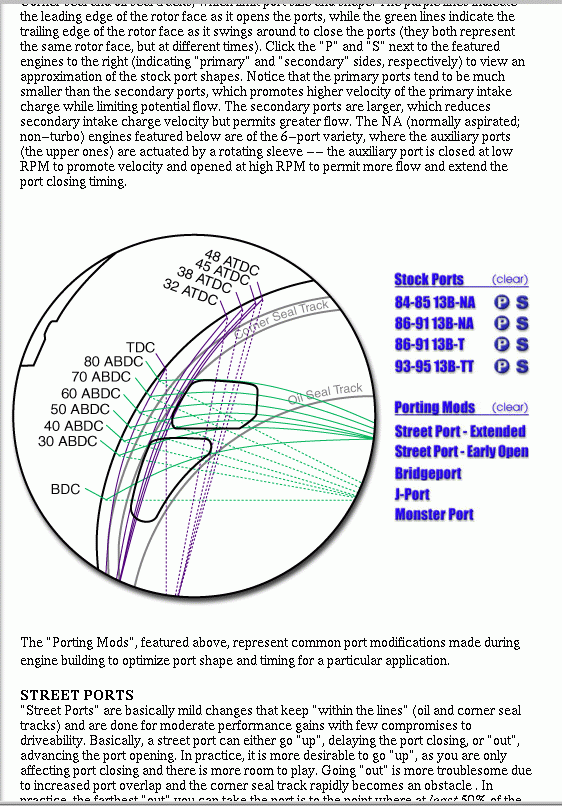
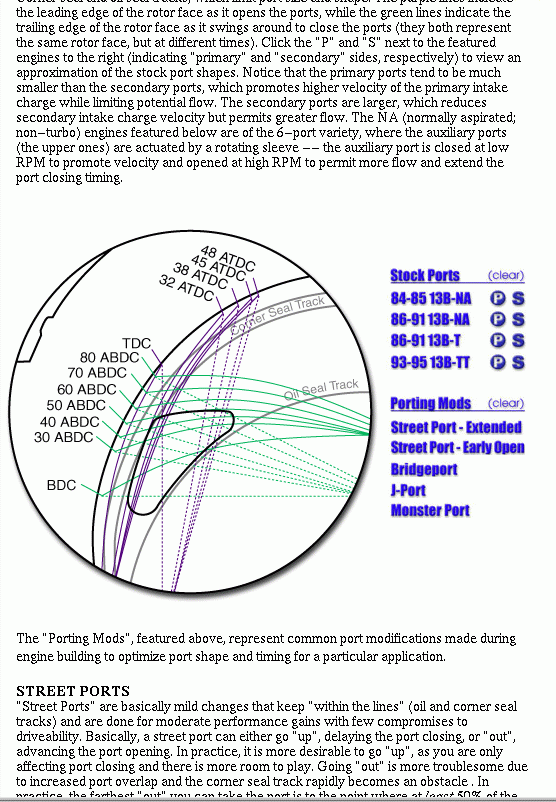
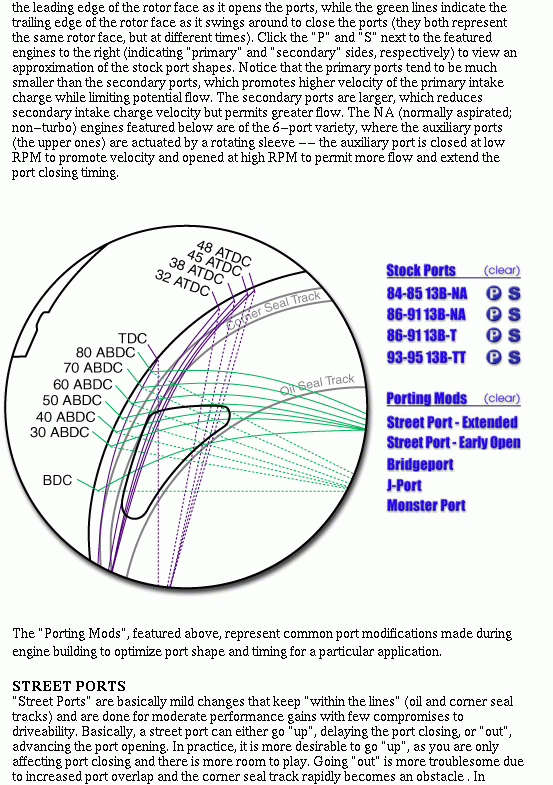
Apparently the straight in peripheral ports are worth
a lot over a right angle side port of the same area aerodynamically
speaking. The RX8 verses the higher power 13B p-port is probably
a good example.
"But it occurs to me that the side ports can have a bigger cross
section area than the P-ports which are limited by rotor width."
With a 16B it is decidedly the other way around. The RX8 side
port area about is as large as it can get given the requirement of
not losing the side seals. The p-port area is the square of the
runner radius mostly. Looks like something around a 2 1/2 inch
runner will be possible with the 16B. A current 2 inch runner has
3.14 square inches of area while a 2.5 inch runner has an area of
4.9 square inches or 56% greater area while the 16B displacement
is only 20% greater.
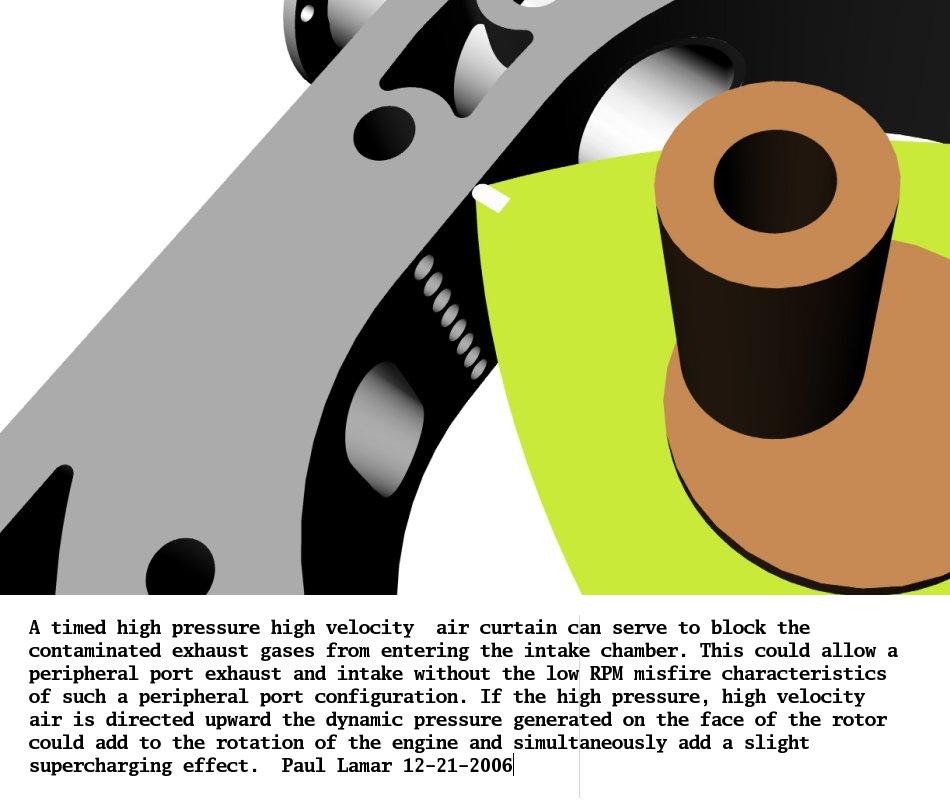
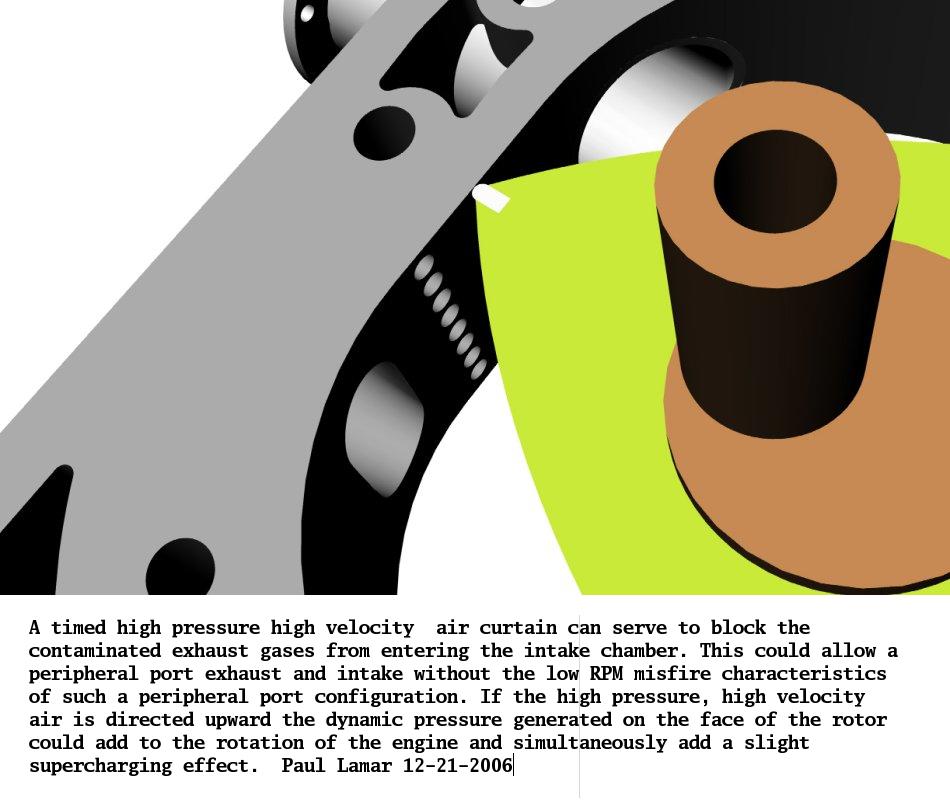
I think a combination side and peripheral will eventually be the
way to go. Both exhaust and intake. The AIXRO rotary already has
both side and p-port intakes.
I think the Wankel rotary still has a long way to go before it is
optimized. I can think of all sorts of things to try.
http://www.rotaryeng.net/Strat-charge.html
What did in the R3350 TC was an exhaust valve would break up
and take out some turbine blades on its way out. This unbalanced
the turbine of course causing a vibration that necessitated
shutting down the whole engine. Needless to say the rotary turbo
compound WILL NOT have that problem.
Paul Lamar ...No rotor no motor.
The Rotary Engine NewsLetter. Powered by Linux.
ACRE NL web site.
http://www.rotaryeng.net
Copyright 1998-2006 All world wide rights reserved.