>> Side/end plates are where the real weight loss is to be
>> had. Mazda has even done the parts already, published a paper on
it and
>> everything! The LeMans engine used detonation gun coated and diamond
>> ground end and intermediate housings. They ran 24 hrs flat out
and won
>> one of the worlds biggest races over all. This is also the
safest way to
>> lose weight off the engine, it has already been tested by the
factory!
>> Foamed metal and all this other stuff is fine, but getting
something to
>> market is the key.
>>
>> A rotary with aluminum end and center housings would
>> have such a HP to weight advantage it isn't even funny.
>> Bill Jepson
>>
>>
>
> It should be possible to cast these from aluminum using factory parts
> for templates. You would probably need to put a thin steel sheet
on for
> wear protection.
>
> I can dream of a 1-rotor with aluminum ends . . .
>
> Keith Wood
Bill,
Do you know if the Lemans end and intermediate housings were
specially made?
I assume they were cast with the side ports filled in and the void
behind
the side ports vacant.
I wonder if cost is the main reason driving Mazda to stick with iron
housings or if there is a long term durability issue from heating and
cooling cycle that occurs after shut down with a long sandwich engine. I
They did it with the 10A though and that was the engine that drove
the Cosmo
110 on the road.
Aluminum end and intermediate housings is an idea that won't die.
What does
it take to make one? Ie could be do one using the lost wax method?
Doug
--------------------------------------------------------
Doug, ET AL
The wear resistance of aluminum castings could possibly be enhanced
using a Nickel Silicon Carbide composite plated on the wear
surface. This composite apparently has excellent durability. The
question in my mind is how the plated composite would resist long
term heat cycling due to the differences in thermal expansion. The
url below has some info on the material.
http://www.uschrome.com/productsandservices/nickel/nicom.asp
Joel
Retired (mostly tired) Ceramic Materials Engineer
-----------------------------------
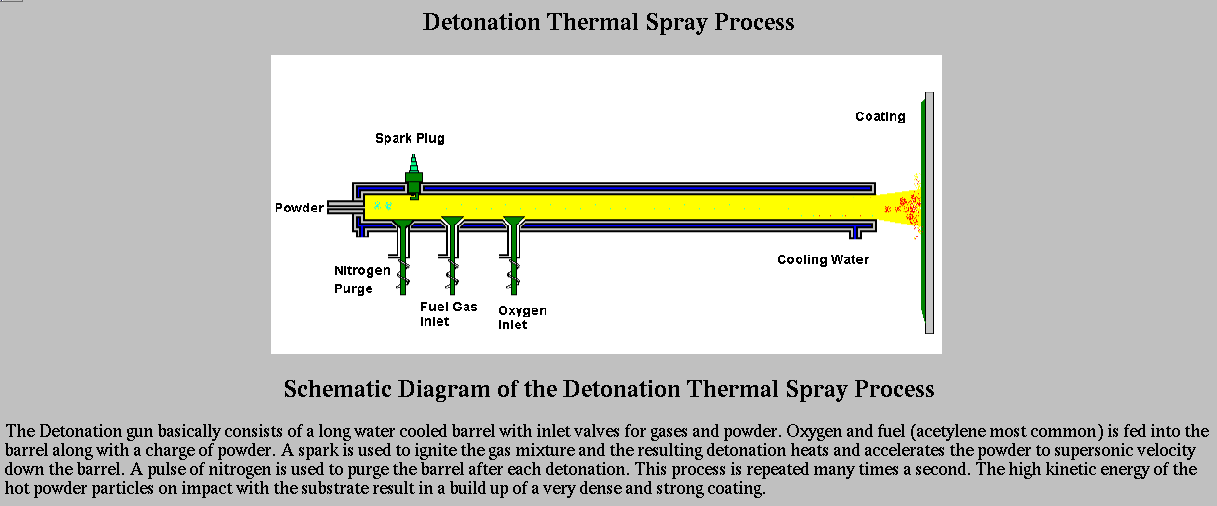
The best way to apply it is with a detonation gun as used by Mazda
in the Lemans engine.
Paul Lamar
A-Flame Corporation Detonation Gun
8175 Kroger Farm Road, Cincinnati, OH 45243-1639 USA
Tel 1-513-831-4284 Fax 1-513-831-5237
E-Mail:
detonation@aflame.com
You Can Have It, Too!
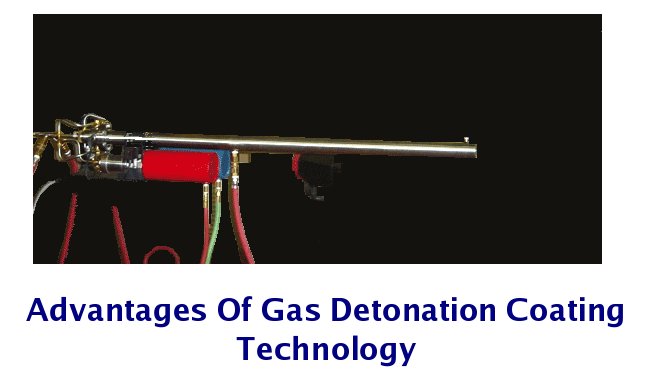
The gas detonation coating process is a spraying method aimed
at creating a new technological generation of production coatings,
or the production of bulk component parts, made from powders. The
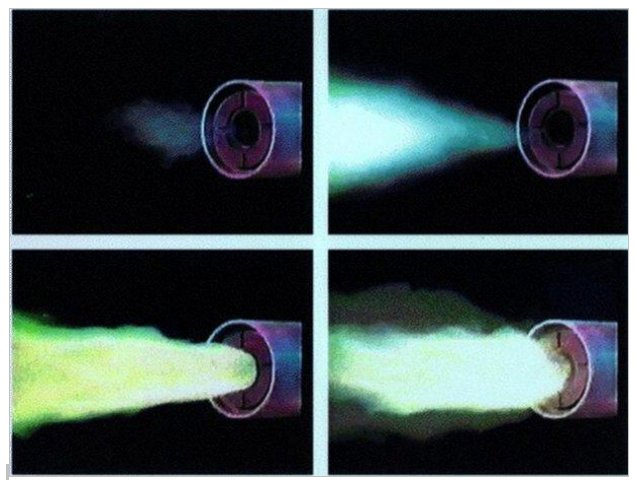
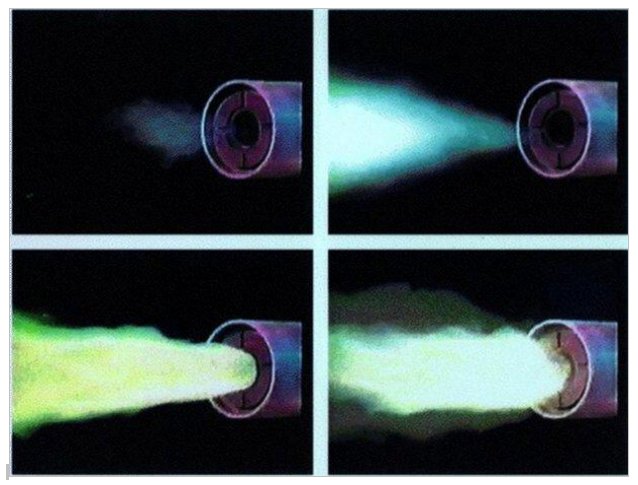
above images show the flow of detonation products from the Detonation
Gun barrel. Four photographs are taken with a 50-microsecond
interval between each. This illustrates the ultra-fast nature
of the detonation process.
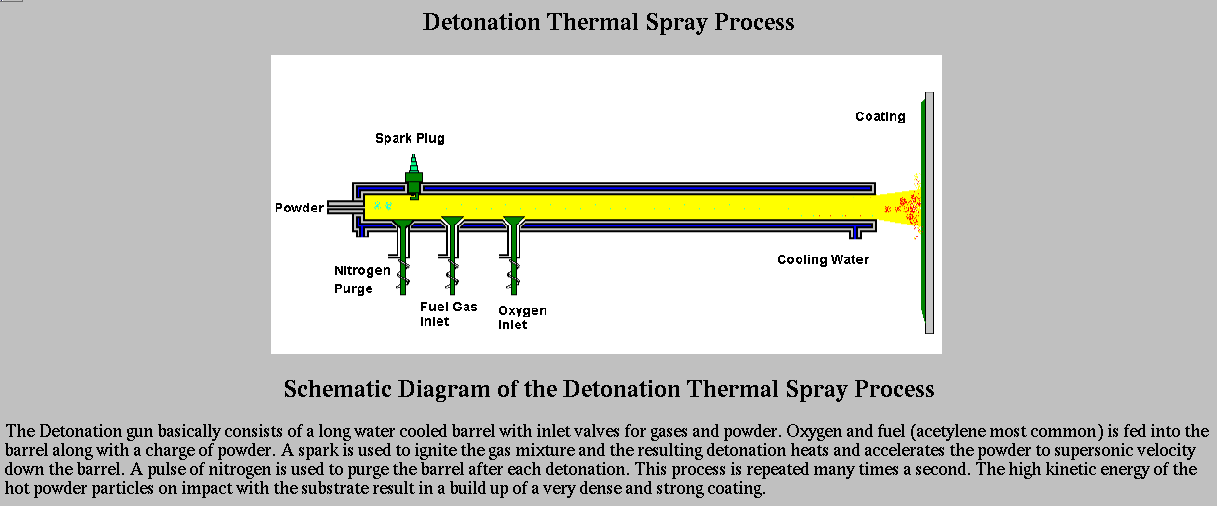
The deposition of coatings is done, by using the energy of the
detonation (explosion) of gaseous mixtures to achieve powder
acceleration. The effect of gas detonation results in a premium
coating quality, the lowest substrate temperature, and a very
economical, and safe manufacturing operation. The patented design
of the Detonation Gun, uses the gasses' dynamic effects, to prevent
a backflash during detonation, which eliminates the need for
mechanical valves, makes the apparatus extremely simple and reliable,
while substantially raising the operational frequency and productivity.
This process uses a wide variety of fuel gases, including propane,
methane, and natural gas.
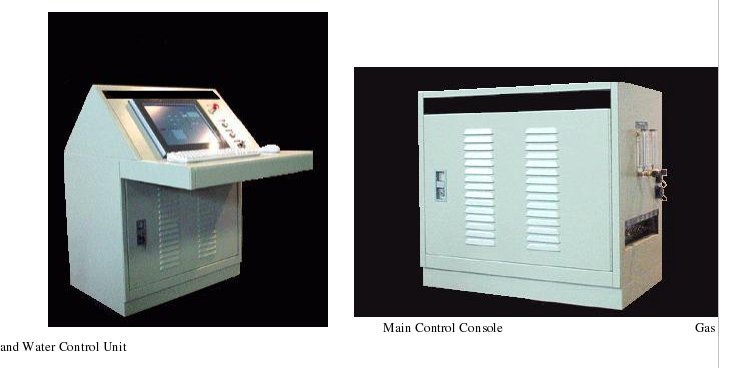
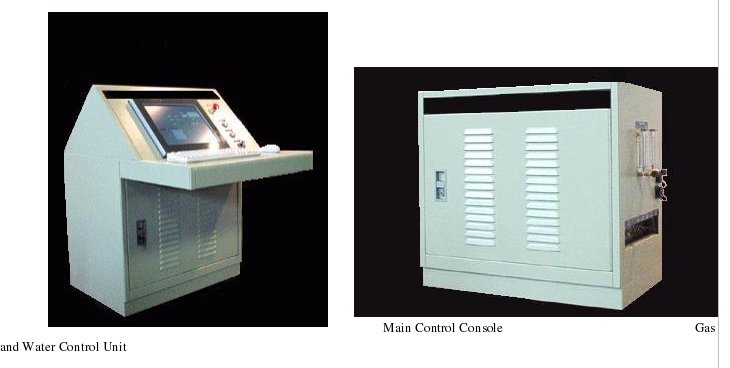
Main Control Console Gas and Water Control Unit
This process is capable of producing coatings of the following metals:
(Al, Zn, Cu, Fe, Ti, V, Co, Ni, etc.), oxides (Al2O3, Cr2O3, MgAI2O4,
TiO2, etc.), carbides (WC, Cr3C2, 91WC-9Co, 85Cr3C2 - 15[Ni-Cr], etc.),
alloys (2OCr-8ONi, 30Al-O.2Fe-69, 8NI, 53Nb-47Ti, etc.) and compounds
(lOONi [B, A], etc.) on various metal, dielectric and plastic substrates;
including glass, ceramics, etc. The characteristic value of adhesion is
as high as a measured 36,250 psi, porosity <1%, layer thickness is
unlimited, deposition efficiency up to 80%, substrate temperature
during deposition 200-1500 C.
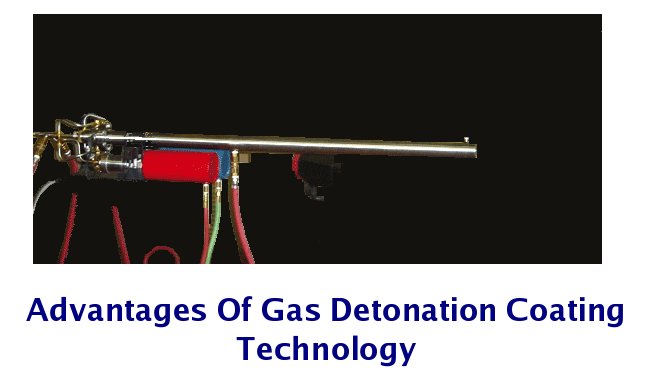
Advantages Of Gas Detonation Coating Technology
Gas detonation is capable of producing the highest pressure, velocity,
and density in the gas flow, which is not achievable by all other spraying
techniques. As a result, the detonation coatings are characterized by
extremely high density, microhardness, and low porosity, and are suitable
for applications requiring very high standards, such as aircraft engine
components. An example would be production of WC-9Co coatings on the
high strength alloy gears of turbines, for helicopter engines,
with 0.3% porosity, 250 MPa adhesion and 1392 HV average microhardness.
This allowed a 7-fold increase in the operational lifetime of this part.
A great variety of materials can be sprayed by using the detonation
technology and a broad selection of base substrates can be coated.
In addition to premium coating quality, the use of the gas detonation
coating process, provides the following benefits:
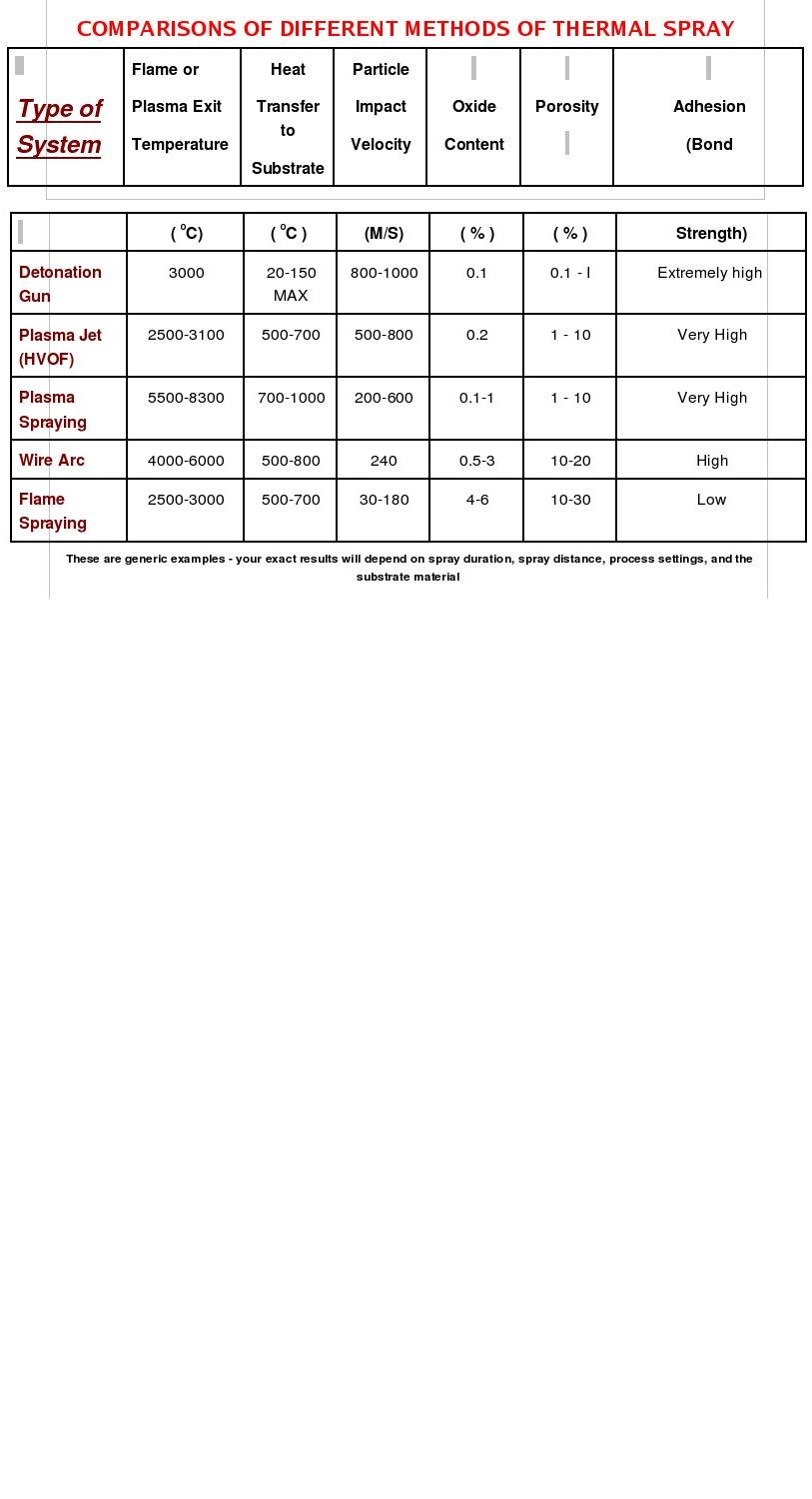
- Low Substrate Temperature: Due to the intermittent nature of
the process, the amount of heat transferred to the substrate stays
very low. The substrate temperature, during spraying, does not exceed
150 C and can be maintained at room temperature, if necessary. This
makes possible the spraying of precision components such as crankshafts,
or turbine blades, without the danger of causing thermal deformations,
or chemical changes. It is also possible to spray low melting point
materials, such as plastics.
- No Use of Nitrogen: The use of Nitrogen changes the properties
of the detonation wave, particularly its velocity, degrading the
quality of the coating. This new gas supply system completely excludes
the use of Nitrogen, as a protective gas. A significant feature is
that the gases are fed continuously into the combustion chamber and
backfiring is prevented by the special design of the gas supply unit.
This eliminates the need for a buffer gas, as well as mechanically
moving valves in the gas supply system, making the process much simpler
and more reliable.
- Low Cost of Operation: The manufacturing experience of our
customers, demonstrates that the use of the detonation coating process,
in production, is very cost-effective; and, it results in substantial
operational and maintenance cost reductions, as compared to the
typical HVOF and plasma spray systems. This is due to the following
five principle factors:
Less Gas Used: A high-pressure fuel and oxygen supply is not
needed. The gases are fed into the combustion chamber at low pressure,
slightly exceeding atmospheric pressure. The total amount of gases
consumed, per unit mass of powder sprayed, is about 10 times less
than the typical HVOF system.
Less Water Consumed: Due to the low amount of heat transferred
to the gun barrel, a special cooling system is not needed. Water
consumption is very low.
Less Electrical Energy Consumption: Very effective electric
power consumption - the unit consumes a total of 200W of electrical
power, which is comparable to a regular electric bulb. A water chiller
is not needed, which requires a lot of electricity.
Less Downtime: The process is very simple to operate and very
reliable. There are literally no components that can wear out, similar
to Laval nozzle in the HVOF gun.
Less Scrap: There are no nozzles that can melt, or disintegrate,
and spit copper on the expensive part being sprayed.
The gun barrel can be mounted at any angle, or can be fixed
in the arm of a robot-manipulator. Multiple gun barrels can be installed
to satisfy process requirements for high volume.
The gun design allows you to use the same unit as a grit blaster,
without modifications of the barrel, or the gas supply system.
This eliminates the need for a separate grit blasting booth, and
it allows for a combination of surface grit blasting and further
spraying, in one continuous operation.
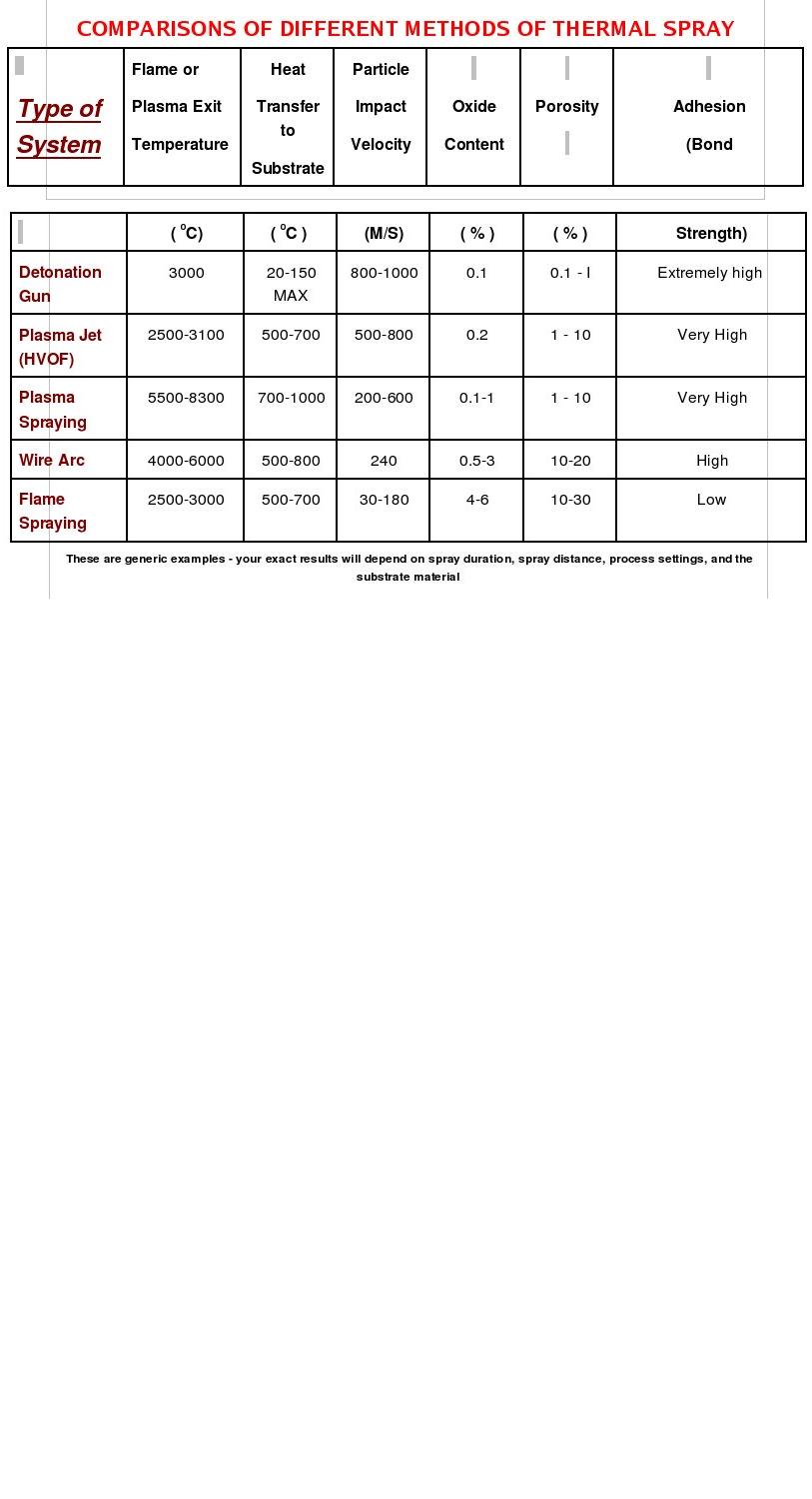
These are generic examples - your exact results will depend on spray
duration, spray distance, process settings, and the substrate material
For More Information, please phone, fax, or e-mail
a note of inquiry to: A-Flame Corporation
8175 Kroger Farm Road, Cincinnati, OH 45243-1639 USA
Tel 1-513-831-4284 Fax 1-513-831-5237
E-Mail: detonation
The Rotary Engine NewsLetter. Powered by Linux.
ACRE NL web site.
http://www.rotaryeng.net
Copyright 1998-2006 All world wide rights reserved.