His opinion is that a one-inch crank throw is about maximum for a
manual
lathe which is far less than an e shaft would require.
Hi Y'all,
the "throw" ie, the eccentric on the eshaft, is 15mm, a little less
than 5/8 inch. But I think you mean throw in the lathe sense; but still
only about 3 inches; many home lathes are up to this task since you
will be sending it out for finish grinding.
And, a single shaft can be turned out of a twin shaft, the only
singles I know of, (3), have e shafts turned from twin shafts. And
despite what has been said on this newsletter over the past 2-3 years,
the Mazda twin rotor product is more than strong enough to withstand
10,000rpm in racing. What is all this talk of porosity, casting
densitiy etc Ask Abel Abarra, or Guru. They actually do it, not talk
about it. The single shaft has a main bearing on each side of the
rotor, ie in each side housing, so it has a much smaller bending moment
and so less prone to failure.
So what is the source that states a Mazda single shaft will not be up
to the task? Any single that has seen the light of day has not failed
because of eshaft problems; as a matter of fact I have not heard of any
single rotor engines failing. I have discussed many balance problems,
torque pulse problems and vibration issues, but to date not one eshaft
failure. So, to para-phrase Tracy some months back, "where do you get
this stuff"
BR, Dave McC
I don't recall anybody saying the stock 2 rotor shaft is not up
to 10,000 RPM. It does deflect so the high speed engines have
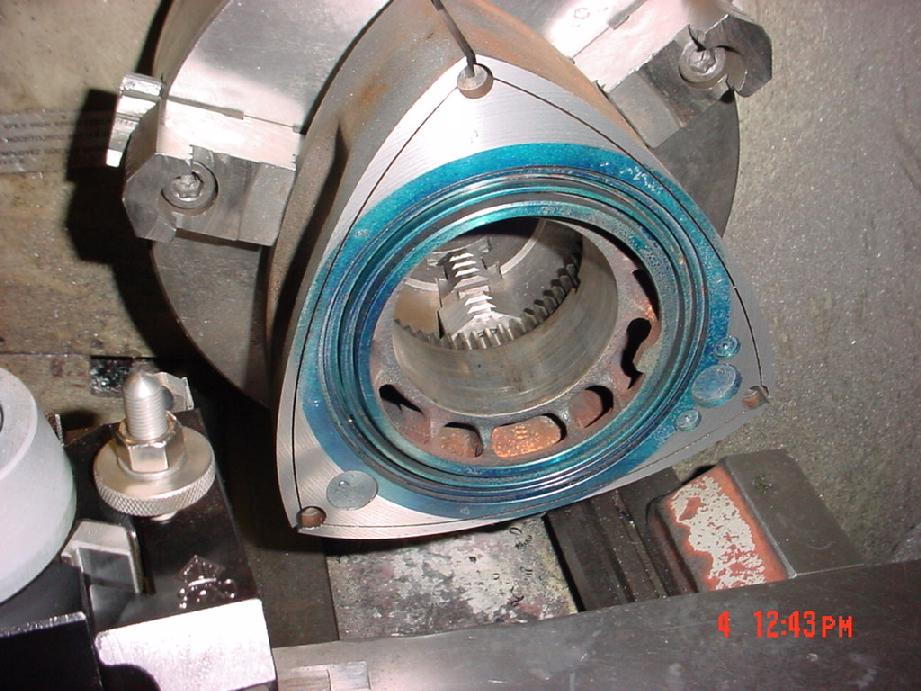
the sides of the rotors tapered. Also Guru sells a center
main bearing kit to reduce this bending deflection.
Here is a picture of a rotor being tapered by Ken Welter.
Of course nobody I know of is running the engine anywhere
near 10,000 RPM in an aircraft. Max so far as been 7500 RPM
so a tapered rotor is not required.
The big problem with the one rotor is the weight as heavy counter
weights are required to off set the weight of the single rotor.
A two rotor is better balanced to begin with. The other problem
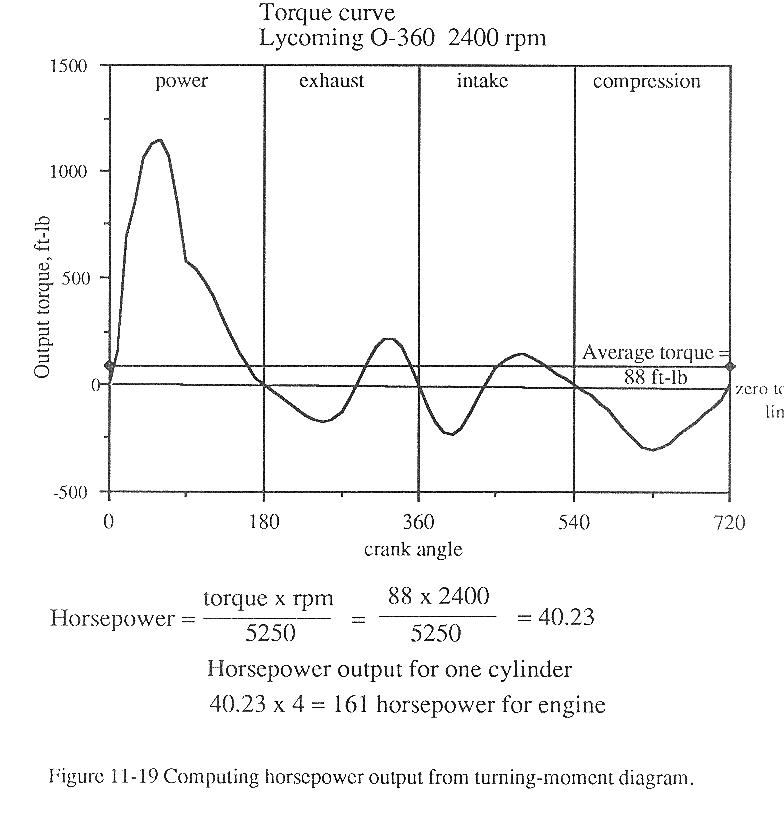
is the single rotor torque pulse goes negative once per revolution
just like a piston engine.
IMHO it is better to change the airplane :)
Paul Lamar ...No rotor no motor.
The Rotary Engine NewsLetter. Powered by Linux.
ACRE NL web site.
http://www.rotaryeng.net
Copyright 1998-2006 All world wide rights reserved.