> Okay... Here's a(nother/ better) idea. Put a rotary on an airplane
> (modified Supercub) and fly the poop out of it. Fly to OSH with
it. At
> the O-show, tear it down with everybody watching (and a video camera
> running). Measure all of the parts and compare to new. Log the
data.
> Put it back together only replacing the necessary gaskets. Fly it
> during the airshow. Tear it down a couple of times during the show,
> reassemble and fly. Fly it home. Fly it 1000 hours during the year.
> Do not make any mods to the airplane. Do not tinker with it. Come
> back to OSH during the O-show and do the same exact thing again -
> demonstrating lack of significant wear. People are concerned about
> trouble free durability as well as loss of coolant.
>
> Test to Failure (Terminal Effects Research) is certainly done on
lots of
> products, though I disagree with a few of your examples.. For
instance,
> a canopy that fails on the chicken gun fails acceptance. A de/anti
> icing system that actually "fails" causes a plane to crash - failing
> acceptance. Products are sold to meet a performance specification.
> During qualification, once they meet the spec, testing can
stop. Plus,
> TER is not typically demonstrated in a marketing gig.
>
> Testing an engine without coolant is fine. I think it's a
potentially
> low-bang-for-the-buck demonstration however. Doing it once or twice
> would probably suffice. Maybe once per year at SnF would be good.
> You'd definitely have to do some characterization work up front to
> understand how hard you can run the engine (oil temperature might
be a
> way to monitor this) and still have it run. If it can make 150hp
for
> 20minutes after coolant loss, great. Tell people that's what you
want
> to show. Or, better yet, come up with a way for it to run for a full
> hour without coolant (is this possible with adequate oil
cooling)? That
> would be spectacular, even if you could only make 40% power
during the
> run. Or run it at idle without coolant for an hour, and then ramp up
> the output to something like 50% and then run it for 20minutes
(possible?).
>
> I think there's room (a need) for a multitude of ways to
demonstrate the
> value of the rotary engine.
>
> Here is a list of common gripes (rumors):
>
> 1. Fragile (see above)
> 2. Needs a PSRU
> 3. Needs coolant/oil cooling systems
> 4. Burns too much gas (poor BSFC)
> 5. Loud/Sounds Weird
> 6. Exhaust gas is ungodly hot - impossible to build a reliable
exhaust
> 7. Burns lots of oil
> 8. Installations look too frankensteinish (complicated).
>
> What else?
>
> Each of these items must be addressed somehow. An item can either be
> addressed by reliably demonstrating well thought out (engineered)
> solutions, or by a marketing ploy, or (preferably) by both.
>
> I think people would be impressed by somebody doing aerobatics
demos in
> a Skybolt (or similar) that's powered by a rotary of some
kind. Ideally
> they would go on a circuit where they made at least 6 appearances
during
> a season. It doesn't have to be unlimited style aerobatics, just
> something with loops, rolls, and spins. Racing is great too, but I
> think racing by itself implies a specially built, high strung engine
> where lots of black magic has been done. Aerobatics implies inherent
> robustness. Racing implies "motorhead." Lots of people want to
fly and
> not have to be a motorhead to do it. I think rotary engines say
> "motorhead" thus far.
>
>
> Regards,
>
> Matt-
The Supercub idea looked like MOTS until you got to the "tear it
down at
the show" part. I like that one. No, I LOVE that one. For that
matter, how about a contest, take a reciprosaur and a 13B apart (to the
MOH level), then see who gets their engine assembled first! We'll draw
the contestants' names, then provide an expert to coach them (let's
invite someone from Lycoming to coach, just to eliminate any possibility
of a rigged game).
One advantage of your idea is that the plane would be unremarkable --
that is, it wouldn't outshine the engine. In addition, it would show
the replacement possibilities.
However, I just checked my pockets and all of the cabinets here, and I
seem to have misplaced whatever Supercubs I may have had. ;) I
have to
use what I can get.
Maybe next year I can provide an aircraft to do this with, but not this
year.
You seem to think that I intended to do the same demo every show. No, I
meant to do it just one time, then tear the engine apart and take the
pieces to other shows. Let people handle them, inspect them and compare
them to overheated reciprosaur parts.
Several of your points-to-address are typical of all auto conversions.
The one we need to shoot down is the reliability/fragility issue.
The first Chicken Gun was NOT built as a standards measure -- it was
built when (IIRC) Lockheed needed to prove that the (IIRC) P-38 could
take a birdstrike and still be an airplane afterward. There was the
belief that the propeller provided protection for single-engine
fighters, thus the Lightning was at risk. It was known as the "Sez YOU"
for years. Eventually, there was a standard developed to take
advantage
of the testing capability.
Test-to-failure has OFTEN been used as a marketing tool. If you're old
enough, you remember the old Shell commercials, where they stuck
one-gallon glass bottles on two cars, filled one with Shell and the
other with another brand, and ran them until the cars stopped. They set
the baseline with the competitor's fuel, then the Shell car passed it by
and kept going.
The company that started making bulletproof glass marketed it by
shooting at it, first with a .22, then up one step at a time, in front
of a crowd at some big fair or World Expo or something, until something
finally went all the way through. Everyone knew the baseline, that
bullets go through ordinary glass.
45 years later, GE repeated the stunt with Lexan, using bulletproof
glass to set the baseline, and took a million-dollar order that
afternoon.
We already have the baseline -- every other water-cooled engine out
there will seize within a minute of losing all the coolant.
Keith
Keith,
In at least one example, you're talking about testing to failure of some
competing product, not the one you're advertising.. If you put a Subaru
on the stand side by side with a 13b and ran them both without coolant,
then you'd be using good 5th avenue tactics (as long as the 13b ran longer).
For a business to be successful, it needs BOTH engineering and
marketing. If we pit one against the other, the business fails.
Matt-
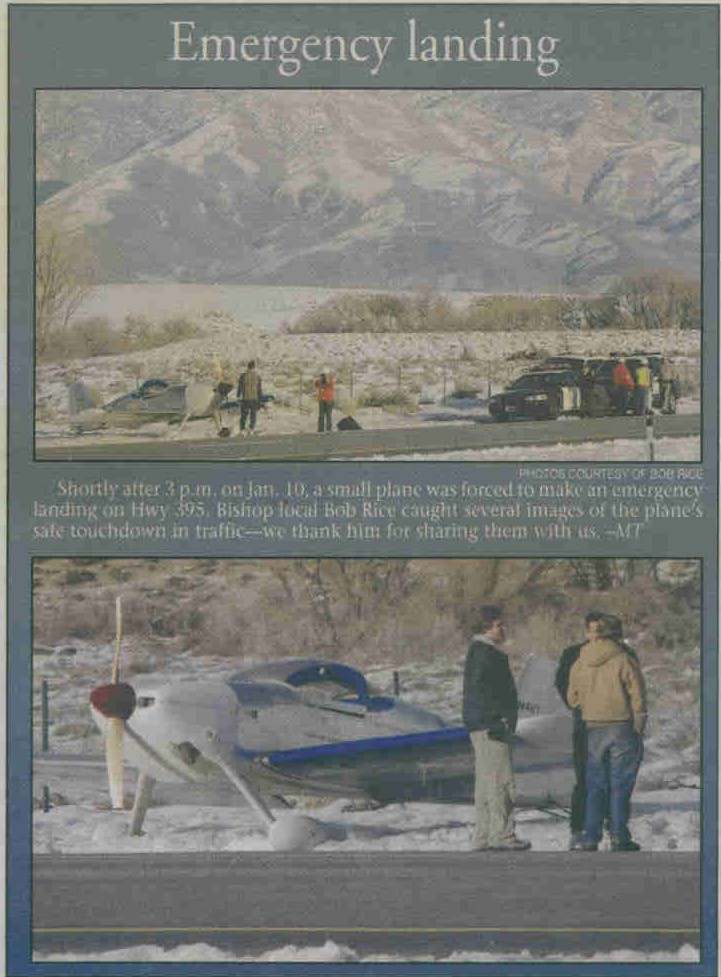
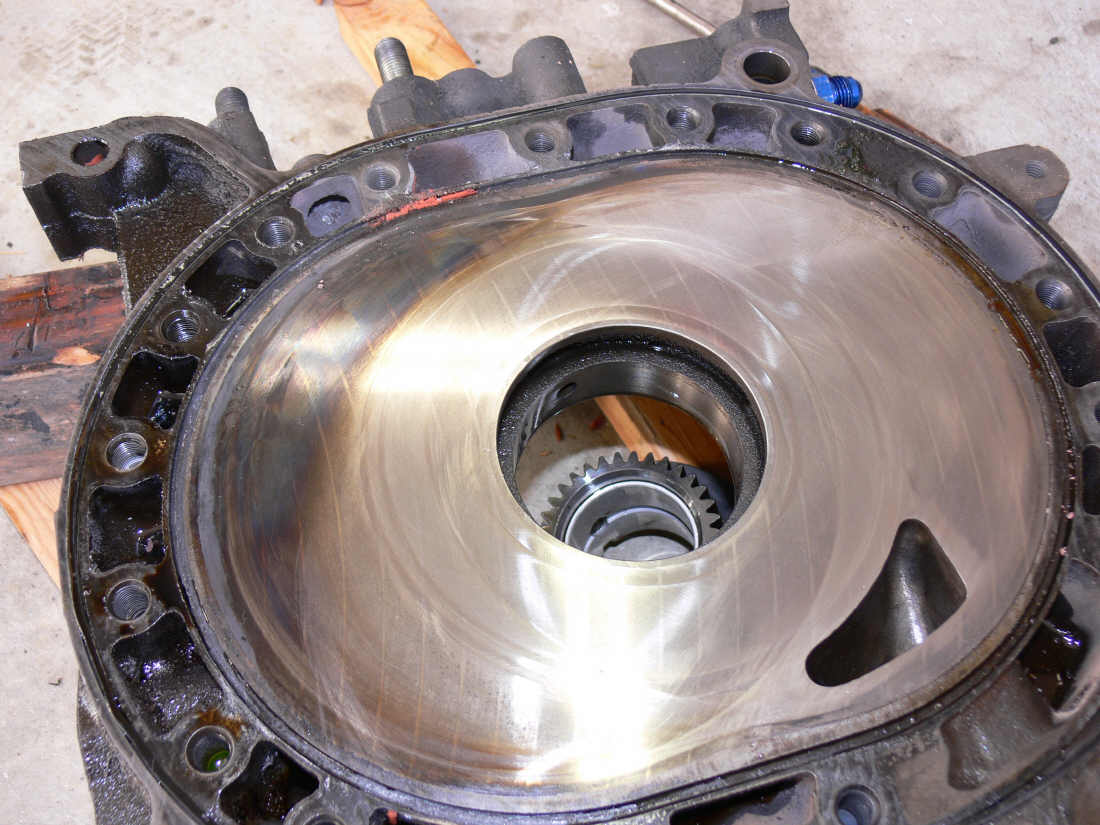
OK I have avoided this as long as possible. Here are some
picture of an engine that lost all coolant at 10,000 feet and
the pilot had to land on the freeway. It ran right up to the last
minute as I recall but lost enough power to force the landing.
You would not likely be able to get this one to re start.
On the other hand the discoloration on the end housings was
removed some how and the engine will be rebuilt with new rotor
housings.
Paul Lamar ...No rotor no motor.
The Rotary Engine NewsLetter. Powered by Linux.
ACRE NL web site.
http://www.rotaryeng.net
Copyright 1998-2006 All world wide rights reserved.