> > I have been monitoring this group for three months now and
> look
> forward to
> > each day's postings. I am an active pilot (P210) and a
> long-time
> > subscriber
> > to Kitplanes, so your discussions surrounding the
> perfection of
> the rotary
> > aviation engine really intrigue me. A 337 running two
> rotaries
> would be
> > one
> > heck of an airplane!
> >
> > I apologize to the aviation purists that my posting is not
> aviation
> > related,
> > but it is rotary related. I own a small manufacturing
> company in
> North
> > Central Montana which has twenty years experience building
> portable
> > natural
> > gas compressors. Our units feature rotary screw compressors
> driven by
> > piston engines (natural gas powered).
> >
> > I would like to investigate the possibility of utilizing the
> rotary engine
> > as a "valve-less" compressor. I am hoping that through this
> group
> I can
> > find individuals who would be willing to provide engineering
> services for
> > this concept.
> >
> > Ideally, I would like to see the driver and the compressor
> integrated into
> > the same rotary engine block--one rotor driving another.
> >
> > My major concern is that the stock rotary has too much
> inherent
> overlap
> > between the intake and discharge ports to work properly as a
> compressor
> > without the installation of intake and discharge valves. Is
> there
> a way
> > to
> > re-configure the ports to eliminate overlap?
> >
> > Cole T. Chandler
> >
> > Sure you put the output p-port just about where the spark
> plugs
> > are.
> >
> > Wankel rotaries have been widely used as compressors.
> >
> > Paul Lamar ...No rotor no motor.
>
> Isn't the overlap eliminated in the Renesis, or is it just
> minimized ?
>
> John
>
> Yes it is (sort of) but that has nothing to do with a compressor
> configuration. The compressor config needs an air outlet
> port near the combustion chamber. If it is anywhere else
> the engine compresses the air and then lets it expand again
> and THEN merely escape through the existing exhaust with no
> pressure change. The difference is there is no fuel and spark
> to expand the air.
>
> Just bore a p-port hole where the lower spark plug hole is
> and you have a mighty fine, perfectly balanced, 10,000 RPM
> air compressor capable of horrendous air flow.
> You don't even have to do that if you want lower flow.
> Just screw a hose fitting in the spark plug hole.
> Block the top spark plug hole with a stock
> spark plug. You will get at least 150 psi.
> If you fill the depression in the rotors you will
> probably get close to 200 psi or more.
>
>
> Paul Lamar ...No rotor no motor.
>
>
> As I understand your suggestion, there would be only one
> compression
> cycle
> per rotor revolution? The normal "exhaust" stroke of engine
> would
> not have
> any function and not be utilized? Would this "dead stroke"
> create wasted
> horsepower?
>
> Cole
>
> Yes but if you vented it to the atmosphere it would consume
> very little power. That part of the cycle could be a used as
> a vacuum pump with the p-port exhaust as the exhaust port.
> You would need another intake port below the pressure
> port on the spark plug side. The pressure output port
> will need a one way valve. So too the vacuum input
> port. One problem might be apex seal lube but try
> self lubricating Rulon apex seals. A mixture of Teflon
> and Kevlar. What you wind up with is both a vacuum pump
> and a compressor in the same stroke and in one revolution
> of the e-shaft.
> --
> Paul Lamar ...No rotor no motor.
>
> There are in fact rotary compressors and have been for a long
> time.
> Most large industrial plants if there is a requirement use
> rotary
> compressors. Many air conditioning units use rotary compressors
> even in
> autos.
> R Matt Doody
>
>
> Paul,
>
> Is it viable to use one rotor as a supercharger for the other
> rotors
> in the engine?
>
> If this is feasible, it might make sense In a turbocompund
> engine
> where you have an exhaust turbine connected to the engine shaft
> anyway, so the power to drive the compressor rotor would be
> deducted
> from whatever your turbine is putting in.
>
> This might have packaging advantages. You could just put your
> turbine right behind the engine with a gearbox. The output
> from the
> compressor rotor would be fed to the remaining rotors.
>
> The question is how much power it would take to run that
> rotor and
> what would its thermal efficiency be? Also it is pretty heavy.
>
> Perhaps use a small single-rotor engine like the Aixro go-cart
> engine and use that as the compressor?
>
> I'm thinking here about a ducted fan turbocompound application
> where
> you want the engine to be as cylindrical as possible. This way
> everything would just go axially on the back of the engine --
> the
> compressor, the gearbox and the turbine. The turbine outlet
> would be
> facing straight back from the middle of the engine, so you
> could put
> a nozzle on it and get thrust at high speed...
>
>
> Regards,
>
> Gordon.
>
> For some strange reason the engine runs rough on only
> one rotor. I know not why.
>
> Paul Lamar
>
>
> So here's an idea -- get a 20b & a custom e-shaft. Configure the
> e-shaft such that the configuration of the lobes for 2 of the rotors
> matches the lobes on a 13b (180 degree opposed). Send gas to the 2
> opposed rotors. Use the 3rd rotor (the middle one I would guess
so the
> thermal effects on the engine are balanced front to back) as a
> compressor and feed that into the other 2 rotors. Voila - a
> supercharged engine that should run nice & smooth.
>
> Mark Supinski
This won't work, guys, because the "free air" volume displaced by the
compressor section must be larger than the displacement of the engine
section. The supercharger must squeeze a larger volume of air into a
smaller volume to increase the engine charge.\
I know we are off the original subject of making a compressor from a
rotary engine. But, Gordon's comments about the Aixro go-cart engine
and cylindrical geometry leads me to this idea: use an Aixro engine
to drive a Rotrex supercharger to pump intake air to a 13b. Boost
pressure would be easy to control using a model airplane servo on the
Aixro throttle. The Aixro/Rotrex system could be remotely located,
thereby simplifying the design of an intercooler system and giving more
control over weight/balance issues. Bleed air would be available from
the Rotrex compressor for cabin heat.
Would this scheme be legal at Reno?
Aubrey
Sure. Here are some pictures of a White Lightening
with something similar. Used a Rotax 2 cycle to drive the
compressor. The Germans had bombers in WW II that did
this.
--
Paul Lamar ...No rotor no motor.
That's a neat idea, Aubrey.
The ability to easily control boost makes this something to think
about. You could just dial in any manifold pressure you want,
anytime you want it.
I would guess that the aixro engine making 40 hp could easily run
the biggest compressor in the Rotrex lineup. Probably enouhg boost
there for a 4-rotor...
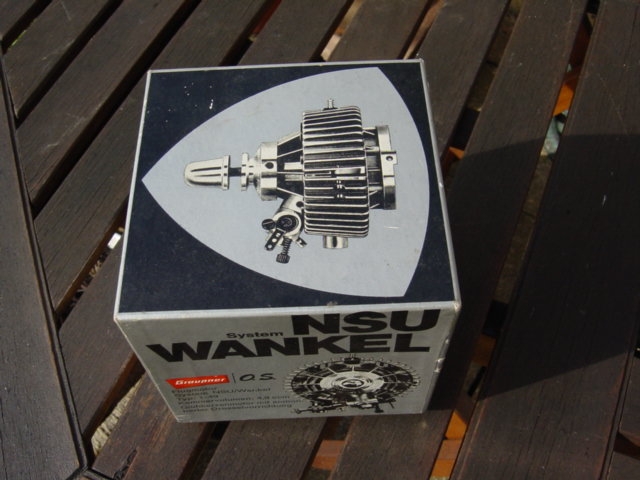
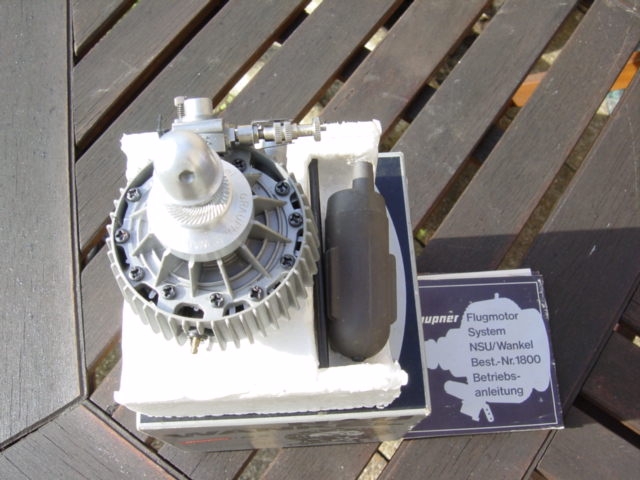
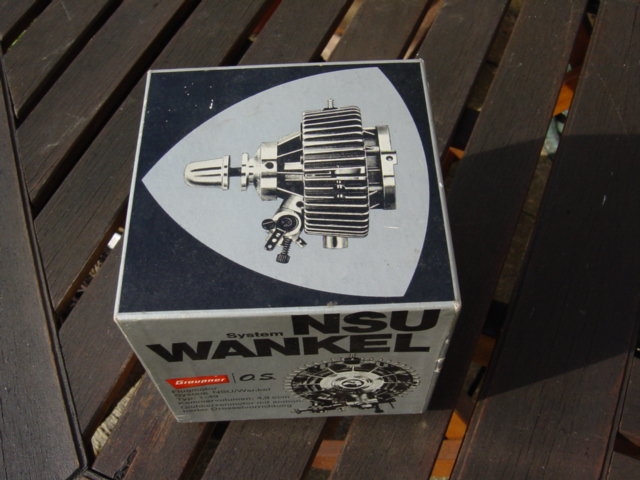
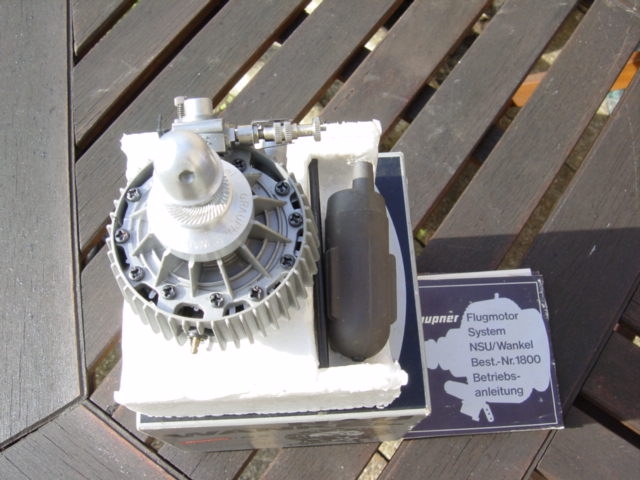
Here's a picture of an RC model rotary -- I think it's just good for
a couple of hp so it would have to be a very small compressor. What
we need is something in between this and the aixro for a 2-rotor engine.
Regards,
Gordon.
The Rotary Engine NewsLetter. Powered by Linux.
ACRE NL web site.
http://www.rotaryeng.net
Copyright 1998-2006 All world wide rights reserved.