Paul,
I have a Glass Goose that I plan on installing a 13B in. The
problem I am having to deal with
is an aft C.G. issue. What I need to do is shed some weight in
back. I have made some
changes, but it is not enough. If I can lighten the engine this
would help a lot. So, here are
some questions regarding aluminum end and intermediate housings.
1. Are they for real?
Yes.
2. Where can they be found?
Racing Beat
3. How much lighter?
My guess is about 50 pounds for all three.
4. How reliable are they?
Don't know. Racing Beat claims they are :)
5. How much?
Check with Jim Mederer but I think you are looking at
about $4500 for the set of three. http://www.racingbeat.com/
6. What is your opinion of them?
I don't have any hard and fast info at the moment.
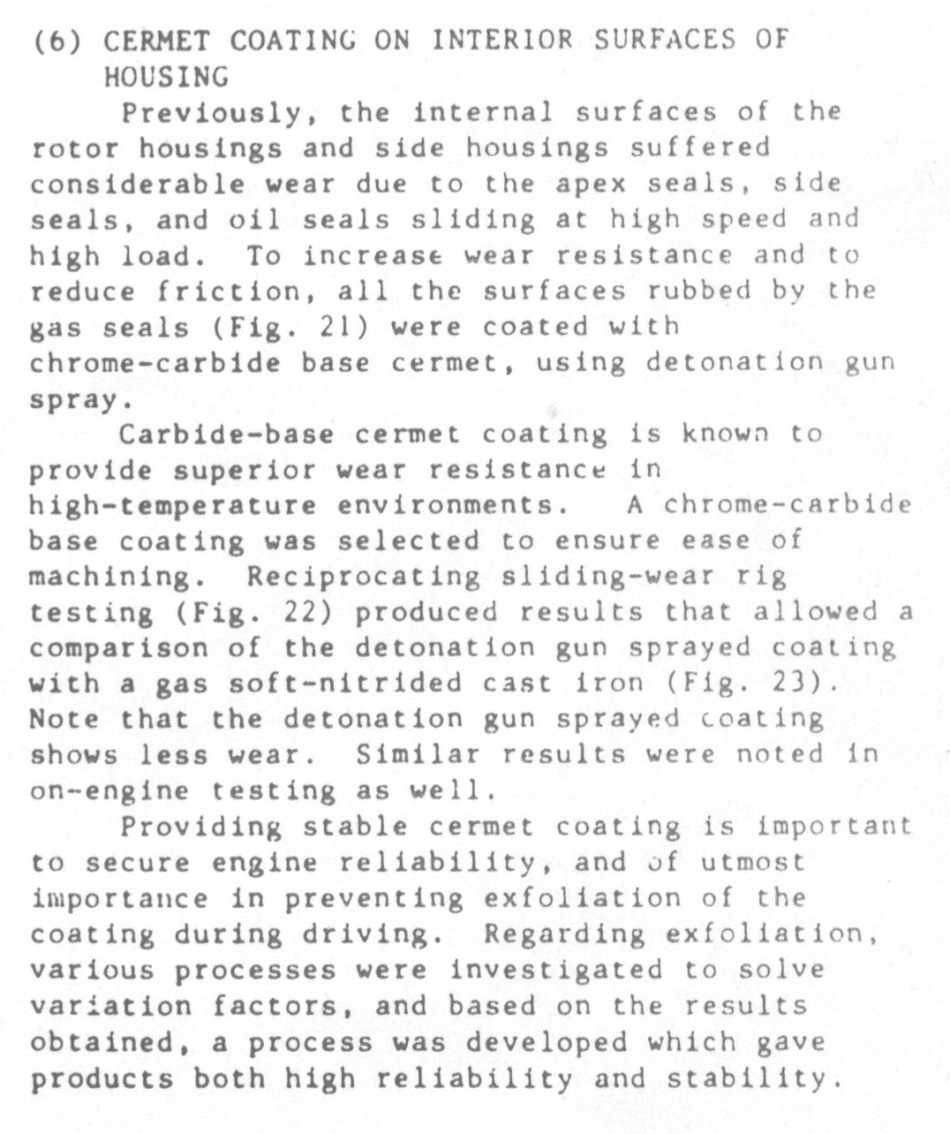
I would prefer a silicon carbide detonation coating
rather than flame sprayed. If they fail you can always
have that done later.
Thanks,
Frank R. Clementi
Paul,
I think after reviewing Jim's website numerous times you both might be
talking about the same thing. For example: Here is some text from Jim's
website at <http://www.racingbeat.com/FRmazda1.htm>
"After each aluminum housing is cast, using A356 Aircraft Alloy, it is heat
treated to T-6 hardness and then CNC-machined prior to being flame-sprayed
and ground to a final finish. The greatly increased wear resistance is the
result of this aerospace originated flame spray (or plasma spray) process
that imbeds into the wear surfaces a proprietary carbide material whose
durability greatly exceeds that of the nitride surface found on the stock
cast iron housings.
During development testing, and the subsequent application of these housings
in very high horsepower, turbocharged engines, it was not uncommon to find
no measurable wear on these housings. We have found the flame spraying
process to be so effective that we utilize the process on stock side
housings with the same excellent results.
The Flame Sprayed Aluminum housings are offered in a variety of
combinations:
1) with machined water jacket O-ring grooves for the 1974-85 engine
applications or without these grooves for the 1986-95 engine applications;
2) with side ports* (based on the 1993 porting configuration) or without
side intake ports for peripheral port applications; and, 3) either top or
side starter positioning (20B application). 6-Port configured housings are
not offered.
The intermediate housing we offer provides additional material for machining
of fuel injector sockets should your application require such a feature.
While our rear housing has no provision for an oil pressure regulator, you
have the option of mounting a stock Mazda regulator in the side of the oil
pan (wet sump) or using the internal oil pressure regulator typically
included in most dry sump pumps."
Another interesting fact is that if a person wanted to drop in a P-ported
Renesis rotor housing, s/he could order the Al. side housings with machined
water jacket 0-ring grooves.
That would solve some of the side seal clearance issues involved with using
Renesis rotors in a 13B configuration. That reminds me. How did Mazdatrix
solve that challenge in the 20B engine they made up months ago with Renesis
rotors?
Doug Fir
If it is det coating I am not responsible for Jim using the wrong term :)
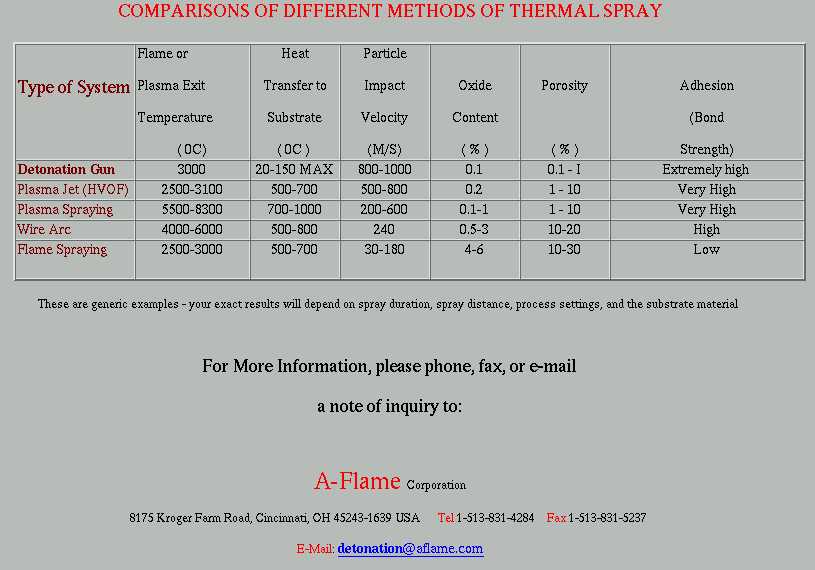
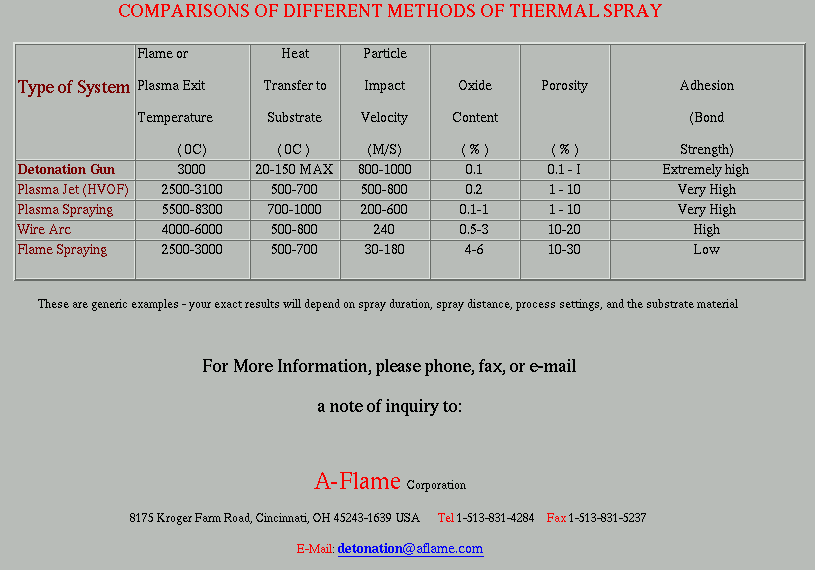
Here is a chart correctly defining the terms.
Paul Lamar ...No rotor no motor.
Paul
Good chart. Detonation gun techniques appear more attractive in that
material can be embedded without the risk of high temp exposure to the
aluminum part.
Doug
*******************************************
I was of the opinion that "flame spraying" was the generic and
"plasma coating" was a variation on the technique, but on reflection,
I guess we should only talk of plasma coating to avoid confusion.
Jim Mederer
The Rotary Engine NewsLetter. Powered by Linux.
ACRE NL web site.
http://www.rotaryeng.net
Copyright 1998-2006 All world wide rights reserved.