snips...
This message triggered an idea Doc. A combination of
EFI and the low pressure dribble system. Since one needs
a low pressure electric fuel pump no matter what control the pump
pressure PWM with a 44 cent PIC microcomputer that takes data in
from a MAP sensor, RPM and a leaning knob pot on the instrument
panel.
snips...
Voila!!! Super simple low pressure EFI!!!! The PIC has an A to D
for the MAP sensor and leaning knob and an interrupt
for the RPM. Should take all of an hour to write the BASIC
program :) No injectors. Small holes in the p-port slide throttle
instead. No injector wires in the cowl to burn. Only wires go
to the low cost, low pressure, off the shelf fuel pump.
No leaning needle valve. No metering ramp in the slide throttle
or multiple holes. Just one small hole There is
a small hose to the MAP sensor mounted on the PIC PC board which
is just behind the panel with the PC board mounted leaning pot
shaft sticking through the panel.
If you want to spend a bit more than 44 cents on the PIC you can
add a USB data acquisition interface and download the flash stored
historical data to a PC. Since THE pic knows the fuel flow it knows
the GPH. Since the PIC knows the GPH and it could take NEMA 0183
ASCII data in from a GPS and calculate and display the MPG IN
REAL TIME!!!!
Handy for checking winds aloft.
Now if you add the clutch throw out bearing dyno you could
display REAL TIME HP and BSFC. Tracy should be doing this anyway
since he is building both the PSRU and the EFI.
This is probably the best idea I have had in the last
couple of years if I do say so myself :)
BTW Sorry corporations. You can't patent it as I have
published it here first.
Paul Lamar ...No rotor no motor.
Sounds like a super idea! I suppose I can handle the programming. :) Since I
was not a hardware type I have some Questions:
1. How does the uC know the fuel flow? Sounds like a sensor is needed. Do
you have a recommendation?
2. RPM sensor: crank angle sensor? What is the output from the crank angle
sensor? I suspect that this input might dictate the uC speed. Not sure I can
handle the input conditioning.
www.electronics123.com lists a lot of goodies. Anybody have any experience
with them?
Doc Custer
Retired Software Engineer and sometime Audiologist
-----------------------------------------------------
The fuel flow will be a function of the fuel pump
pulse width output by the PIC. That in turn will be function
of MAP and RPM plus leaning by the pilot.
The tach signal can come from the ignition module.
Most electronic ignitions have a tach signal output.
The RX8 crank angle sensor puts out one pulse per
rev. At 7000 RPM that is 116 pulses per second or
every 8,620 micro seconds. Since the PIC will execute
a least one instruction per micro second, or more, a direct
interrupt to the PIC every revolution is no problem.
Any Schmidt trigger chip and zener diode will handle the
inductive voltage output from the crank angle sensor.
--------------------------------------
Here is the high buck part $4.37 with the full speed USB 2 port
and on chip flash programming. 28 pins. 10 bit A/D
You don't need all this power but nice to have for future display
and data acq. The USB port makes it super simple to down load
PIC programs and read data in real time with a terminal program
in a Windows PC or set up just another Linux user :)
Also attached is a PIC application pdf note on driving a brush
type DC fuel pump motor.
http://www.microchip.com/
The constant drip mechanical fuel injection is a dead end
when it comes to data acquisition and instrument panel
displays. This PIC approach allows everything from super simple
up to a full blown glass cockpit.
Also it occurred to me the pressure does not have to be
low. If smaller holes are drilled in the slide throttle
and a high pressure EFI fuel pump used a higher pressure
system would result with better fuel atomization.
Further more if two systems are built with two pumps
each system could handle one rotor. That would allow
matching the EGT in each rotor by controlling the mixture
in each rotor separately. A bit of back up redundancy as well.
Summit Racing also sells an MSD Co. $170 wide band heated O2 sensor
for indicating the air fuel mixture ratio.
www.summitracing.com
There are others on the market for more money that read
out the mixture ratio in numbers from about 10:1 to 18:1
These will help greatly when doing R&D and tuning. Mazdatrix
has one on their dyno.
These PIC microcomputers are still rapidly increasing in power
while at the same time are becoming much much easier to program
due to on chip programing the flash memory and the USB
interface. Add a built in BASIC interpreter and a cave
man could do it :) Aircraft engine controls are not the most
demanding applications in the world. Pretty simple really.
-----------------------------------------------------
Here is a company that embeds the BASIC interpreter into
the PIC. These are so cheap and so easy to use everybody on
here should buy one of these things and play with it.
Your knowledge on EFI computer systems will immediately jump to a
higher plateau. Tons of Internet support.
http://www.rev-ed.co.uk/picaxe/
http://www.picaxe.org/
http://www.phanderson.com/picaxe/picaxe.html
http://www.hippy.freeserve.co.uk/picaxeqa.htm
http://dave.fraildream.net/picaxe/index.shtml
Attached is the 73 page clearly written manual. It includes a
tutorial on the version of BASIC used to program the chips.
Interestingly you can use a graphical method of programming
which is very easy to learn. It basically is a visual
representation of your program in flow chart form. You arrange
the building blocks on the computer screen and and it writes the
program for you. A lot like what you did in kindergarten :)
--------------------------------------------------------
Here a program that controls a DC motor. It is the heart
and soul of the simple constant dribble EFI system. This is
it! There is little more.
http://www.phanderson.com/picaxe/pwm.html
BTW no returning hot fuel to the fuel tanks.
-----------------------------------------------------
I went on the PICAXE web site and downloaded the 27 meg free
programming editor.
http://www.rev-ed.co.uk/picaxe/
This is the greatest thing since sliced bread
when it comes to programming. I wrote my first program in 30 seconds
using the Kindergarten blocks.
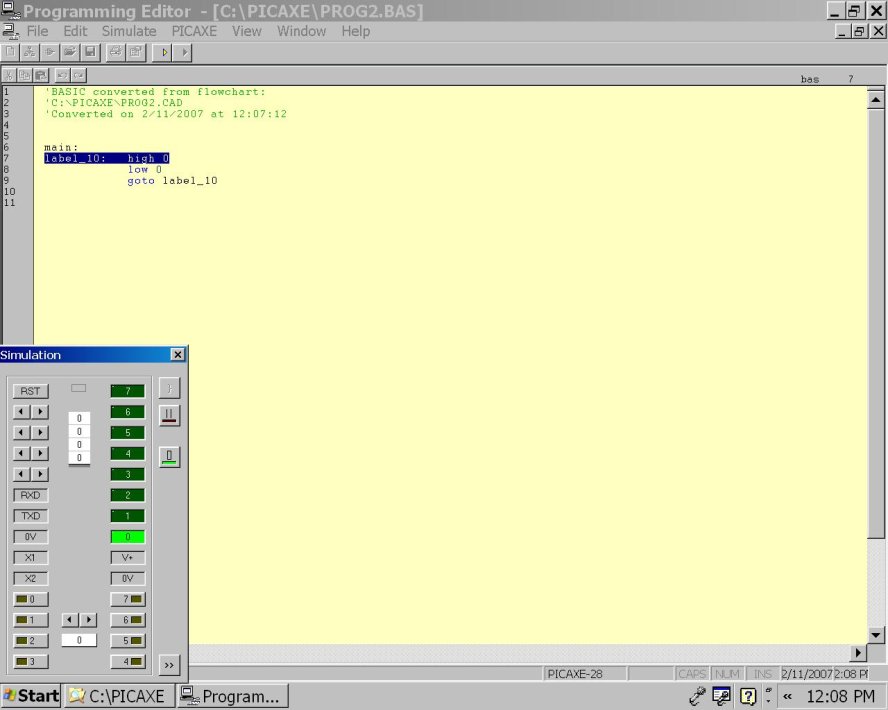
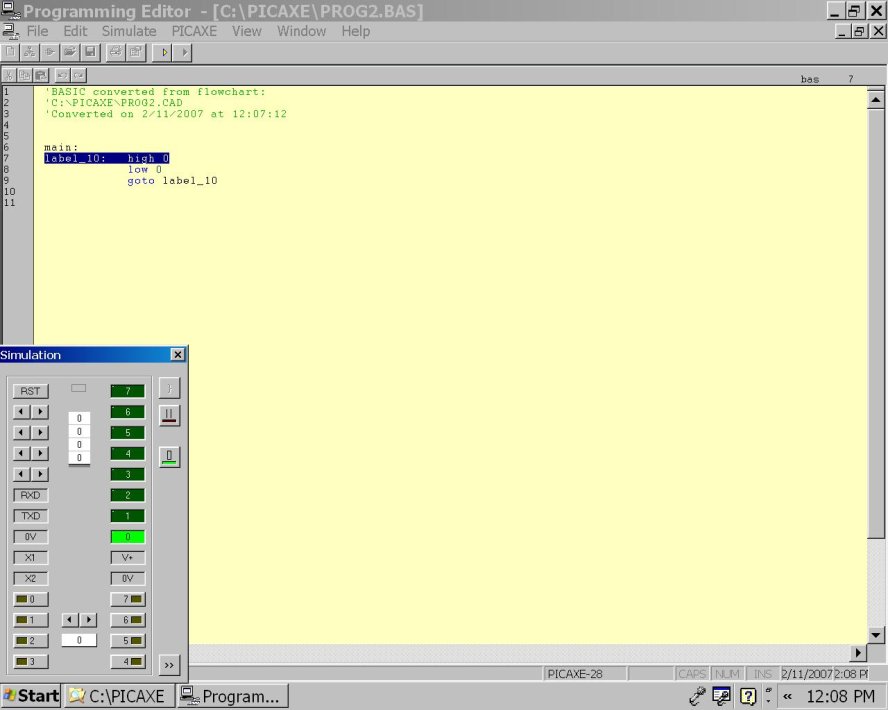
Not only that but they have included a free simulator.
My 3 line program program blinks a green light. The simulator
is animated and it steps through your program over and over
again while the green light on the screen blinks on and off.
Here is a screen capture from my Windoze computer.
It also gives you BASIC and assembler source listings.
All I can say is WOW! This is way beyond clay and everybody
can become Leonardo da Vinci of programming.
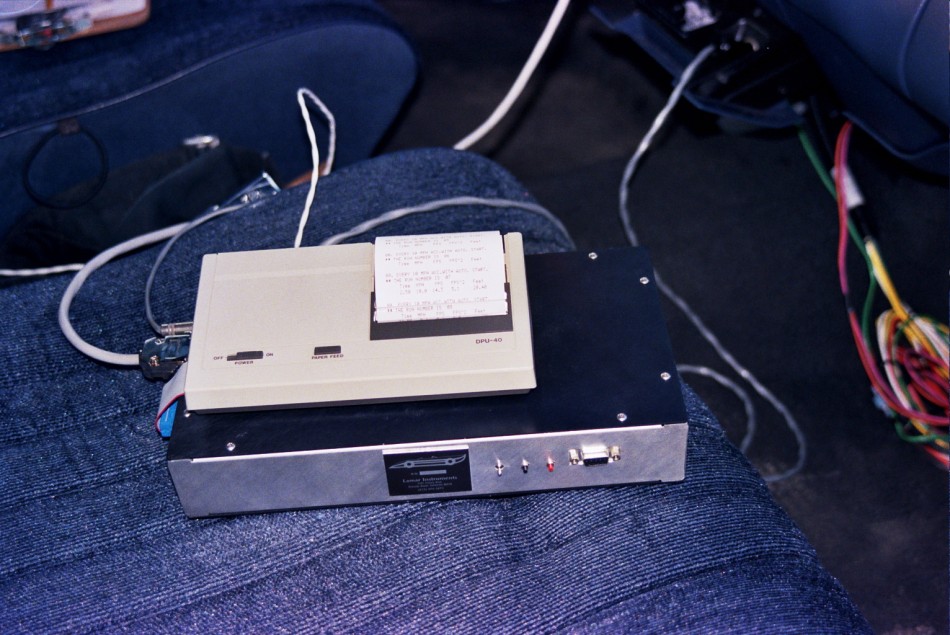
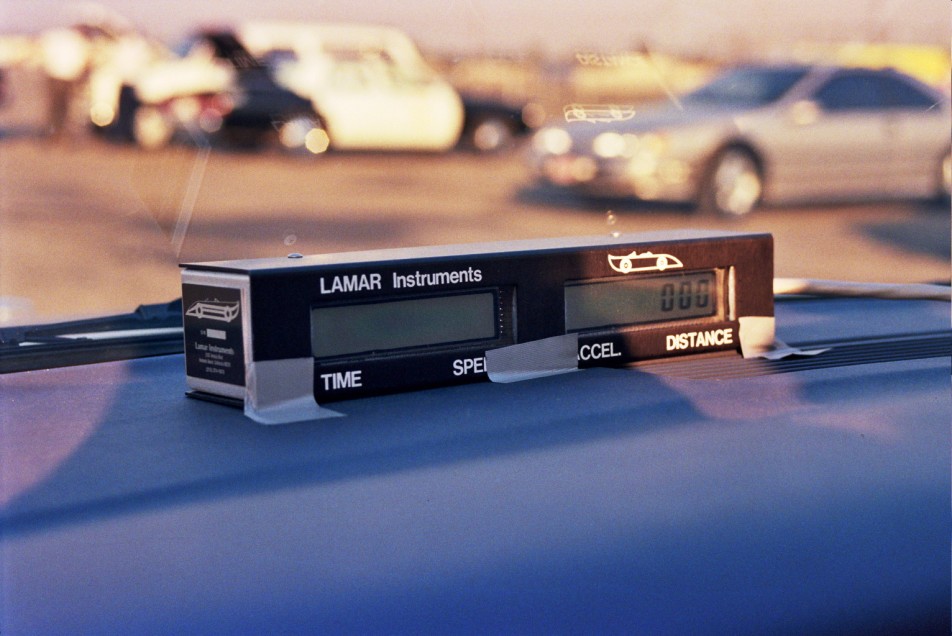
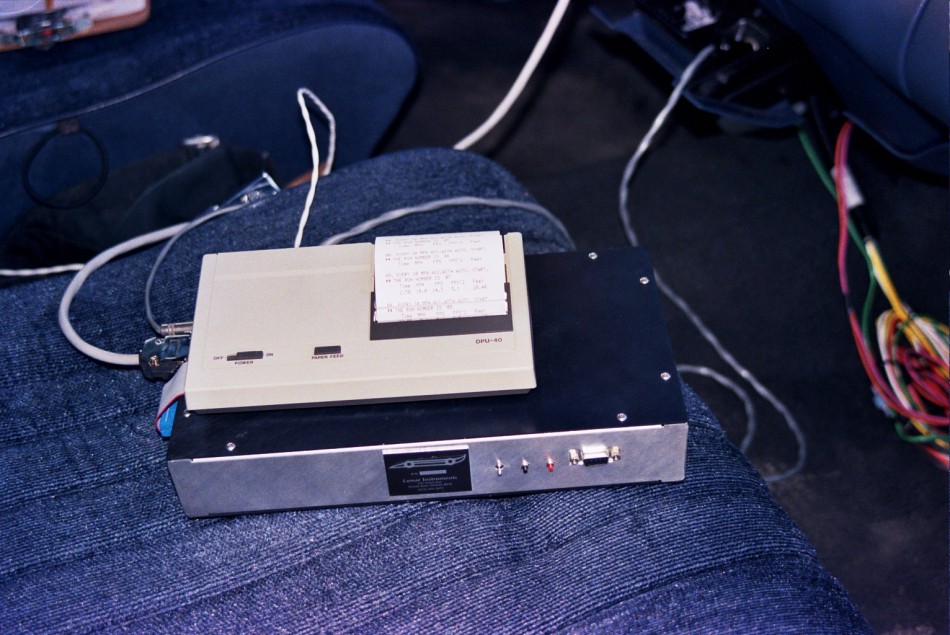
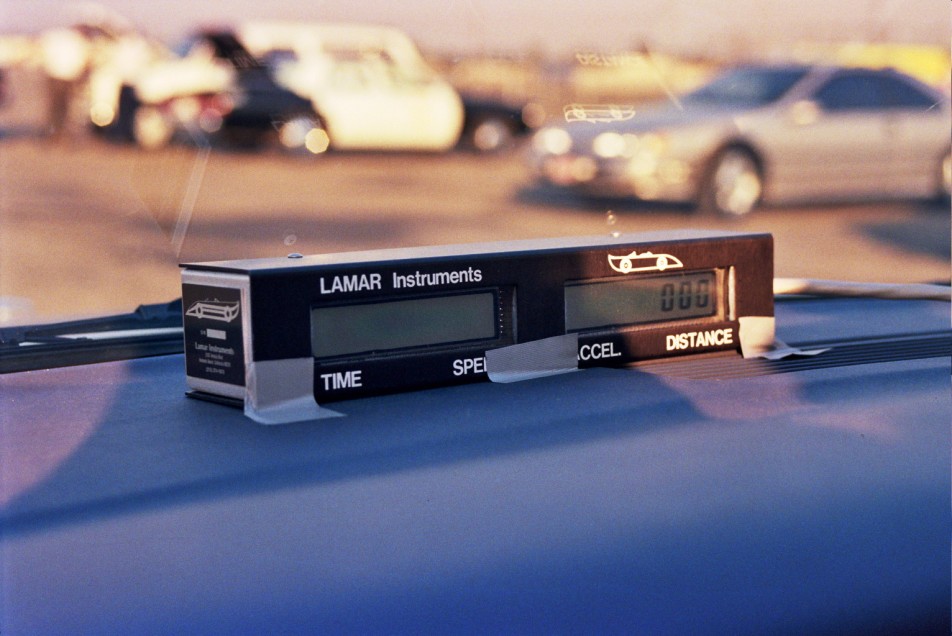
I wish I had something like this when I wrote my first year long
6502 assembler program for the first $5000 Lamar Instruments Real
Time Road Test System that then Managing Editor John Dinkel on
here bought for Road & Track magazine way back in 1975.
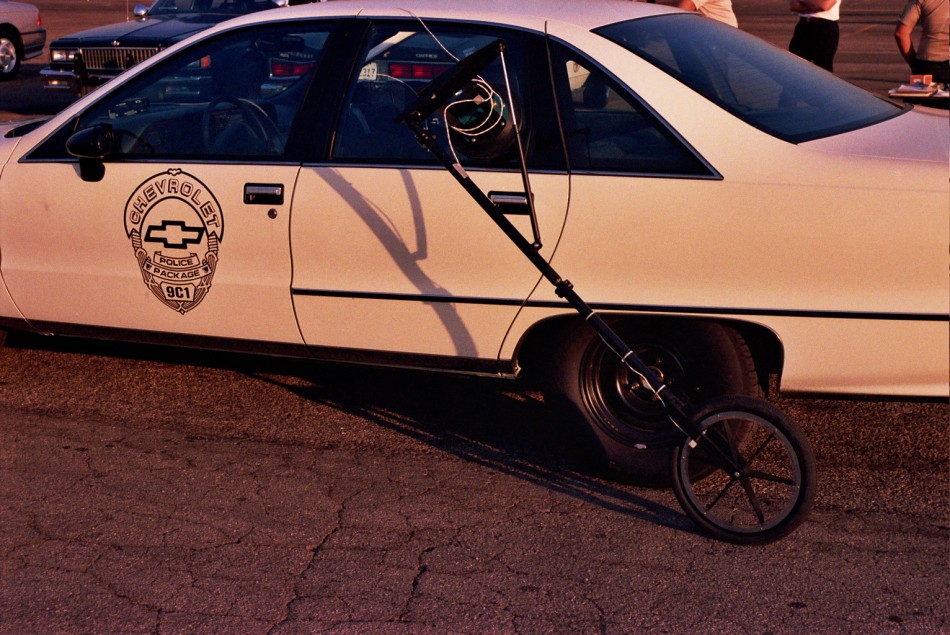
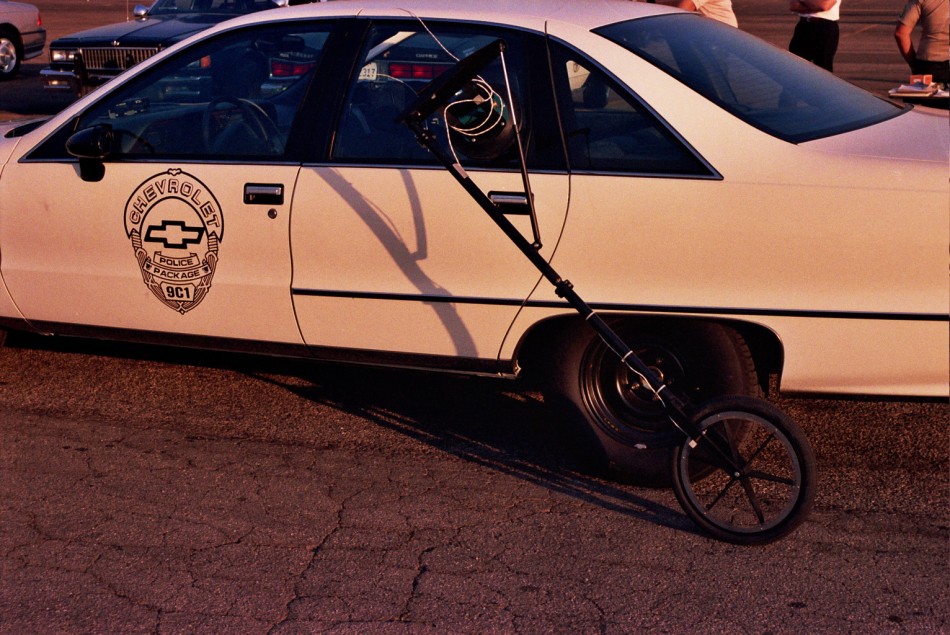
That got me a super head start in computers. Thanks again John
for your trust and belief in me. Which eventually allowed me to
do the last picture :) (Not Robin :)) I forgot her name :)
BTW NO expensive solenoid fuel injectors to plug up or fail.
No fuel injector bungs welded to intake tubes. No fuel rails.
No pressure regulators. No fuel return lines to the fuel tanks.
The EFI constant dribble fuel hardware system under the cowl
consist of only two -4 AN fuel hoses. One for each rotor.
That's it!!!!! It feeds fuel to the engine only in the amount
it needs for the prop load at the moment.
We are looking at nothing short of a revolution in low
cost EFI systems for aircraft engines here IMHO.
Paul Lamar ...No rotor no motor.
The Rotary Engine NewsLetter. Powered by Linux.
ACRE NL web site.
http://www.rotaryeng.net
Copyright 1998-2006 All world wide rights reserved.