A while back Paul suggested using a hydraulic clutch throw out mechanism
from a GM car as a torque sensor. I think this is a splendid idea.
Imagine sitting in your cockpit with a real-time torque / HP display!
Besides being first class fun and impressive as all get out, it has
SAFETY implications: an unexpectedly low torque for the
current conditions would be a pretty powerful indication of a problem
and might indicate a precautionary landing, just to find out what is
going on.
In addition, if one were to claim X HP based on this mechanism, one
could be challenged to show data that the measurement is accurate. Which
leads to the desire to calibrate the torque sensor, traceable to NIST.
Also, one would like a table of corrections to torque for each value of
RPM. That way, a correct HP measurement could be obtained and programmed
into a uC.
Which leads me to the following questions:
1. does anybody on the list have any knowledge about how to go about
getting such calibration?
2. And more importantly, who is a good source for such a service?
As usual, my ignorance of things mechanical is showing. :)
Doc Custer
Retired Software Engineer and sometime Audiologist
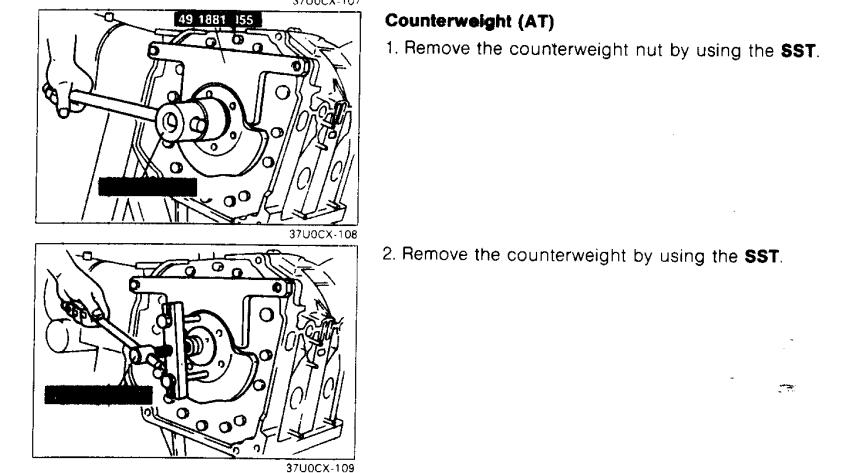
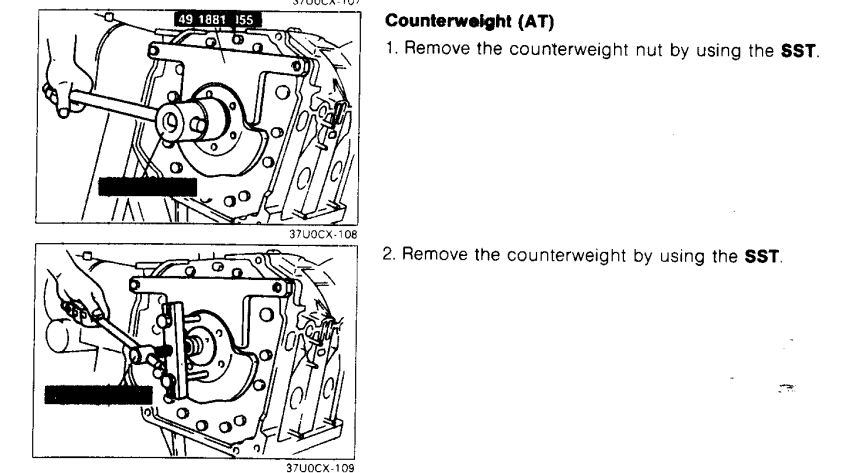
Real Easy Doc. You lock the engine by putting a stop
on the ring gear. Tool available from Mazda. Bob Mears
knows the part number and may have the tool in stock.
"Call Ronnie Kenley, [his] parts manager, let him know your
part of the rotary aircraft group. 800 692 4497"
The tool is called an SST. For the flex plate
the part number is 49 1881 055A. Handy for torquing
or removing the large nut on the e-shaft. You will have
to install it and temporarily uses spacers to mount
Tracy PSRU as it uses the same bolts that Tracy uses
to mount the PSRU to the 13B. See the attached jpg.
Weld a large nut to a plate with holes in it that can be
bolted to the prop flange. Put a large calibrated torque
wrench on the nut and apply small torque increments. Read
and note the pressure gage on the instrument panel.
The max torque out of a p-port 13B will be around 200
foot pounds. After passing through Tracy's 2.85:1 gear box
the torque at the prop will be about 570 foot pounds.
If you don't want or have a torque wrench that size,
make a lever about 5 feet long and hang weight increments
off the end. An old prop will work fine as a lever :) I
hesitate to suggest a new wood prop as a six foot prop would
require about 200 pounds max hanging off the tip and it
might break :)
Paul Lamar ...No rotor no motor.
The Rotary Engine NewsLetter. Powered by Linux.
ACRE NL web site.
http://www.rotaryeng.net
Copyright 1998-2006 All world wide rights reserved.