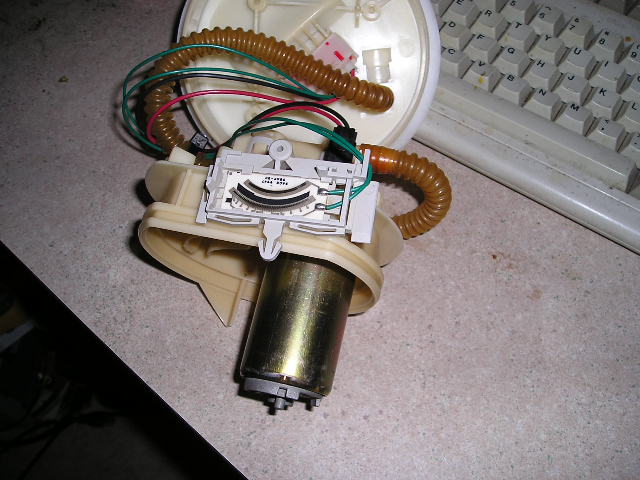
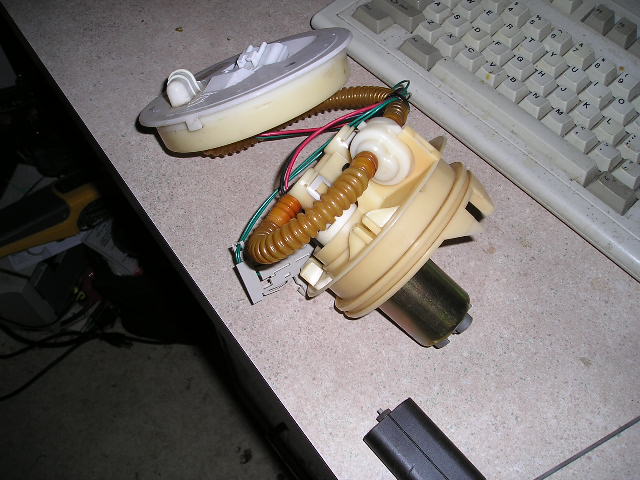
This cute little thing is good for 280 HP in
the 3rd gen turbo RX7.
Could use four mounted in the fuel tanks.
Two in each tank. One primary and one back up
in each tank. Four switches on the instrument panel.
Right tank primary or back up. Left tank primary
or back up. No fuel selector valve needed.
If you took them out of the tank and fed them with
a manifold and tank selector valve you would have
a lot more options such as one pump for each rotor
primary and back up.
I'll run some linearity test on these as soon
as I get my PICAXE.
--
Paul Lamar ...No rotor no motor.
I'm using a pair of Walbro high-pressure internal pumps (F20000141)
inside my gravity-fed header tank. These have already been tested @50
psi to deliver more than enough fuel with either or both running. They
are essentially the same pump Tracy is using, but the internal version.
My header tank is just over 3 gallons. The next test will be prolonged
running of both pumps with a full tank to be sure the maximum
temperature rise won't be a problem, since the fuel returns to the
header tank. I can always use a small fuel radiator if necessary.
The frame is stainless steel, which bolts to a phenolic cover plate at
the top of the tank. (The small tube at the bottom is only a support
strut)
I'm still undecided on filters. My main tanks have finger strainers
leading into the header tank. The pumps have their own filters as
shown. I'm planning on a 10-micron filter after the pumps, but am
undecided as to whether to use a much larger and heavier canister final
filter, or a small, in-line, 10 micron filter. The smaller filter
would be more likely to get plugged, but would only be subjected to
particles that got through the fuel pump filters.
Scott Gettings
Looks identical to the Mazda 3rd gen.
Tracy's Walbro pumps are much larger as I recall.
Here are a couple on Mike Perry's airplane
and two on Dave Leonards airplane.
The bigger ones seem to have AN fittings.
Paul Lamar ...No rotor no motor.
The internal Walbro pumps have a little less hardware. The body of my
pumps are about 3 3/4"x 1.5" dia.
The pumps Tracy uses have a pipe thread fitting that requires a smaller
I.D. line. I'm trying to keep every fitting with a minimum -6 diameter
to reduce back pressure. I'm also avoiding 90-degree turns in the
plumbing. I've accepted the lower reliability of a barb-and-clamp
fitting because they are inside the header tank, and are totally
redundant. All external fittings and lines are 1000 psi minimum.
Scott Gettings
Bigger lines certainly help the vapor lock problem
as it is harder to heat a larger mass of fuel.
The one on my C182 is about 3/4 inch OD or larger.
Paul Lamar
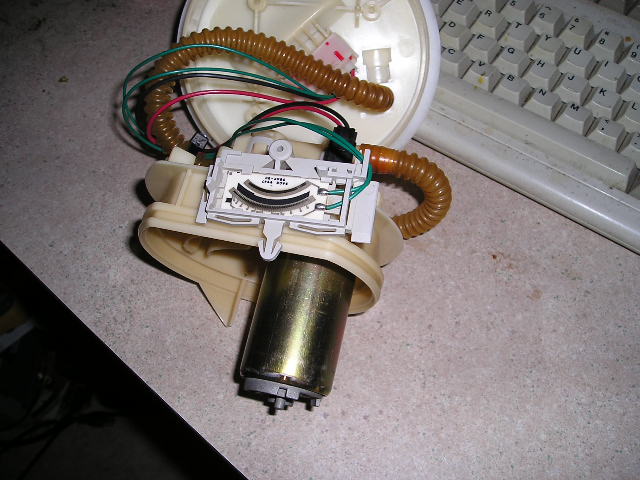
Looks like the Ford focus is using the same pump.
As I recall the Focus uses PWM.
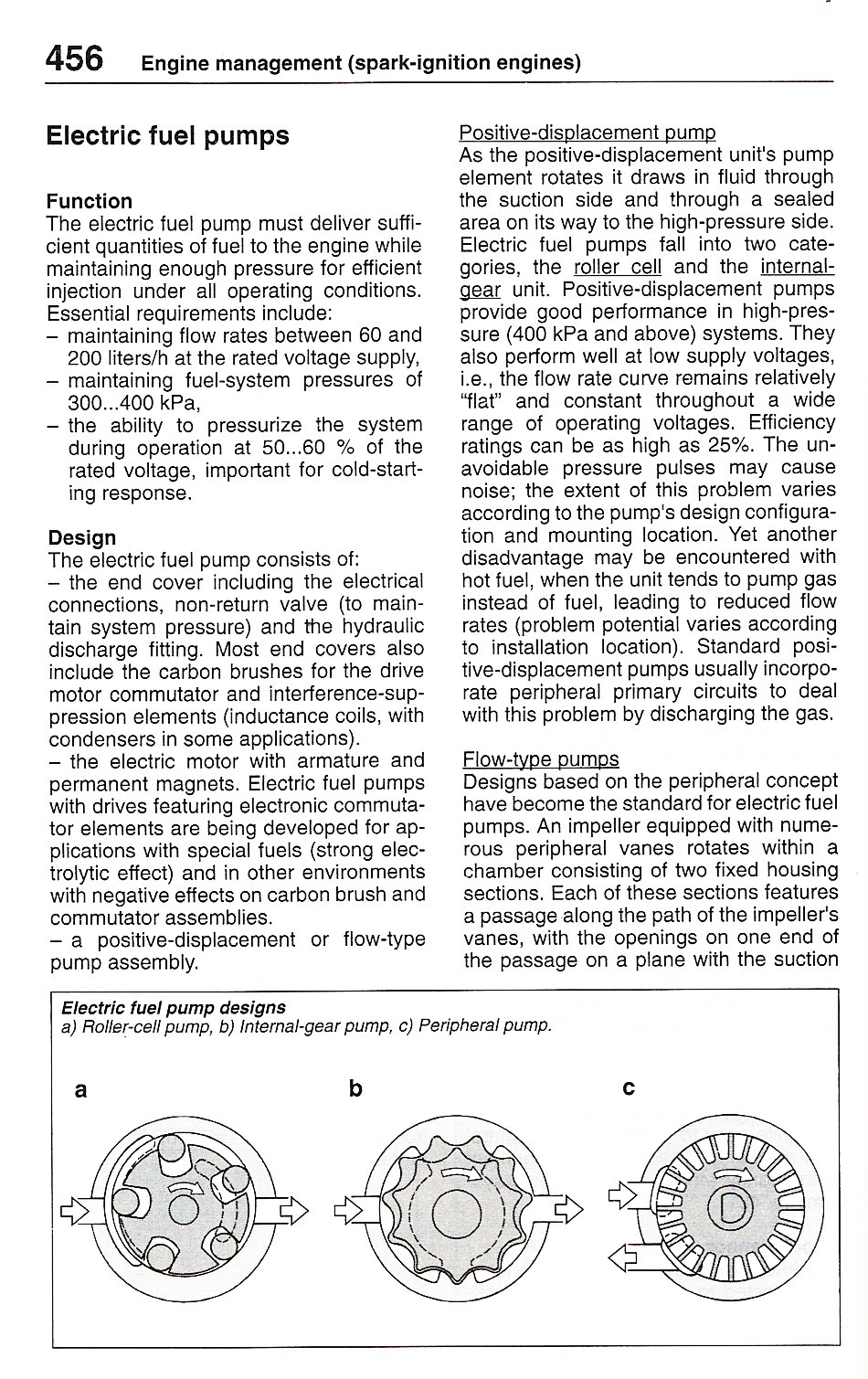
BTW these pumps are not really positive displacement.
As such they don't suck worth a darn. In fact if they suck
air they are damaged. Here is what Bosch has to say about it.
I think they are in the category of a peripheral pumps.
Best to mount them in the tank or as low as possible.
--
Paul Lamar ...No rotor no motor.
The Rotary Engine NewsLetter. Powered by Linux.
ACRE NL web site.
http://www.rotaryeng.net
Copyright 1998-2006 All world wide rights reserved.