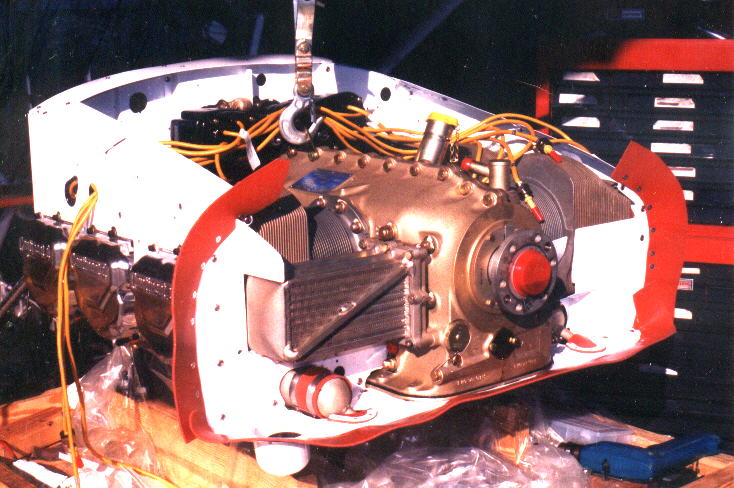
Paul--
Thank you for the offer to calculate motor mount loads. At this point,
since the engine runs so smoothly (we ran a junker on only one rotor
with a glass of water on the engine stand and it did not even move), we
think we will hard mount the engine without any "rubber bushings". Have
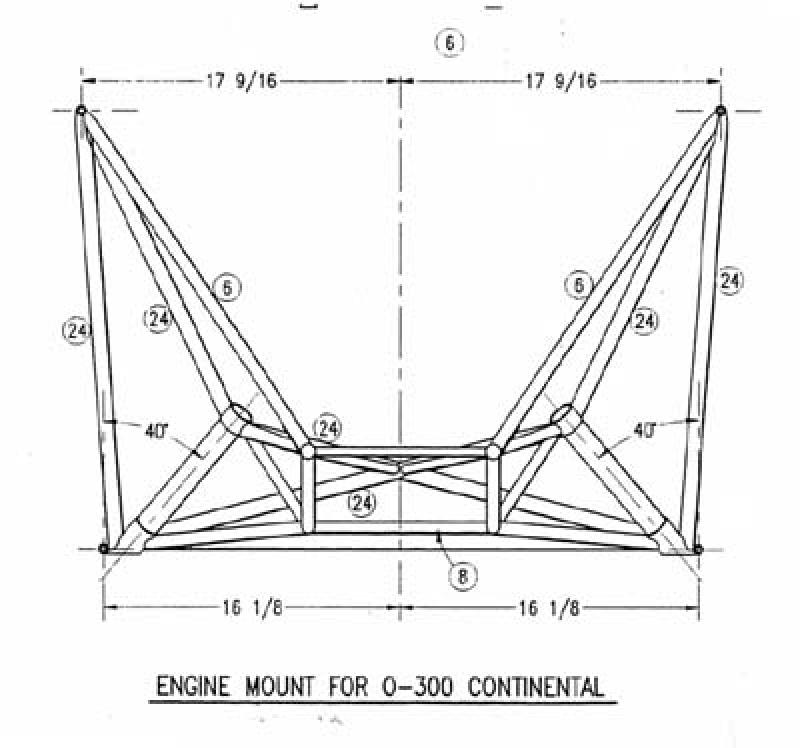
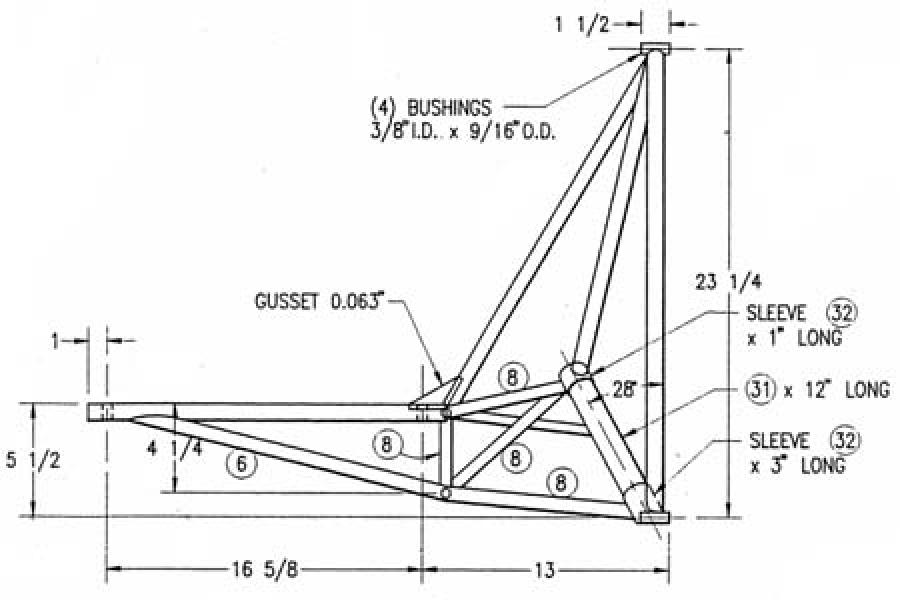
included some attachments that, hopefully provide the necessary
information and some insight as to our thinking.
Suggestions are appreciated.
Tom Chapman
I don't recommend the mounting plate idea for several
reasons. I'll get back to you shortly with them.
-----------------------------------------------------
OK here are my reasons. Most of this stuff applies if you
use rubber bushings or not. You will have less trouble
with your electronics if you use rubber bushings.
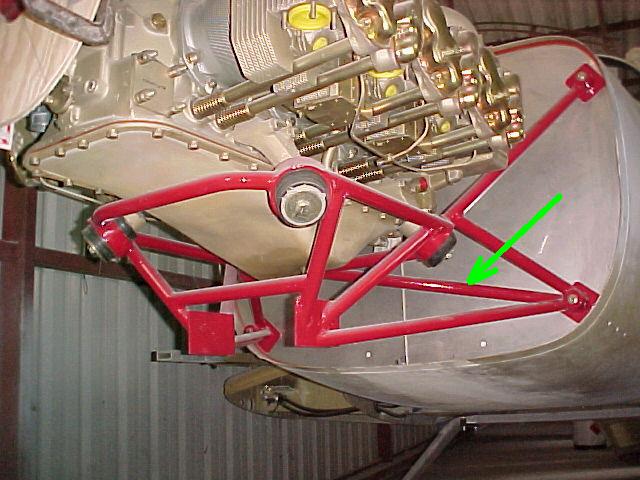
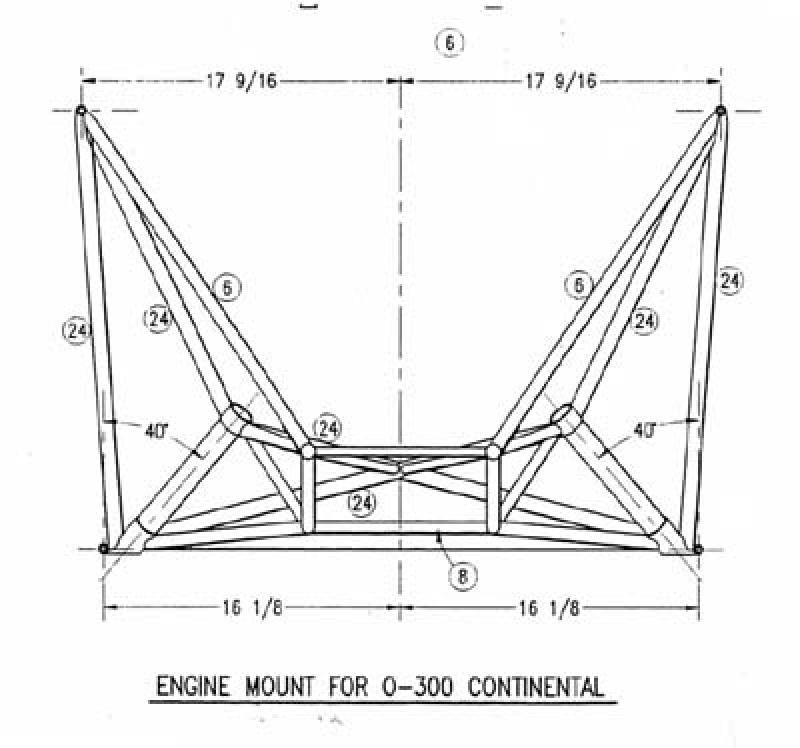
"The whole idea of the mount is to copy an aircraft
engine bed mount. Aircraft engines don't have 45 pound gear boxes
mounted to the front of them so the CG of the aircraft engine
is somewhere between the front and rear cylinders. Therefore
4 rubber mounts make some sense. The rotary on the other hand
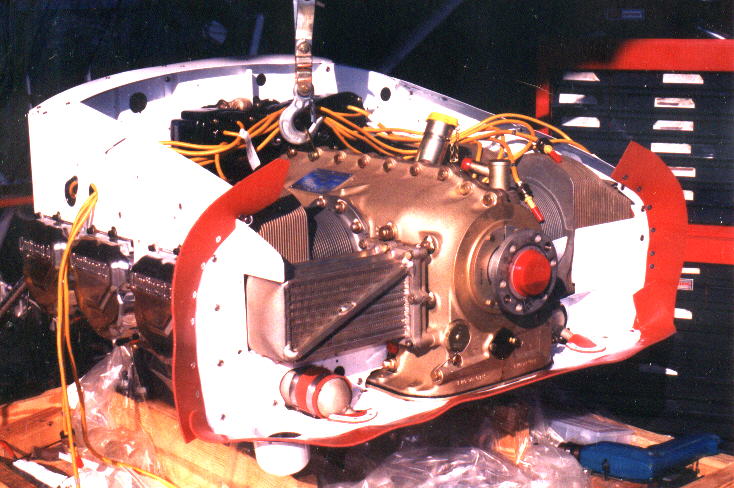
with a 45 pound gear box on the front has it's CG under the front
end housing. So those front rubber mounts take ALL the load.
It makes no sense to have four large rubber mounts. That is not
a show stopper on its own however.
I sent Fred some email way back when he first started making these
mounts and he changed the design somewhat and added tubes in an
attempt to fix it. He should have scrapped the sandwich plate at
that point.
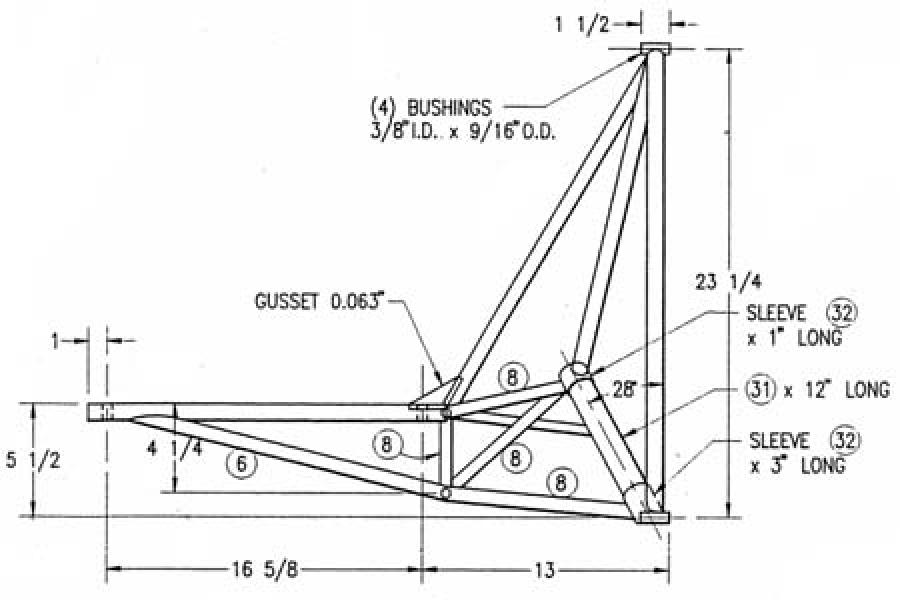
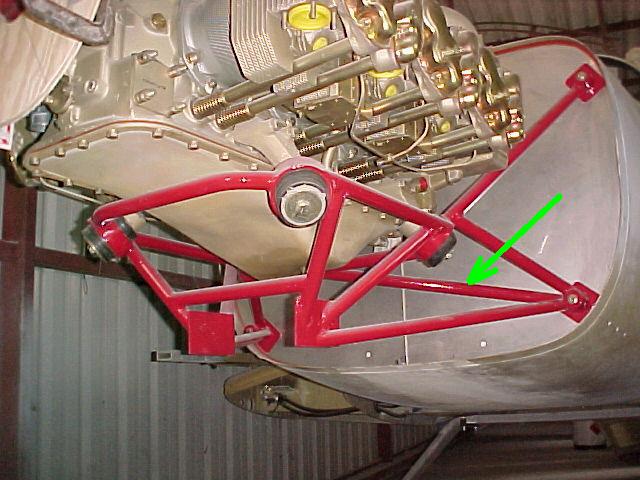
The biggest problem is the front rubber mounts that are now taking
all the load must be directly supported by tubing sloping up and down
towards the firewall hard points at a reasonable angle. Running the
tubing straight back horizontally is not a reasonable angle.
That leads to unnecessarily high compressive loads in the lower
tubes.
Therefore the tubing passes right through a tangential muffler and
or a turbo charger. That is why we use a wide Schertz beam to support
the engine and get the tubing away from the exhaust side of the engine.
The exhaust plumbing becomes much easier. My C182 suffers from the
same problem. The motor mount tubing is being over heated
by the exhaust and corrodes. I had to have the 182 mount overhauled
with new pieces of 4130 tubing.
That is problem number two.
Problem number three if you make the aluminum plates thick enough
to resist the torque bending loads from the front rubber bushings
it is too heavy without expensive NC milling out of a bunch of
pockets and holes. If it is too thin and merely water jet cut
it will crack sooner or later as aluminum has lousy
fatigue characteristics. Particularly at elevated temperatures.
The engine fires twice per rev with up to a 800 ft pound pulse
so it doesn't take long to achieve the required cycles to fatigue
the plate.
Problem number four as the plate flexes around the rubber
bushing area it is hard to keep the oil in the pan and engine
from leaking out. Now there are two oil seals to worry about
instead of just one. One between the engine and the plate
and one between the plate and the oil pan. Dumb.
Problem number five. The plate runs at oil/engine temperature
so it exceeds the temperature rating of the rubber bushings.
With a bit of additional radiant heat from the exhaust the left
front rubber bushing melts. Without the additional heat from the
exhaust it is running at its maximum rated 200 F temperature. The
aluminum plate itself is half way to losing serious strength at
250 F.
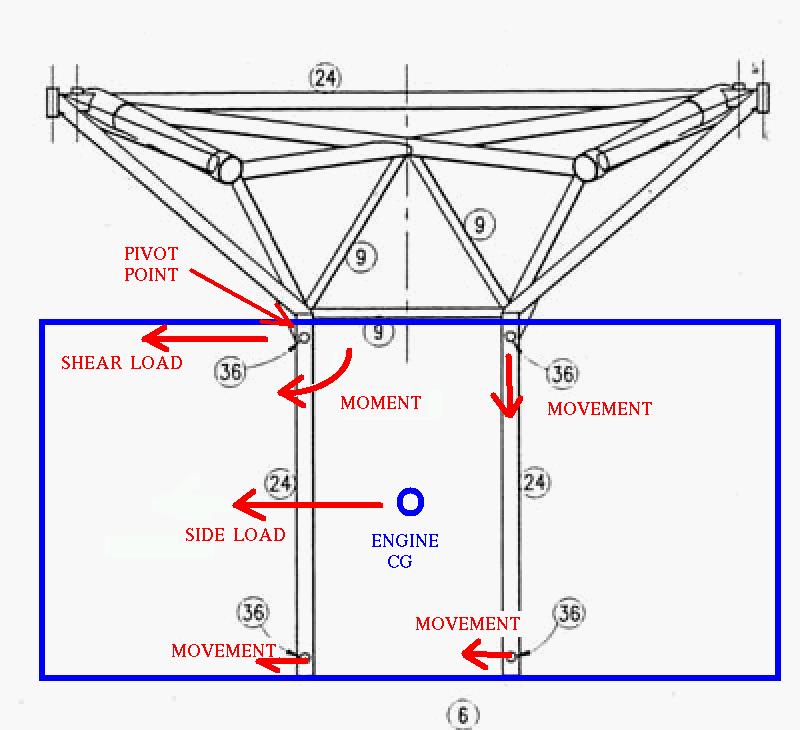
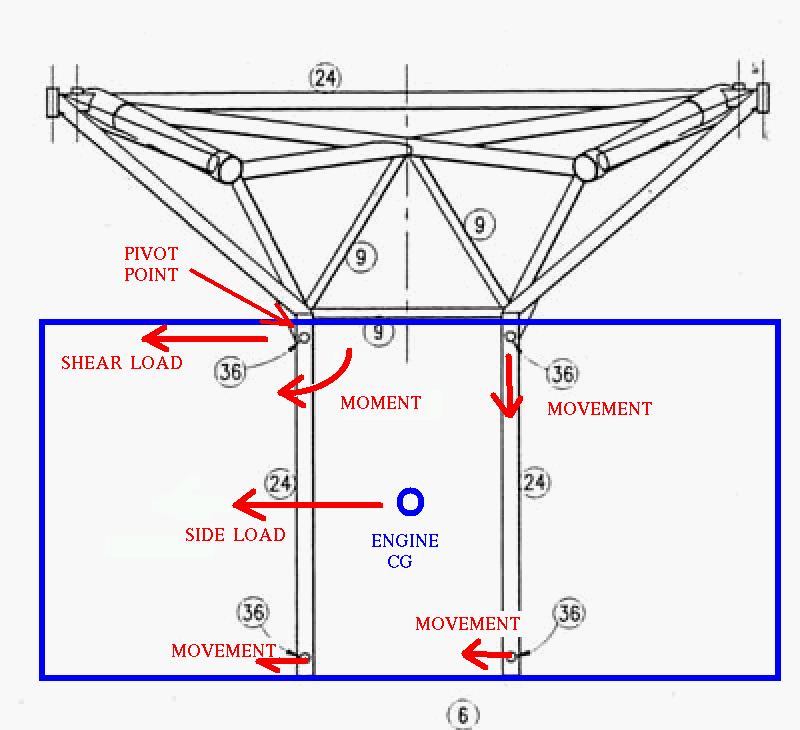
Problem number six. It is near impossible to adequate support
the front rubber bushing area from lateral loads. This will lead
to cracks if any type of violent yaw maneuvers happen.
The mount works in a few specific aircraft designs because it has
been beefed up over the years with gussets and tube doublers to fix
the tube bending loads and the cracks that have developed and the
FAA AD's on it. I know I have one in my C182. Consequently it is
not light weight. It is a dumb design done by someone that did not
have a clue about proper space frame design 60 to 70 years ago. The
dynafocal mount was designed later by Lycoming to fix these
problems."
Here are a few attachments illustrating the problems.
Paul Lamar ...No rotor no motor.
The Rotary Engine NewsLetter. Powered by Linux.
ACRE NL web site.
http://www.rotaryeng.net
Copyright 1998-2006 All world wide rights reserved.