Paul--
I believe I am ready for the various dimensions, at your
convenience--have the mixed blessing of being retired (recycled) and a
MacGyver for a partner in this venture.
If you will, please include specs on oil pan material (thicknesses and
type of aluminum alloy) as well as specs for construction of shertz beam
(thickness of 4130 sheet to use and dimensions, etc. s-tube? or .5"
square tube?)--will help me determine whether or not to make them myself
or farm the job out.
Tom
Oil pan 6061 T6 material thickness is a function of how good of a
tig welder you are.
Anything from .050 through 1/4 inch will work. The pack panel should
be .090 or thicker. Same for the flange.
A one off 4130 Schertz beam is very expensive indeed. Not something
one can make
in a pan brake. Here are the dwgs.
More dims to come.
-------------------------------------------------------
Here are some more dims. Cut all tubes to fit.
You have the catalog and pics of the rubber ball joints.
Here are the catalog and pics of the rubber bushings from Barry
Controls.
We use the 2002 series.
Let me know if you have anymore questions.
Paul Lamar ...No rotor no motor.
Paul,
I seem to recall that you have a plate mount on your Kiss....bolted
between the engine and the psru ( please excuse if I am wrong ). Why do
you prefer the S-beam mount above all others? How do you fasten the rear
of the engine using the plate mount?
Also, in going through the website looking for the Kiss, I came upon a
photo of a Presscot pusher with a ducted Wankel. Do you know what the
downfall of this plane was? It looks to be a very nice and practical
installation for moderate performance.
Erik Snyman
Messina
South Africa
--
Erik Snyman
Messina
South Africa.
The plate mount works fine. Bob White has one too. Unfortunately
it is too expensive as it requires some NC machining to
get the weight down. The rear mount can be the same as any other
Schertz beam mount. Bob White used a strut up from the bottom edge
of the firewall. A minor drawback is the lower tubes
need to be a bit larger in diameter to avoid buckling due to slightly
increased length. In theory it reduces the stress on Tracy's spacers
as the torque reaction from the prop is directly absorbed by the plate
and motor mount main rubber bushings.
The ideal motor mount for the rotary would be a magnesium cast bell
housing with built in motor mount arms.
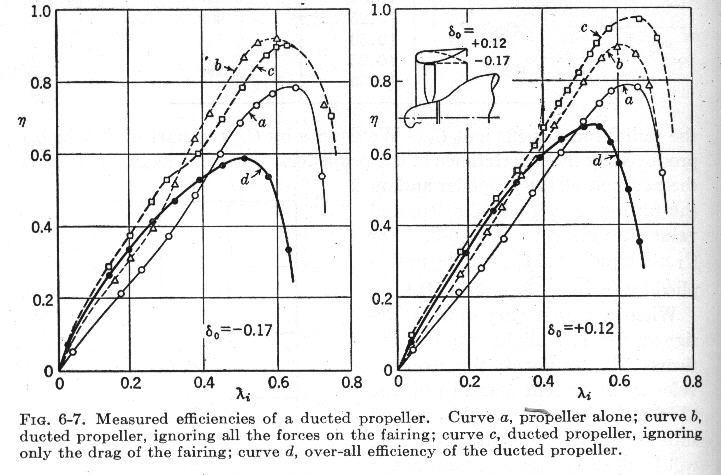
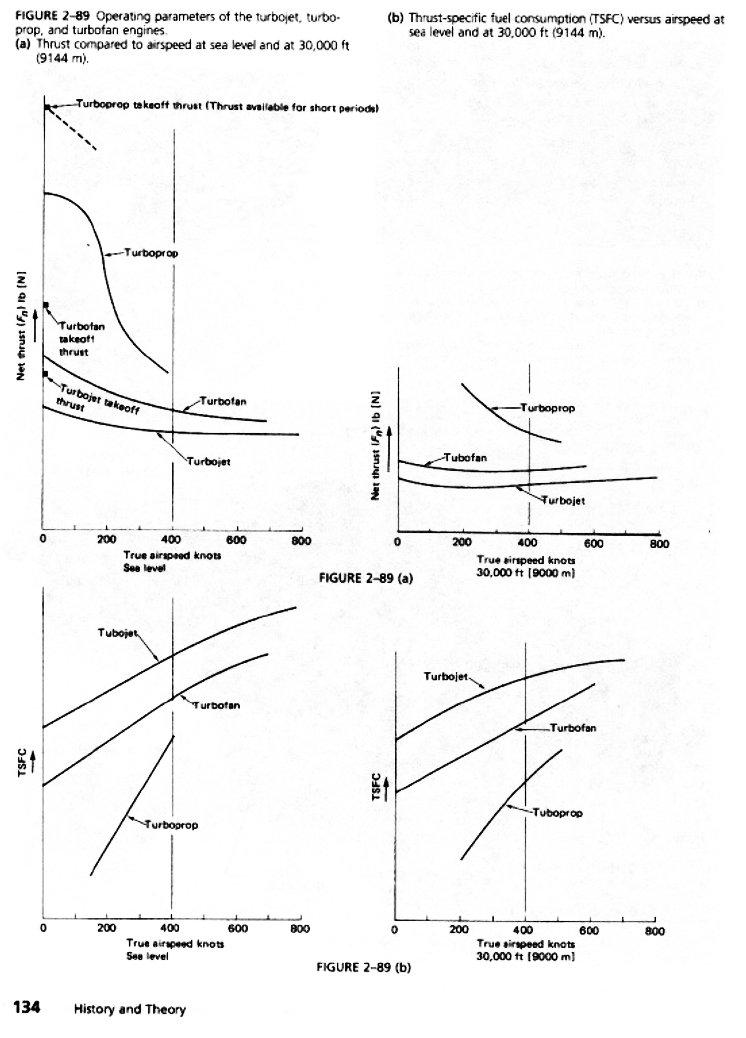
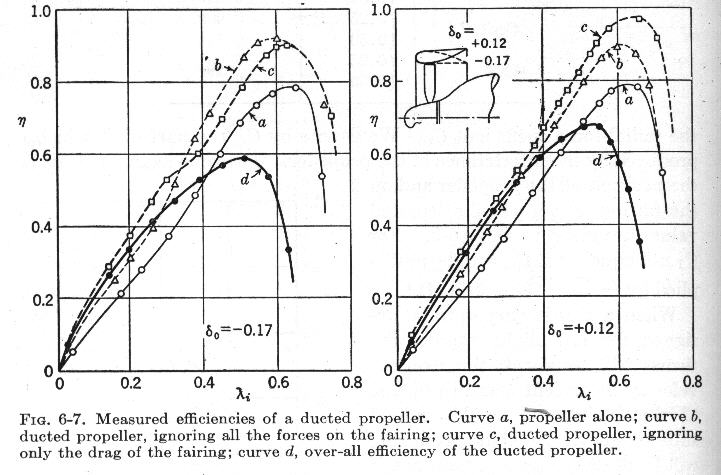
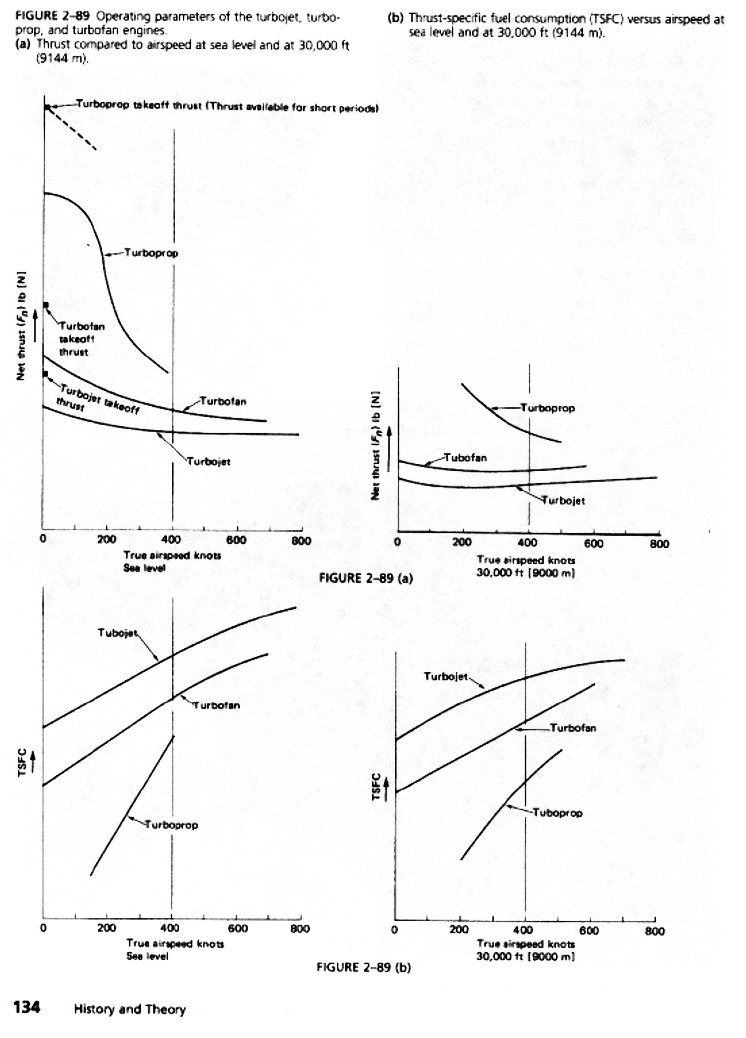
Ducted fans are horribly inefficient compared to props
until you get over 500 MPH. At that point they are the
lessor of two evils :) They would be better without the duct as
that adds drag. They are also point designs. What works best
at 500 MPH does not work best at 100 MPH. Airliner makers use them
as they don't care what the eff. is at less than 500 MPH and
they have plenty of excess HP to take off at 100 MPH.
After all they have enough power to go faster than 500 MPH :)
If you have enough HP to go faster than 500 MPH by all means
use them. With a flat plate drag of 2 square feet you would need about
1700 HP net out of the duct to go 500 MPH at sea level. The engine
would be generating about 2500 HP given a duct eff. of 70%. Putting
it in terms of net thrust you would need about 1300 pounds at
500 MPH. Putting it in terms of fuel burn at .5 BSFC it is 1250
pounds per hour or 208 gallons an hour at sea level.
Paul Lamar ...No rotor no motor.
The Rotary Engine NewsLetter. Powered by Linux.
ACRE NL web site.
http://www.rotaryeng.net
Copyright 1998-2006 All world wide rights reserved.