Just watched Acura Race to the race on the Speed channel.
Never heard so much BS and out and out lying in all my life.
IMSA American Lemans series is not car racing. Chassis and engine
development has absolutely nothing to do with it.
All you have to do is sand bag and then complain to the
IMSA organizer and they will change the rules to suit you.
Or perhaps pay some one in power big bucks to change the rules.
Its a monumental dishonest joke.
Where are Can Am racing rules when we need them?
--
Paul Lamar ...No rotor no motor.
Here is the results of the Sebring race.
55th Mobil 1 Twelve Hours of Sebring
Sebring International Raceway, Sebring, Fla.
Saturday's results
1. (1) Frank Biela, Germany; Emanuele Pirro, Italy; Marco Werner,
Germany;
Audi AG/R10/TDI (1, P1), 364.
<<lots-o-snips>>
No surprise that six Acura's P2 entered with a $100 million budget and
three separate 2 car teams did well. Particularly since Roger
Penske two car P2 team stumbled big time.
No Mazda powered 3 rotor P-port in the results. What happened?
I guess R&T decided NOT to run if the IMSA organizer were going
continue to penalize them year after year for running a Mazda rotary.
The total carb air intake area on a p-port 3 rotor is 9.42 square
inches. Why then does IMSA make them pump all the air through
this tiny 2 inch dia. restrictor hole with only 3.14 square inches.
One third of the potential 3 rotor HP.
What is IMSA afraid of?
I'll tell you. An unrestricted p-port 3 rotor would run the rest of
these
antique piston engine guys into the ground in 12 hours or 24 hours.
Mazda should run their own rotary powered sports car series and
humiliate these idiots with better lap times running on the same
tracks using press releases and advertising.
Paul Lamar ...No rotor no motor.
The winner wasn't even running gasoline - the Audi R10 is a V10
turbo-diesel. :-)
From http://www.modernracer.com/news/category/racing-stories/
"The Audi R10 TDI, the world's only Le Mans diesel racer, has been
doing so
well that new regulations have been put in place to reduce its
advantages.
The American Le Mans Series has decided to allow the competing
gas-powered
LM P1 Lolas to drop 143 pounds of weight to make for a tighter race.
The
Lolas will also be granted a five-liter larger fuel tank. Audi says its
engineers have calculated with computer simulation that 22 pounds at
the
upcoming Road America is worth at least two-tenths-of-a-second per
lap. Audi
said it is deeply disappointed about the random decisions of the IMSA
organization. Nonetheless, Audi is hopefully it can continue its
winning
streak this weekend with the Road America race."
Andy Hecker
That is funny. No word about all the other rules and restrictions.
Where is a complete set of rules for all IMSA race cars?
I have not seen them. Do you have a set?
What minimum weight is forced on the gas engined cars?
Five liters of more fuel when all cars are holding 100 liters, or
more, is of little advantage. As far as I know the piston
engine cars are non turbo. Given equal displacements and no limits
on RPM a turbo gasoline engine will have twice the HP of a turbo
diesel. The Europeans are hung up on stinky, carcinogenic pumping
diesel engines :) The reason they win is nobody wants to get close
enough to pass them :)
The other P2 cars are not allowed turbos. http://www.motorsport.com/
"Fitted with mandated air restrictors, the 3.4-liter, 90-degree, V8
racing engine developed by Porsche for long-distance events produces
503 bhp, an increase in output over the former model by 23 bhp. The
weight of the car is also in line with the A.C.O. regulations, with
the new RS Spyder weighing in at exactly 775 kilos or 1709 lbs."
1709 pounds is a war fighting tank :)
With no restrictor a Mazda p-port 3 rotary street car engine would have
a minimum of 450 HP and would weigh about 260 pounds using cast iron
end housings.
Turbos on gasoline piston engines can double the HP. A 3 rotor turbo
would have something in the neighborhood of 1200 HP.
Turbos on gasoline V8 piston engines with four overhead cams and
24 valves can double the HP.
With no minimum weight, all other things being equal, a gas engine
will beat ANY diesel engine in a road racing situation. Over all weight
in a racing car is a strict function of engine weight. The ratio is
somewhere less than 3 to one. Back in the days of Can Am, with no
minimum weight rules, our Chaparral cars weighed 1300 pounds empty and
the all aluminum Chev 6.5L V8 engine weighed 450 pounds. That was old
low tech using aluminum chassis's and fiberglass bodies. My guess the
ratio is now closer to 2 to 1 using carbon fiber for both in racing
cars.
In street cars the same relationship applies except the ratio
is higher. The RX8 is an excellent example. It weighs 3000 pounds
with a 200 pound engine while piston engine cars of about the same
HP with heavier, 350 pound piston engines, weigh 3400 to 3500 pounds.
The fastest accelerating street cars with no minimum weight rules
are always gasoline powered cars.
It is the same in airplanes that have no minimum weight rules.
Diesel engines are extra heavy and not worth the slight reduction in
fuel burn.
Diesel engines are limited in the ability to rev due to combustion
characteristics. HP is directly proportional to RPM. Therefore a
gasoline engine will always generate more HP per pound of engine
weight. That is giving the benefit of the doubt to the diesel engine
because diesel engines run at higher compression ratios. That requires
a stronger and heavier engine at the same HP level. Teledyne
Continental
and Renault both recently failed to produce a viable diesel
aircraft engine.
The Germans figured all this out in the late 1930's. There were
no diesel powered fighter planes or bombers in WW II. At something
like 70 to 80% full power or above a diesel engine is only slightly
more efficient than a gasoline engine. That has not changed in the
last 100 years. See the attachment.
BTW IMHO Mazda ought to sue IMSA $100,000,000 for loss of advertising
and PR for arbitrarily discriminating against the rotary. That
is about what Acura spent winning the P2 class.
--
Paul Lamar ...No rotor no motor.
------------------------------
Sorry, Paul,
Germans had a 4-engined diesel powered aircraft in 1938. Check this
link for pics:
http://www.grafixnpix.com/wwii/german.htm
Eric Benson
----------------------------------------------------
"Sorry, Paul" Is that supposed to make me feel like
I made a mistake? It don't! :)
I knew that! That is why I said:
"The Germans figured all this out in the late 1930's. There were
no diesel powered fighter planes or bombers in WW II."
The Germans >>> ABANDONED <<< the diesel aircraft
engine in 1938. They were not stupid.
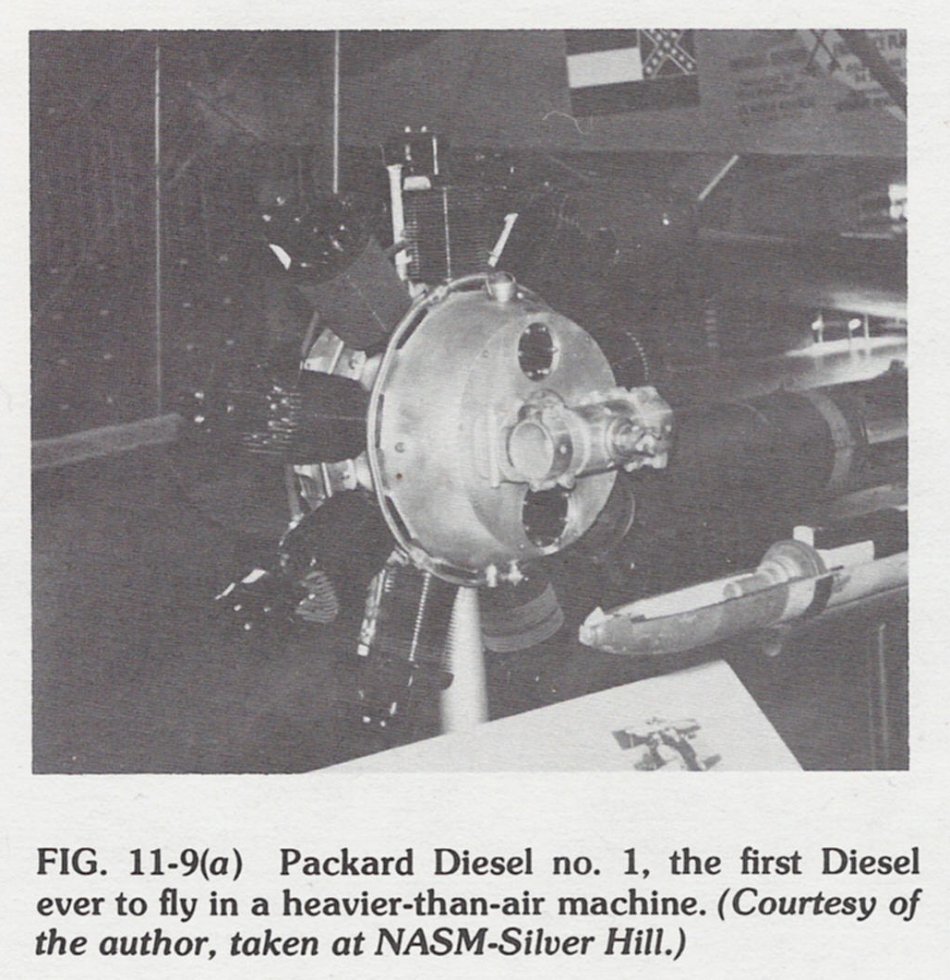
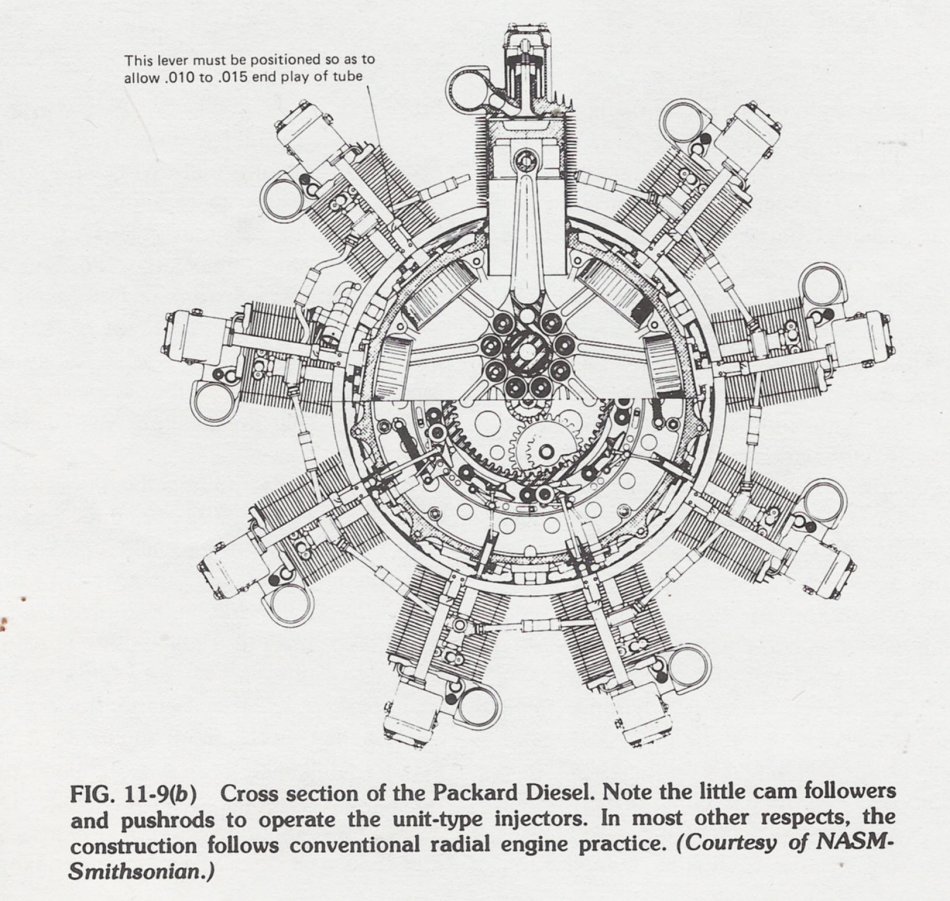
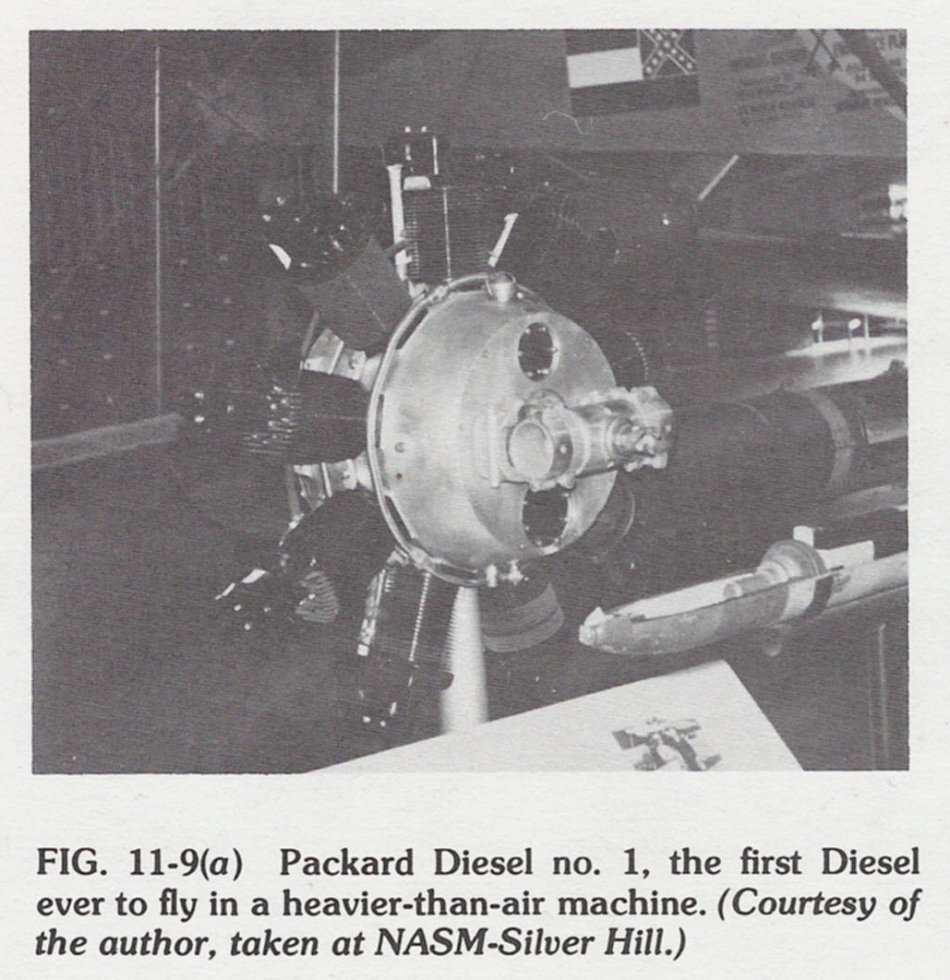
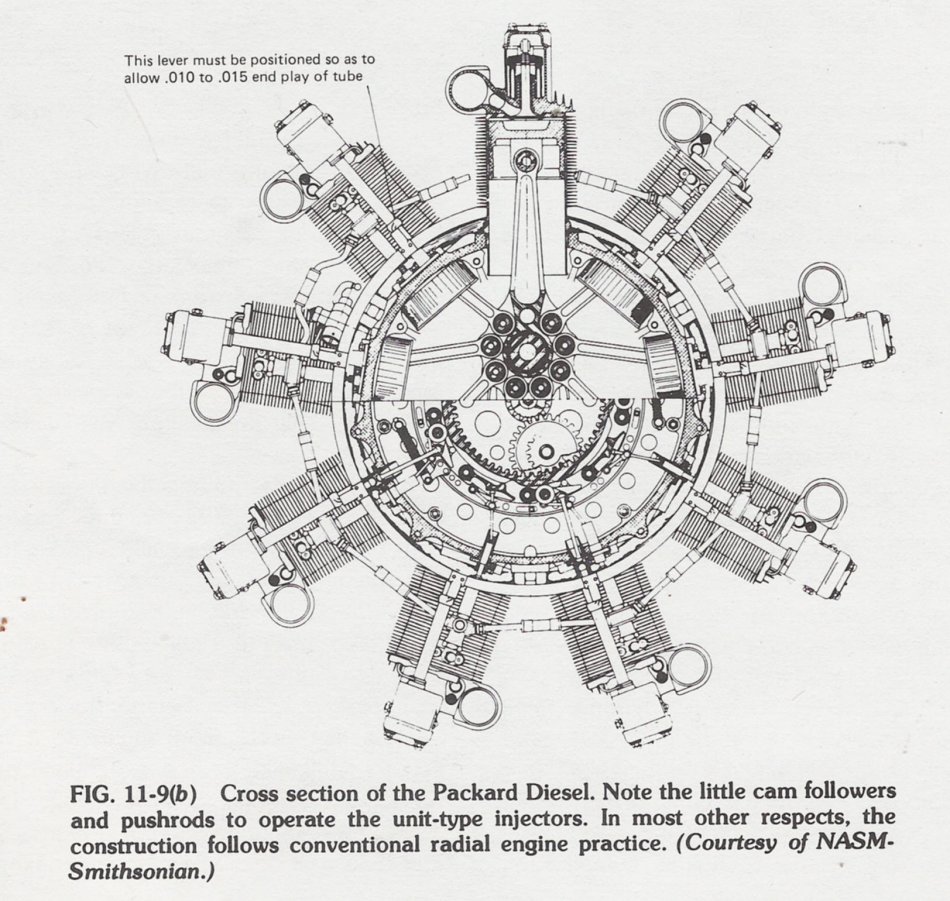
Long before 1938 Packard built a diesel aircraft engine
in the early 30's. The Packard had a displacement of 5132 cubic
inches. An R-5132 if you will! More displacement than a corncob
engine. 84 L. The stroke was 12 inches! A whole foot! It weighed
4000 pounds and but only put out 585 HP at 900 RPM. A horrible
power to weight ratio. It was never widely accepted.
I will say diesel aircraft engines will have applications in
UAV aircraft when you want to loiter in the same spot for hours on end.
Diesels are excellent for low fuel burn when they are generating less
than 50% of full power. As the fuel weight burns
off you can continue to reduce power to just stay aloft.
Recently the Diamond Twin powered by the Thielert Mercedes econo
box A class car engine crossed the Atlantic ocean at 40% power in only
two days :) (I am joking. I don't know how long it took.)
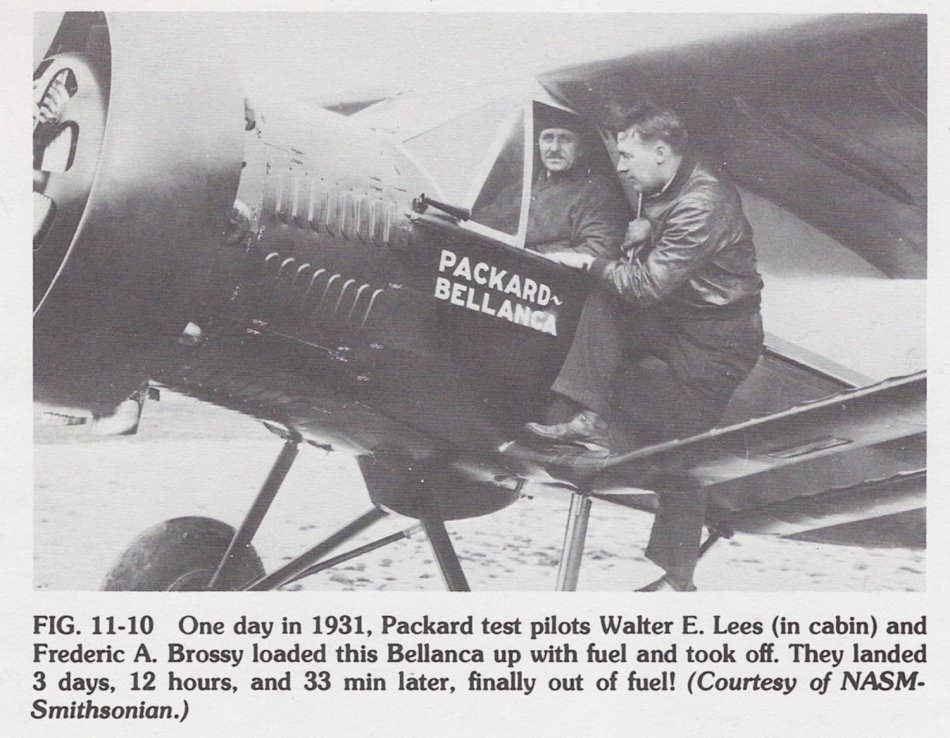
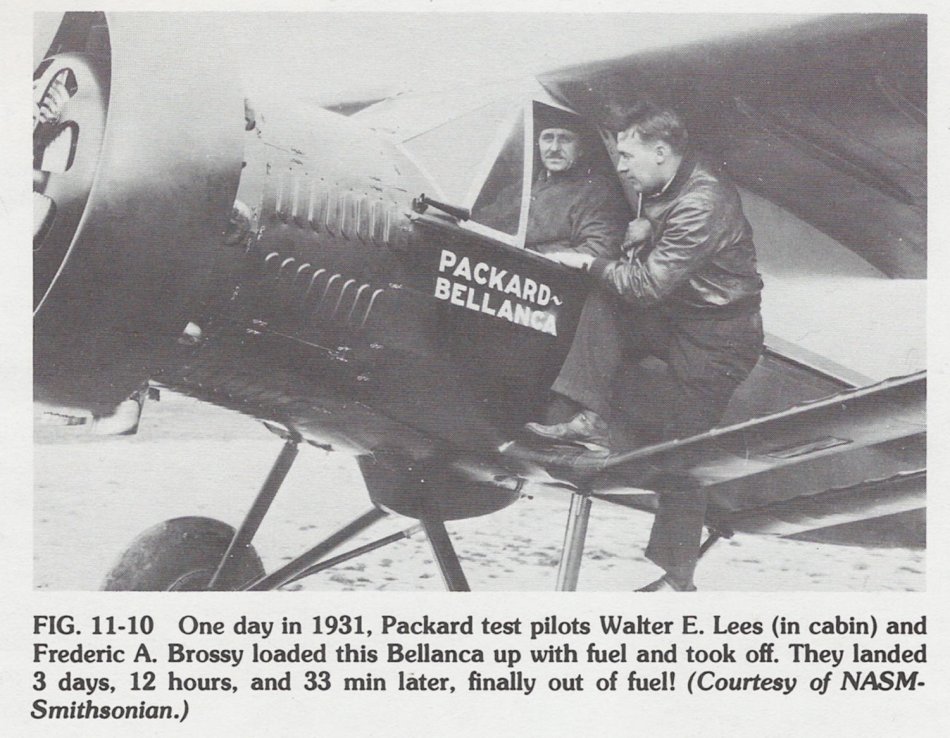
It becomes a matter if you want to go, or you want to go slow.
Packard also found that out in 1931. See the pic.
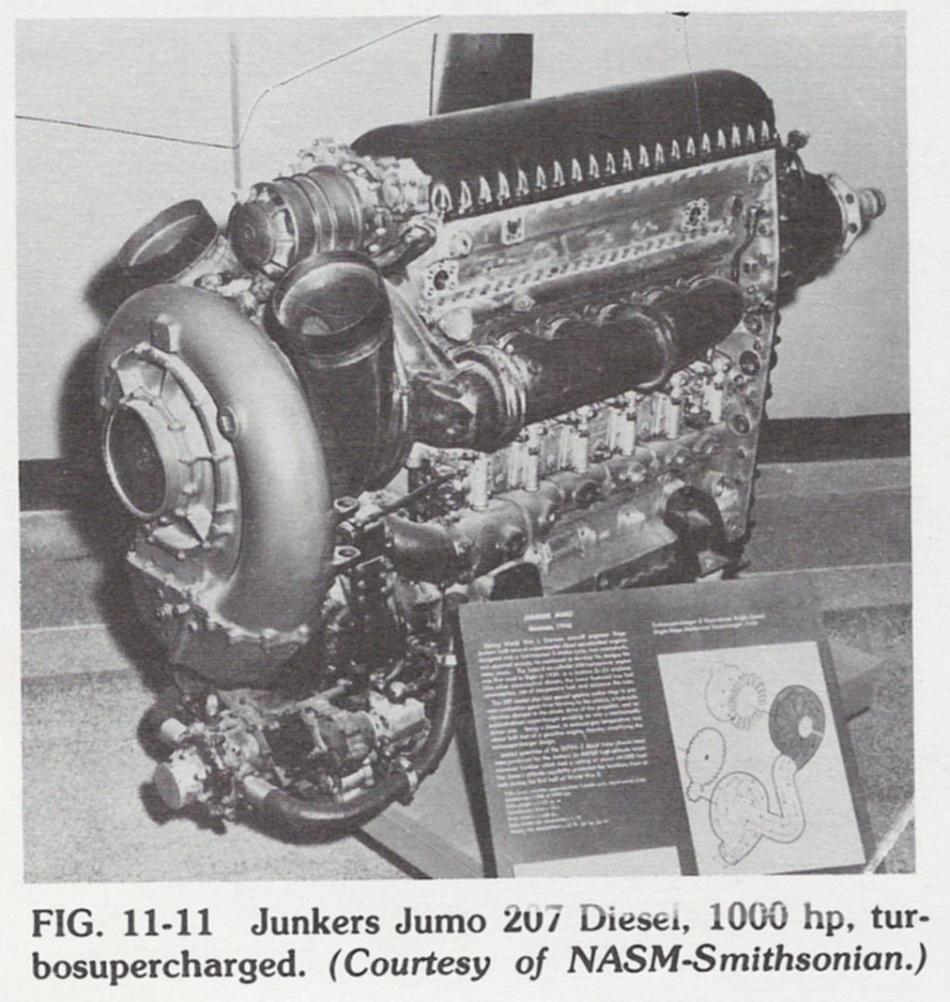
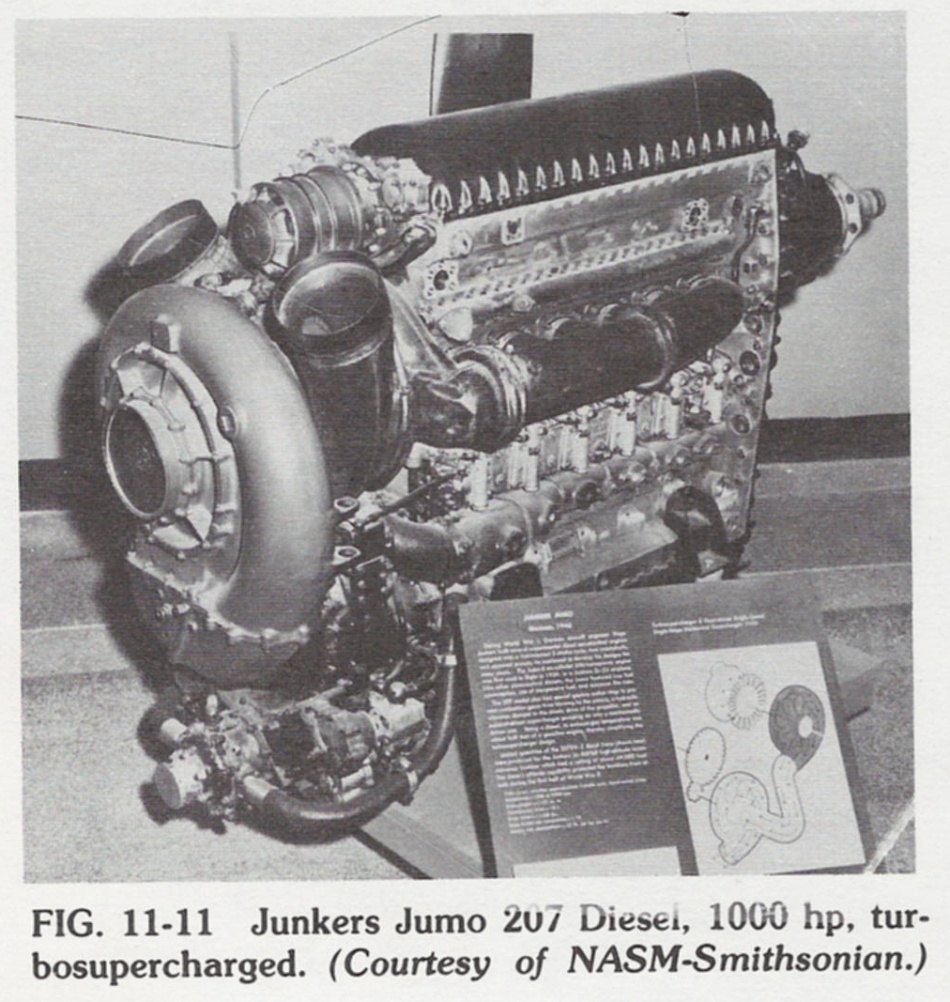
The last pic is of the Junker Jumo 207 A/C diesel of the late 1930's.
BTW Eric please sign your messages in the future.
Paul Lamar ...No rotor no motor.
The Rotary Engine NewsLetter. Powered by Linux.
ACRE NL web site.
http://www.rotaryeng.net
Copyright 1998-2006 All world wide rights reserved.