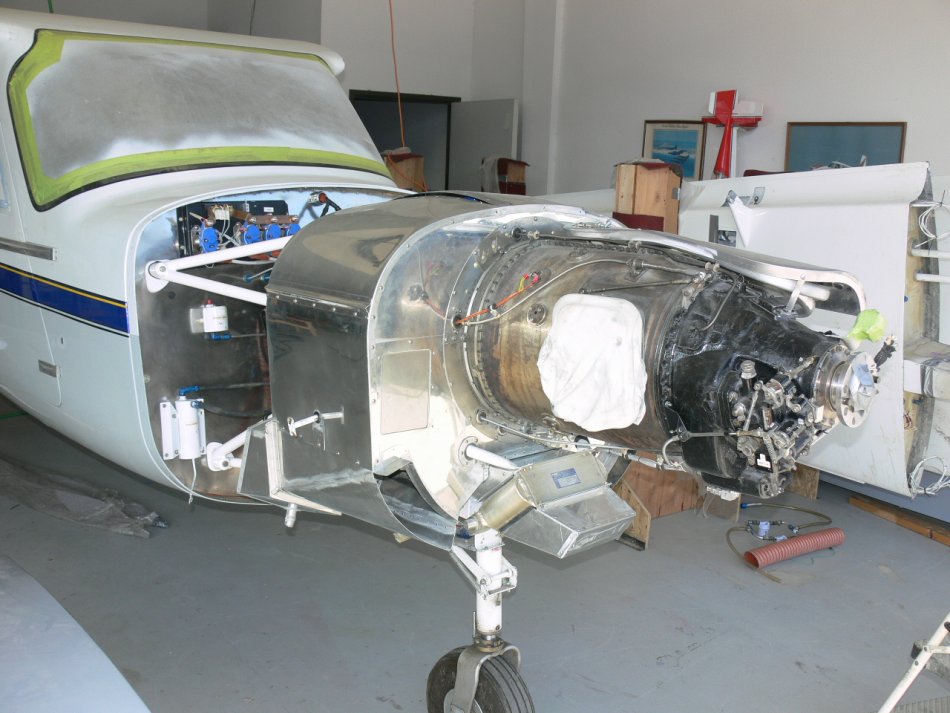
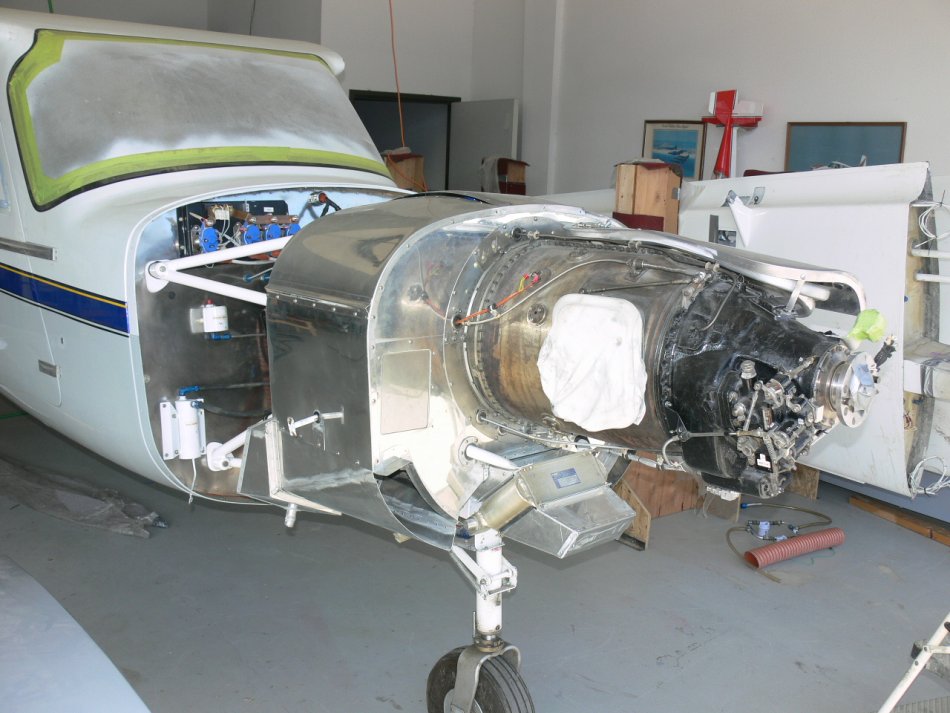
I was looking at the PSRU and engine mount. The PSRU case is cast to
hold the Barry Mounts which is what has been suggested for the rotary
if only we could generate the $$ to cast such a case. Unlikely.
What did interest me was the use of square tubing for the engine
mount. I believe this is possible because the upper and lower engine
mounts and the Barry mounts are in the same plane parallel to the
engine thrust line. In some instances we might be able to do
something similar by adjusting the length of the S beam to match the
firewall hard points if they are the same upper and lower. One could
actually fab up the the sides on the bench. A modified version would
be to maintain the firewall hard points out the the rear beam and
then from the rear beam to the Barry Mounts, it could be narrower but
still parallel to the thrust line so that square tubing could be
used. Probably need a gusset at the rear beam if there is off set
between the front and rear pieces. Now is when I need Rhino. It
would be interesting to explore the possibilities.
I think the present rear beam or strut engine mount is just about
perfect for our application so I am not advocating a change. Jerry
-----------------------------------------------------------
The empty weight is listed at 1800 pounds and gross is 2500 pounds.
The engine alone is in the neighborhood of 500 pounds. The chain drive
gear box adds another 127 pounds. The prop 30 pounds. The wing
loading is 22.5 pounds per square foot so stall, takeoff and landing
speeds would be high.
The Chevy LS2 engine is: 400 HP at 6000 RPM
400 ft pounds torque at 4400 RPM or 335 HP.
The last number looks about it for takeoff and climb as
the max gear reduction is 2.22:1. That gives a prop
RPM of 2000 I would guess. Lets see prop diameter is 86 inches.
Circumference is therefore 22.5 feet. Mach one is about
1100 FPS or 66000 feet per minute so prop RPM
is 2933 RPM at Mach one tip speed. Tip drag starts getting bad
at around Mach .7 so max RPM on this prop should be
around 2000 RPM. The numbers check with my guess.
It is erroneous to believe with this PSRU ratio that you will get
400 or 500 HP out of the Chevy LS2 or any other LSx V8 engine.
335 HP at 4400 RPM is a more realistic estimate.
Now the question is: for how long? Back in the days when I was
associated with GM the stock engine durability test was 300 hours
cycling the engine between max torque 4400 RPM and 6000 RPM max HP.
I don't know if the LS2 will pass that test. In sprint road racing our
TBO was 2 hours. It took years of programmed dyno testing and part
redesigns to get the big block life up to 24 hours for Lemans
competitive power.
In a car the LS2 engine rarely exceeds 2000 RPM at Freeway speeds.
First thing you need to do is throw away the cast iron or powdered
metal rods, cast iron crank and cast Al piston and change them to
aircraft quality forged materials such as 4340 and heavy duty piston
alloy. It is not possible to use sodium cooled valves due to
the small stem diameter so a higher quality SS exhaust valve material
is needed. Then one would need a good maintenance program for
checking for internal parts cracks every 50 hours or so after
the first 300 hours by disassembling the engine.
It has a real nice high pressure die cast aluminum oil pan :)
Paul Lamar
Somebody said 3 rotor.. I say p-port 4 rotor.. It would still be
lighter than the V8 Chevrolet. A 2 rotor bare block is 190-200lbs, a
bare 3 rotor is 260lbs. Would a bare 4 rotor be 320lbs (less?)? The
gear reduction would be heavier than is used for a 2 rotor, but not double.
And it would be good for 450hp at 6000rpm. With a 2.85 gear, that is
about 2150 prop RPM. Nice. Easy. Run forever.
Can a double width carrier be easily built for a 2.85 500hp reduction
unit?
450hp with an installed weight about the same as a big bore continental,
things get interesting. How about this engine in a P210 (obviously
turbocharged/compound to run the pressurization). Or how about somebody
knock off a C195 sized airframe. It would be sporty. This sized engine
would even run a Beaver (replacing an R985). Or how about two of them
on an early Twin Commander airframe. Or how about mounted on a Beech
Duke. Either one of those would be a nice get around..
Matt-
"Can a double width carrier be easily built for a 2.85 500hp reduction
unit?"
That is an interesting idea Matt perhaps the gears can be turned
around to make a herringbone set canceling out the gear thrust.
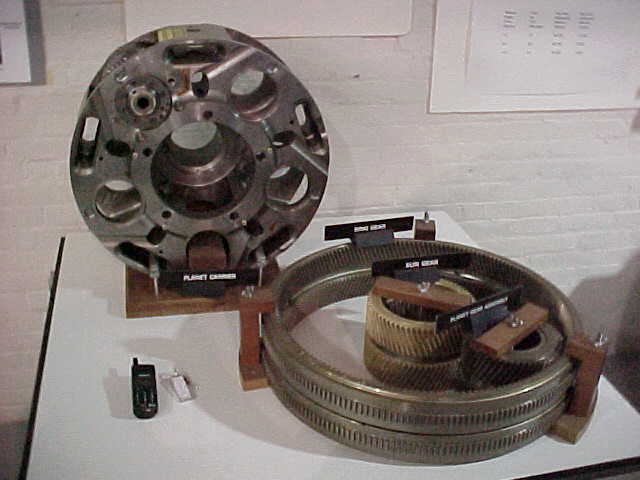
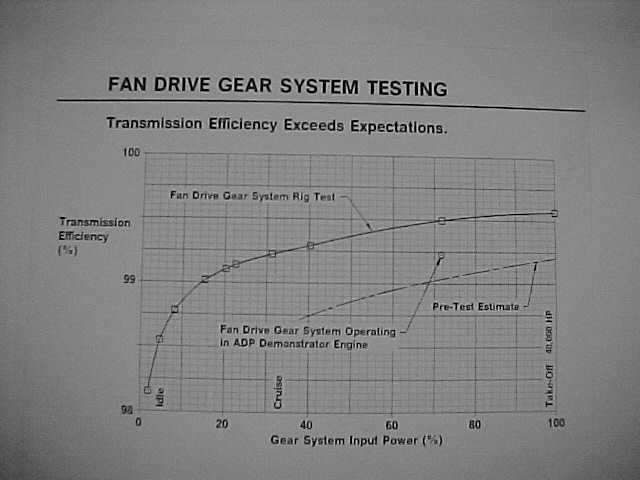
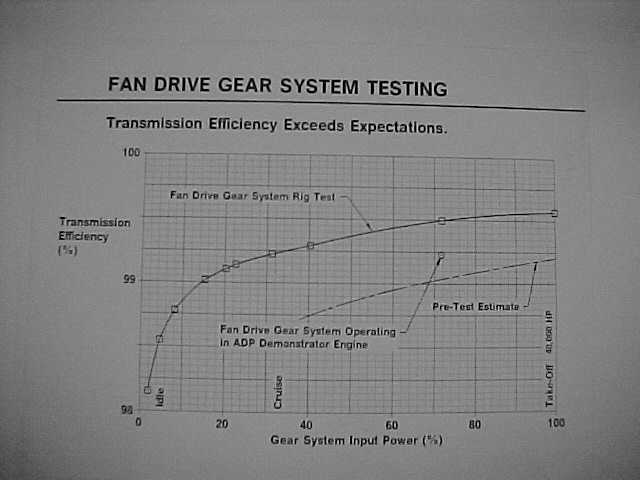
This P&W PSRU was good for 40,000 HP.
The airplane you are looking for is a Stallion.
http://www.aircraftdesigns.com/
Here is one at SZP with a turbo prop engine.
Paul Lamar ...No rotor no motor.
The Rotary Engine NewsLetter. Powered by Linux.
ACRE NL web site.
http://www.rotaryeng.net
Copyright 1998-2006 All world wide rights reserved.