This is not real automatic landing system so much as
it is an automatic flaring system.
Sharp makes a GP2DO2 solid state distance measuring sensor that can be
interfaced to the PICAXE It measures distances from 4 inches to 32
inches
with high rez. It uses the same principle the British Dam Busters
use in WW II to destroy German dams. It measure the angle the sensor
sees looking at a spot of infra red light reflected off the
runway surface.
You set up a decent rate of a couple hundred feet per minute
and let the auto flare unit take over at 32 inches. You might also
want to monitor the air speed so it does not flare after stall :)
The rest is software.
If you have a PIXAXE auto pilot altitude hold
you already have most of what you need. The idea here is mount
the sensor on the main landing gear axle and measure the distance
100 times a second and control the elevator to flare
the airplane. If anyone is interested in this let me know
and I will upload info from a book I have on interfacing
PICs.
This could be handy for landing sea planes on glassy surfaces
or land planes at night.
Paul Lamar ...No rotor no motor.
Paul,
Your spies must have been hanging around my hangar. I have actually
done what you're suggesting, but used the R144-GP2Y0A02YK sensor,
available from Acroname. Its range is 8" - 60", which provides 50%
greater range. Unfortunately, I haven't flown yet so I can't say how
well it works. I have monocular vision, so judging distances (close up)
is a bit of a challenge. I ran across these sensors and decided to buy
one and see what I could do with it. While it doesn't have a perfectly
linear output, I felt it was good enough to provide a signal for landing
purposes. (I never considered using a PICAXE controller.) I hooked the
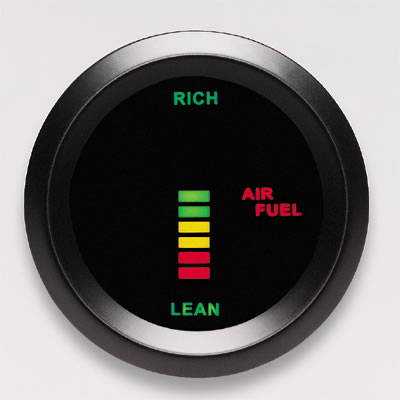
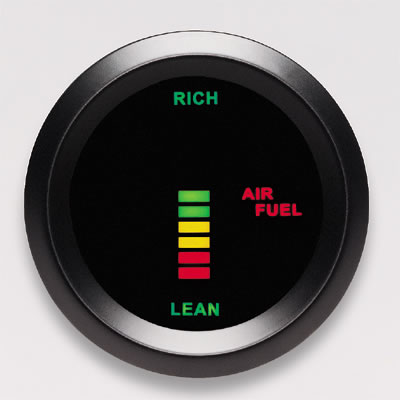
R144-GP2Y0A02YK sensor up to a 0-5v digital A/F gauge, the one with
colored led's. I tried it out by hanging it out of the window of my
truck while traveling down the highway at 65mph. I was concerned that
speeds of 70-80 mph might degrade the signal. It seemed to do the job
quite well. So, I built it into my left gear leg fairing and mounted
the A/F gauge in my panel.
I'll let the group know how well it works in a month or two.
Mark S.
Lancair ES, N/A 20B
------------------------------------------------------
Great minds work alike :)
--
Paul Lamar ...No rotor no motor.
The Rotary Engine NewsLetter. Powered by Linux.
ACRE NL web site.
http://www.rotaryeng.net
Copyright 1998-2006 All world wide rights reserved.