snips...
Doc and Paul,
I'm not so sure turbo compounding has much to offer for cars. The
main reason is that cars, unlike airplanes, cruise at a very low
power levels, probably about 25 percent. There is little energy in
the exhaust at low power levels, so not much power to be recovered.
Another factor is ambient pressure. The NACA paper -- 786 I believe
-- proved that the power recovered by the turbine is a direct
function of the pressure gradient between engine intake manifold and
turbine exhaust, which is at ambient pressure. The steeper the
gradient, or delta P, the more power the turbine wheel will see.
This should be intuitive -- the bigger the difference in pressure,
the faster the gas wil accelerate from the high pressure side to the
low pressure side, and the more momentum, ergo energy, it will bring
to bear on the wheel.
At sea level and without boost, there is no pressure gradient. In
fact, intake manifold pressure will be lower, even at full throttle,
than ambient pressure, due to pressure losses in the intake tract.
At part throttle, such as cruise, the intake pressure will be quite
a bit lower than ambient. There is nothing to be gained here.
If you boost the engine significantly, you will get a pressure
gradient. For example if you boost the engine 15 psi, you will have
2 : 1 pressure gradient. In an aircraft flying at 20,000 feet, the
ambient baro pressure is less than 7 psi. Even if you only have a
turbo normalized setup that brings your manifold pressure to sea
level pressure of 14.7 psi, you have a pressure gradient of more
than 2 : 1.
So I would say that turbo compounding would only make sense for
high-performance vehicles that are highly boosted. In this situation
you will get extra power from the recovery turbine, above and beyond
what you get from the boost. So I think it is a niche technology at
best for the automotive world.
Also, I absolutely agree with Paul that turbo compounding is only for
the Wankel engine. Forget about it for piston engines, for all the
reasons stated above.
But for an aircraft engine, the turbo compound rotary could be
revolutionary, no doubt about it. Think of an 800 hp 4-rotor, that
weighs less than a Pratt PT6, and sips half the fuel. Think what
that engine would do in a plane like the TBM 850, or better yet, a
plane specifically designed to take advantage of the lighter fuel
load and engine.
Regards,
Gordon.
Billions have been spent over the years getting one percent more
efficiency out of car engines. Curtis Wright (no less), John Deere,
Rotary Power International, Mazda and lately Mistral have all spent
as much as a 100 million dollars or more (in total) on the rotary
engine attempting to get the BSFC down from .47 BSFC to .44 BSFC.
IMHO by downsizing the engine and the turbine during cruise
the rotary powered car fuel consumption can be improved by as much
as 40%. From the RX8's 25 MPG to 35 MPG using the turbo compound
principle. Here in LA we spend as much as 80% of our travel at a
constant80 MPH on the freeway. You don't need a 250 HP engine to go
80 MPH. Here is an How-to in pdf format and html.
http://www.rotaryeng.net/RX8-TC-eng.html
Paul Lamar ...No rotor no motor.
Paul,
Thanks for that article. That's a neat idea, with the small rotor.
Another approach might be to use a very small, highly boosted
engine. Here's a paper about an engine where they ran boost of up to
3 bar. They used ethanol direct injection for detonation control,
thanks to the evaporative cooling effect.
The advantage of the boost is that it gives a steep pressure
gradient across the turbine that really kicks up the recovery power.
I've included a copy of that paper here.
Regards,
Gordon.
Gordon,
Approaching this from another direction.
My guess on the frontal area of the RX8 is 25 square feet.
Five feet high and six feet wide by .8 (old rule of thumb).
The C sub d is around .3 so flat plate drag is 7.5 square
feet. Aero drag will be 7.5 X .0026 X 80 MPH ^2
or 125 pounds. Drag HP will then be:
(117 FPS X 125 ) / 550 ft/lb sec. or 25.5 HP.
Give it another 11 HP for rolling drag, gear eff. and
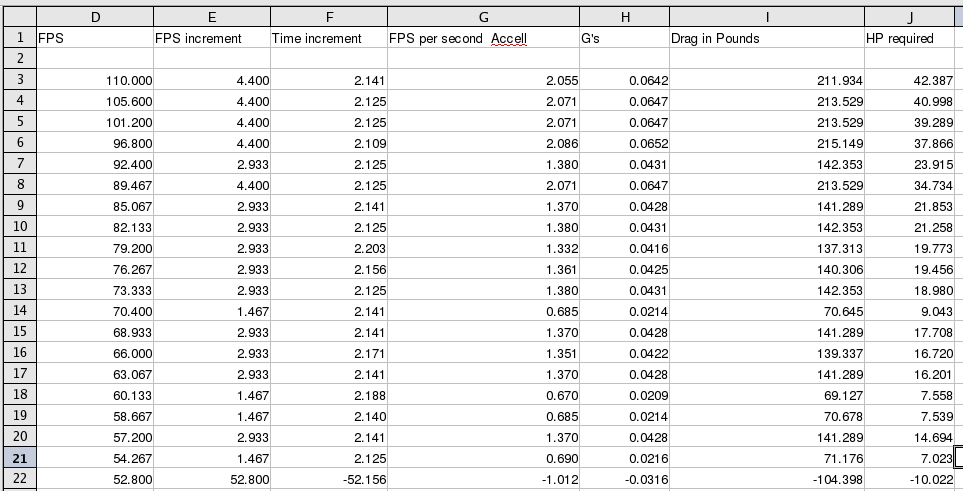
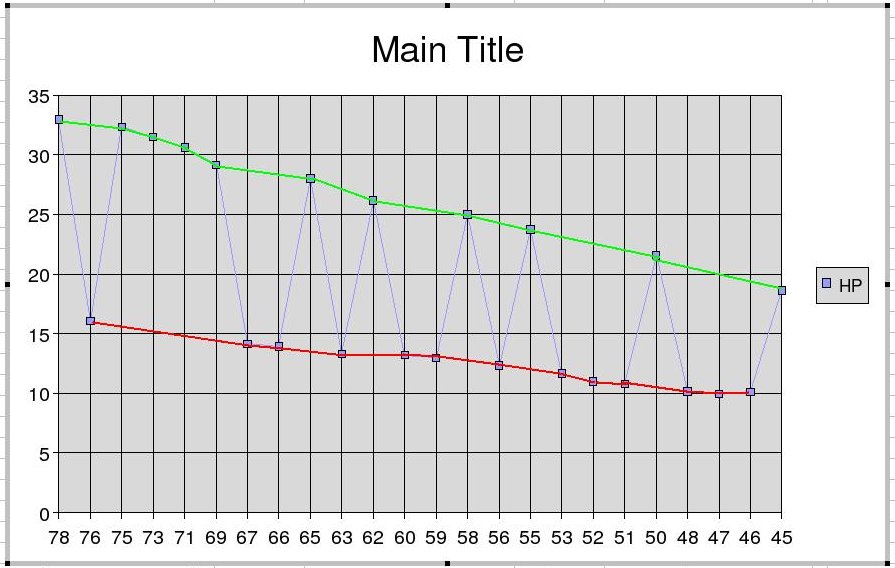
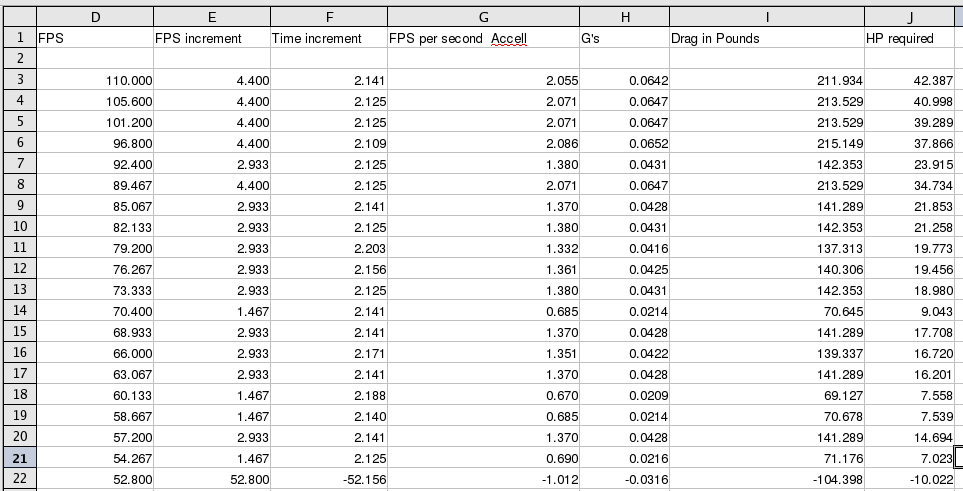
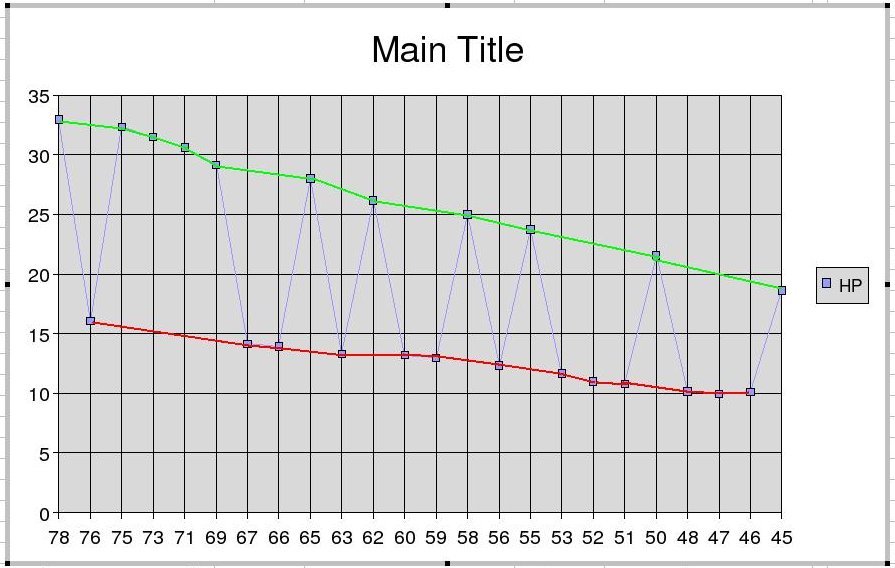
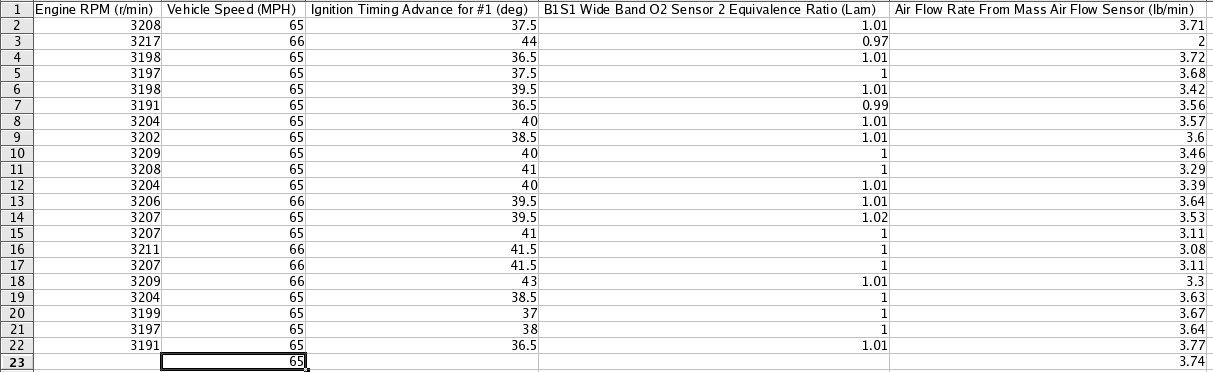
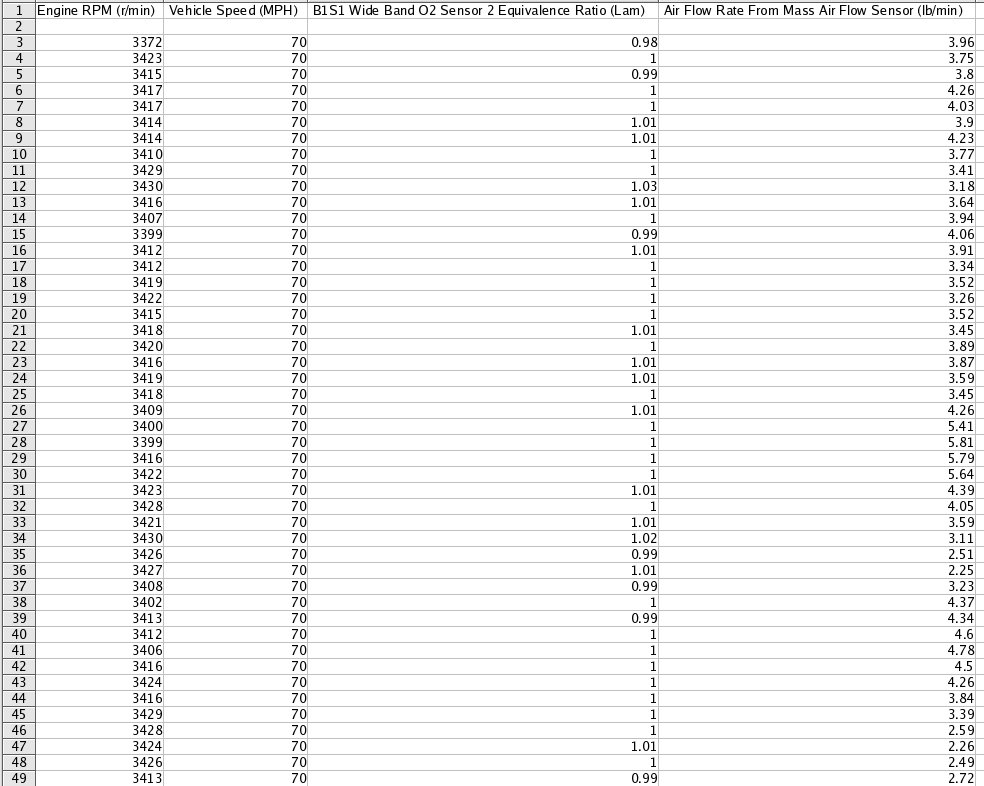
accessories. The attached charts are some measurements
I made of total RX8 drag and HP required using the coast down
technique so this number correlates rather well.
Since we now know the optimized BSFC of the leaned rotary engine
is .47 and a car requires 36 HP at a steady 80 MPH and if we
optimized the SIZE of the rotary engine for cruise at 80 MPH and
36 HP we should be burning 17 pounds per hour or 2.8 GPH. That
equates to 31 MPG. Right now the RX8 is getting about 20 MPG at
a steady 80 MPH. I have a Car Chip to measure it at 80 MPH but
I haven't got around to measure that accurately yet.
http://www.davisnet.com/drive/products/carchip_products.asp
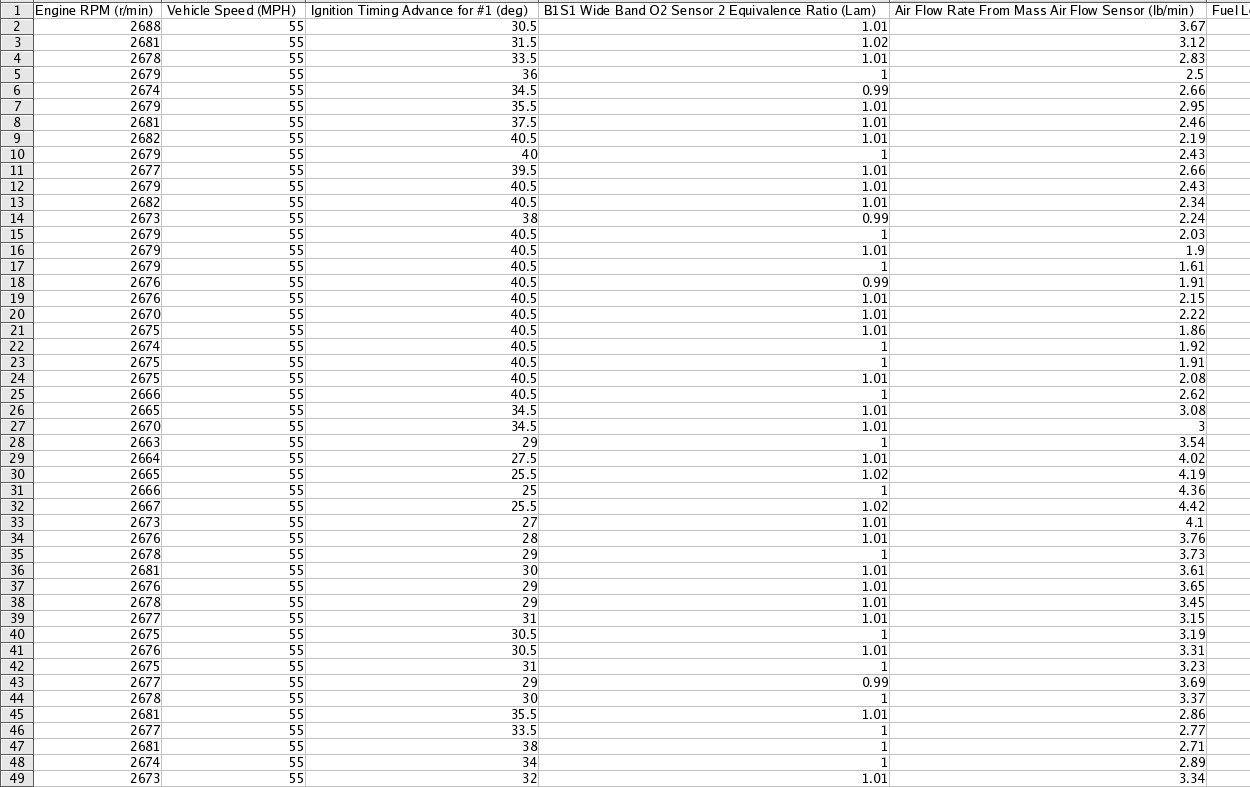
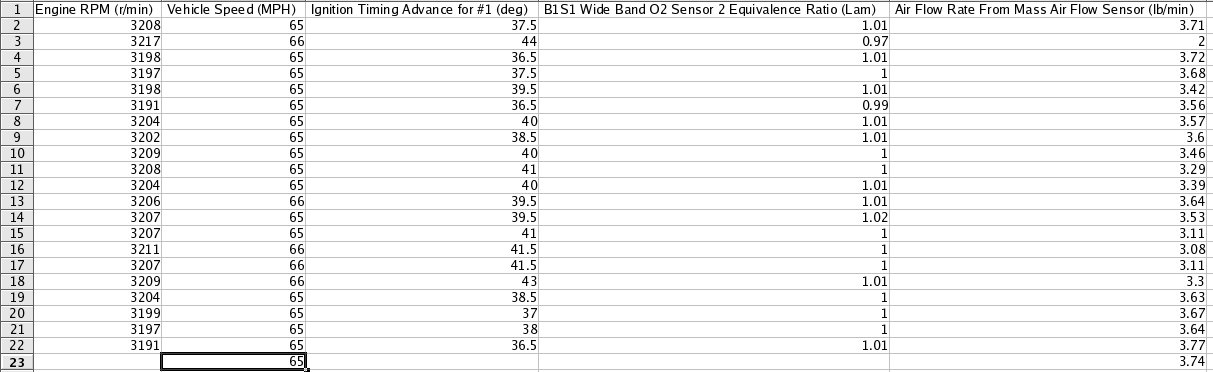
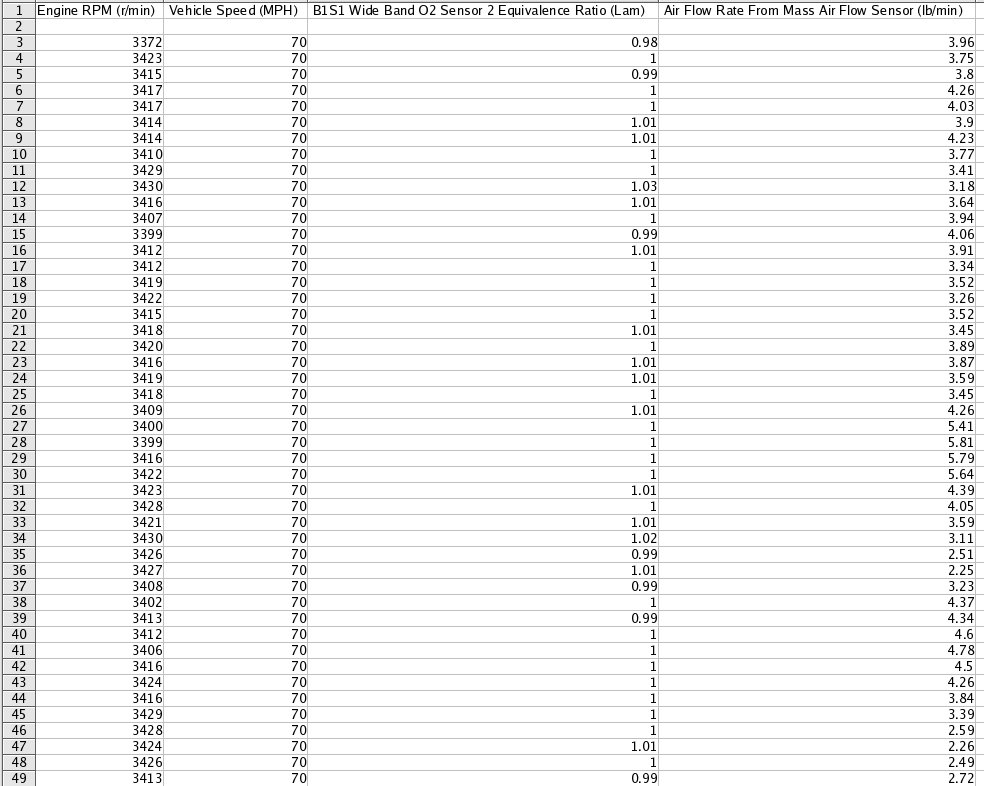
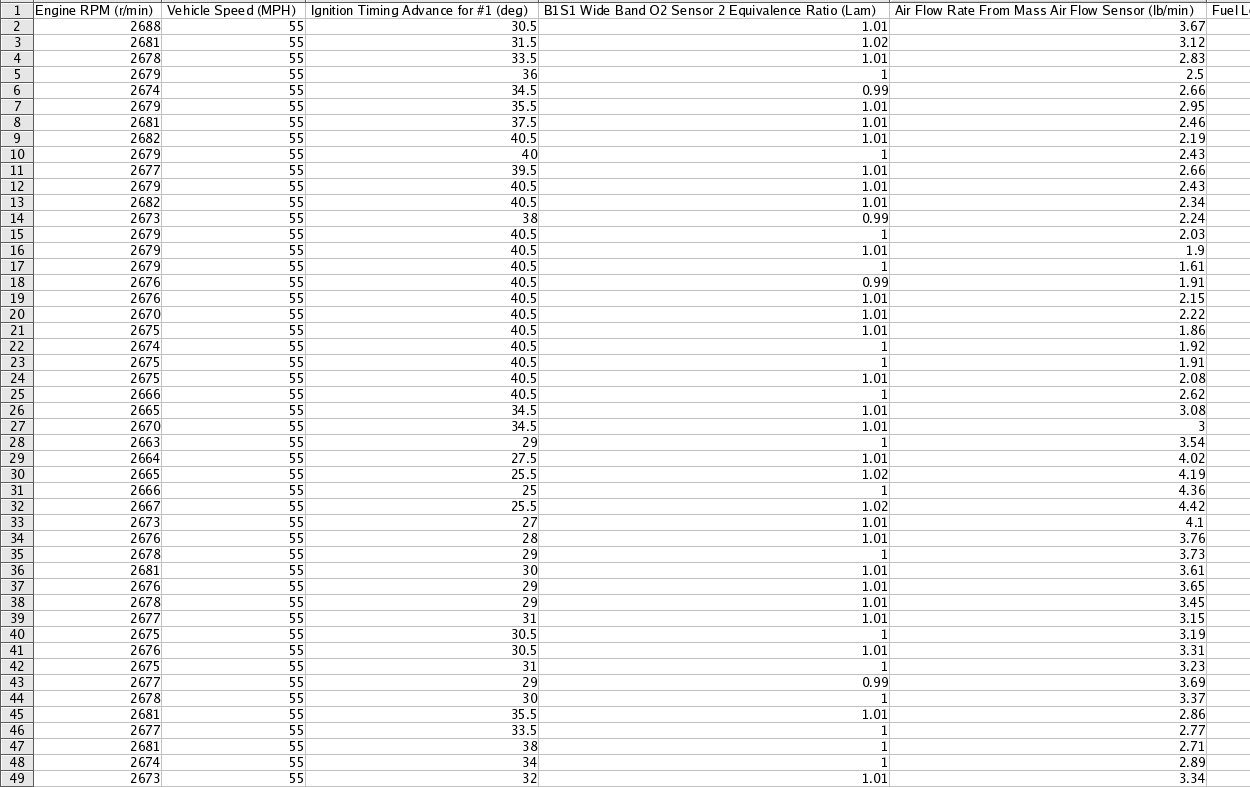
I have measured it at 55 MPH, 65 MPH and 70 MPH. It appears to
be about 25 MPG in this range. The MPG numbers assumed the mixture
was set at 14.7:1 which I think the RX8 computer maintains.
To calculate fuel burn you take the pounds of air burned per minute
from these charts and calculate the fuel required.
So I am guessing that down sizing the rotary engine is worth 11 MPG
at 80 MPH. The turbo compound feature will only have to provide an
additional 4 MPG to achieve our goal of a 35 MPG RX8 at a steady 80
MPH. Four MPG is worth a lot in these days of $3 US a gallon gas.
In the rest of the world where gas is $5 or $6 a gallon it
should be worth a lot more.
BTW this approach results in no loss of RX8 acceleration or top
speed. In fact both may be increased. It is not a free lunch
however as the cost of the engine will be increased.
Paul Lamar
The Rotary Engine NewsLetter. Powered by Linux.
ACRE NL web site.
http://www.rotaryeng.net
Copyright 1998-2006 All world wide rights reserved.