Hello Paul,
I was looking over my 20B block today and preparing to start the
disassembly process when I noticed something that seemed unusual to me.
Please understand that while I have quite a lot of experience with
piston engines, my rotary experience is negligible. I noticed that
there was a LOT of carbon build up in the Primary Intake Ports while the
smaller secondary ports were squeaky clean. Is this normal? I've seen
exhaust ports do this but usually the intake ports are clean.....aren't
they???
Don
That is a little strange. I don't recall seeing that on
a two rotor. I wonder the history of this particular 3 rotor.
Perhaps it was loafed around town its entire life. Perhaps
the turbo charger oil seal was leaking and oil was being sucked into
the intake manifold.
Paul Lamar ...No rotor no motor.
Paul
If the turbo oil was entering the intake manifold, wouldn't it be in the
secondaries also?
I've been a bit confused by this engine from the start. Before I
started tearing it down I wanted to
identify exactly what I have. The last 20B I rebuilt (7 years ago) had
specific identifying marks
that distinguished the year / series. It had a stamped letter on the
rotor housing next to the "Mazda 20B" marks, and that was the first
thing I looked for. But.....this one doesn't have that. This engine
has black on the rotor housings where is says "Mazda 20B" and the batch
number stamp isn't on there at all. I was initially perplexed by this
until I dug up some info on the Internet that suggested that it is an
internal factory rebuilt engine. I cut this info from the RX7 forum:
G'day from DMRH
This is a basic way to understand your 20B engine........
000 - 999 = 1st batch
A000-A999= 2nd batch
B000-B999= 3rd batch
C000-C999= 4th batch
D000-D999= 5th batch
E000-E999= 6th batch (only heard of these, never seen one)
I have never heard of an F-series. Since Mazda made just under 4000
20B version Cosmo's I can also picture that the E-series was for
warranty replacements if they exist at all.
If the engine has black on the rotor housings & the batch number
stamp isn't on there, then its an internal factory rebuilt engine.
(meaning its been out in a car & returned after failing within the
warranty period)
The last engines to go into a car would have stopped around "D500"
for fitment into a Cosmo. For example.........
The last Cosmo sold by Mazda = JCES-100633
However, Mazda quote selling just 369 examples of this series-II
version so how it got to #633, I really don't understand.
The latest Cosmo we have ever imported is JCES-100309. Its engine
batch # D442 It was a AUG-95 car & production ceased in Sep-95.
If you have any quiries then contact us via
http://www.dmrh.com.au
<http://www.dmrh.com.au>
That's about all I know about it so for, but maybe it will be more
apparent once it open it up.
Pics of my plane and engine are at
http://atexdoc.myphotoalbum.com
<http://atexdoc.myphotoalbum.com/>
Don
Well if the turbo was leaking and it was only driven slowly
then maybe the deposits were only on the secondaries. I have
a 20B in the hangar. Next time I am out there I will take a closer
look at the stock intake manifold and TB and see if they have a primary
and secondary butterfly valve with a split plenum.
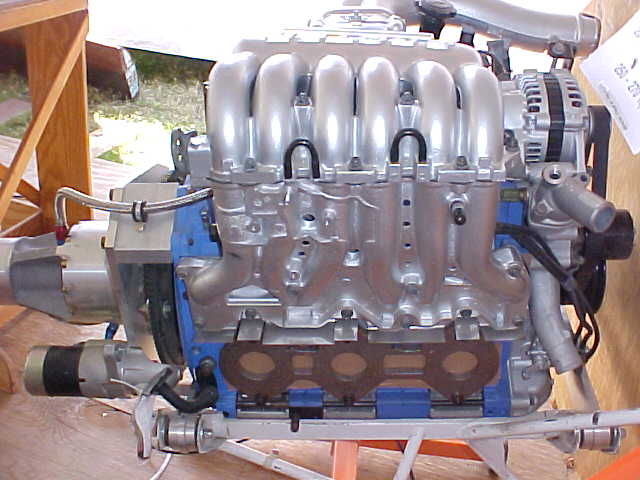
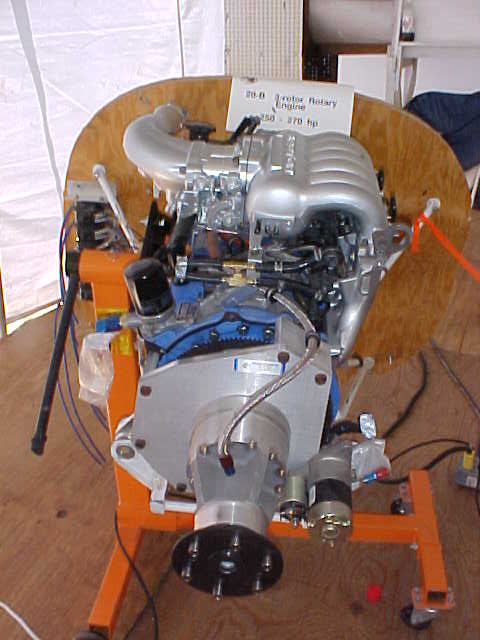
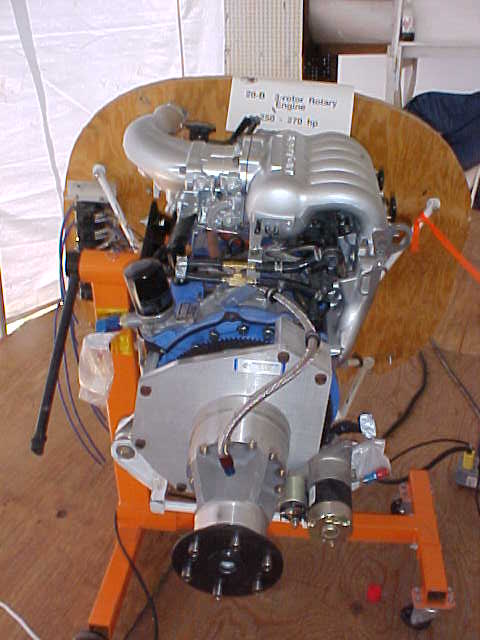
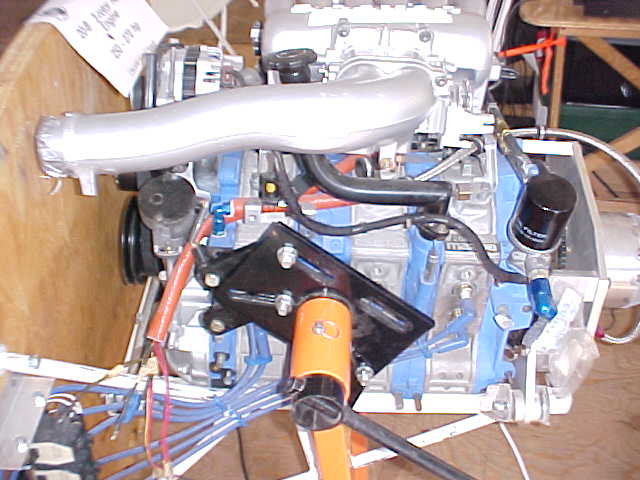
In this picture it looks like all runners go to the same single plenum.
Is the BD4 done Don? Was it flying with a AC engine and you
are switching over to a 3 rotor?
Paul Lamar ...No rotor no motor.
The Rotary Engine NewsLetter. Powered by Linux.
ACRE NL web site.
http://www.rotaryeng.net
Copyright 1998-2006 All world wide rights reserved.