> Paul,
>
> It is not correct that range has to suffer by burning
ethanol. In
> fact range can increase if you fly above 10,000 ft density
altitude.
>
> The reason is that ethanol has an oxygen content of about 25
> percent. The effect is like supercharging, or nitrous oxide, or
> dragsters that use nitromethane which has huge amounts of oxygen.
> Gordon
Sorry, this is not correct -- the oxygen in ethanol is
representative of
the fact that is has been partially oxidized, in other words,
partially
burned. So some of the energy content has been expended over being a
hydrocarbon. Nitromethane is a different story. The oxygen can
come free
of the nitro-groups and combine with any available hydrocarbons.
You carry less energy per pound with ethanol, how you use it
determines
your specific fuel consumption, milage, etc.
The evaporative cooling effects and octane effects are real, but the
oxygen content has already been used up ( i.e. not available).
Bill Schertz
Bill,
Thanks for that insight.
What exactly do you mean by, "partially oxidized?" The way I
understand it pure ethanol has an oxygen content of 35 percent, so
all of that oxygen should be available for oxidization, no? (AGE 85
is only 85 percent ethanol -- the rest is pentane isomerate -- so
its oxygen content is about 30 percent.)
The oxygen is the reason the stoichiometric air-fuel ratio of
ethanol is lower than gosoline -- because when you add the same
volume of air, there is more total oxygen due to the oxygen embedded
in the fuel, so you need more fuel to completely oxidize the extra
oxygen. See the attached table, "Ethanol Gasoline Properties."
The heat energy of ethanol per pound or per gallon is lower than
gasoline, as you pointed out. However, the oxygen in the ethanol
results in better thermodynamic efficiency, so power actually goes
up. You can see in the attached chart that an O-470 engine running
on AGE85 has 15 percent more peak power.
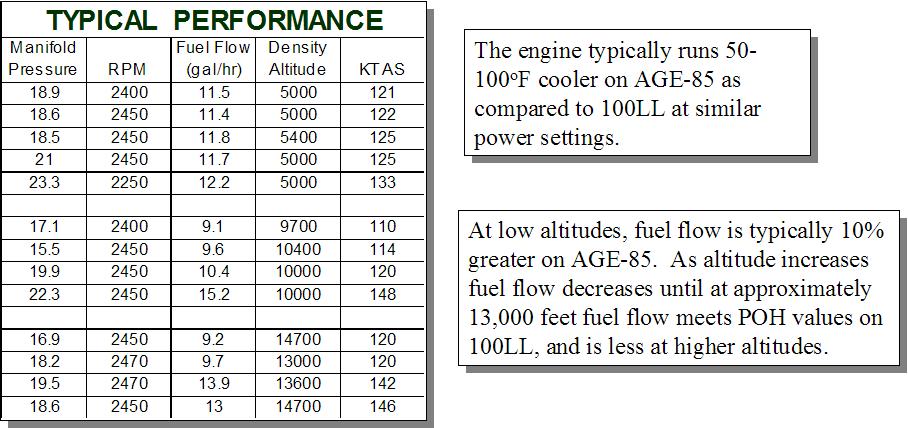
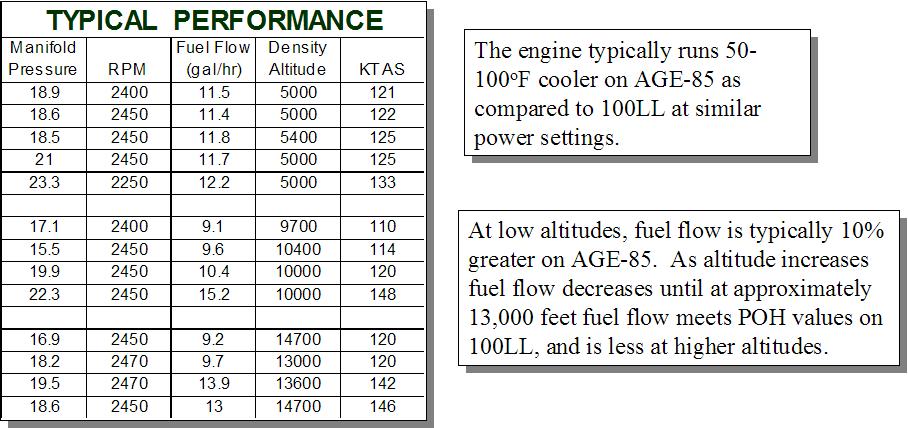
The graphic on flight test data shows that at 10,000 feet a Mooney
with an IO-360 running AGE85 has a fuel burn at lean mixture that is
less than the same plane on avgas at 8,000 feet. One of the
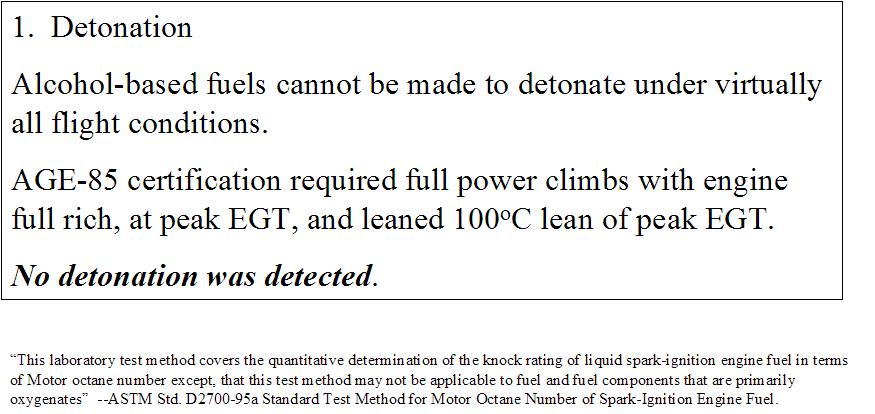
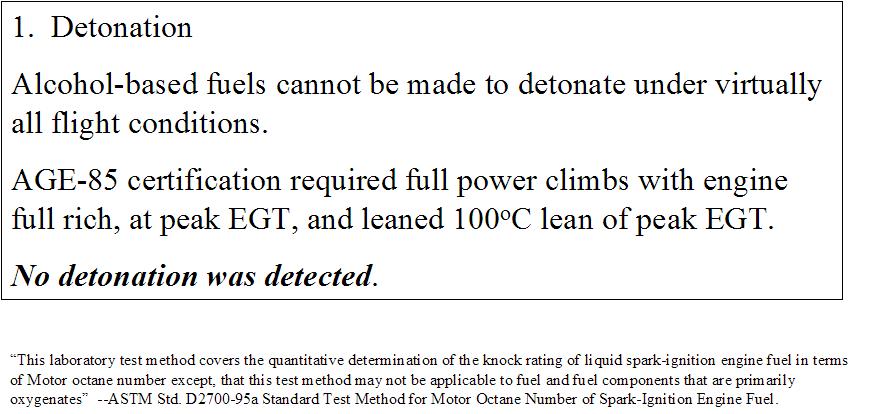
advantages of ethanol is that very lean mixtures can be safely run.
Regards,
Gordon.
Gordon,
What adverse effects are there on housings when you use Ethanol ? I had
developed and manfactred seals which resist methanol and future long
life oil detergints. These could be used on a rotary engines too,
however I had the impletion that Ethanol, Methanol etc corrod the
housing.
regards
Roderick
Roderick,
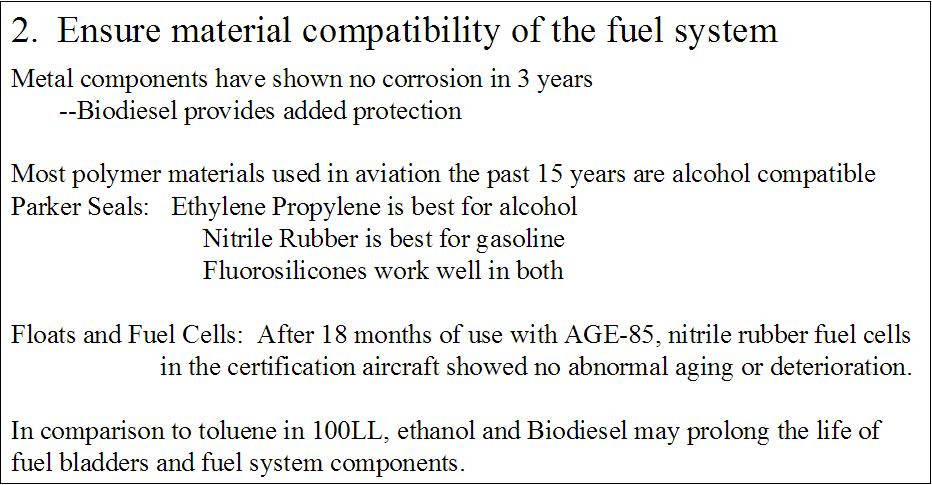
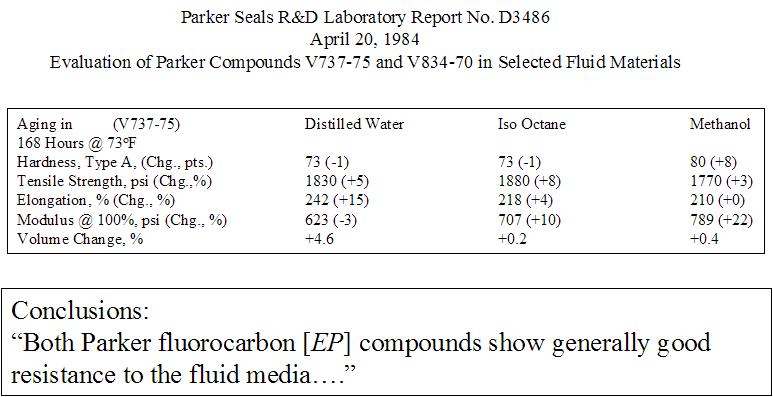
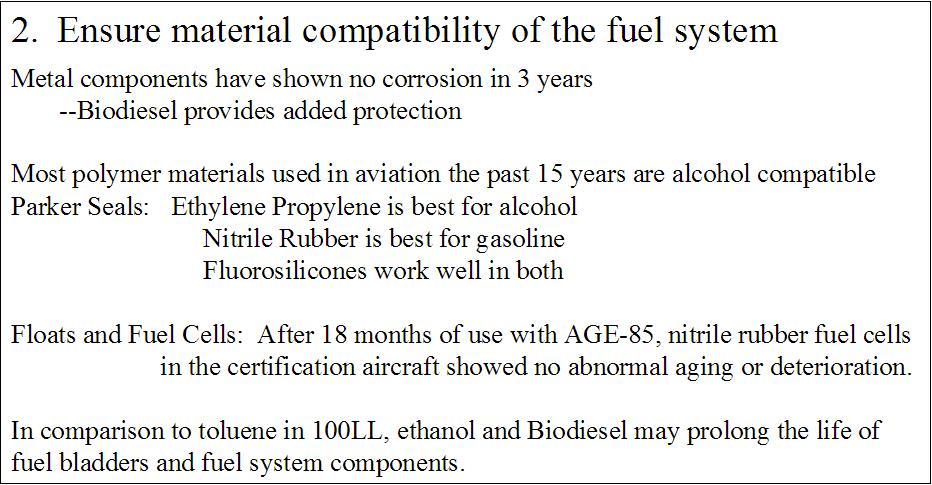
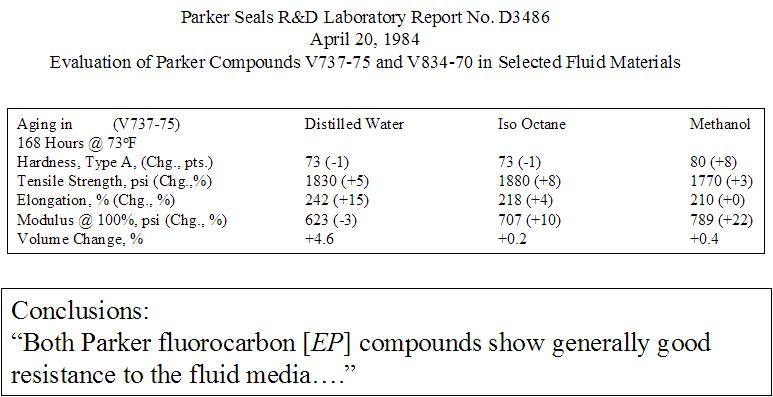
As far as I can find from the literature, AGE 85 is compatible with
existing fuel system materials.
Here are some snippets from I think Baylor University which has lots
of info on AGE 85.
Regards,
Gordon.
The Rotary Engine NewsLetter. Powered by Linux.
ACRE NL web site.
http://www.rotaryeng.net
Copyright 1998-2006 All world wide rights reserved.