Yes it does add to the complexity of flying unless you want to
get into microcomputer control of waste gates. So far I know
of nothing like that off the shelf that will work with a turbo
rotary in aircraft use.
I think Gordon and maybe a few others on here have a turbo
selection
spread sheet for A/C use.
Gordon, could you upload your spread sheet again?
The thing to watch out for is turbine over speed. That makes
car turbochargers the wrong choice for aircraft use as the car
turbo
charger turbine has too much HP for the compressor. This
is done
so the turbo charger will accelerate rapidly. In steady state
use the turbo charger will over speed and the turbine will be
destroyed. Several people have blown up stock turbo
chargers in
turbo
rotary engines in aircraft use.
Usually the turbo charged used is a TO4 for the 3 rotor
but the
compressor should be chosen to be larger than what one
would find
in car use. This slows the maximum RPM of the turbo
charger to keep
it within RPM limits for the given EGT. Another way of
putting it
from the turbine point of view is you want an A/R greater
than one. This slows the air flow going into the turbine
blades.
A way of measuring this is record the temperature
drop across the turbine. The higher the temperature drop
the more powerful the turbine. Also it is a good idea to
get a turbine tachometer to check and make sure the turbine
RPM is within limits. This will pay off in the long run
as your turbine will last longer.
Here is a spread sheet from Dave Leonard.
Also get a copy of this book.
"Turbochargers" by Hugh MacInnes HP Books ISBN 0-89586-135-6
To minimize oil coking use a synthetic oil like Idemitsu
rotary engine oil or Mobile One. Also try to get a water
cooled
turbocharger housing. They are available for the TO4. The
stock
Mazda turbos are water cooled.
Paul Lamar ...No rotor no motor.
I'm not clear whether Don has p-port intake or not, and
whether
he is
against p-port intake. If so, I don't really see p-port as
being high
risk at all, and might actually improve reliability by
lowering
temperature rise when boosted for a given horsepower
produced by
lowering pumping loses.
As Paul has said, all rotaries until the Renesis already have
p-port on
the exhaust side..
Matt-
Paul and Don,
Here's the Turbochart spreadsheet.
If you have any questions about using it, or suggestions
to improve
it please let me know.
I'm in the middle of completely revamping it to add the
exhaust
side
so we can match turbines for turbocompounding. I also want
to make
it easier to use.
Regards,
Gordon.
Thanks Gordon,
This spread sheet is very helpful. As I started plugging in numbers for
my 20B, I wasn't sure what numbers to use for the following:
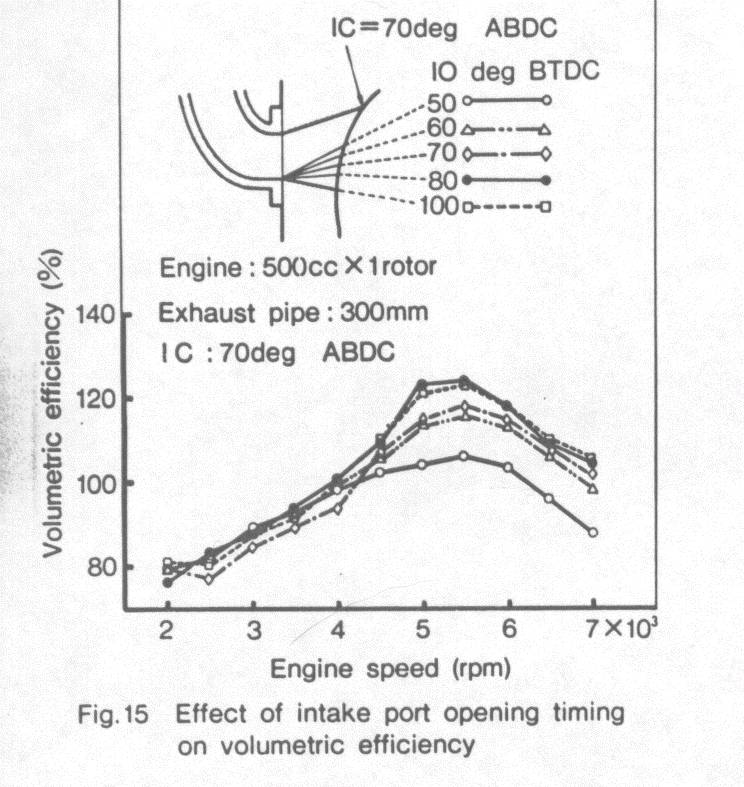
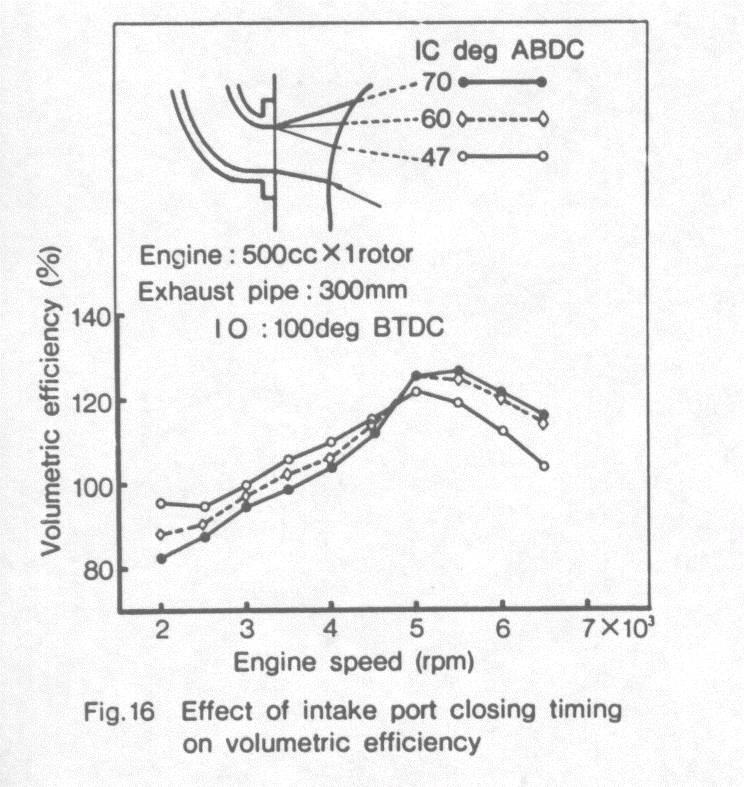
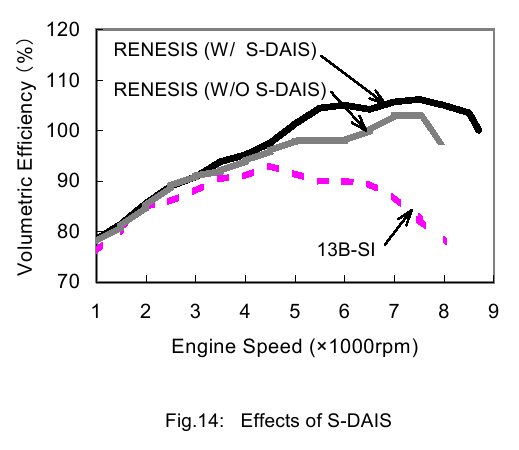
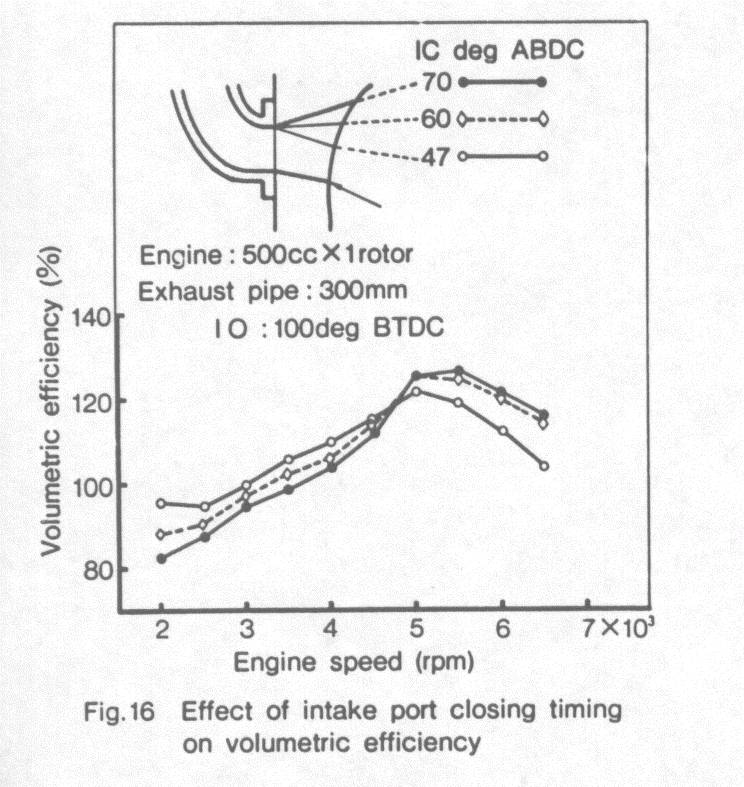
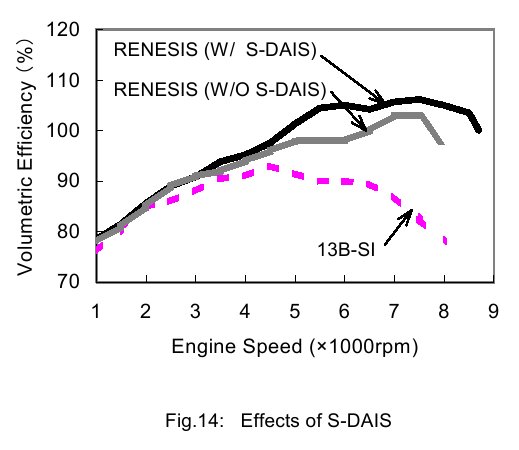
Volumetric Efficiency
Air-Fuel Ratio
Compressor Efficiency
I sent the spreadsheet back in this e-mail with my number saved in it.
Can you look at it for me? All my little colored boxes seem to fall
outside of the graph. The GT4202 Turbo Chart seems to be closest since
the colored boxes are at least inside the graph. Am I doing it right??
What does all this tell me?
Don
You will notice immediately that I failed to correct the engine
displacement for the 20B to the number Paul gave me in a prior e-mail.
It should be ~240 cubic inches. Unfortunately that made all my numbers
look even worse on the charts. I spreadsheet came with a volumetric
efficiency number of "1.2" already entered into the box. This sounded
odd, so I did the almighty internet search. I came up with this site
that indicates that the more appropriate number should be 0.94 (94%).
Does this sound correct?
Don
http://www.digi-go.biz/articles/volumetric-efficiency-of-a-rotary-engine-explained-by-miguel-p.html
-------------------------------------------------------------
You should notify the guy that did that we are here to help :)
The 1.2 VE number is for a P-port. .94 VE is more like it for a 2nd gen
side port. The side port RX8 engine with the stock tuned manifold
is about 1.05 VE. A lot depends on the manifold so .94 VE might be high
for a 3 rotor. It is called Ram Charging or some such and was developed
years ago. Made famous by Dodge. Something for nothing. It is
a pipe resonant phenomena.
Please send us your sheet again when you get it fixed.
Paul Lamar ...No rotor no motor.
The Rotary Engine NewsLetter. Powered by Linux.
ACRE NL web site.
http://www.rotaryeng.net
Copyright 1998-2006 All world wide rights reserved.