I was reading about turbo charging theory last night and I came across
the discussion of turbo charging -vs- turbo normalizing. The
distinction seemed a little vague, but apparently there are makers of
aftermarket turbo normalizers for aircraft that use what they referred
to as "pop-off valves" or "fixed waste gates" rather than the
conventional method of having the wastegate cycle open/closed to vary
turbo speed. I've heard of using a BOV (which sounds like a pop-off
valve) in the intake to damp excessive back pressure into the intake
manifold when the throttle is rapidly closed as when rapidly shifting
gears in a car, but this sounded like it was being used on the exhaust
side to somehow maintain the intake manifold pressure a 30 regardless of
the altitude. I'm pretty confused about the difference. Can anyone
explain the difference in using a fixed waste gate (pop-off valve)
method to turbo normalize. What hardware does one use to turbo normalize?
Don
------------------------------------------------------------------
Maybe our resident turbo charger expert Dave Leonard will handle this.
I'll give it an initial stab. Turbo normalizers maintain
sea level pressure up to some altitude. It is the only option
for most general aviation piston engines as they will not
tolerate boost. They are designed for the NA HP and that is
it. Any boost over that and you risk catastrophic failure in the
hand grenade mode.
The Wankel on the other hand will tolerate lots of
boost. Numbers like 15 psi boost are common. whether this can be
maintained up to high altitudes depends on the details.
Blow Off Valves on the intake manifold have been used to
limit the boost as well as waste gates on the exhaust side
of the turbo charger. The best control systems are
microcomputers like the PICAXE as they can measure
intake manifold air temperature and limit the boost if
the air temperature gets too high. That might cause detonation.
Detonation is enemy number one in turbo rotary engines
as it tends to fracture the apex seals.
Also get a copy of this book.
"Turbochargers" by Hugh MacInnes HP Books ISBN 0-89586-135-6
Far more comprehensive than anything you might find on
the WWW. There is a whole chapter on high altitude turbo
charging. I paid $16.95 for my copy years ago.
Another book is Maximum Boost by Corky Bell ISBN
0-8376-0160-6 Lots of design details on inter coolers
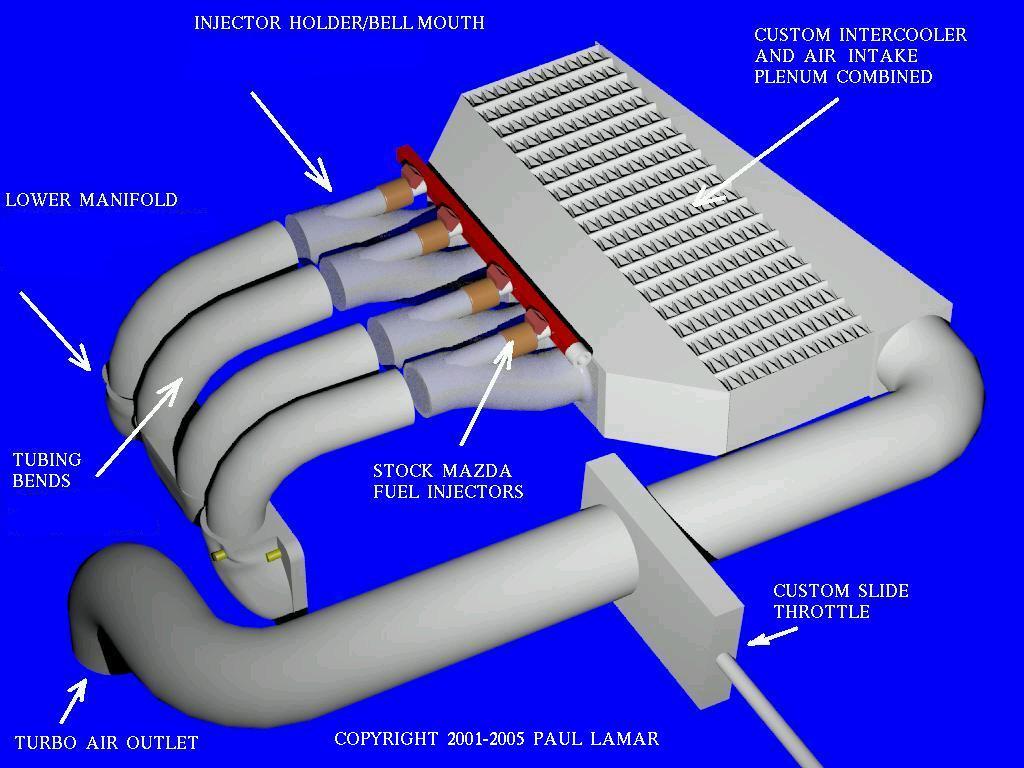
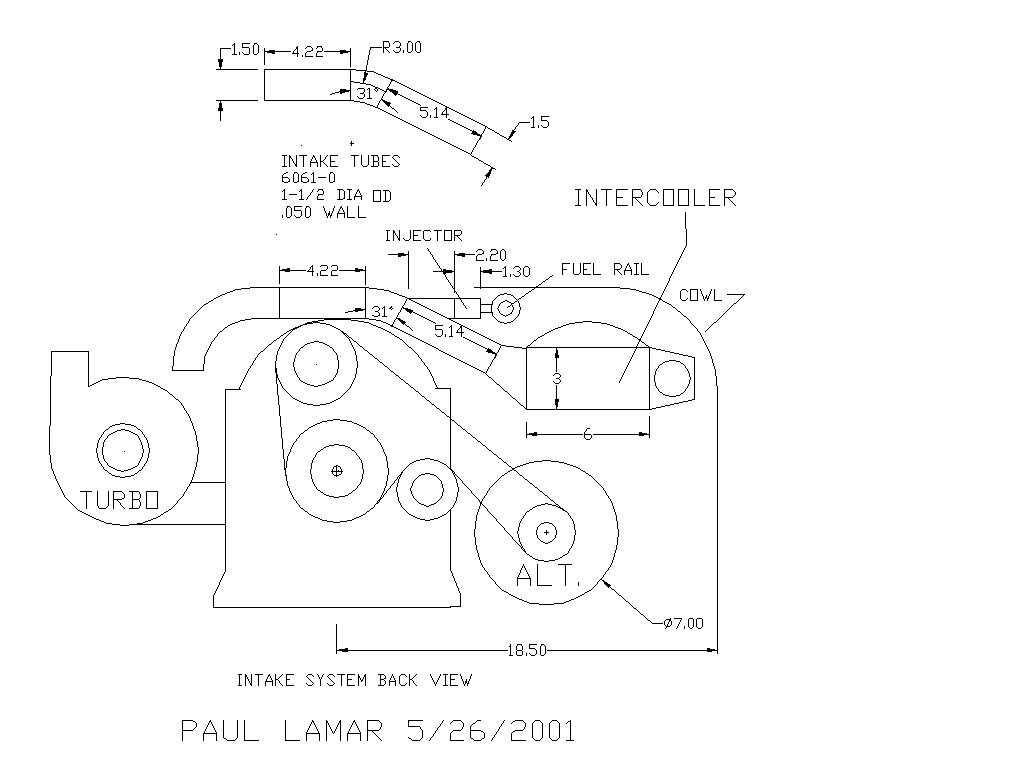
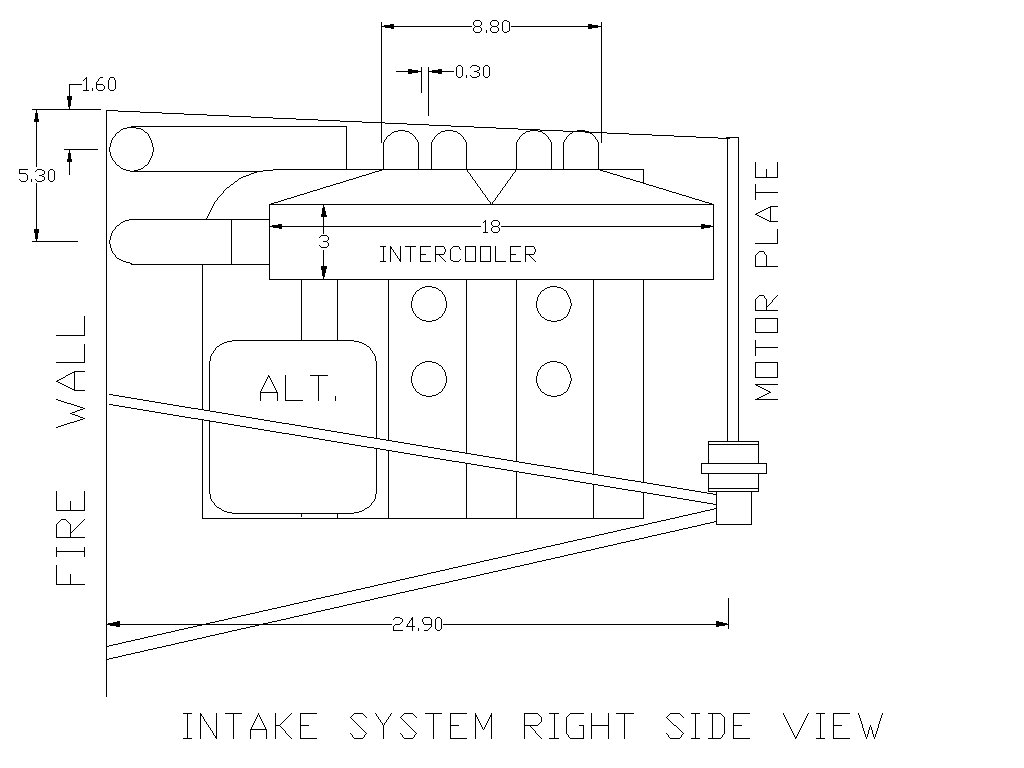
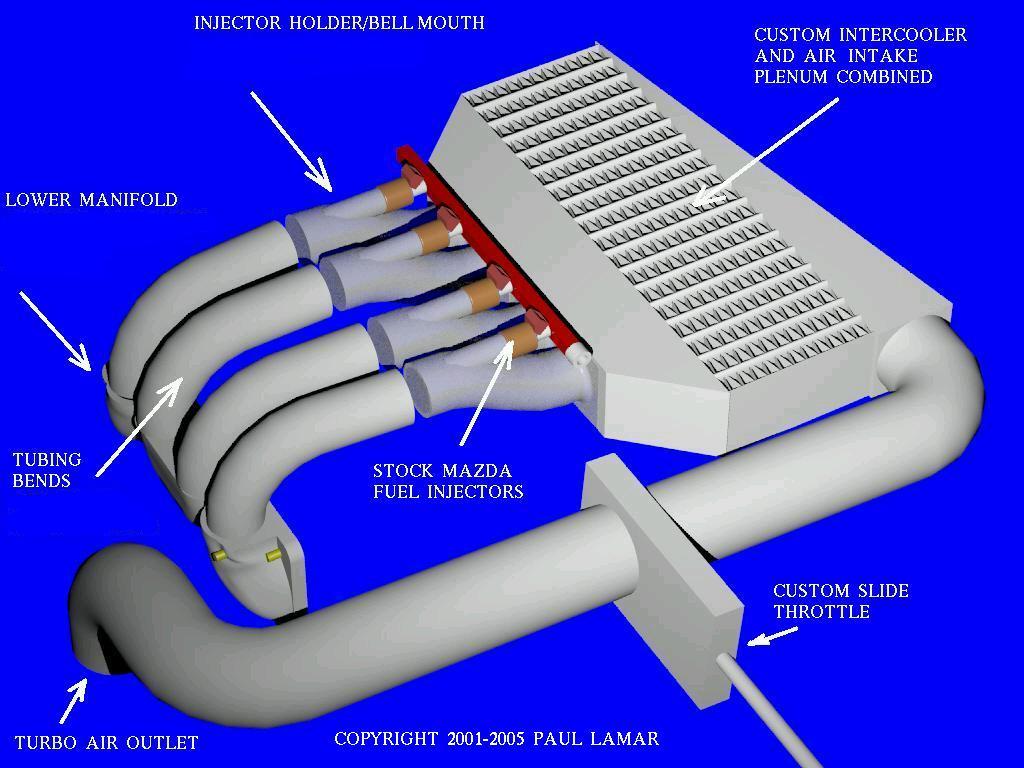
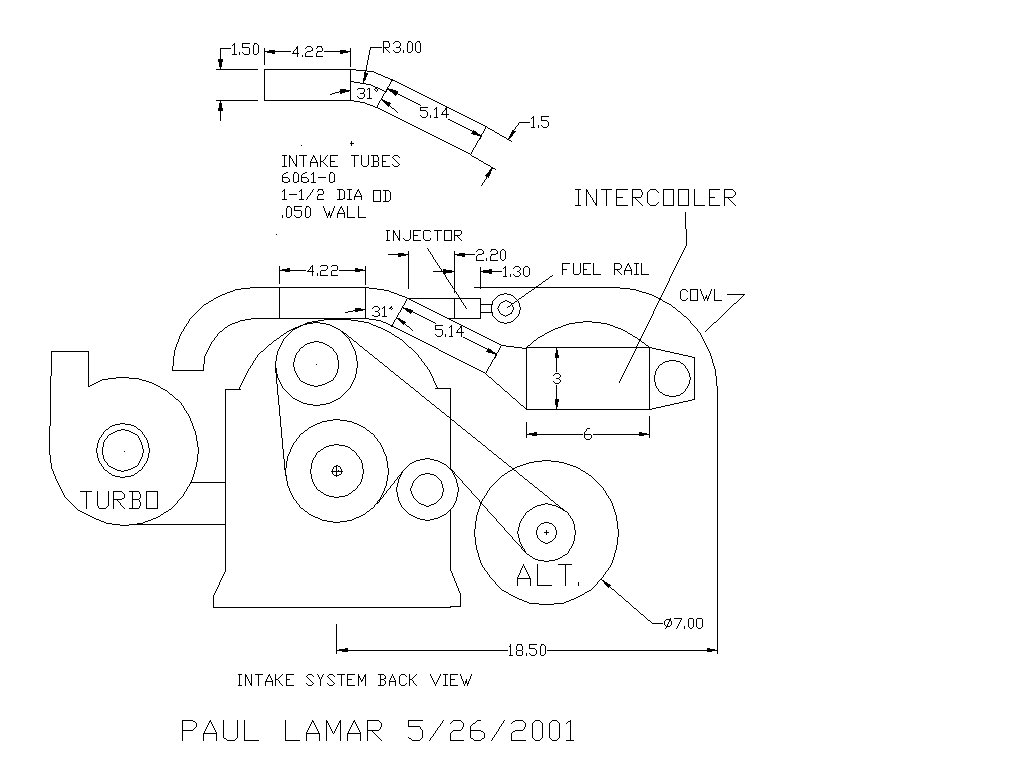
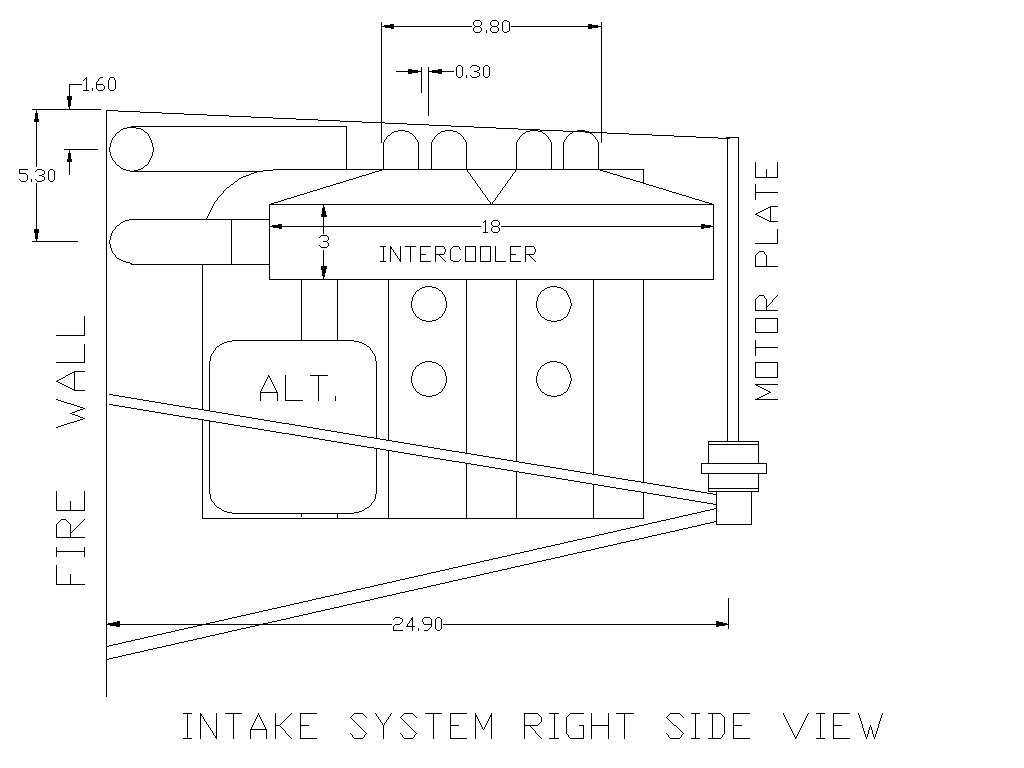
and intake manifolds. This 3D is how I would do it.
This minimizes the pressure drop in the inter cooler
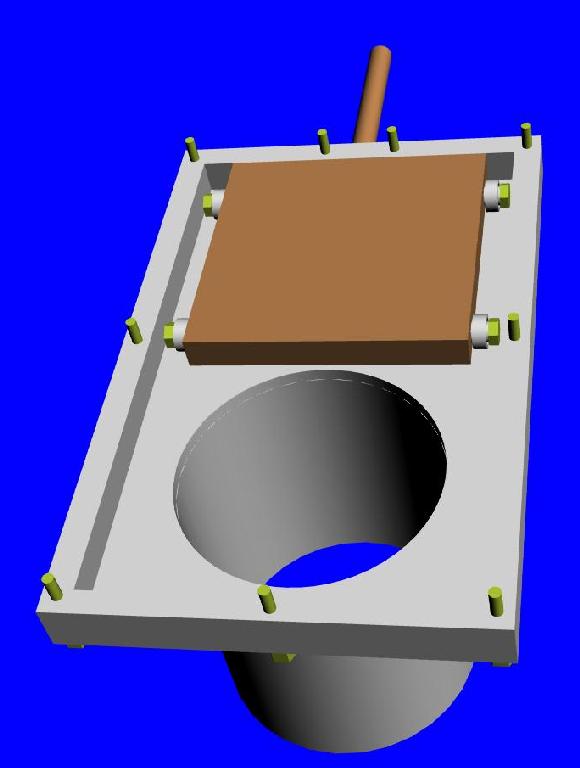
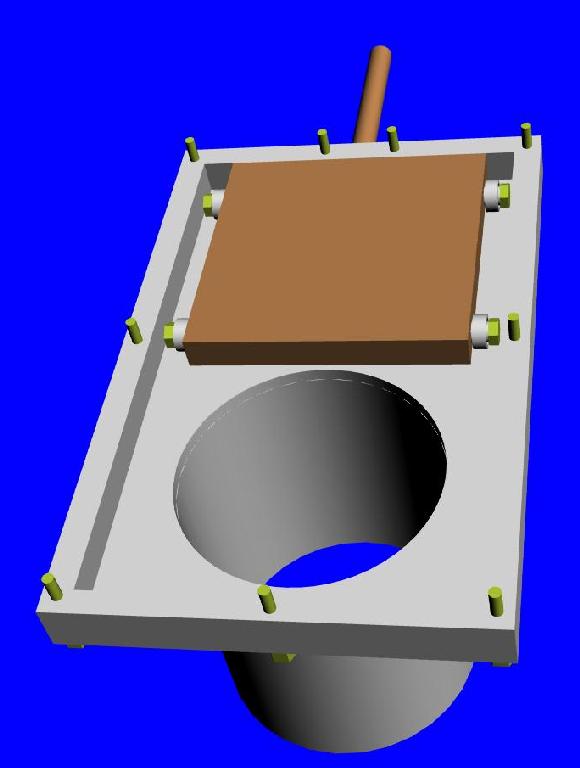
minimizing the turbo engine's fuel burn. That is a slide
throttle.
Paul Lamar ...No rotor no motor.
The Rotary Engine NewsLetter. Powered by Linux.
ACRE NL web site.
http://www.rotaryeng.net
Copyright 1998-2006 All world wide rights reserved.