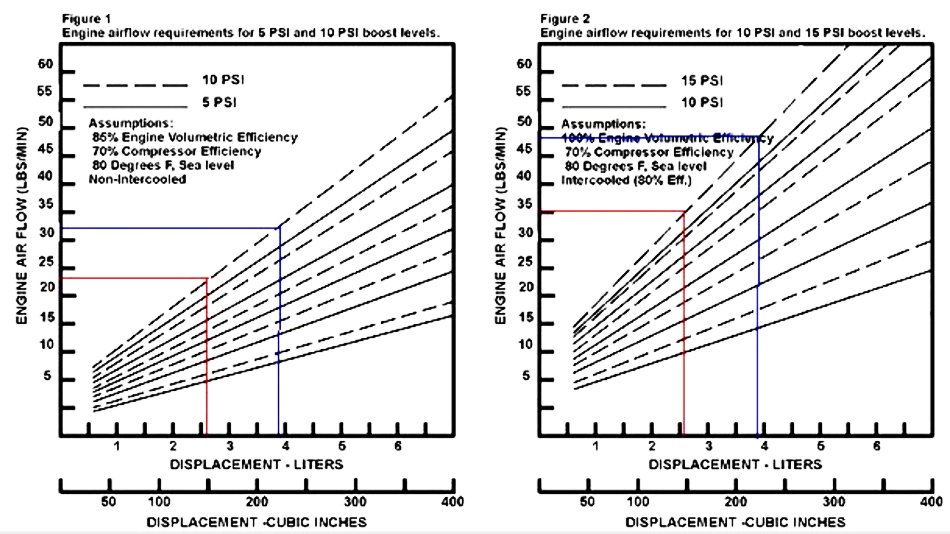
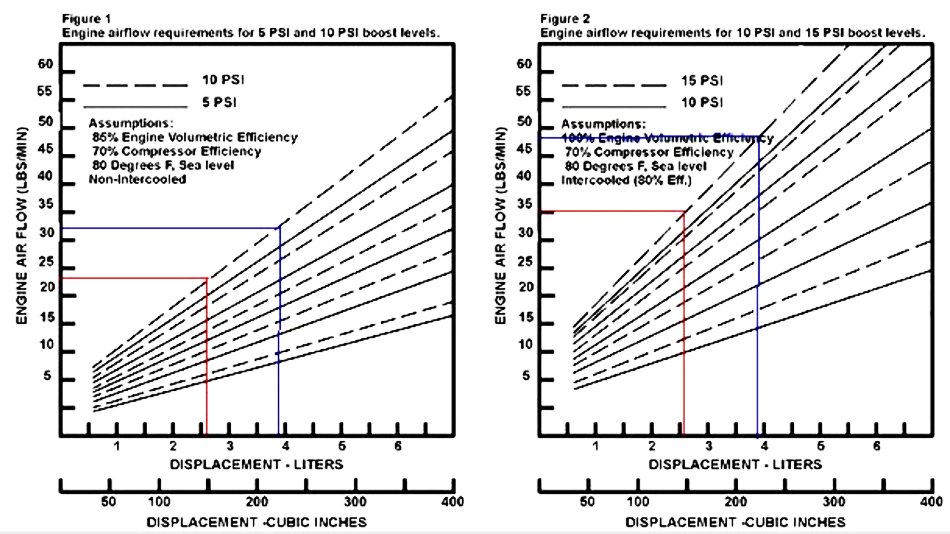
snip again
The forum seems to be open again?
Anyway, I know, a lot has been said about the displacement of the
rotary.
My comments refer to engine calculations, or engine math, if you will.
Mep in particular.
As I see it, EVERYTHING IS WRONG with calling the Mazda Rotary a 1.3
litre engine. Here is why:
First, it is a four cycle engine and after all, in comparison to an RPE
two shaft rotations must be counted to be equivalent.
I think it is not correct to say any four-cycle engine performs like a
two-cycle engine of half its displacement, regardless of Rotary or RPE.
Secondly, one measure of engine performance and of its internal loading
is the 'mean effective pressure' (mep). This is the reference piston
pressure, the average between maximum and minimum gas pressure during
the power stroke. (Work is calculated by using the stroke as the
distance travelled.)
The hp of an engine is influenced only by three things: displacement,
mep and engine rpm, while torque is the product of displacement and mep
only. Even the ratio of stroke-to-piston diameter has no impact on
torque. Most people would dispute that, however.
In four-stroke engines the hp is calculated thus:
Hp = displacement * rpm / 120 * mep. (for 2-strokes the divisor is 60).
In metric power is in kW, displacement is in litre, rpm in 1/min, mep in
MPa. (No other factor is required.)
Using the imperial system the displacement is in cu-inch and the mep in
psi. A factor of 6600 is needed, since 6600 inlb/s equals one hp. (550
ftlbs/s = 1 hp)
In numbers: hp = displacement (cuin) * mep (psi) * n (rpm) / 792000.
(6600 * 120 = 792000)
mep in psi = hp * 792000 / ( displacement (cuin) * n (rpm) )
Example, 2.6 litre, 4 cycle RPE, generating about 180 hp at 6000 rpm.
(The number of cylinders is irrelevant). 2.6 litre equals ~ 160 cuin.
Mep = 180 hp * 792000 / (160 * 6000) = ~ 150 psi. If 200 hp are
generated, the mep is 165 psi.
Today?s car engine average around 150 to 170 psi. 20 years ago it was
about 10 to 30 psi lower. With charging, mep can be pushed up to as much
as 200 psi. F1 engine are in the 230 psi range. Industrial engine are
near 90 to 100 psi, even Diesels. However, they last ?forever? having
10,000 hrs in life or more is not at all unusual. On the other hand F1
engine with ~ 235 psi last for about 5 hours, that? all. However, their
rpm is continuously very high.
The mep is a measure of power output per displacement and also a good
indicator of the life of the engine.
When using 80 cuin or 1.3 litre displacement for the Mazda Rotary would
result in near 300 psi mep. That number is unheard of for an ICE. That
just can?t be right. The mep of the rotary is also near 150 psi in
naturally aspirated use.
Calculating with 2.6 litre (160 cuin) displacement, its mep is near 150
psi, as it should be. Because of that, the Rotary can not be a 1.3 litre
engine, but it must have a displacement of 2.6 litres.
Of the three variables for power, mep is influenced mainly by the
compression ratio, the porting and the resulting VE, as well as by the
pressure of the intake charge, NA or charged.
Regarding its displacement to overall size, the Rotary has an advantage
there. An RPE of 2.6 litre displacement takes more space and is heavier.
Rpm is limited in all engines by the inertia forces that are linear with
the respective masses and proportional to the square of rpm. This is
true not only for the RPE but also for the Rotary where there is no
linear reciprocation, but a constant centrifugal force of rotor and
eccentric. The direction of acceleration is pointing from the centre of
the eccentric to centre of the eccentric shaft. A limit to the rpm
applies to the Rotary just the same.
Coming back to the displacement of the Rotary, calculating all three
chambers would also be wrong as it takes three shaft revolutions for all
three chambers to fire and that would also be incorrect as the speed is
1.5 times higher compared to an RPE of 2.6 litres of same output. So the
rotary is not a 3.9 litre engine either, it simply is an equivalent 2.6
litre four-cycle engine. Two shaft rotations need be calculated. Period.
On using 3.9 litre displacement its mep would also be incorrect at near
100 psi which is lower than is being measured.
What really counts is the displacement in volume per time at a certain
engine rpm that must be compared. The Mazda Rotary compares to 2.6
litres (160 cuin) displacement with regard to equivalent rpm to a four
cycle RPE. The power output of the rotary also jives with that. Only 2.6
litre can be right.
Regards
Rolf
Rolf,
The formula you used is designed specifically for piston engines.
Hp = displacement * rpm / 120 * mep.
The constant 120 is used because each cylinder has a power stroke
only once for every TWO turns of the engine shaft. So because RPM is
denominated in minutes, it is necessary to divide by 120 seconds to
make the units come out right.
If it was one power stroke per cylinder, per engine shaft turn -- as
it is on the rotary, the formula would divide rpm by 60, the number
of seconds in a minute.
It's the same thing with calculations for volumetric flow. The
rotary engine has one intake event for each engine shaft turn. (And
one compression even, one combustion event and one exhaust event.
The whole 4-stroke cycle happens in one turn of the engine shaft,
for each rotor.)
When you say the displacement of the engine is EQUAL to 2.6 liters,
that is true, because it pumps the same amount of air per any given
rpm as a piston engine of that size.
However, that's like saying let's call a Pound Sterling note a 2
Dollar bill, because one Pound Sterling equals two Dollars.
Does this make sense? Try walking into a store and buying something
with a Pound note. You can try to convince the clerk that the two
are completely identical and interchangeable...
Here is what actually happens inside the rotary engine:
Each intake event is 650 cc, not a molecule more. Each compression
event is 650 cc (before compression), not a molecule more. Each
combustion event is 650 cc (after expansion), not a molecule more.
Each exhaust event is 650 cc not a molecule more.
This is the simple fact. You and Paul and anyone who does not
understand this can call it by its equivalent displacement.
But people who are concerned with what is really going on inside the
engine, not the EQUIVALENT compared to a piston engine, will stick
to the REAL displacement.
This is the real physical displacement of each rotor flank and it is
650 cc. Period End of Story.
Regards,
Gordon.
PS: I notice Jeff Spitzer's turbo spreadsheet also uses the real and
correct displacement of 1300 cc.
It is a ismple matter to switch between the two for calculation
purposes and the result is exaclty the same. Both methods will
calcualte absolutely correctly.
This whole discussion is a tempest in a teacup. 1300 cc is the real
displacement and 2600 cc is the equivalent displacment, when
comparing ot a piston engine.
Jeff just said it is 2.6 L equavalent. He merely used 1300 cc to identify the engine.
You can't have it both ways. If it is 1300 CC it won't pump 35 pounds
of air per minute. If it is not 35 pounds a minute it will not develop
the HP. This is a factual chart. Why don't you give it a rest for awhile.
I am sure it will dawn on you sooner or later.
Paul Lamar ...No rotor no motor.
The Rotary Engine NewsLetter. Powered by Linux.
ACRE NL web site.
http://www.rotaryeng.net
Copyright 1998-2006 All world wide rights reserved.