Hi Paul,
I am wondering if you could direct me to some charts of BSFC vs. RPM/HP
for
the 13B and Renesis w/ and w/o P-ports. I'm looking for a sweet spot for
cruise on a Sportsman I am building and want to incorporate a rotary.
Thanks,
Dan Kidd
Mazda keeps that kind of data real close to the chest.
As far as I know it does not exist outside of Mazda's
dyno rooms.
However the rule of thumb is the best BSFC always occurs
at the torque peak P-port or side port RPM. The torque peak RPM is
a function of the runner length.
So all these curves apply. You have to add the fixed length to
the last set of Lemans eng. curves.
A p-port has better BSFC as the pumping losses are lower.
--
Paul Lamar ...No rotor no motor.
I am confused. Some questions:
1. The first two graphs (both labeled Performance Graph) appear to have the
same curve labels (CorrHP and CorrTorq), but the shape of the curves is very
different. I assume that the difference is the length (tuning) of the
induction system. Is this correct?
2. The first graph with the torque peak near 6,250 RPM kinda sorta
correlates with the third graph curve peak labeled 6.88" +175 except for the
large difference in torque value. The second graph does not appear to
correlate with any of the curves in graph 3. Is this correct?
3. Referring to "You have to add the fixed length ..." What is the fixed
length? I do not see it specified anywhere.
4. Also the fourth graph does not appear to correlate with any of the other
three. The RPM scale starts at 400 and ends at something over 1600. All the
others start at or above 4,000 RPM. The BSFC curve never gets below 0.7. Is
this correct?
5. If a fellow wanted the max HP using a 2.85:1 redrive without regard to
fuel burn, what length should the runners be?
6. If a fellow wanted the best fuel efficiency using a 2.85:1 redrive, what
length should the runners be?
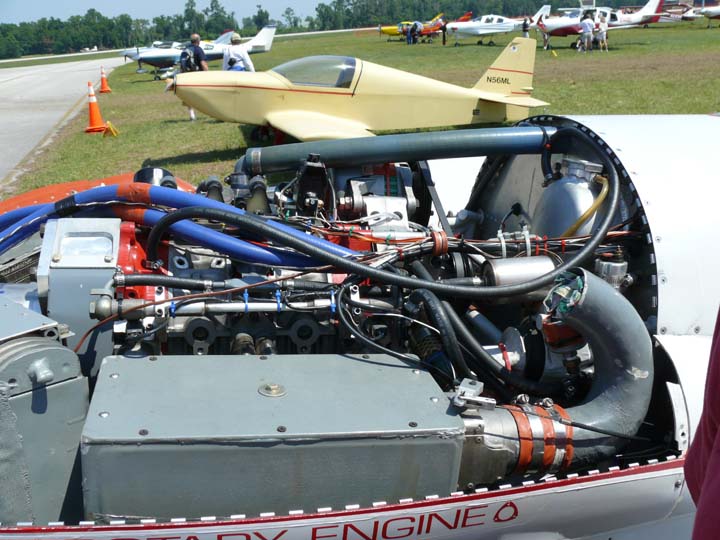
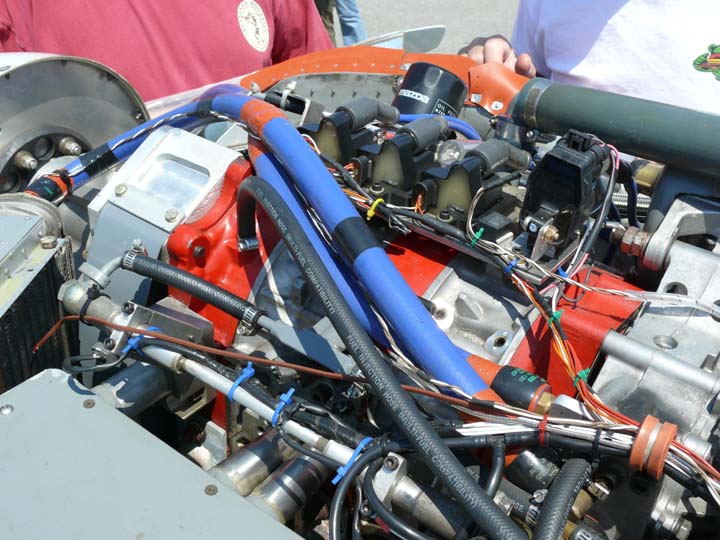
Attached are some pix I took at SNF. They are of Tracy's RV4 engine if
memory serves. SNF007-72 shows the intake tubes running between the housings
and the plenum. The plenum is in the lower left corner. SNF005-72 shows the
plenum, butterfly throttle and a tube going to another part of the induction
system, presumably an air filter and some sort of scoop. Tracy told me that
the intake tubes run from the engine to close to the wall of the plenum (an
inch or two was the impression I got). They are straight. He also said they
were not the optimum length. I think they are 6 to 8" in length and 1.5" OD.
Assuming they are 7" would you be willing to guess at the power output?
Maybe Tracy would care to comment? Are you there Tracy?
Doc Custer
Retired Software Engineer and sometime Audiologist
1. Yes they are two different length runners that vary by only 3 inches.
2. The first graph is a 24.5 length runner. The + 175 mm converts to 6.88 inches.
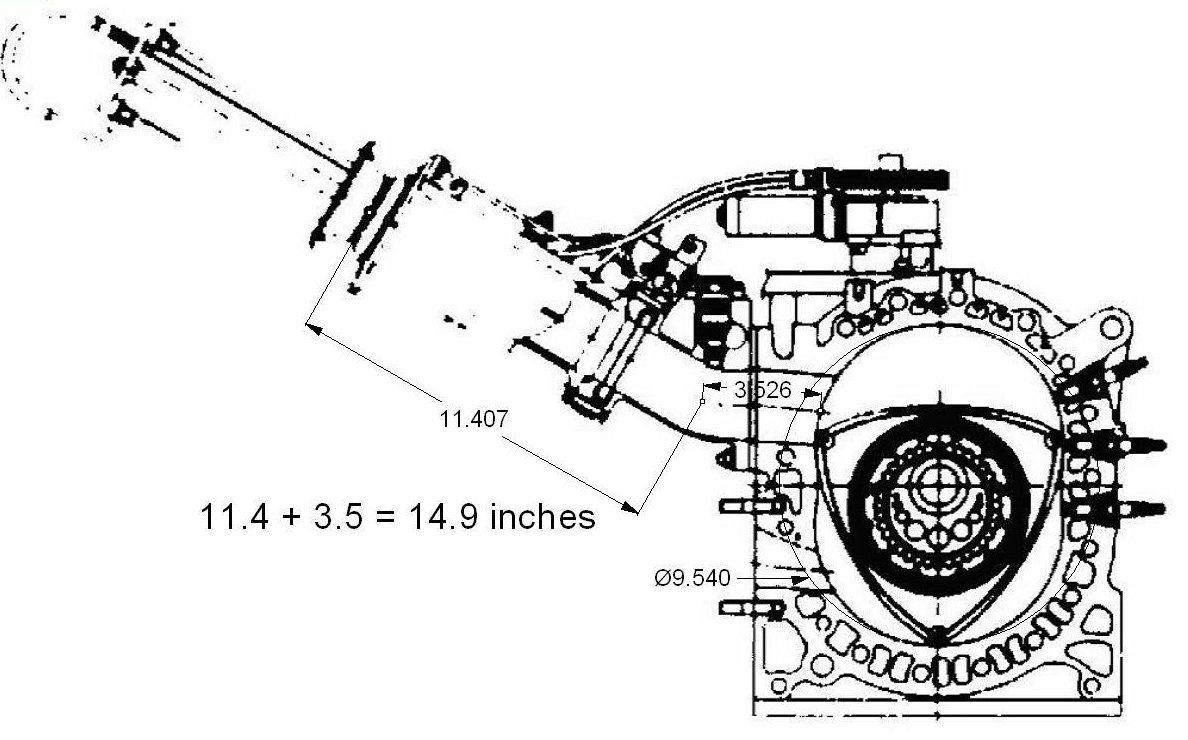
The fixed length of the manifold is there fore 6.88 plus 14.9 or about 21 to 21 inches.
Pretty close for two engines one (ours) copied from the other (Lemans engine) 16 years later.
The Lemans engine (3rd graph) had about 1.822 inside diameter runners and we
had 1.875 inside diameter runners. The exact length of the runner for a given
torque peak RPM is also affected somewhat by the inside diameter. We used carbs for
this test and Mazda used fuel injection. I would say given the differences the
correlation is excellent.
3. The fixed length is 14.9 inches. See the third attachment.
4. Yes that is a real old chart from some old book on engines showing
the minimum BSFC occurs at the torque peak RPM. This fact has been known
for many years. Other than that the graph has no significance.
5. Assume max RPM is 7500. My guess is around 23 to 24 inches using the
1-7/8 ID runner based on the first graph.
6. I can't answer that until I know what RPM you want to cruise at and if you
have a variable pitch prop or a fixed pitch prop. The lower the RPM the less
friction in the engine. The idea is you want to slow the RPM and load the engine
to wide open throttle with a higher pitch. Pick your RPM point and then set the
runner length accordingly. This all ties in with aircraft drag. If you slow the 200 MPH
airplane to 120 MPH or so you will minimize the drag and perhaps maximize the MPG.
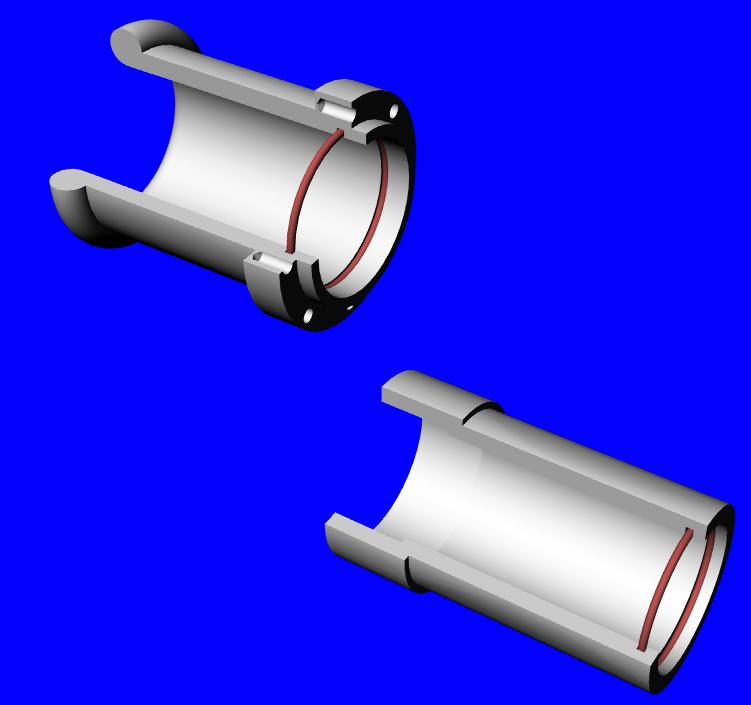
Do something like the last three 3Ds. Variable length runners.
I can guess at the power output. Perhaps 180 HP.
Paul Lamar ...No rotor no motor.
The Rotary Engine NewsLetter. Powered by Linux.
ACRE NL web site.
http://www.rotaryeng.net
Copyright 1998-2006 All world wide rights reserved.