Paul,
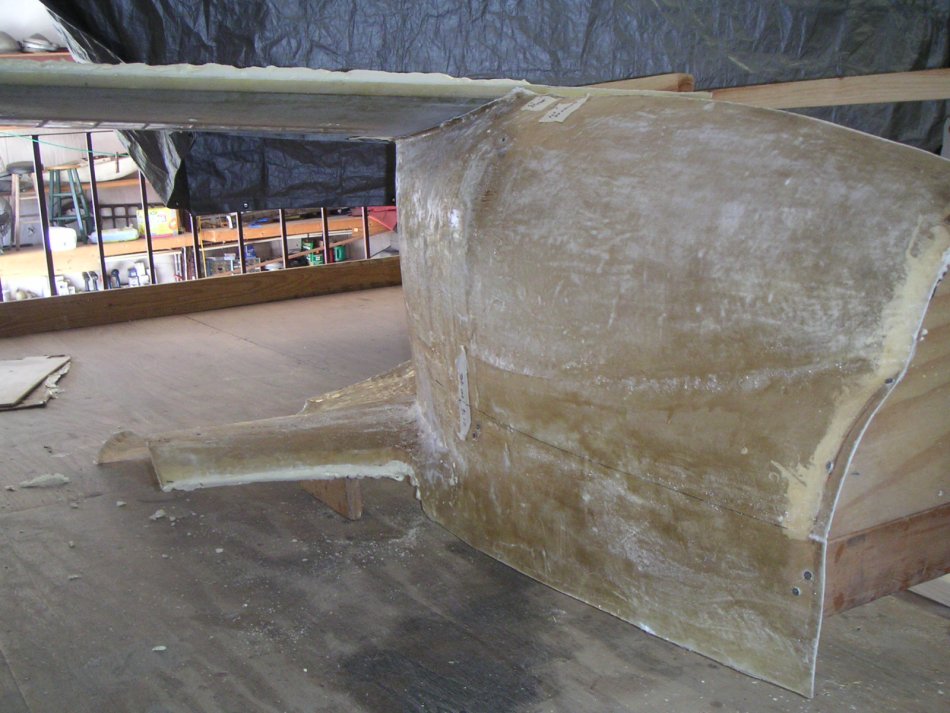
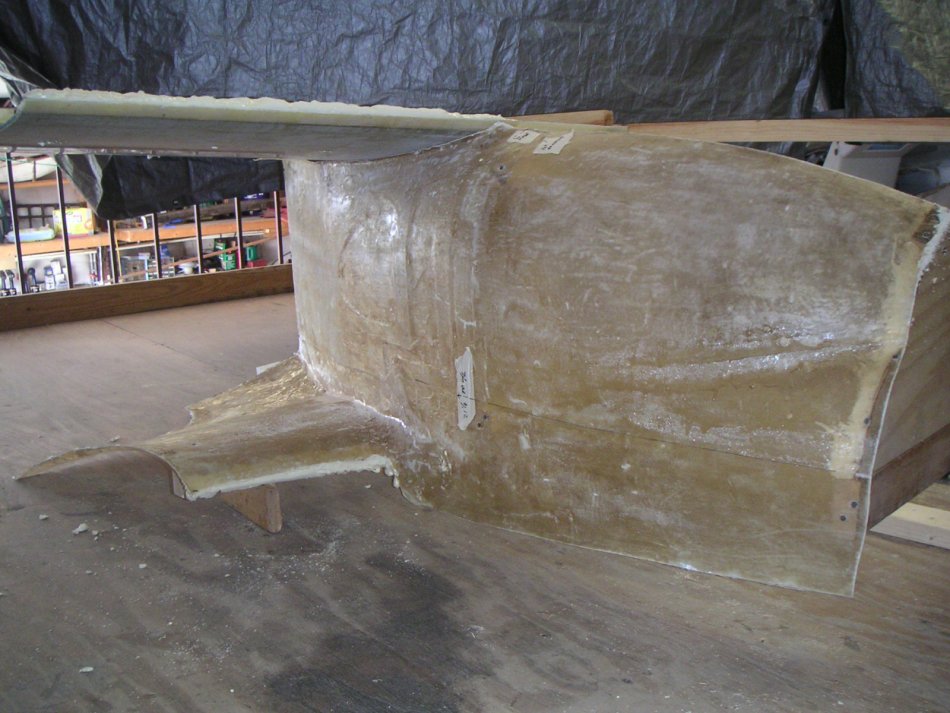
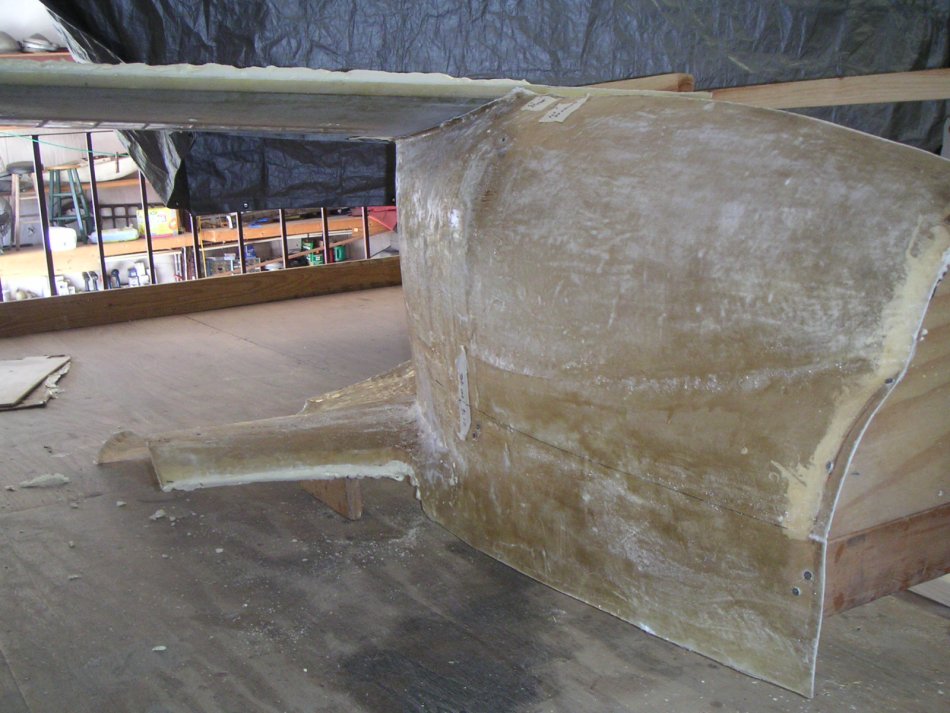
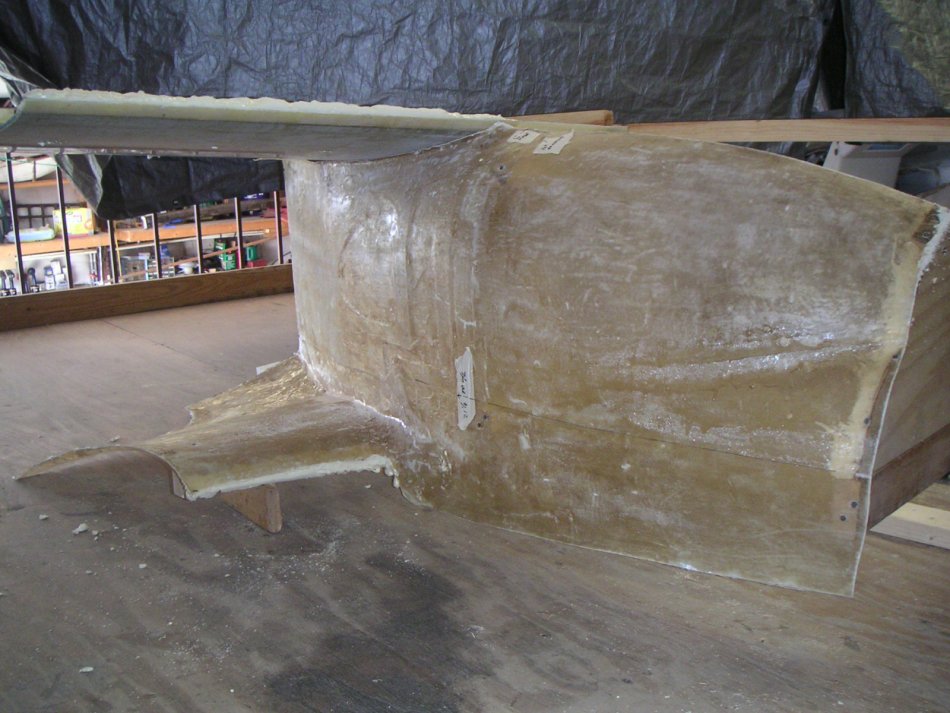
I was successful in pulling a mold off of the side of my plane. It is
about 7.5' long, which includes all of the pylon side and about 1/2 of
the nose area. I have 2' of the bottom wing surface and 3' of the
upper wing surface so far. It is quite strong after mounting it to
wood and using foam on the back side.
My plans are to measure at least 8 locations on the pylon side without
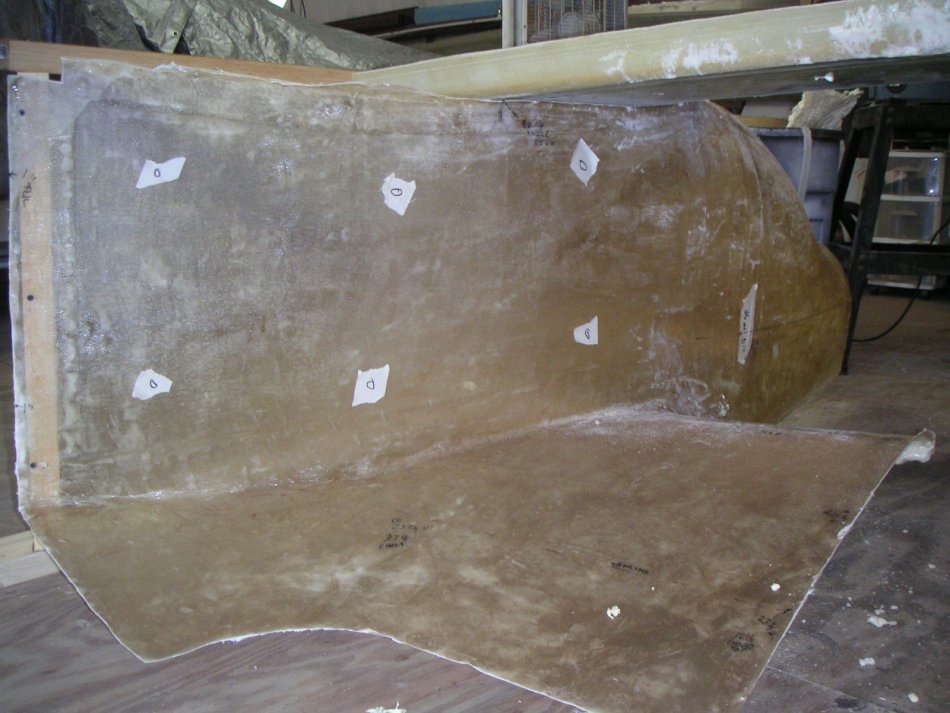
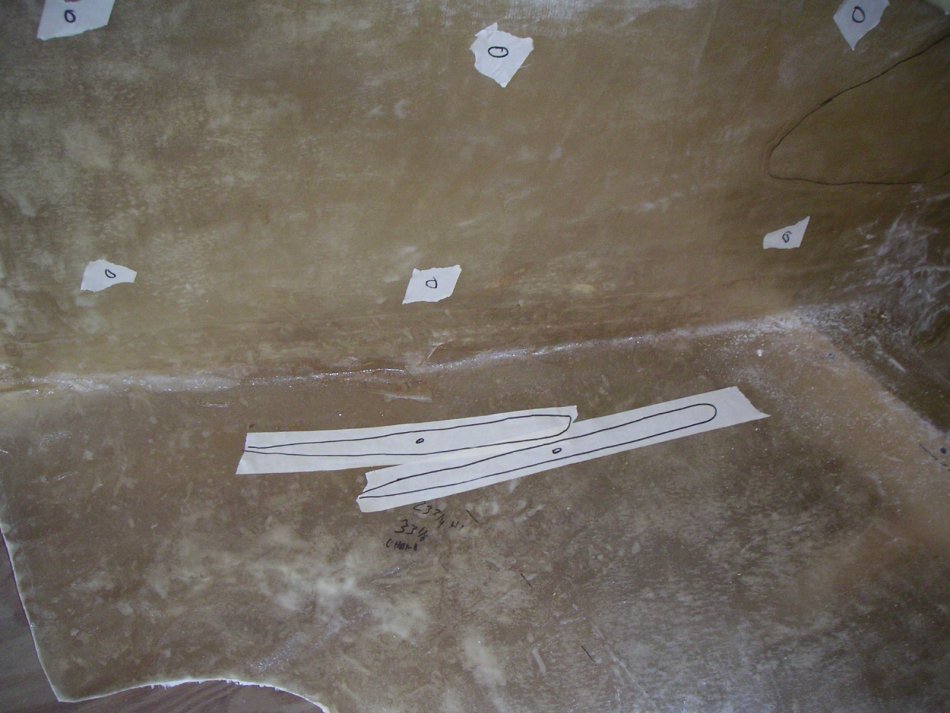
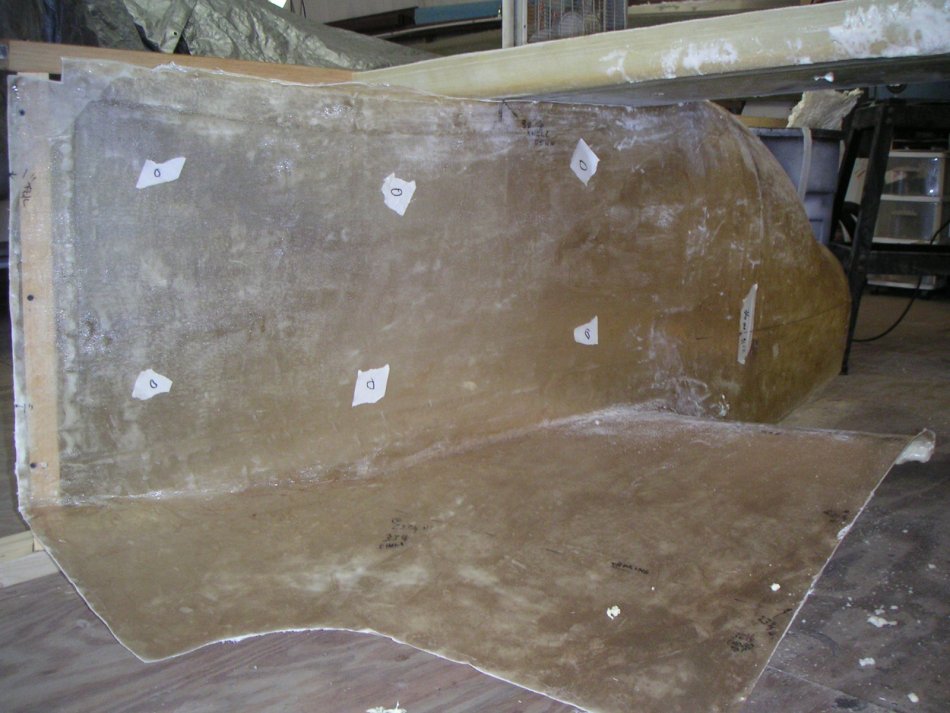
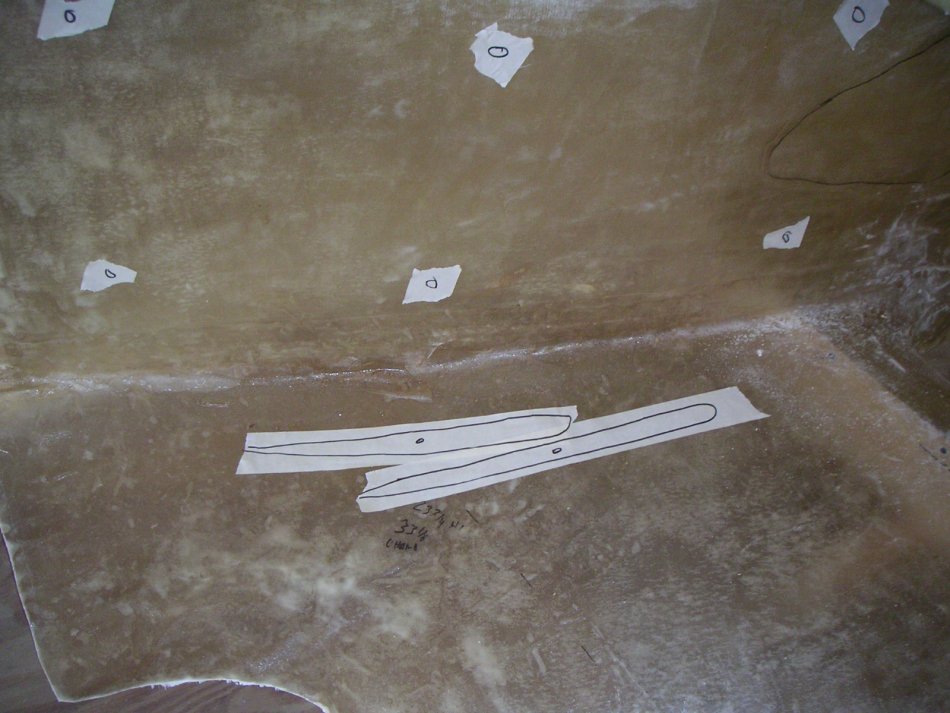
any vanes, using a range of speeds up to 75 mph. The pix show proposed
locations of pressure-monitoring ports, which I can bring in from the
back side. I then plan to use at least 4 different mounting areas
for the turning vane, varying in both fore-aft and inboard-outboard
locations. (The successful turning vanes built by others have been
spaced out about 2" from the pylon wall.) They also show potential
locations for the turning/cooling vane. I'll place a pressure port on
both the front and back of the radiator, in addition to the pylon wall
ports.
Questions:
1. Any suggestions to make the mockup a better aerodynamic model of
this area of airflow?
- For example, I don't know if I should close in the back and bottom
sides or just leave them open.
2. Are the pylon side pressure port locations reasonable to start with?
3. Is a single pressure port on each side of the radiator enough?
4. How smooth does the skin need to be to get good data? Should I fill
and sand the model surface?
5. Your cooling book says use 1/4" flexible tubing for the manometers.
Is this ID or OD?
Hopefully I'll have some data soon (if I don't get arrested on the
highway).
Thanks,
Scott Gettings
1. Just round the leading edge to get smooth airflow along the model.
2. I would use a minimum of four to get an idea of pressure distribution
over the surface.
4. Some sanding is in order. Particularly near the leading
edge. 1/3rd back. Further back the boundary layer will build.
5. I use drip irrigation tubing and fittings. It is about 1/4 inch OD
and shiny black.
You will be doing a tremendous service for the Sea Hawker community.
No law against moving something on the top of your truck :)
I would duct tape over the tubing to make it non obvious.
The tubing looks like wires and that is what scares the cops :)
Paul Lamar ...No rotor no motor.
The Rotary Engine NewsLetter. Powered by Linux.
ACRE NL web site.
http://www.rotaryeng.net
Copyright 1998-2006 All world wide rights reserved.