> Why not check out the round-slide Mikuni VM44? These can be had for
> less than $100 each.
>
> You're only going to lose a tiny bit of power at WOT throttle
> compared to the 48. In fact if you wanted to use runners with 1.75
> inch ID, they would be perfect.
> Regards,
> Gordon.
*****
Hi Gordon,
what are factors in flat slide versus round slide?
Where would it be better to use one than the other?
BR, Dave McC
Dave,
I'm no carb expert, but as far as I can see either type will work
fine on an aircraft engine.
There are really three distinct types of carburetor that have been
discussed here, so maybe it would be useful to summarize. The flat
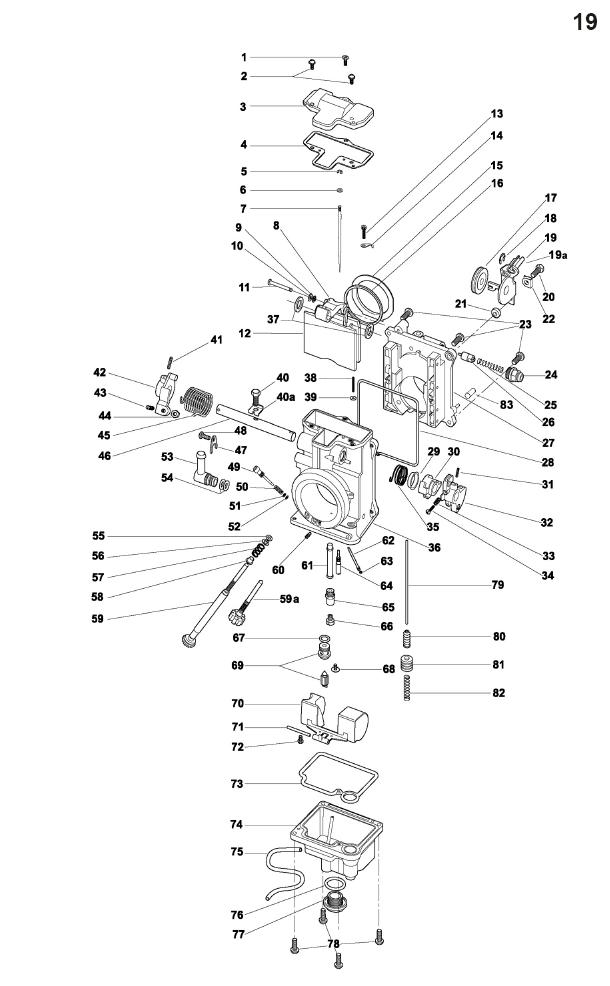
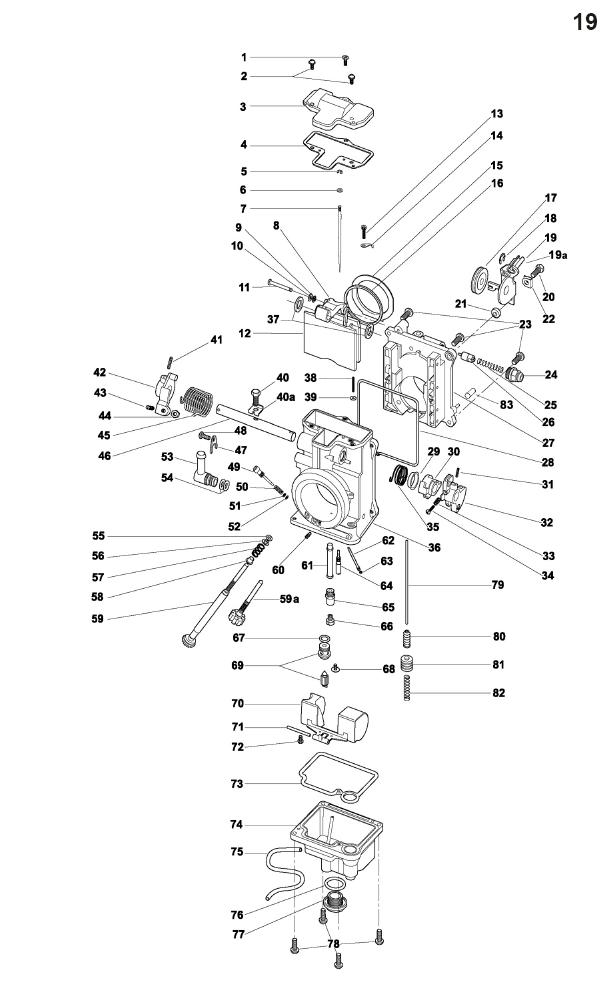
slide like the Mikuni HSR 48 that Paul likes, the round-slide and
the constant depression (also called constant vacuum or constant
velocity).
All three are variable venturi, side-draft carbs typically used on
motorcylces. The round slide type is most common and is the carb
used on Rotax 2-stroke engines and all kinds of motorcycles. The
slide is a round, cylindrical shape that intersects the carb throat
at a right angle and is actuated directly by the throttle. As the
slide is moved the venturi size increases or decreases.
The flat slide is the same -- slide is moved directly by the
throttle -- except the slide itself is a flat plate -- like Paul's
slide throttle. The flat slide is kind of a refinement on the round
slide and these are typically aftermarket carbs that are higher
performance replacements for round slide. They typically have
accelerator pumps, which the round slides usually don't.
This is not a big issue because we don't really need an accelerator
pump. The important thing is that the mixture adjustment system can
be added to either one. The biggest round slide that I'm aware of is
the 44mm Mikuni VM, which is cheap and plentiful.
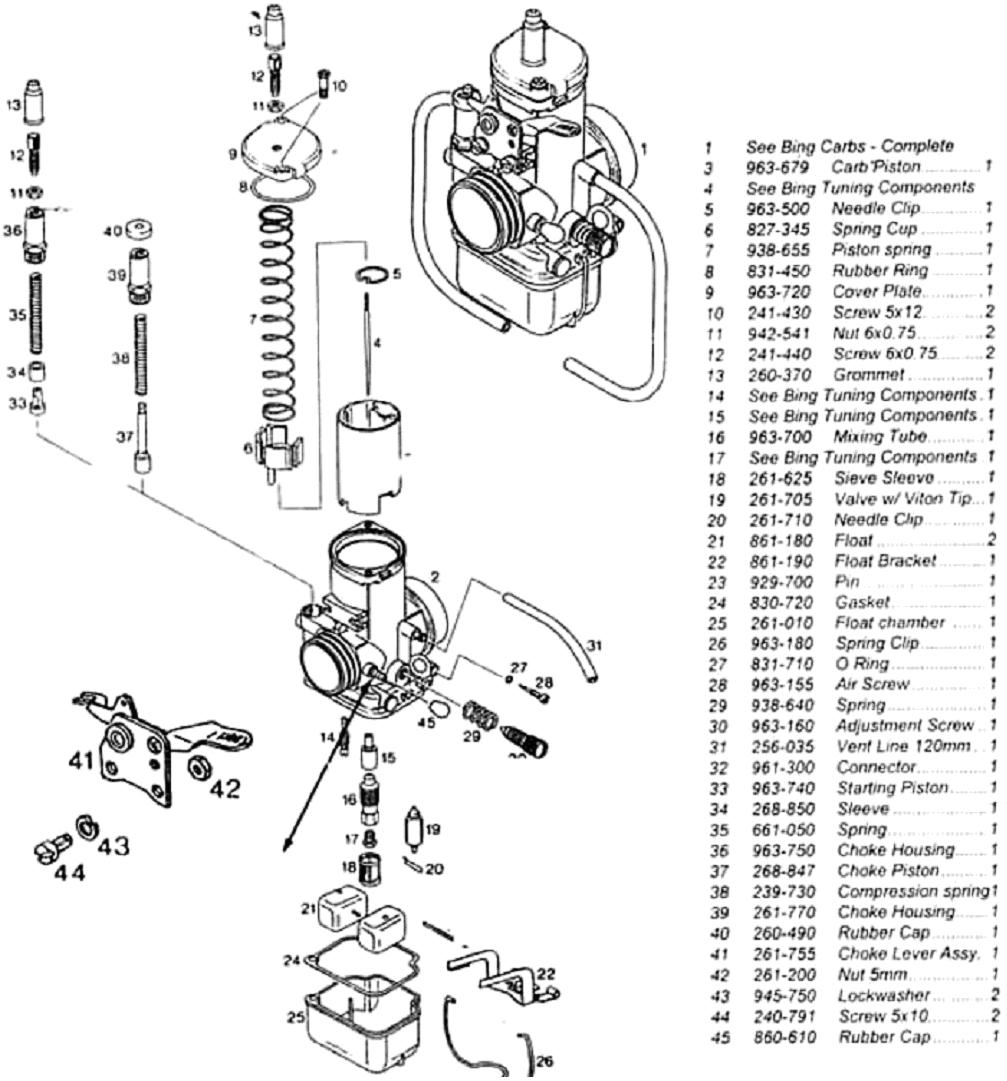
Bing makes them too in various sizes and they are used on Rotax
2-strokes, both for ultralights and snowmobiles. I can tell you from
experience that these carbs will go to 10,000 feet without the
mixture control added on. That's because variable venturi carbs have
some degree of mixture compensation inherent in the design. Once you
get over 6,000 feet or so they will start to run a little rich, but
not nearly as rich as a Lycoming carb.
I don't really have experience with the flat slide carbs, but these
are really nice carbs -- and a little more expensive. The big 48s
are a Harley aftermarket item and have a very good reputation.
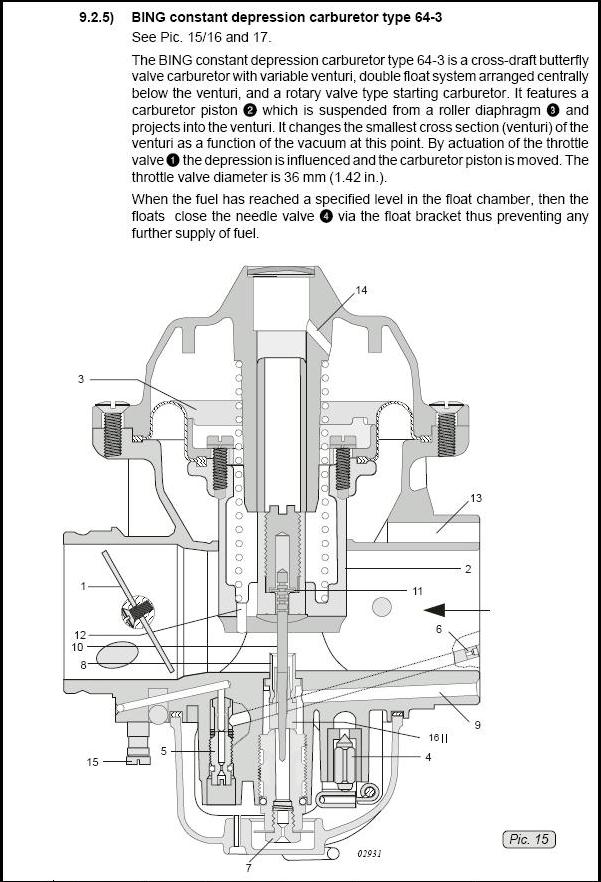
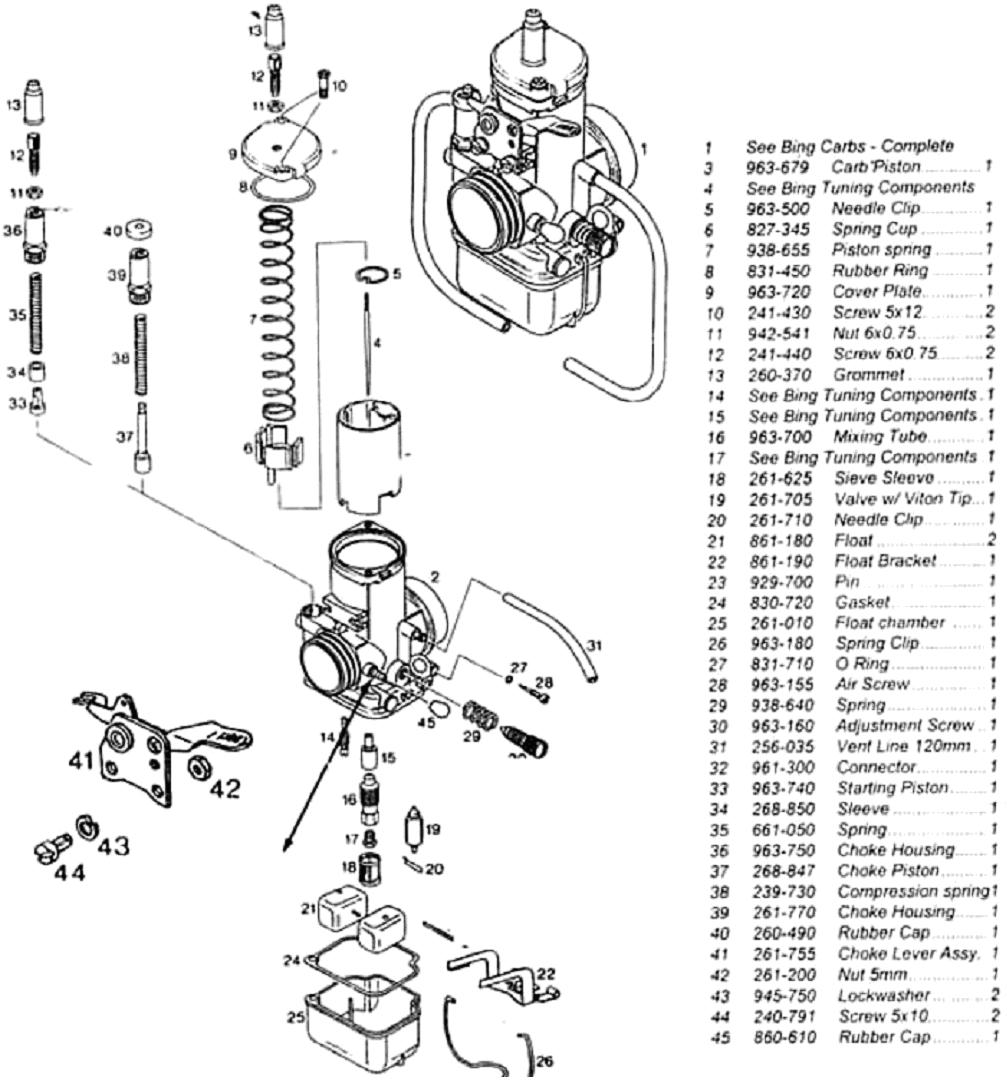
The third type is the constant depression. This includes the Bing 64
series which are used on Rotax 4-strokes and BMW boxers -- as well
as the Keihin CV which come standard on late model Harleys. These
are really sweet carbs for all around performance.
Again from experience with Rotax 4-strokes, these carbs work
flawlessly. A Marvel carb used on Lycoming is like a lump of coal
compared to these beauties. They too can use the ventuir vacuum
system for leaning, but even without it they will lean by themselves
up to about 10,000 feet. Again, it would be preferable to have
mixture control in order to reduce fuel flow in cruise somewhat.
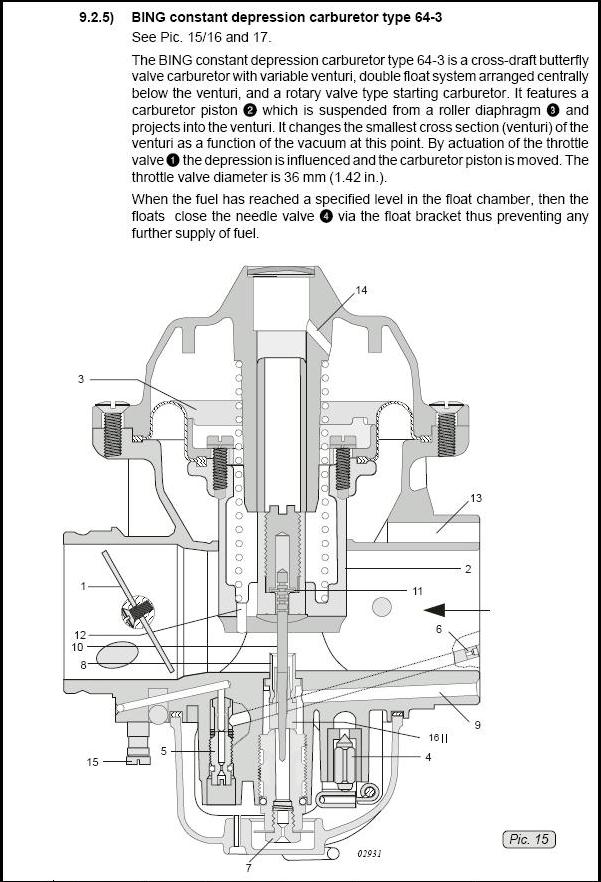
These constant depression carbs also use a round slide, but the
slide is not actuated by the throttle. Rather, the throttle actuates
a butterfly valve and the slide is actuated by manifold suction by
means of a diaphragm and spring. This is a really smart design and
results in absolutely precise fuel metering and throttle response.
These carbs are the thing that turned Harleys into civilized,
fuel-efficient machines.
My choice would be the constant depression type carb -- but either
one of the three will work fine. The main thing is they can all take
advantage of the mixture control scheme.
Regards,
Gordon.
The Rotary Engine NewsLetter. Powered by Linux.
ACRE NL web site.
http://www.rotaryeng.net
Copyright 1998-2006 All world wide rights reserved.