Guys,
I'm with Dave on the smaller runners -- 1.75" ID, 44 mm.
I'll take the better torque below 6000 rpm with the smaller
runners.
Think about how you fly your plane. You want your torque peak
to be
below your cruise rpm, so that when you push in the throttle, your
power comes up quickly.
If your torque peak is above your cruise rpm, pushing in that
throttle is going to feel pretty lame. You might as well forget
about controlling pitch attitude with power -- like in a power-on
approach for example.
Anyway, the Lemans engine was tuned for peak power at 8500 rpm.
With
2.85 reduction gearing your limit is going to be about 7500, which
gives just over 2600 prop rpm.
If you compare volumetric flow between 8500 rpm and 7500 rpm, you
see that it is 88 percent of the higher rpm. So since the 1.75" ID
has 87 percent of the area of the larger tube, it should be
just right.
This will give plenty of power. My turbo chart spreadsheet
shows 253
hp at 7500 rpm, assuming a VE of just 1.1.
Pick up a couple of those 44 Mikunis for a couple of hundred
bucks,
a needle valve for maybe $50 and you're in business.
Regards,
Gordon.
Not true Gordon. HP is what airplanes fly on. It is not like a
car.
Forget all you know about car engines. Your computer model is
flawed.
HP is torque TIMES RPM.
You want max torque at cruise RPM because that is where the best
BSFC is.
Your making a big mistake as your BSFC will also be worse.
The Lemans engines was designed for minimum fuel burn
because the rules stated one had only so much fuel to run
the race on.
As I said before an intake manifold is an aerodynamic device with
aerodynamic drag. Power is consumed by the engine to pump the air
in. It is a trade off with organ pipe effects. If you want the
best
BSFC you want to minimize the aerodynamic drag in your intake
manifold
and you therefore you want to minimize the air velocity in the
intake
manifold and maximize the cross sectional area to skin area ratio.
Smaller pipes work in cars at low RPM because the intake air
velocity
is much lower and the organ pipe effects dominate. Mazda spent big
bucks tuning the Lemans engine and nobody has got more power or
less
fuel burn.
The velocity in an intake manifold can be as high as Mach .4 or
higher.
Paul Lamar ...No rotor no motor.
Actually Paul, planes fly on thrust -- but in the case of
propeller
engines (both piston and turboprop), the thrust is produced by
horsepower not torque, which is what you were probably trying
to say.
What I'm talking about is the torque characteristics of the
engine.
An engine with a sharp, steep torque curve would be a disaster for
an aircraft engine. What you need is a very flat, wide torque band
in the heart of your cruise rpm range (2000 to 2500 prop rpm).
Yes, BSFC is lowest at torque peak. But if you have a peaky
engine,
you will only see that good mileage in a very narrow rpm band.
Large
intake runners make for a peaky power curve. Smaller runners will
produce a wider torque band that will give good fuel specifics
in a
wide rpm band.
Anyway the difference we are talking about is relatively minor.
The
smaller runner is almost 90 percent of the area of the large
runner. I'm afraid that big runner will only shift the torque peak
to a higher rpm and will result in less power in the middle rpm
range where you need good power in an aircraft engine.
I love the idea of the 1.75 ID tubing. I think it will actually
be a
better aircraft engine with more power in the midrange because the
velocity will be higher in the runners and therefore more momentum
in the air charge for more complete cylinder filling. Those big
pipes are great for top end on a race track, but when you are
cruising along in your plane and then have to initiate a cruise
climb you will be tapping your VSI with your index finger
wondering
why your plane isn't climbing.
And what's wrong with my spreadsheet? I recall you giving it your
blessing a couple of weeks ago when I was tweaking it with data
from
that Le Mans engine which you supplied. As I recall my spreadsheet
ended up showing less hp than your graph (615 hp versus 650).
Regards,
Gordon.
Prop thrust is produced by HP and not torque.
If you are cruising along at less than max HP with a fixed pitch
prop the engine is not fully loaded. Unlike a car there is no
fixed mechanical connection between aircraft speed and engine RPM.
If you open the throttle to climb in an aircraft the engine RPM
will
instantly
accelerate to max RPM and HP consistent with the prop load.
Response
has nothing
to do with it.
Climb has nothing to do with torque. Climb only has to do
with the ratio between max HP out of the prop and the drag and
gross
weight.
There will be no climb without excess HP.
Your program cannot calculate BSFC because it has nothing in it
about intake manifolds, engine friction and a myriad of other
things
that determine BSFC. One of those is pumping losses.
If you want to use 1.75 inch tubing be my guest. I don't
recommend it.
BTW every pilot that is checked out in a variable pitch prop
equipped
airplane is taught to reduce the pitch first and then apply the
throttle.
Why?
Paul Lamar
snip...
Paul,
I said prop thrust is produced by hp not torque.
What I didn't say was that torque turns the prop. I said that you
don't want an engine with a torque peak that is higher than your
cruise rpm.
The relationship between torque and power is purely mathematical.
But we can only measure torque -- hp must be calculated from
torque.
That's why on a turboprop you set your engine power using the
torque
gauge -- and rpm.
Now about climb performance. Climb is the result of thrust in
excess
of the airplane's total drag. We can figure out any airplane's
theoretical rate of climb with the equation for vertical speed,
which is simply the product of the prop's excess thrust and the
airplane's true airspeed, divided by the airplane's weight.
We can simplify that relationship because we know that power
equals
thrust times velocity. So the vertical speed of our airplane is a
function of the excess power divided by the airplane's weight.
We have to introduce a constant to take units into account (unless
using metric). In order to get vertical speed in feet per
minute and
using power measured in horsepower, we multiply excess power by
33,000, then divide by weight: VS = 33,000 * Px / W.
So here we can clearly see that the ability to climb depends on
having excess power. If we have a fixed-pitch prop then all we can
do is push the throttle forward and wait for the engine rpm to
increase to the point where we have excess power. Depending on
your
airspeed, the propeller pitch and the power characteristics of the
engine, that might be a long wait.
Look at a simple piston single. What happens when you are
approaching to land and then have to go around? If you were
letting
down with no power, is your engine instantly going to roar to life
and hurl you skyward?
But if you were coming down with power, pushing the throttle
all the
way in is going to get you climbing a lot quiker isn't it?
If you have an engine that has a peaky power curve, you're
going to
be like that Skyhawk coming down at idle. It's going to take a
while
for the engine to get up a head of steam.
Of course, with a CS prop it's a little different, but even here a
narrow powerband requires special measures.
Let's look at the turboprop because turbine engines have a narrow
rpm operating range. Most turboprops have at least two governors
that will automatically keep it in its rpm range -- some have
three.
Look what happens at takeoff in a turboprop. You set the prop for
maximum rpm, say 2000. But unlike a piston plane with CS prop,
your
prop doesn't instantly go to that rpm. That is because the
engine is
not producing enough power to spin the prop 2000 rpm. The prop
governor will actually prevent the blades from going to flat pitch
in attempting to reach that rpm. You just have to wait until your
engine spools up and starts making power.
Only as power increases to a certain point does the governor
let the
prop come off the low-pitch stop and reach the rpm set by the
pilot.
It's even more important to know at what power level you're
going to
be "coming off the governor," when you are landing. So here we see
how even with a constant speed prop, an engine with a narrow
powerband requires automatic controls in order to keep the proper
balance between power and rpm. You can't just slam the prop levers
around like in a piston plane and think you are going to have
instant response.
That's what I'm talking about. If you have a P-ported rotary
engine
with a very narrow power band, you have an engine that is like a
turboprop. Even with a CS prop, that plane is not going to be
fun to
fly -- unless you also have turboprop-style governors that will
keep
you out of trouble.
Could you fly that kind of engine with a fixed-pitch prop? I don't
think so.
Regards,
Gordon.
"torque peak is above your cruise rpm"
"peaky power curve"
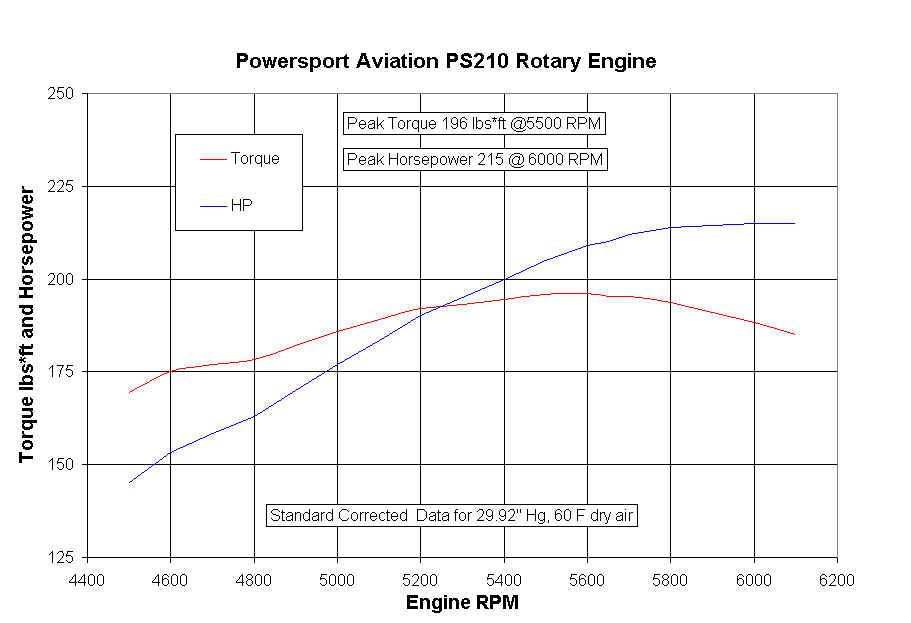
What is peaky about these power curves?
We don't have a P-port with a narrow power band let alone "very
narrow"
band or torque with "peaks". It is probably difficult to build a
rotary
with a narrow power band. I don't know how to build one.
If you know how to build one please tell me :) I might find a use
for it :)
The Power Sport engine is using a smaller runner. Probably around
1.75 inches.
HP is well down from the 1 7/8 ID runners we used on the ACRE engine.
Max torque in the Power Sport engine is less than 200 foot pounds
about
the same as ours. However power is off by 30 HP compared to the
ACRE engine.
6000 RPM is the optimum cruise RPM for the rotary. That is where the
bearing loads and the BSFC are a minimum.
Paul Lamar ...No rotor no motor.
RE Small vs larger intake runners, this argument has been going on
forever. It is pointless in my opinion. Once we have engines in
both configurations all will be known. In the meantime either p port
promises a lot more hp than a stock intake. Small p port intakes
produce 215 hp at around 6400 rpm. They would produce even more at
7500 rpm. Bigger intakes will produce even more power. But since
both are limited to 7500 rpm, the increase will not be that
significant. The best street ported engines are not claiming 200
hp. For a stock intake, pray for 150 hp. It will take a miracle.
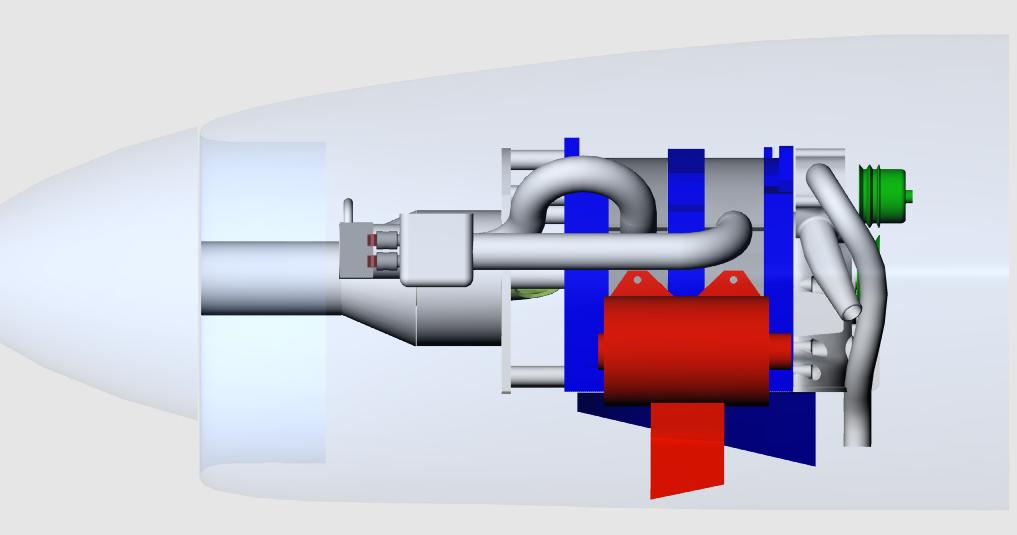
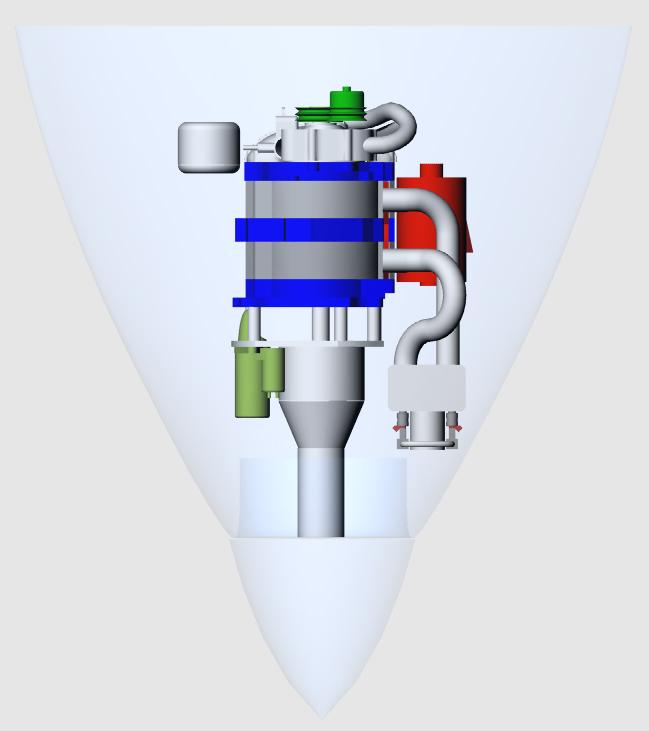
I have built a number of intakes to augment my scrap pile. There is
a world of difference trying to wrap a 2" O.D. pipe over the top as
compared to 1.75 o.d. Most airplanes will not have room above the
engine for a 2" o.d. system. Remember that 2" bends are not
available in the same radius as 1.75 tubes. Space is more important
than potential performance in making the decision. Inside an
airplane cowl, there is seldom room for a proper intake or exhaust.
Jerry
Read this chart again Jerry. You did get it did you not?
Note the torque severely dropping off at 6100 RPM. That means the HP
on this 1 3/4 tube P-port engine will also start to go down from here.
Your experience in this matter has been limited to Tailwinds.
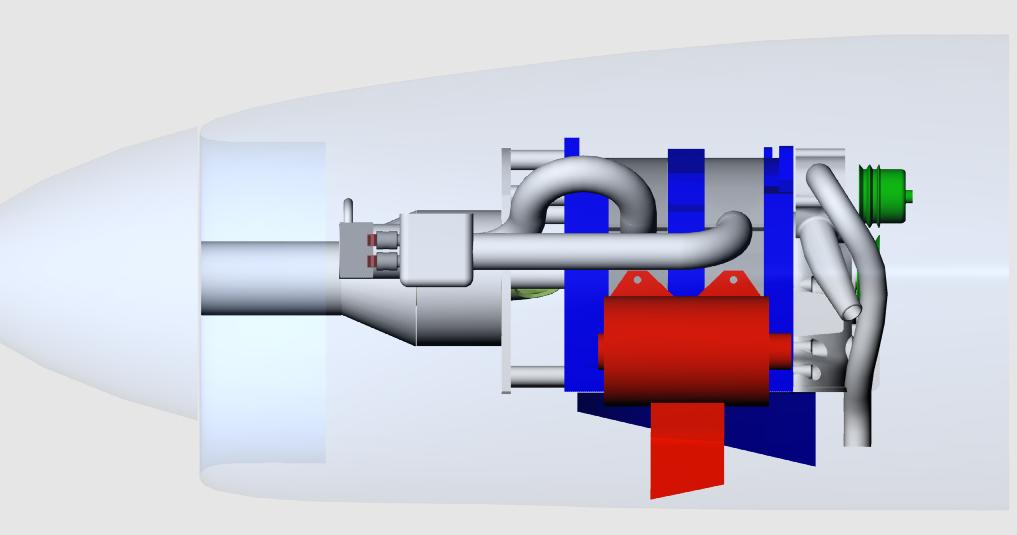
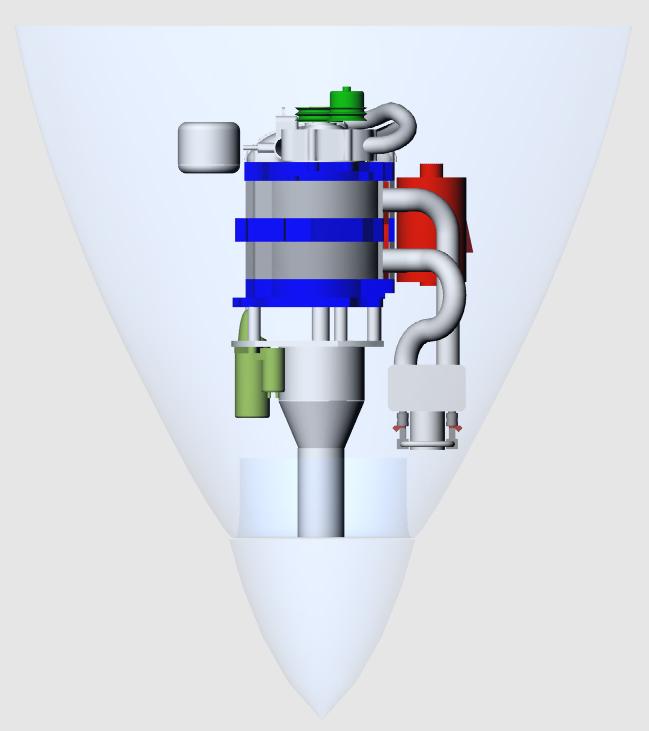
Most RV's have plenty room above the engine for a 2 inch 180
degree bend intake. All the pushers have not problems.
I know! I have literally done dozens of scaled
3D dwgs on this subject. Same goes for a Mustang II. I would say
with a very few exceptions a 180 degree 2 inch tube bend fits fine.
Furthermore one is not limited to going over the top.
See the last 3 3D's.
I thought I had you convinced on this years ago :)
Paul Lamar ...No rotor no motor.
The Rotary Engine NewsLetter. Powered by Linux.
ACRE NL web site.
http://www.rotaryeng.net
Copyright 1998-2006 All world wide rights reserved.