Use a needle valve to change the amount of dynamic pressure
applied to the top chamber. Just a small controlled leak would also
probably work.
Unfortunately this super simple scheme won't work on the Mikuni 48 mm.
Paul Lamar ...No rotor no motor.
Paul,
I like the idea of a simple system, but I don't believe a controlled
leak will work.
An incredibly small leak will foul up a vacuum system. The worst part
is a tiny tweak to far and the piston falls all the way causing the
engine to
stop. Even at high altitude I really don't want that to happen. I
really believe
that fuel [level] is the way to go here.
Bill Jepson
OK here is an illustration of such a system.
Paul Lamar ...No rotor no motor.
Guys,
Why reinvent the wheel when a perfectly good leaning system is
flying on thousands of Rotax engines?
The system works by controlling float bowl air pressure with vacuum
from the carb's own venturi. It does not control fuel pressure or
fuel flow, but works just as effectively because fuel flows from the
carb jet as a function of the pressure differential between the
venturi and the float bowl. If you lower the float bowl pressure,
less fuel will flow.
The Rotax system is automatic and uses an aneroid diaphragm to move
a needle valve. The manual system does away with the diaphragm and
you control the needle valve directly on your instrument panel.
Everyone who flies Rotaxes knows both the automatic and manual
versions and the leaning is as effective and simple as a mixture
knob on a Cessna.
You can buy the entire thing as a kit for under $200 and it will
work with vacuum slide carbs, round slide carbs and flat slide
carbs. Some of these carbs already have a port for venturi vacuum --
including the Mikuni HSR and various Bings. In that case, it is
simply a matter of running a bit of plastic hose to various fittings
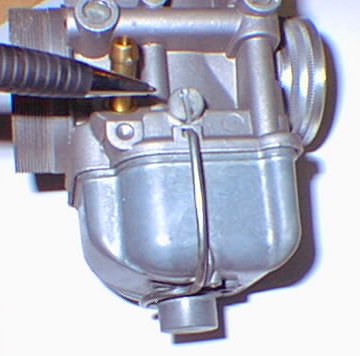
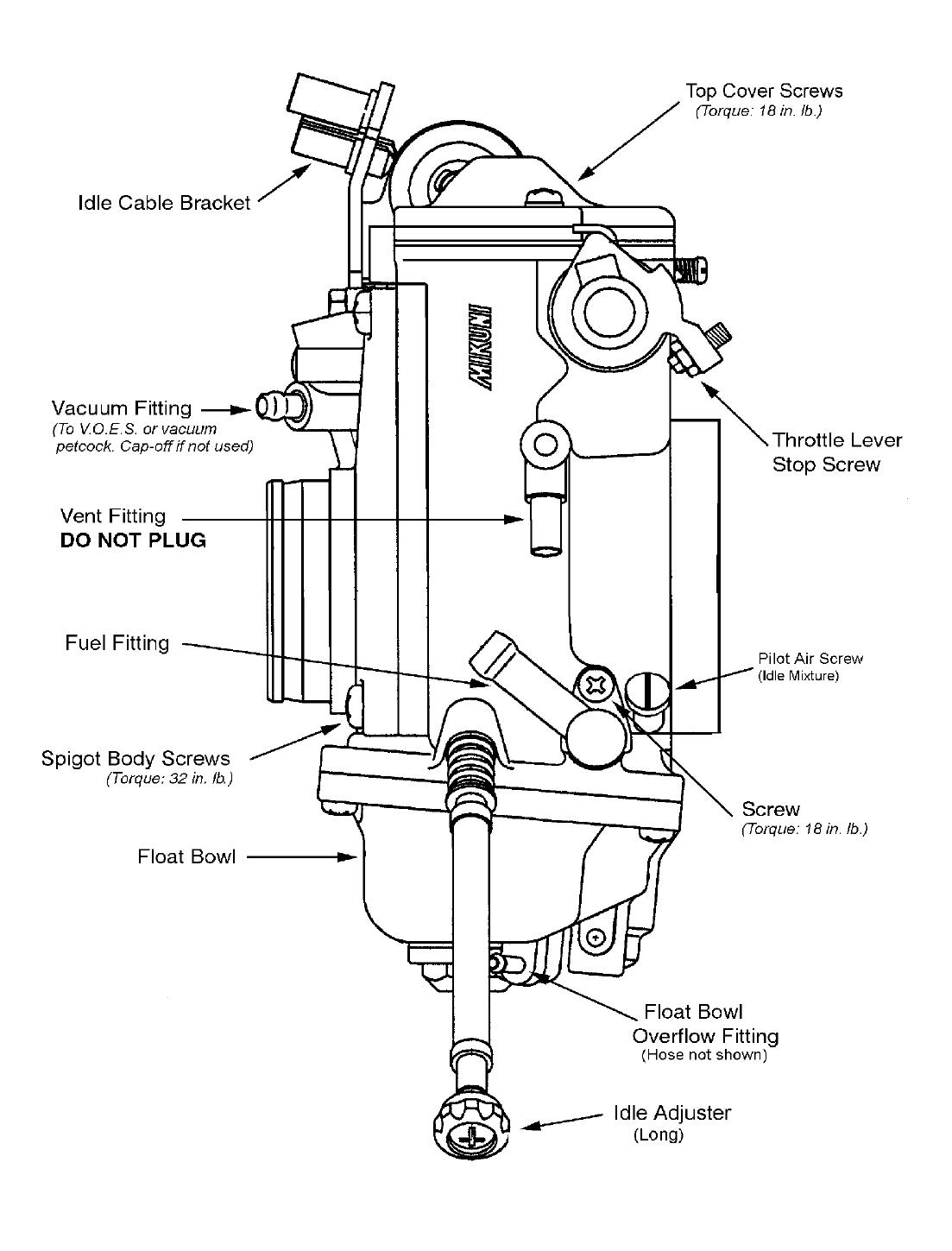
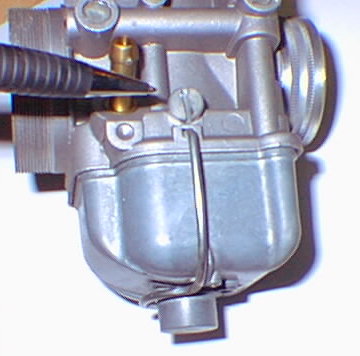
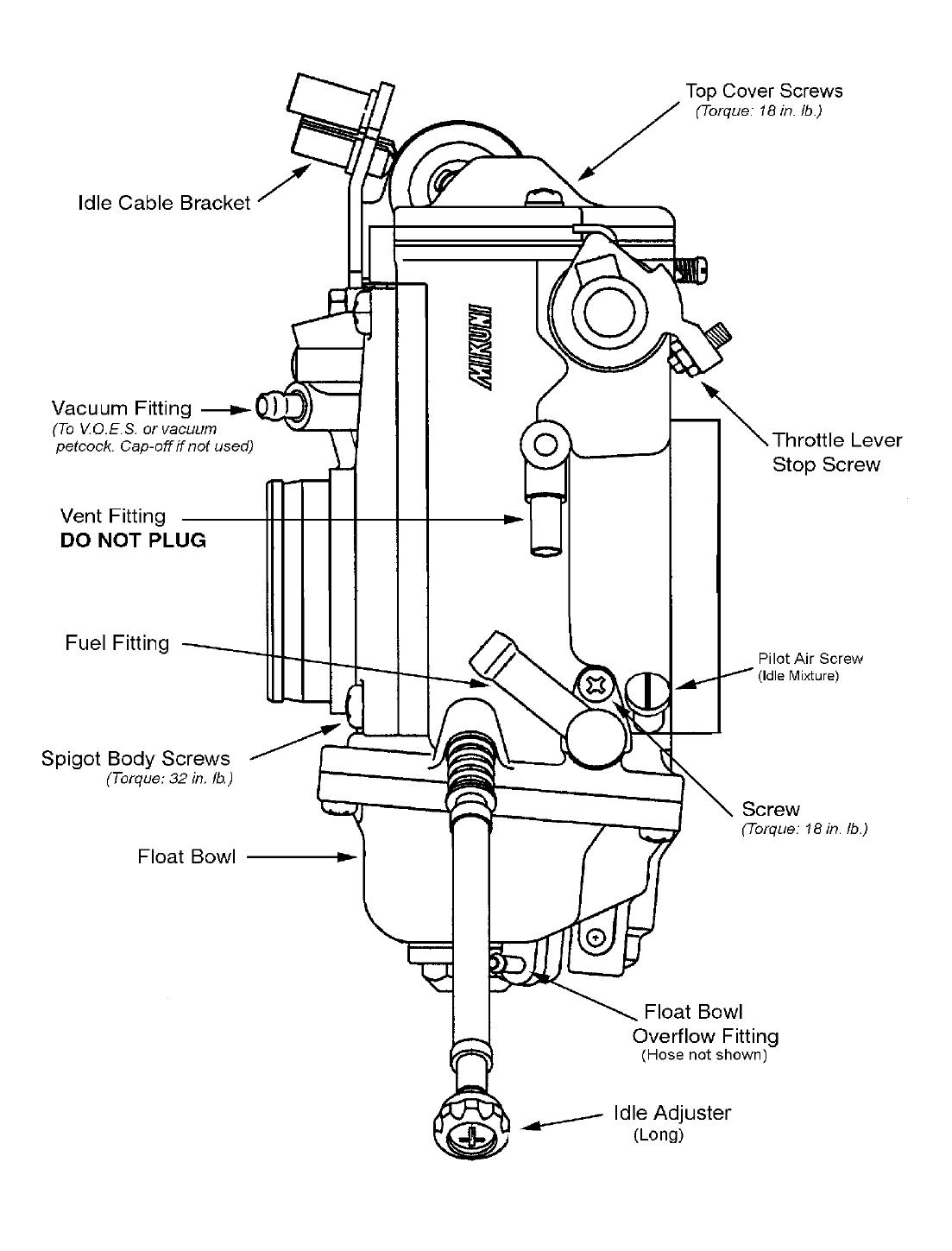
and the needle valve. The carb picture shows the vacuum port on the
Bing carb. The Mikuni HSR also has a vacuum port as shown in the
diagram.
Carbs that don't have a venturi vacuum port, you can add one very
easily -- typically to the slide cover on the top of the carb,
because this is open to the venturi below. This modification is a
piece of cake and involves drilling a hole and epoxying in a little
hose fitting. See the pdf file.
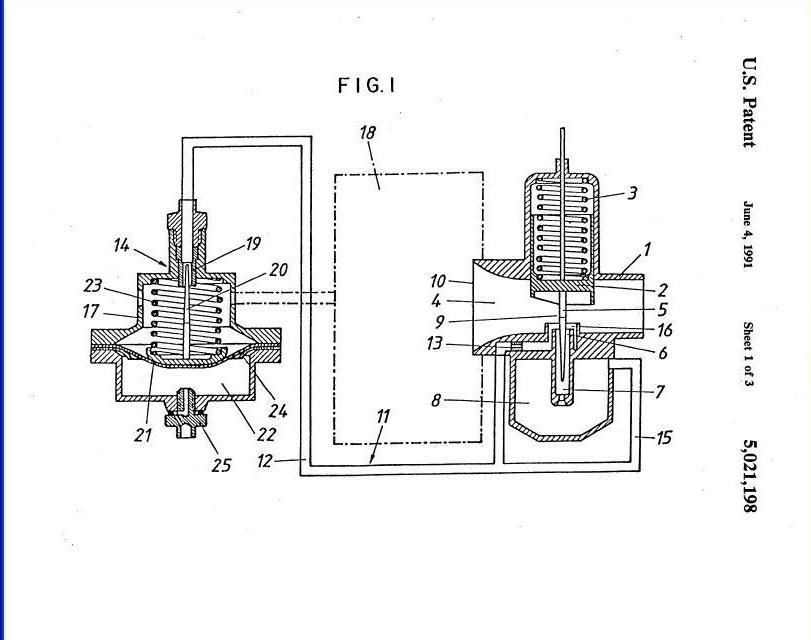
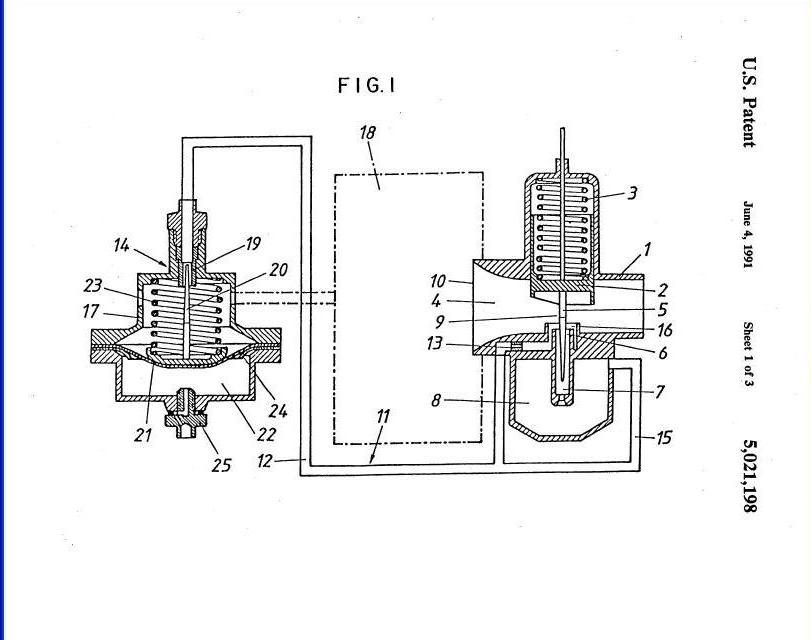
The first diagram shows how the diaphragm-controlled
(automatic) system works. The line to the float bowl vent is 15.
Normally this is vented to atmosphere (static port). You can see
that the float bowl vent is connected to a vacuum signal from the
carb's venturi, by line 11.
The aneroid chamber is 22. As altitude increases and the air gets
less dense that chamber naturally expands and pushes up the needle
valve, 20. This shuts off the flow of static air which is in the top
chamber -- it's connected to the airbox.
So as the plane climbs, the float bowl pressure is decreased by
cutting off static pressure and leaving only the lower pressure from
the venturi. The result is that the float bowl air pressure is
reduced, so less fuel flows.
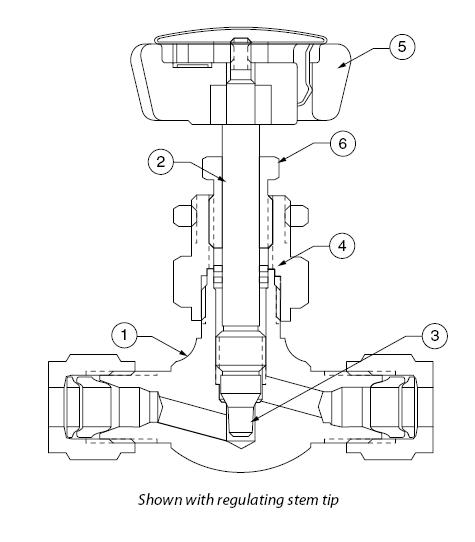
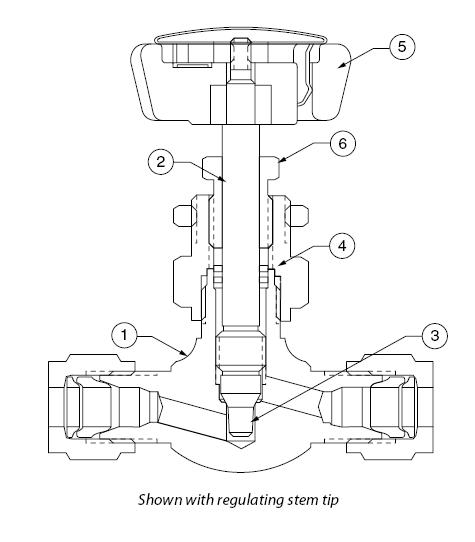
In the manual system you simply replace the diaphragm needle valve
with the manual needle valve mounted to the instrument panel -- like
this Hoke unit designed specifically for air instrument lines.
You can roll your own by buying a needle valve, some tubing and
tees, or you can buy a complete kit from Green Sky or Holtzman (and
pay a little more than DIY):
http://www.greenskyadventures.com/bing/HACmanorder.htm
http://www.holtzmaneng.com/
Regards,
Gordon.
Sorry Gordon. I missed the manual leaning part the first go around.
That is what we are after.
Will it work with a Keihin 51 mm? I am leaning towards two of those because they
are cheaper than the Mikuni's and probably easier to tune.
Paul Lamar
The Rotary Engine NewsLetter. Powered by Linux.
ACRE NL web site.
http://www.rotaryeng.net
Copyright 1998-2006 All world wide rights reserved.