Guys,
Why reinvent the wheel when a perfectly good leaning system is
flying on thousands of Rotax engines?
The system works by controlling float bowl air pressure with
vacuum
from the carb's own venturi. It does not control fuel pressure or
fuel flow, but works just as effectively because fuel flows from
the
carb jet as a function of the pressure differential between the
venturi and the float bowl. If you lower the float bowl pressure,
less fuel will flow.
The Rotax system is automatic and uses an aneroid diaphragm to
move
a needle valve. The manual system does away with the diaphragm and
you control the needle valve directly on your instrument panel.
Everyone who flies Rotaxes knows both the automatic and manual
versions and the leaning is as effective and simple as a mixture
knob on a Cessna.
You can buy the entire thing as a kit for under $200 and it will
work with vacuum slide carbs, round slide carbs and flat slide
carbs. Some of these carbs already have a port for venturi vacuum
--
including the Mikuni HSR and various Bings. In that case, it is
simply a matter of running a bit of plastic hose to various
fittings
and the needle valve. The carb picture shows the vacuum port on
the
Bing carb. The Mikuni HSR also has a vacuum port as shown in the
diagram.
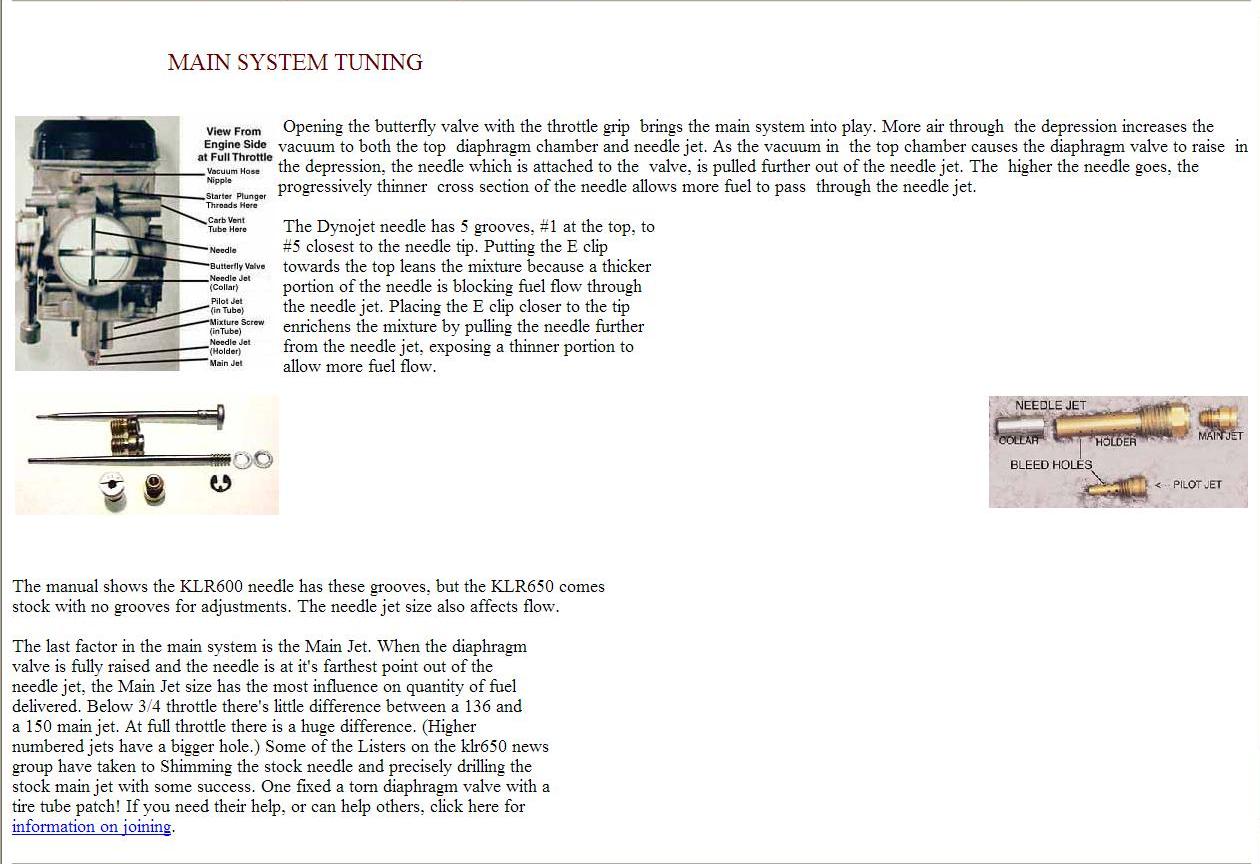
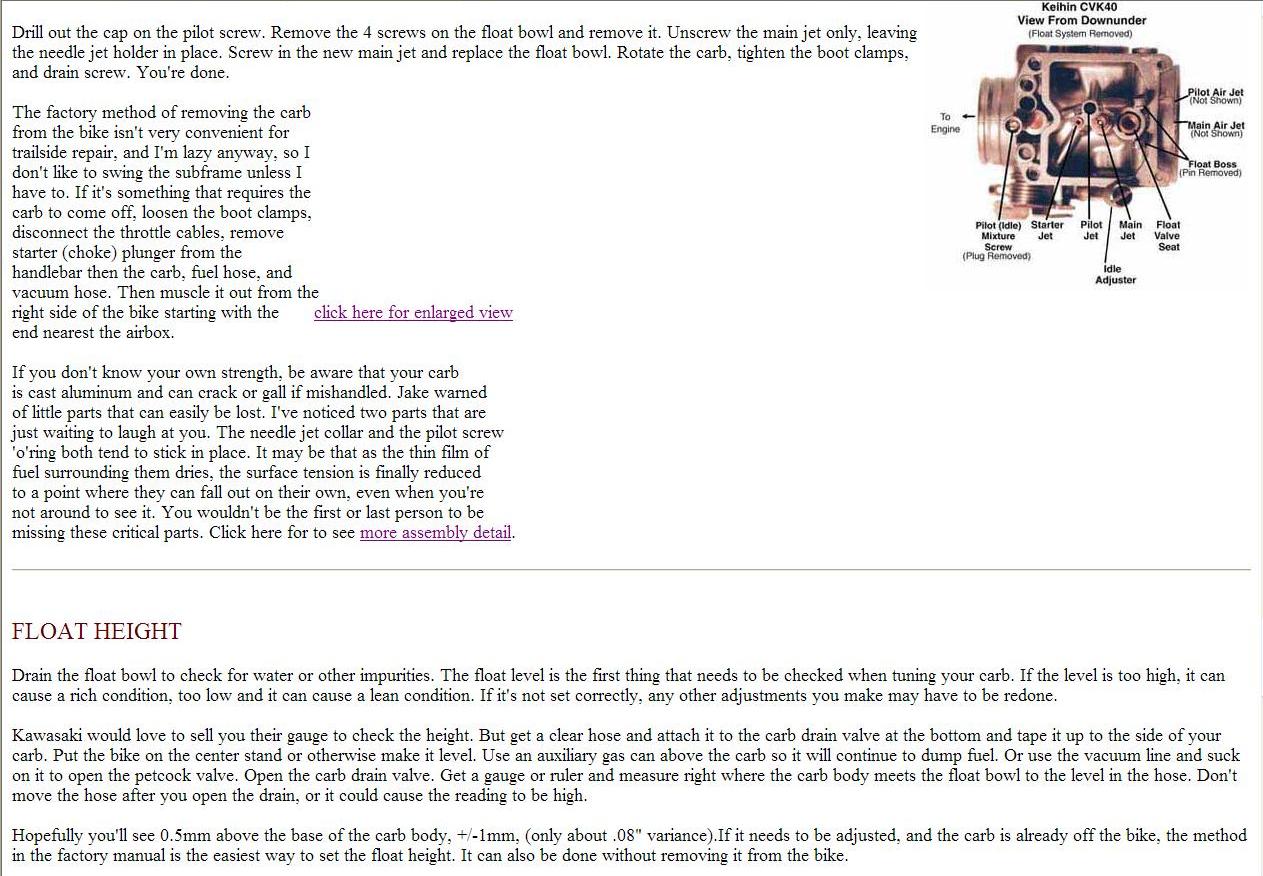
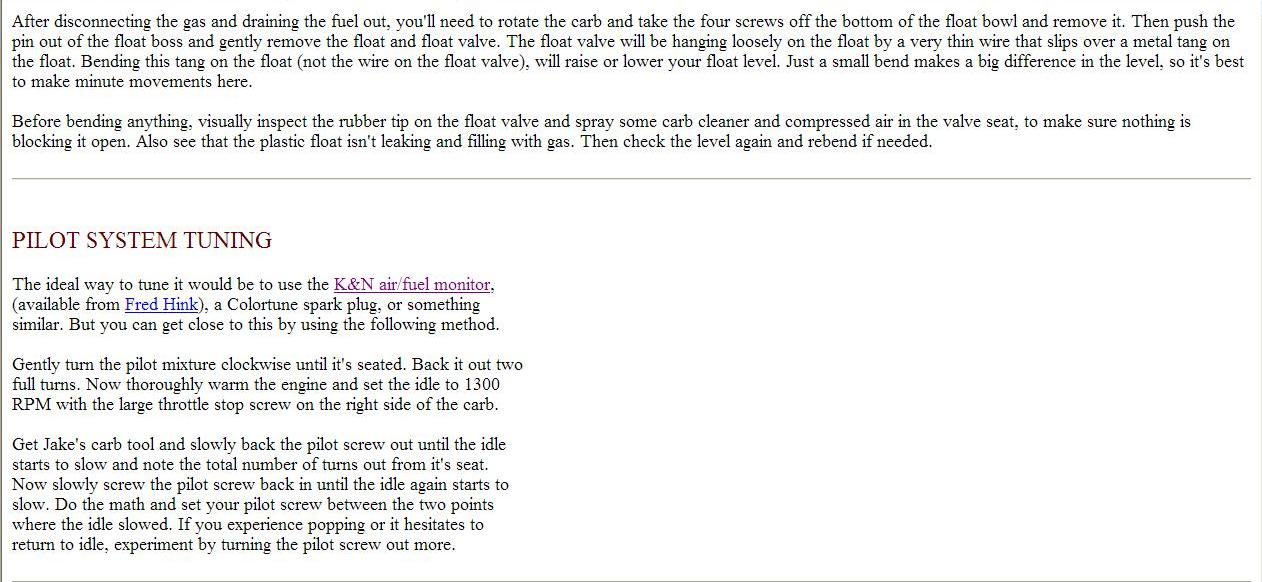
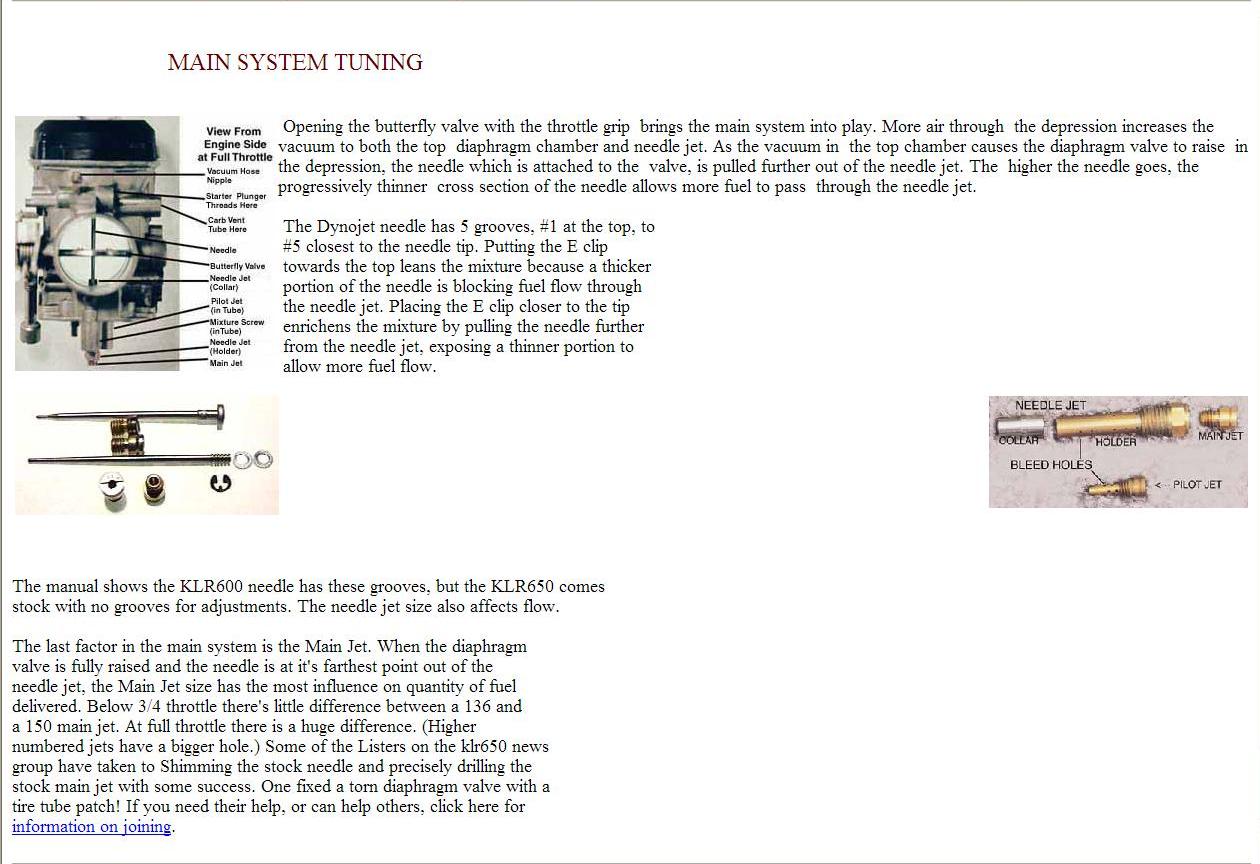
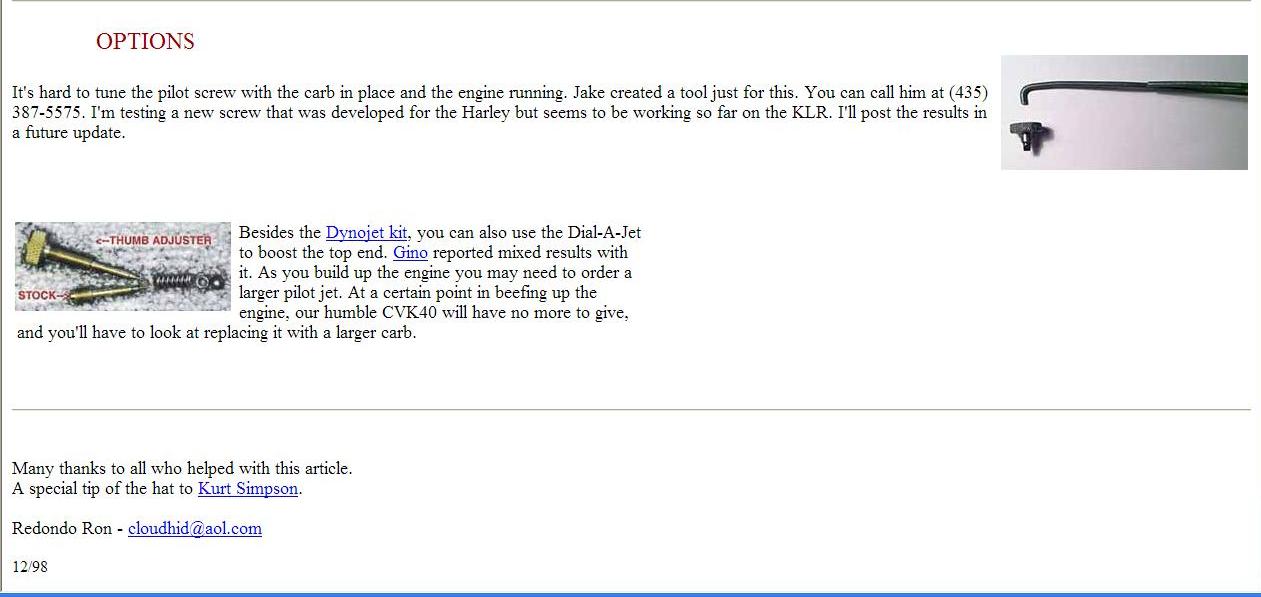
Carbs that don't have a venturi vacuum port, you can add one very
easily -- typically to the slide cover on the top of the carb,
because this is open to the venturi below. This modification is a
piece of cake and involves drilling a hole and epoxying in a
little
hose fitting. See the pdf file.
The first diagram shows how the diaphragm-controlled
(automatic) system works. The line to the float bowl vent is 15.
Normally this is vented to atmosphere (static port). You can see
that the float bowl vent is connected to a vacuum signal from the
carb's venturi, by line 11.
The aneroid chamber is 22. As altitude increases and the air gets
less dense that chamber naturally expands and pushes up the needle
valve, 20. This shuts off the flow of static air which is in the
top
chamber -- it's connected to the airbox.
So as the plane climbs, the float bowl pressure is decreased by
cutting off static pressure and leaving only the lower pressure
from
the venturi. The result is that the float bowl air pressure is
reduced, so less fuel flows.
In the manual system you simply replace the diaphragm needle valve
with the manual needle valve mounted to the instrument panel --
like
this Hoke unit designed specifically for air instrument lines.
You can roll your own by buying a needle valve, some tubing and
tees, or you can buy a complete kit from Green Sky or Holtzman
(and
pay a little more than DIY):
http://www.greenskyadventures.com/bing/HACmanorder.htm
http://www.holtzmaneng.com/
Regards,
Gordon.
Sorry Gordon. I missed the manual leaning part the first go
around.
That is what we are after.
Will it work with a Keihin 51 mm? I am leaning towards two of
those
because they
are cheaper than the Mikuni's and probably easier to tune.
Paul Lamar
Yes, it will work with the Keihin 51mm, Paul.
The Keihin is a vacuum slide carb (aka constant vacuum, constant
depression, constant velocity etc.)
This would be my first choice. This is the type of carb used on
4-stroke Rotaxes and the small 4-stroke HKS 2-cylinder. The
constant
depression carb provides fuel metering under all possible
conditions
with an accuracy that is surpassed only by EFI.
The only question is whether the Keihin has a port for venturi
vacuum, if it doesn't it's not a big deal as it is a simple matter
to tap into.
Regards,
Gordon.
So all you do is meter (using a pinch valve) the vacuum created by the
venturi to "depressure" the float diaphragm? A lot of calcs probably
needed to ascertain what amount of DP you get across any specified
carb's venturi. It doesn't seem like there's enough vacuum to give the
range one would want. I thought a venturi was an extremely low loss
(pressure wise) device. Do other systems use external (mechanically
created) vacuum?
Allen
Houston
Allen,
You have grasped most of the concept. Yes, we do "depressurize" the
float bowl, which causes less fuel to flow -- for any given airflow --
hence a leaner mixture.
There is nothing to calculate. On a constant depression carb, the
venturi size varies while the pressure within the venturi remains
the same.
Let's review how float bowl carbs work. The fuel flows from the main jet
for one reason only -- it gets sucked out by the vacuum in the venturi.
Fuel pressure has nothing to do with it, because once the float bowl is
full the float pushes the needle valve shut.
It's the air pressure in the float bowl that presses the fuel out
through the jet -- because the pressure is higher in the float bowl than
in the venturi. And since the needle jet opens into the venturi, fuel
will flow to the area of higher pressure to the area of lower pressure.
Normally the flaot bowl is vented to the atmosphere -- static port. But
if we run lower pressure from the venturi to the float bowl, the
difference in pressure will decrease and less fule will flow -- the
mixture is leaned.
The pressure is controlled by a needle valve. At full rich, the float
bowl is vented only to ambient pressure. At fulll lean the float bowl
would be vented only to the venturi, so the pressure would be the same
in both and no fuel would flow at all. This is like idle cutoff.
Obviously this is a full range of adjustability. I don't know of any
systems that use external vacuum. What for, when venturi vacuum
works best.
I can tell you from experience that a 100 hp Rotax will go to 15,000
feet at perfect mixture using the automatic system. The manual system is
exactly the same. A turbo 914 will go well into the flight levels. This
is proven technology that works on thousands of Rotaxes around the world
that have logged millions of hours.
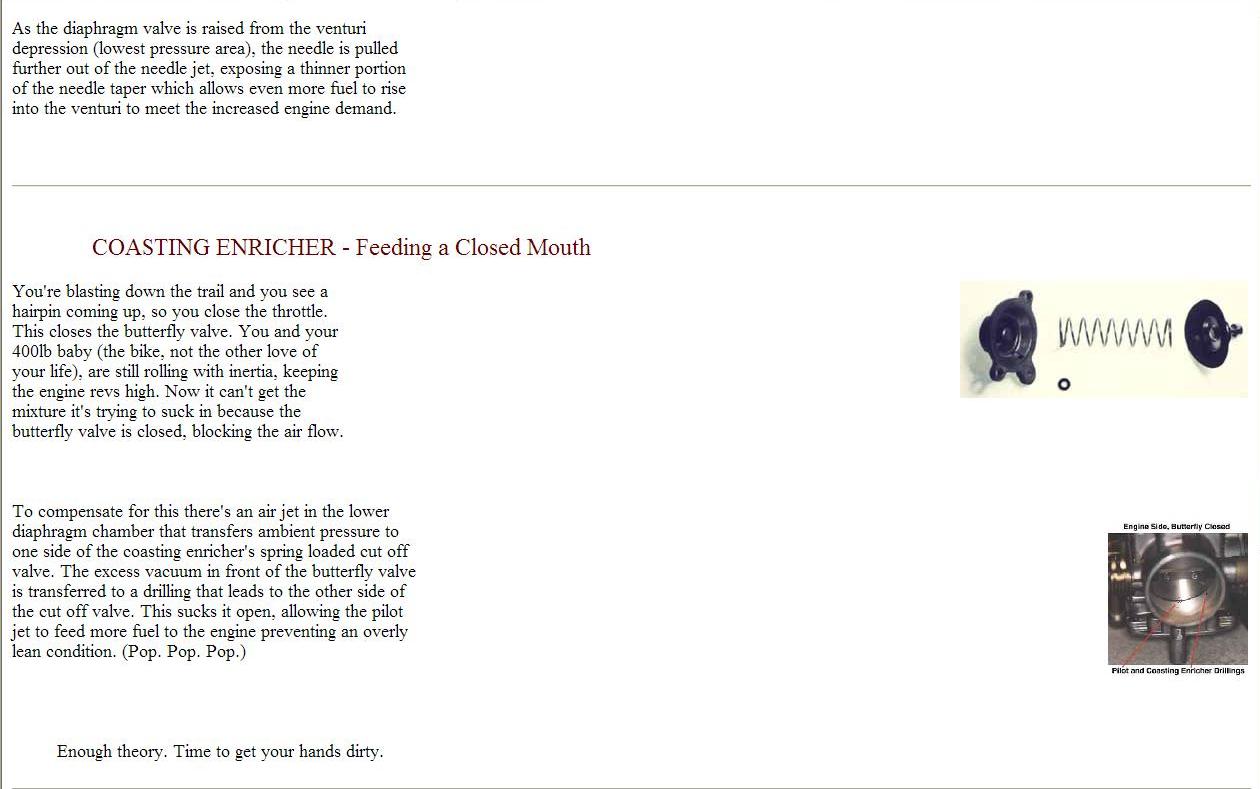
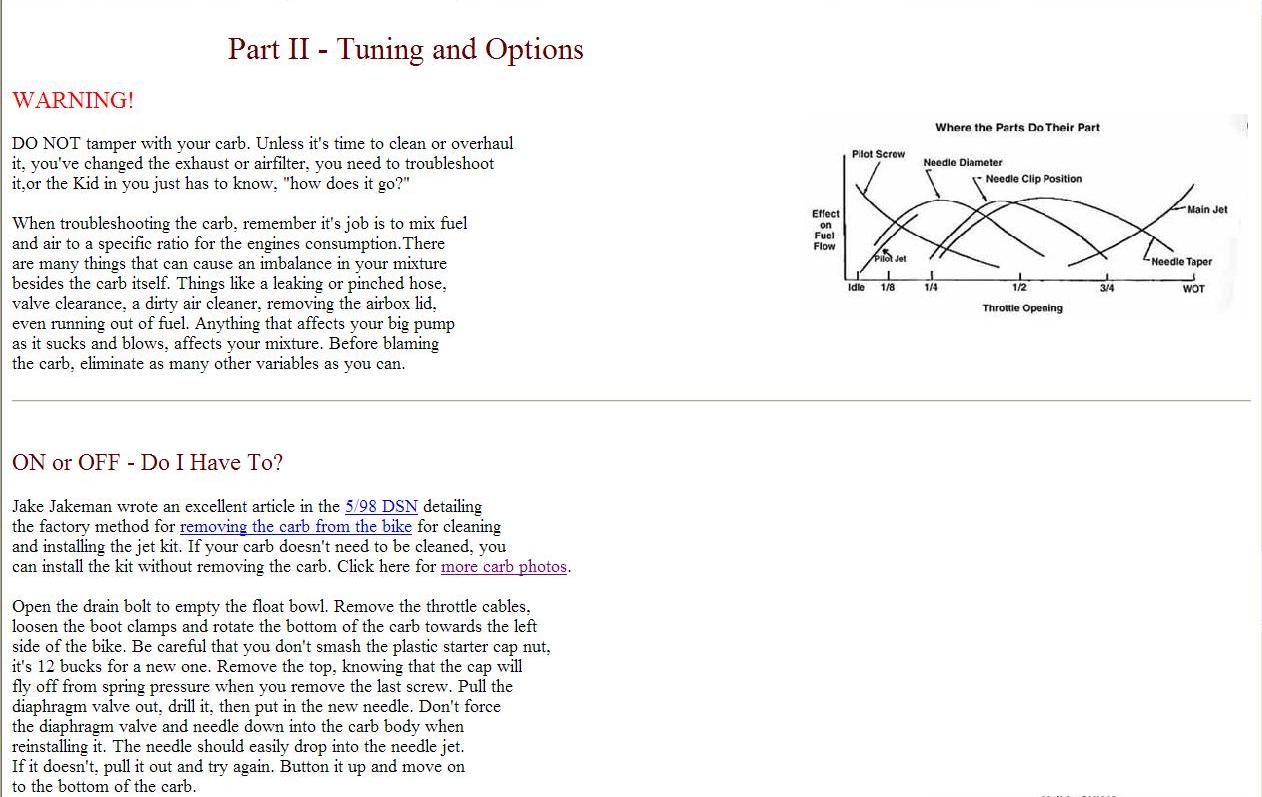
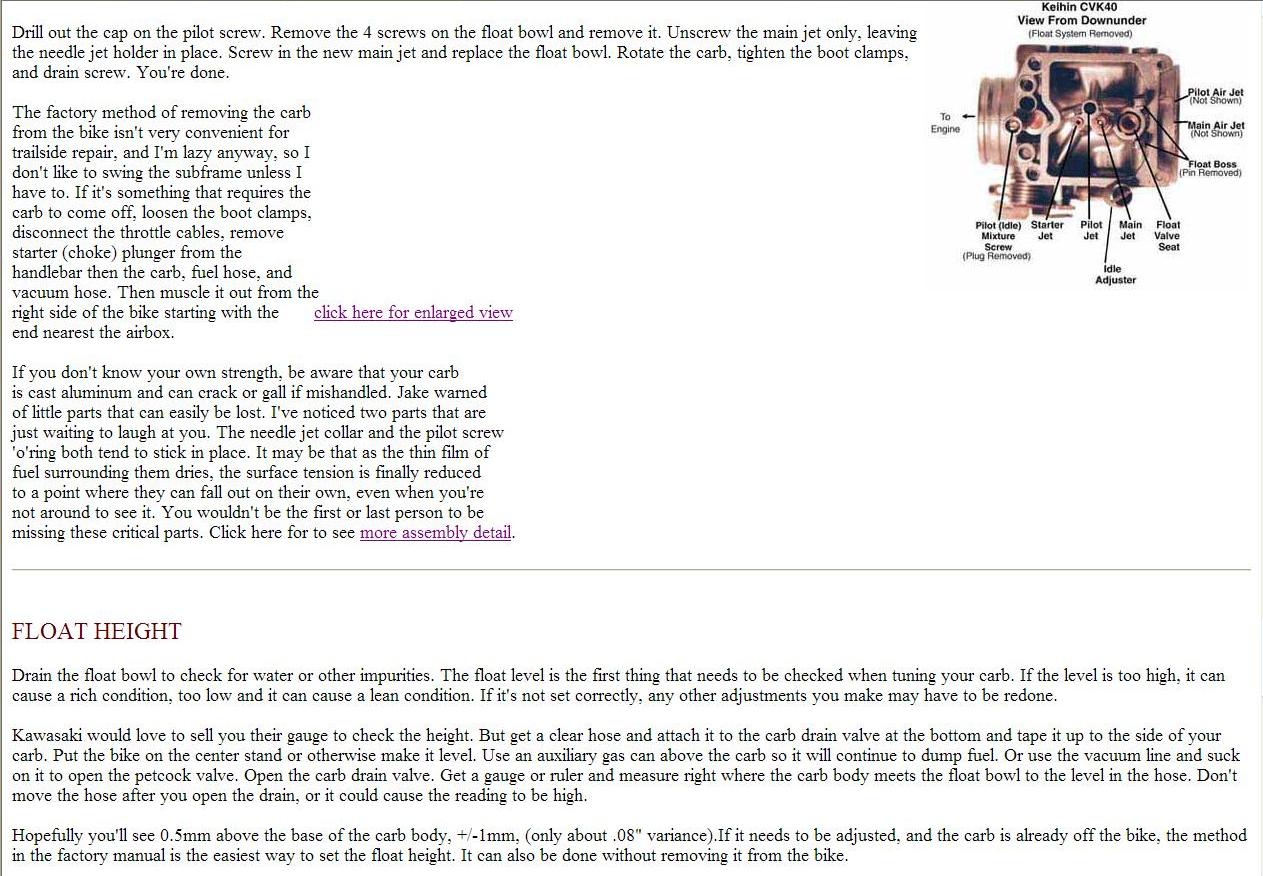
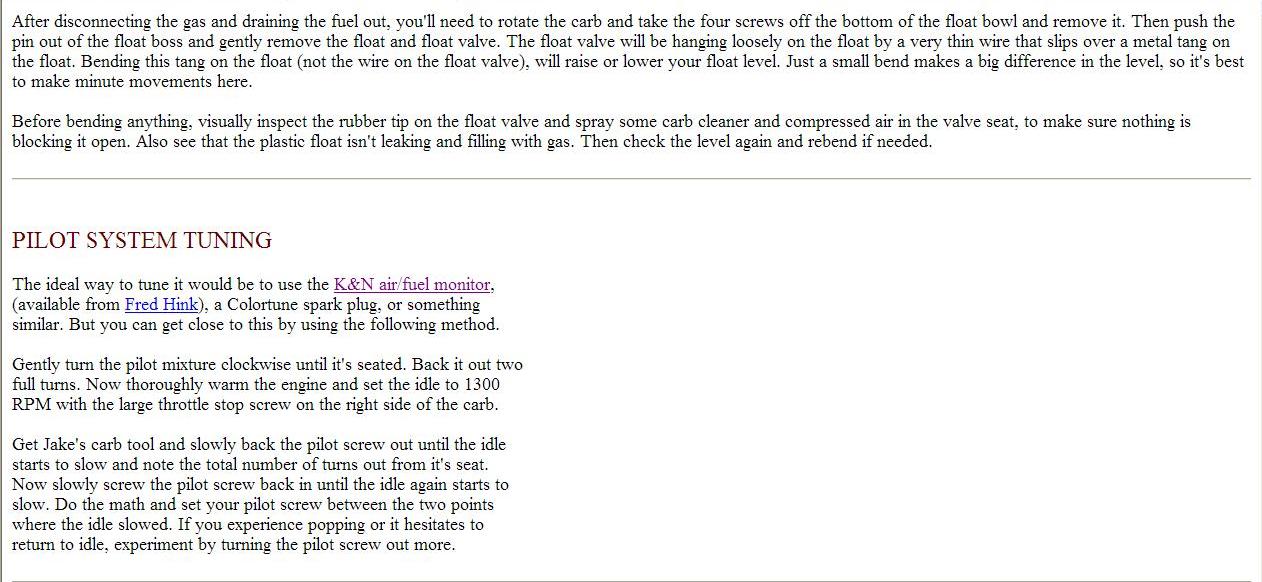
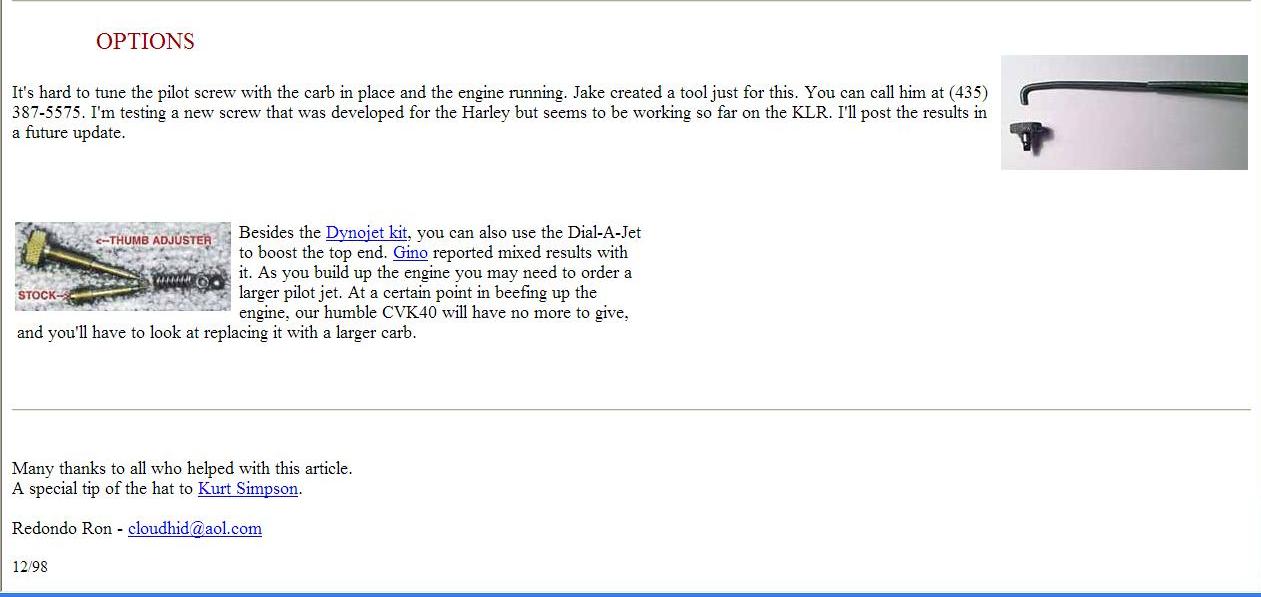
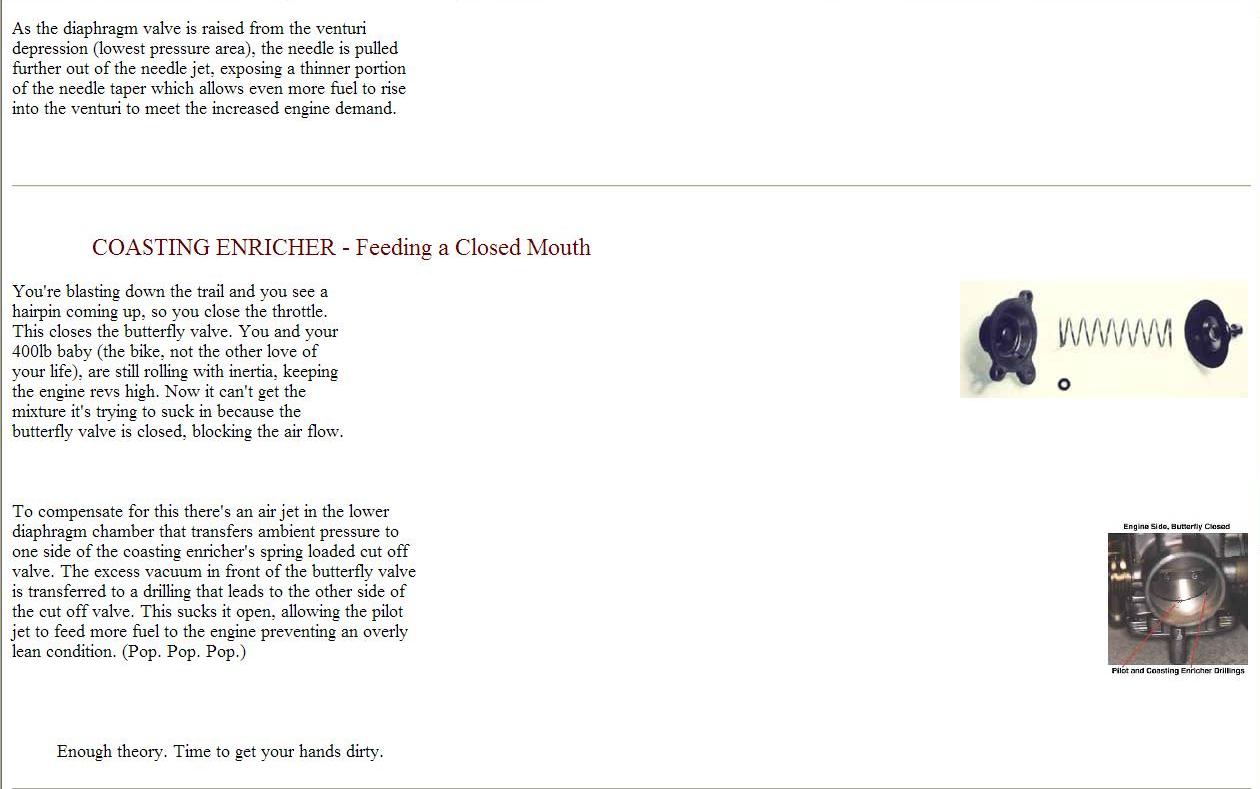
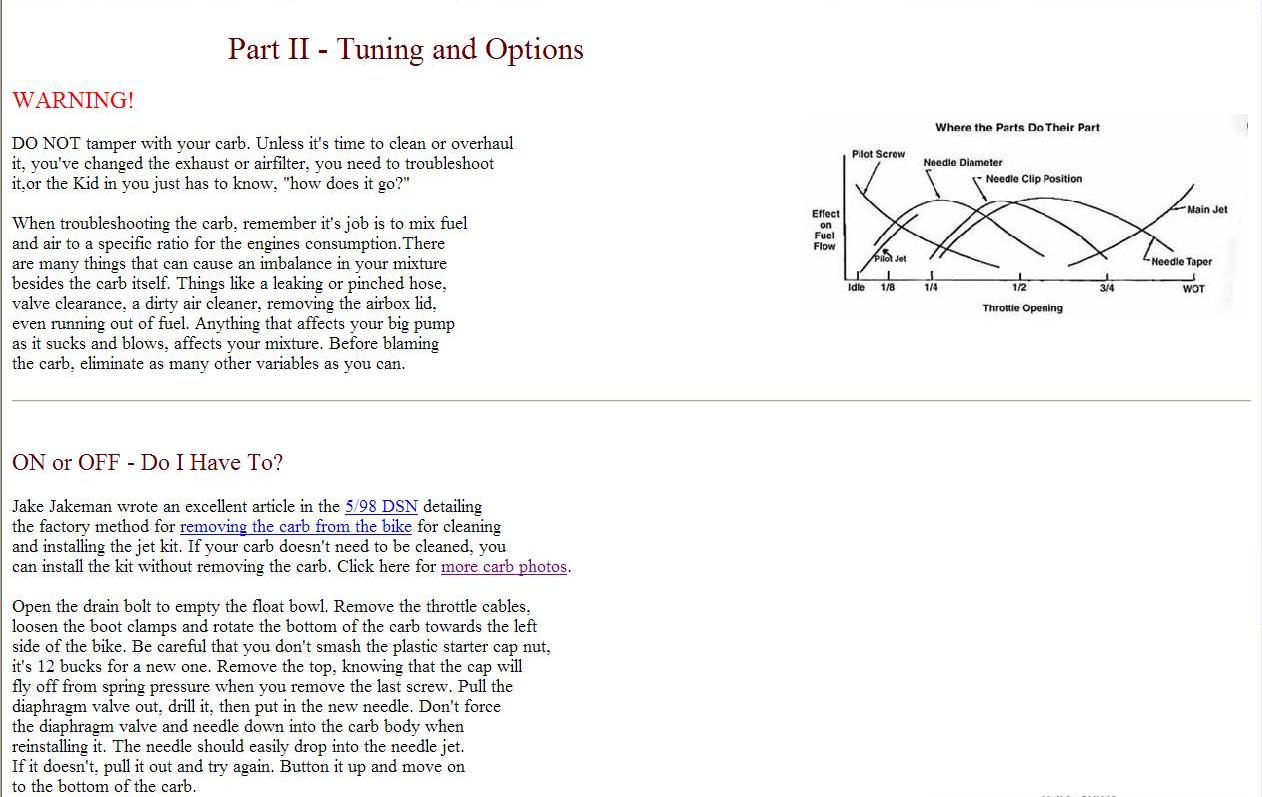
Paul, I've attached a helpful article on the Keihin CV carb. This one is
for a 40 mm but the carbs are the same. There are six more pages which I
will upload in a separate message.
It looks like the Keihin has a vacuum port already. If this is vacuum
signal from the venturi -- as one woudl assume -- then you are all set.
You have your venturi vacuum source.
I'm kind of curious what these vacuum ports are used for on motorcycles
-- I noticed the Mikuni HSR has one too. Maybe Bill Jepson has an
answer?
Regards,
Gordon.
Gordon,
Thanks for the dissertation on carbuerators. I do appreciate it as I
have never worked on any kind of engines (except the diesel in my
sailboat) and never had a need to before now. My father used to say to
my mother, "Lucy can you splain wuts wrong with that boy?". So now I
know how they work and I have you to thank Gordon.
Allen
Houston
Thanks for the kind words, Allen -- but I can't take credit for that
carb article. I found it on the internet. Here are the rest of the
pages.
Regards,
Gordon.
The Rotary Engine NewsLetter. Powered by Linux.
ACRE NL web site.
http://www.rotaryeng.net
Copyright 1998-2006 All world wide rights reserved.