Hi Paul,
Awhile ago you proposed a way of determining the engine HP output by
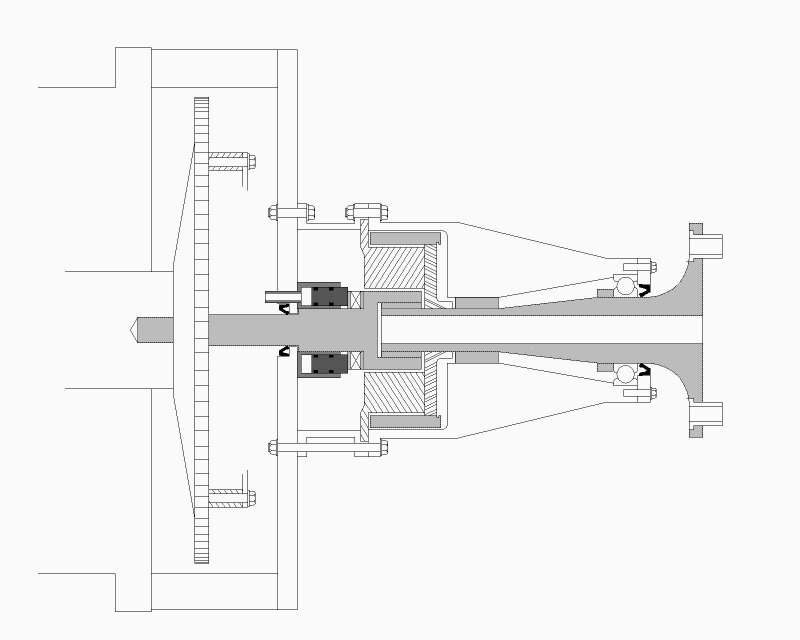
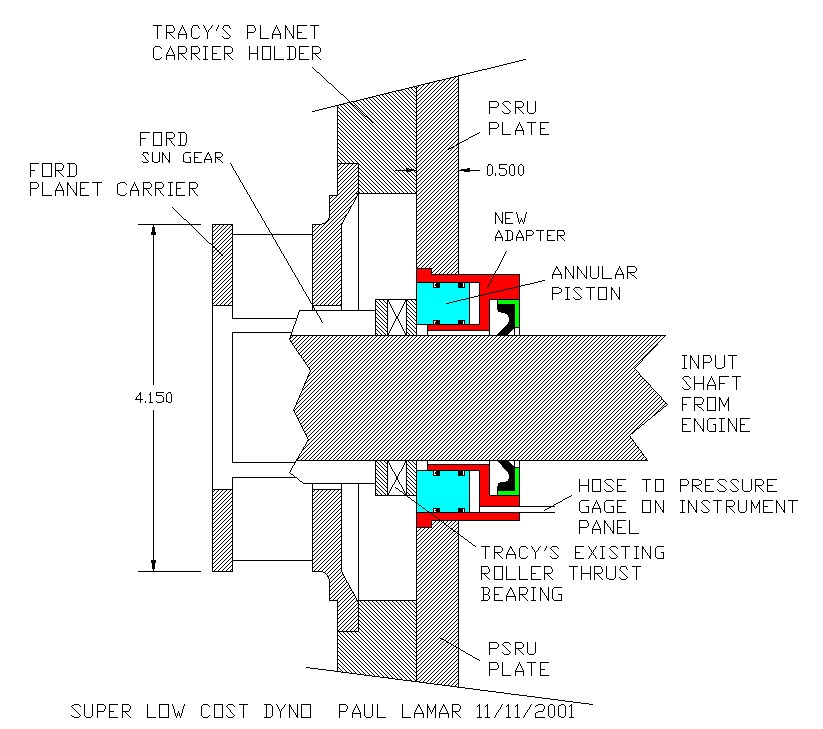
measuring the end load on the gearbox sun gear shaft. In the drawing you
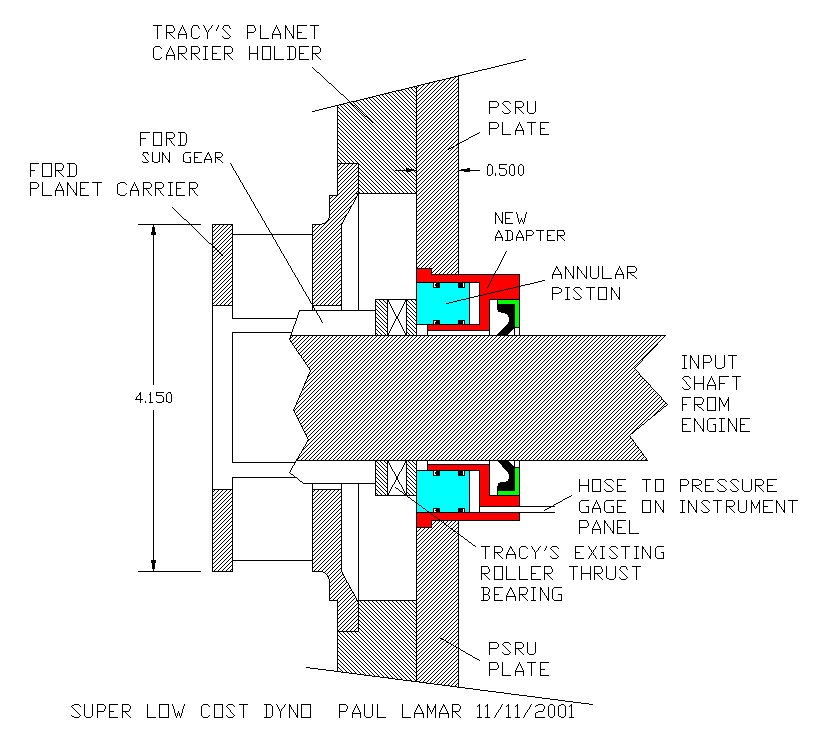
made, you showed a floating piston that the thrust bearing would bear
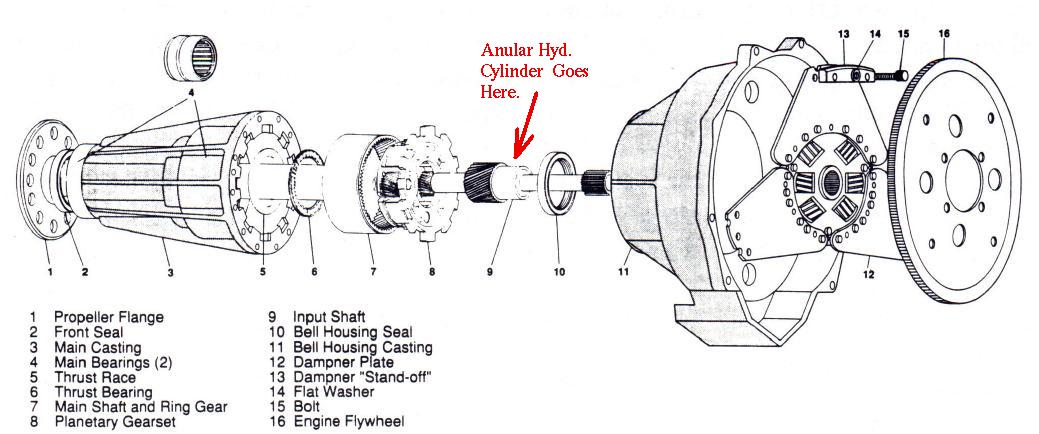
against and pressureize the chamber. In Tracy's gearbox/flywheel
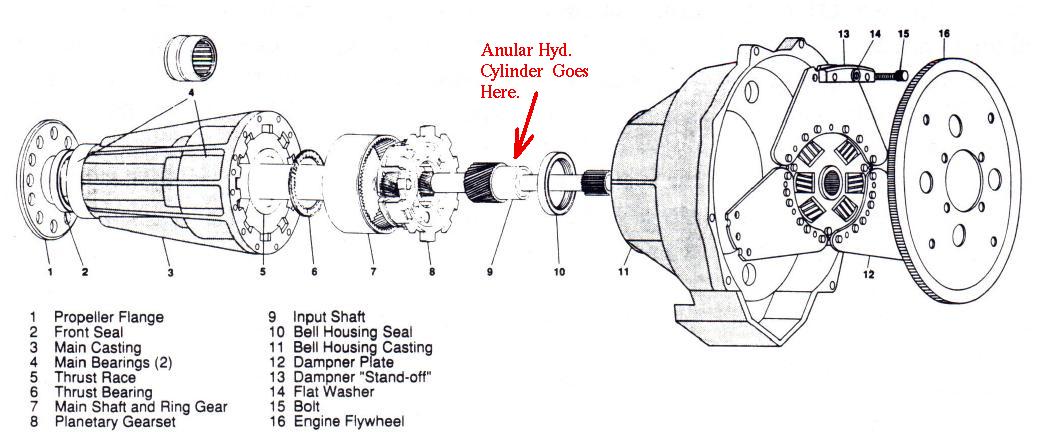
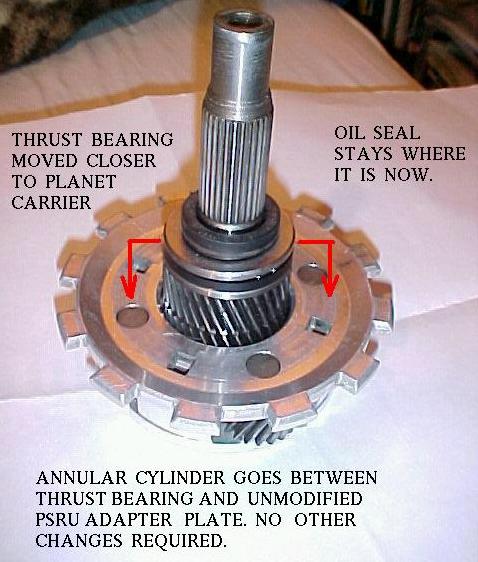
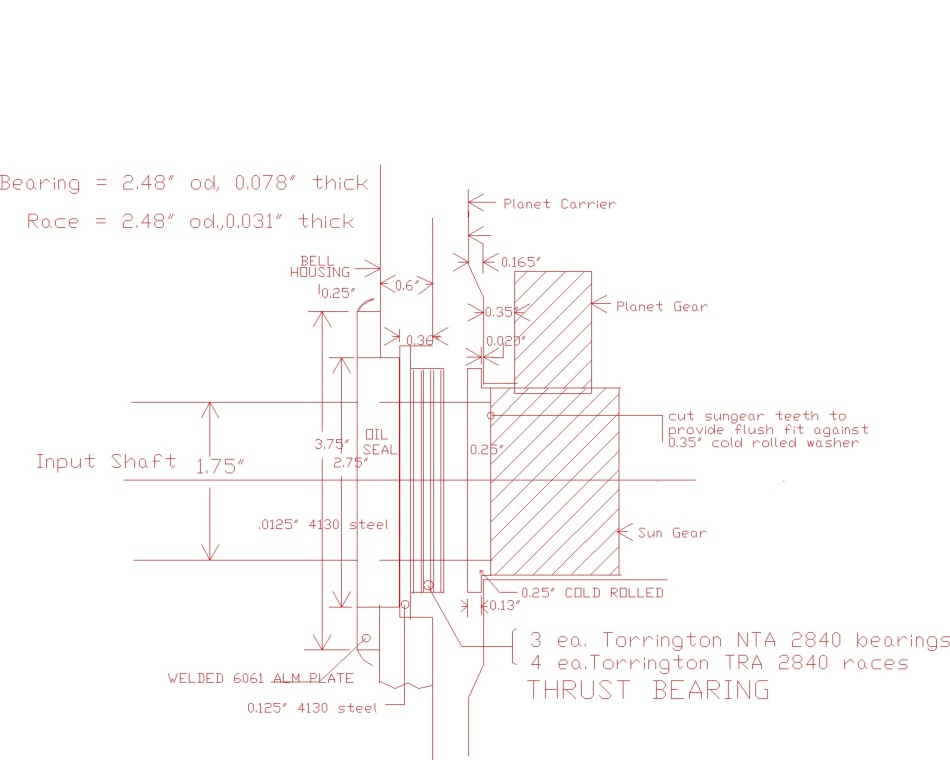
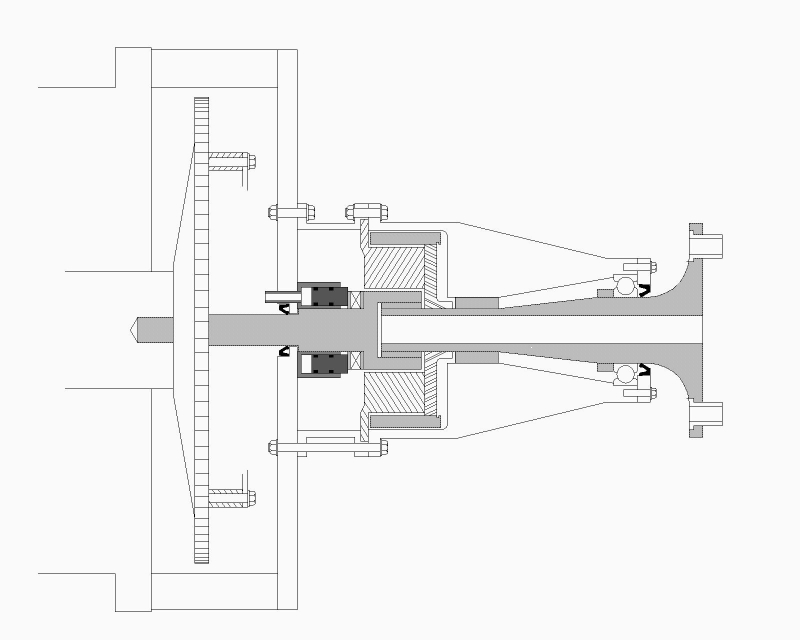
assembly there is no room to build toward the engine from the back side
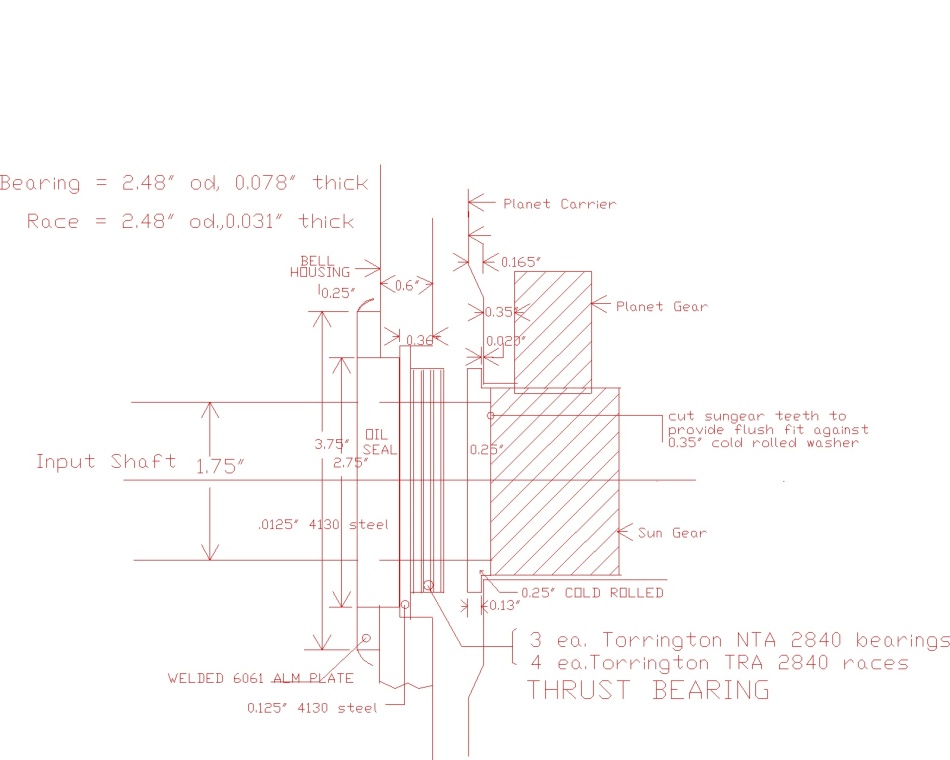
of the g'box mounting plate so I'm trying to build your concept on the
inside of the g'box. There's no room inside either, but I'm trying to
exhaust all possibilities as I'm building a new rear half for my g'box
anyway and would like to incorporate this feature if possible.
The initial key to any design is the actual pounds of end load that the
sun gear shaft exerts. Did you ever ballpark this value for a 300 HP
input? I've tryed a formula from a library book and come up with an
answer less than one pound --- obviously too little, so I think I have
copied the formula wrong.
Also, once I have this load and relate it to a volume of oil, am I
correct in assuming that very little movement of the piston will be
necessary. My theory is that if I have oil filling a piston, a tube to a
pressure gage, and a pressure gage and there is NO air in any spaces the
amount of oil moved (and thus piston travel) will be only that required
to move a diaphragm inside the gage. FWIW I'm thinking about 2
concentric face seals that get squashed a little flatter. The piston
volume = ( the ID of the outer seal minus the OD of the inner seal)
times the distance between the faces. Some sort of stop would prevent
excessive "squish" and provide anti-rotation.
Any thoughts on the load or the seal squish concept are most
welcome. Thanx, Dave M
-----------------------------------------------------------
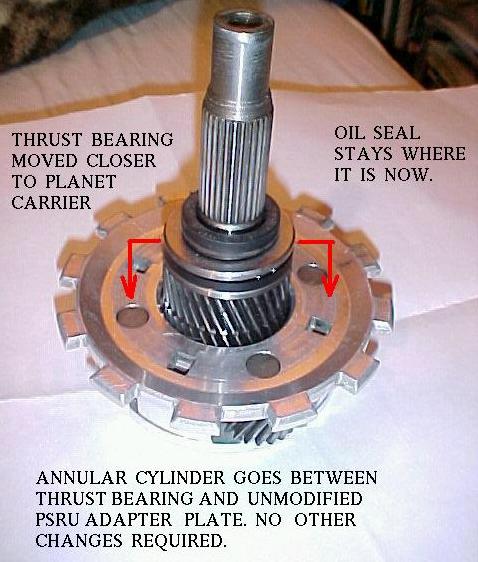
Perhaps you need to grind the unneeded parts of the teeth off of the
sun gear to make room. Here is what I have on the subject.
If T is in inch pounds and d is in inches the tangential force on the
gear will be equal to T / dia. 200 foot pounds is 2400 inch pounds.
If the gear is 2.5 inches in diameter that tangential force is 960 pounds.
Thrust force is 960 pounds times TAN of the angle I think.
The gear tooth is 24 mm hypotenuse and 10 mm opposite
so ARCSINE = Opp/Hyp or 24 degrees angle I think.
Thrust load = Tan 24 degrees is .46 so the thrust load is .46 times
960 pounds or 440 pounds I think. Check my math somebody.
You need to know the max torque. My guess it may be as much as 220 foot pounds
or 2640 inch pounds.
The Rotary Engine NewsLetter. Powered by Linux.
ACRE NL web site.
http://www.rotaryeng.net
Copyright 1998-2006 All world wide rights reserved.