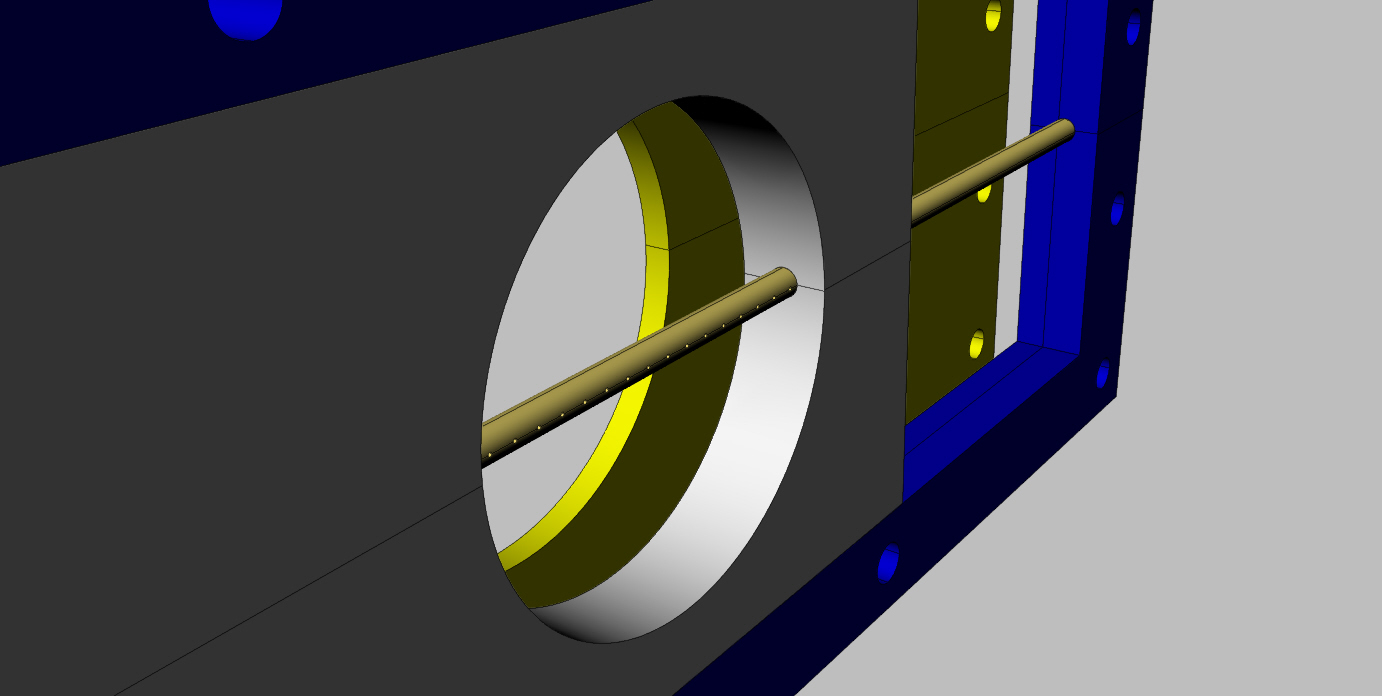
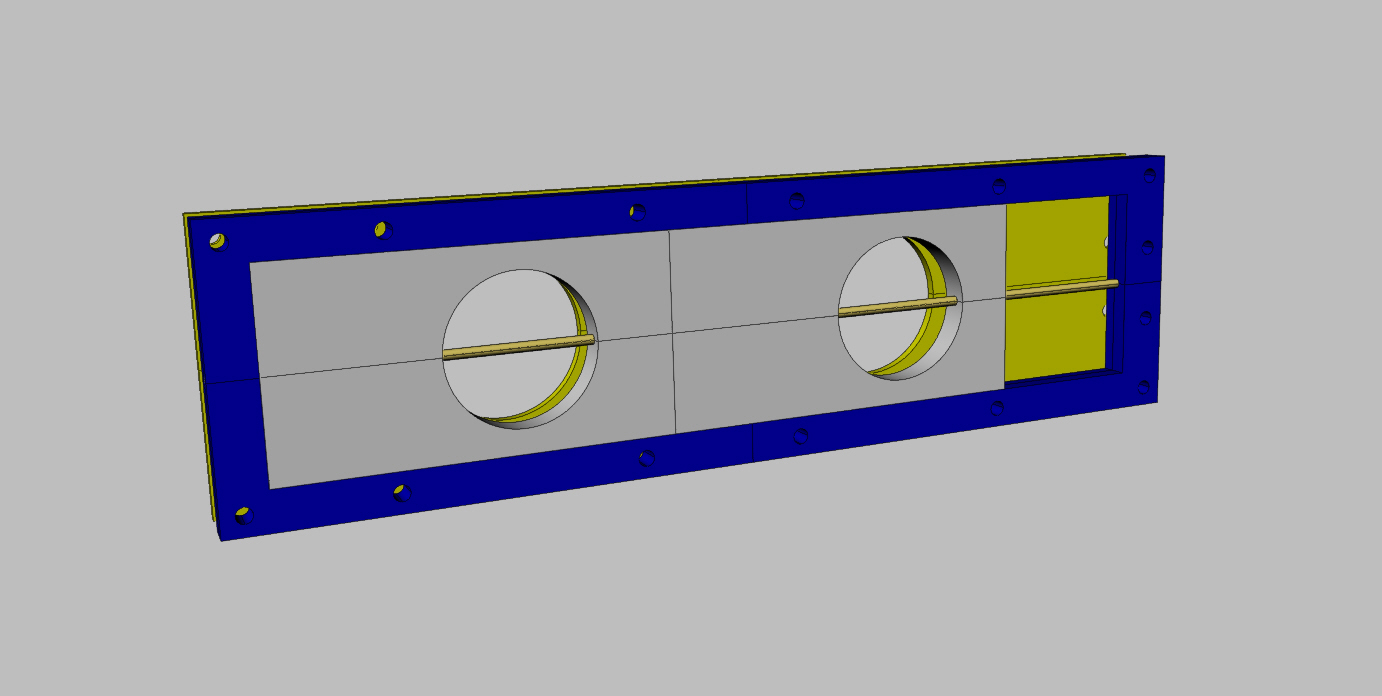
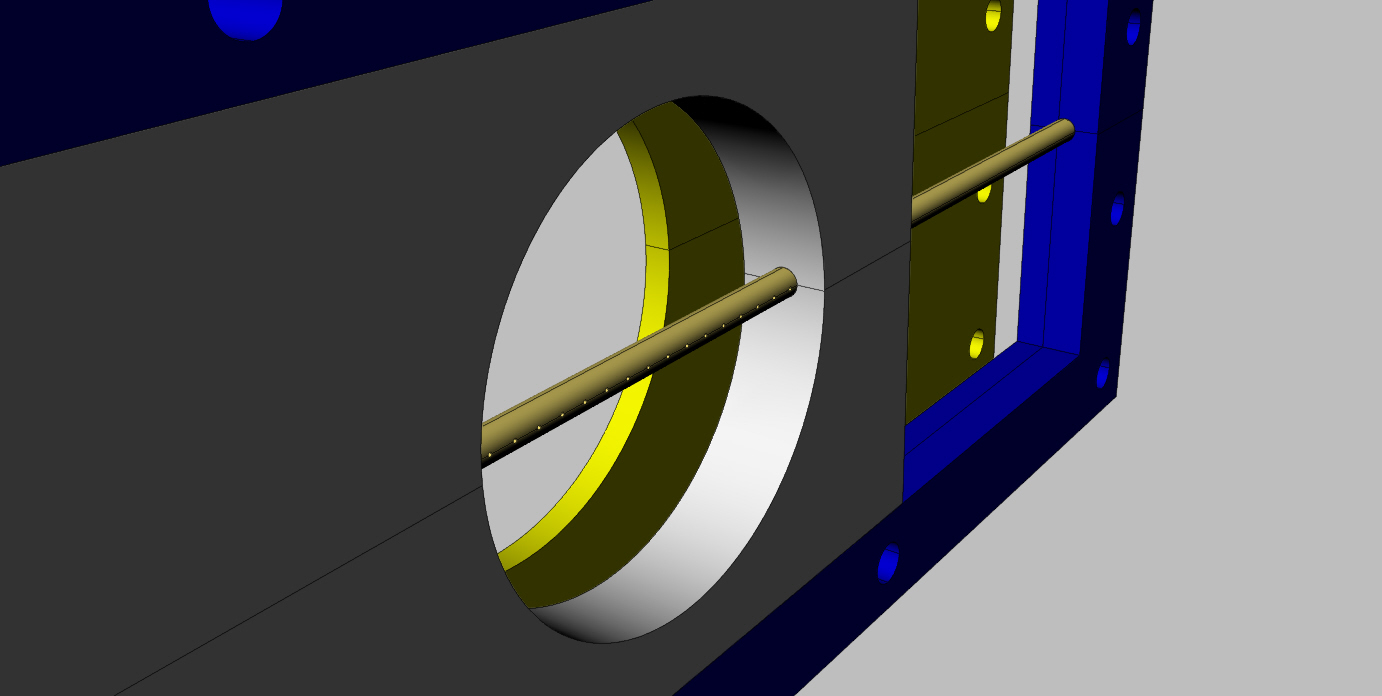
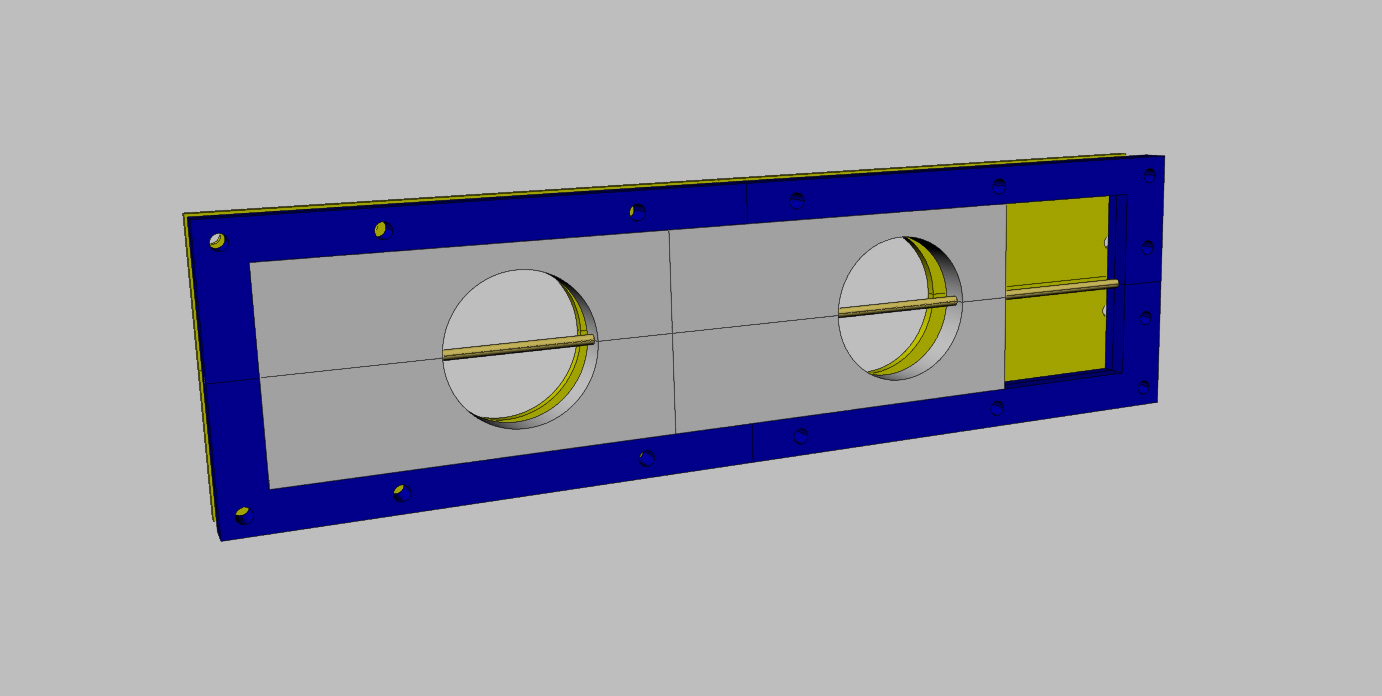
This design steals ideas from Ellison and Mikuni.
The fuel metering is done with a bunch of small holes
drilled into a brass tube that stays in the air passage
all the time similar to the Ellison. The slide is three piece
similar to the Mikuni 48 mm. As the slide opens it exposes more
and more small holes in the brass tube increasing the fuel flow.
The brass tube is attached to a stationary rectangular column
that is fixed to the spacer. The fuel comes in through the
spacer and down the column to the brass tube. The brass tubes
fit in holes in the center parts of the slides. The fuel is
sucked out of the side of the tube by the Coanda effect.
Ellison claims excellent atomization.
The trade off is a more complicated slide.
However it is much lower technical risk than the ramp in the Teflon idea
as it uses a tried and true method of metering fuel. There are hundreds of
Ellisons out there on all sorts of airplanes. It does not use the Ellison method
of leaning the mixture. The mixture is still leaned with the
external fuel pressure regulator. The Ellison of course has a built
in fixed fuel pressure regulator.
It is a bit hard to tell what is going on here by looking at these
3Ds. One has a solid slides and the other transparent slides. Both are shown
in all three positions. Closed, half open and fully open from
top to bottom.
This is my fall back option if the ramp in the slide idea does not work.
Why not use a couple of Ellisons? That will work if you don't mind
paying $825 each.
For a lot more on how the Ellison works check out the web site:
http://www.ellison-fluid-systems.com/
---------------------------------------------------------------------------
Here is a blatant dual copy of the Ellison. Nobody will be able to build it
and sell it as Ellison has a good patent on it I am sure. That will not
stop an individual from building one for himself.
The 1/8 dia. brass tube runs all the way through the 3/8 thick one piece
Teflon slide. It is not easy to machine so be aware.
BTW I gave up on this multiple hole idea because one could not
insure the mixture would not vary between holes. Here is what Ben Ellison
has to say on the subject.
"The TBI uses a tube with many holes to meter fuel in the venturi. This tube is
covered by a slide valve used for the throttle. At low power settings, which
are common in auto applications but not in aircraft, the fuel metering steps
from slightly lean to slightly rich as the throttle is opened. This variation
in mixture results in poor fuel economy as well as illegal levels of exhaust
emissions. Aircraft, on the other hand are always above 50% power and the
digital nature of the fuel metering is irrelevant."
So he changed my mind :)
Paul Lamar ...No rotor no motor.
The Rotary Engine NewsLetter. Powered by Linux.
ACRE NL web site.
http://www.rotaryeng.net
Copyright 1998-2006 All world wide rights reserved.